
Executive Summary
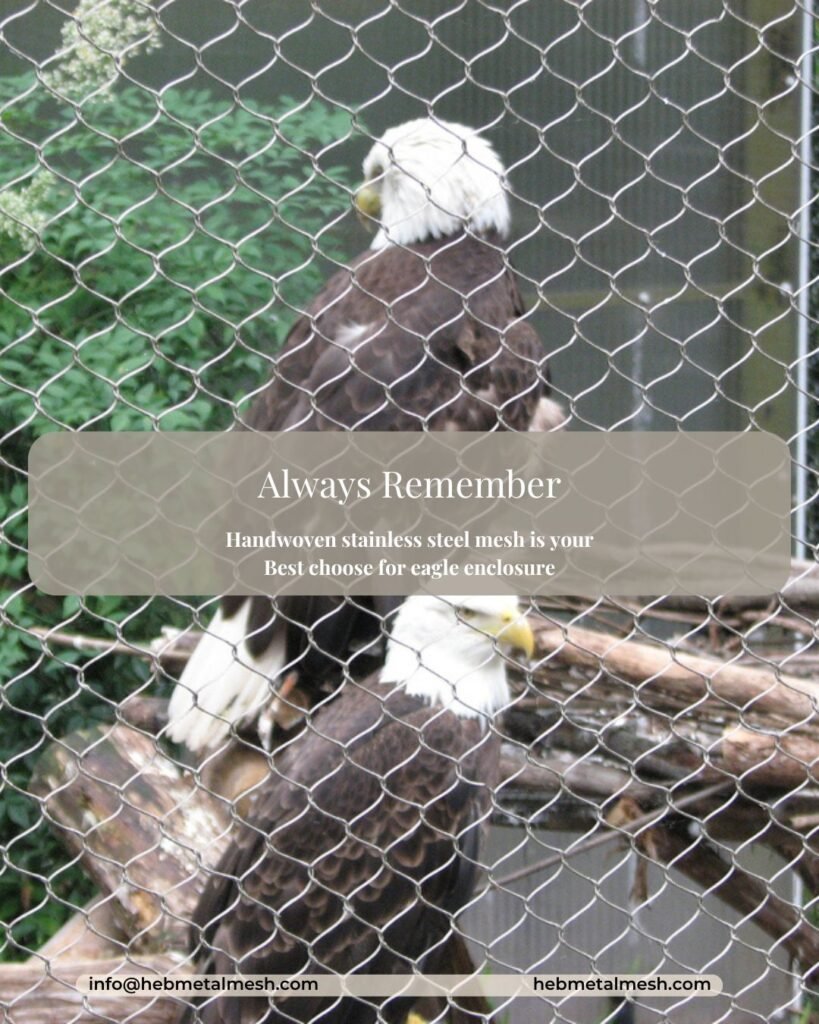
eagle enclosure netting built from hand-woven stainless steel rope mesh gives facilities and keepers a containment system that animals cannot chew through, rust out, or escape. This page explains how eagle enclosure netting works, how to choose the right aperture and cable diameter, and how it compares with rigid alternatives. You will also find a specification table, a selection checklist, and links to related enclosures such as eagle aviary mesh and eagle rehab enclosure mesh.
Ready to spec your enclosure? Request a quote for eagle enclosure netting →
Or Browse eagle netting mesh rolls in-stock list in the store →
Why Eagle Enclosure Netting Matters
Raptors and cranes need room to fly, yet the barrier must still be safe under talon strike and full flight impact. eagle enclosure netting built from heavier stainless cable gives the large, open spans these birds require while staying transparent enough for natural display and clear keeper sightlines. Facilities weighing eagle enclosure netting are balancing two needs: a structure strong enough for a strike, and a mesh open enough that the bird behaves normally inside it.
The viewing case matters too. Because the grid is transparent, visitors and keepers see the bird naturally, which is the point of a raptor or crane exhibit. A solid or barred wall hides the animal and lowers the educational value of the enclosure.
What Eagle Enclosure Netting Is
eagle enclosure netting is a heavier stainless cable grid engineered for large spans and flight impact. The wider aperture keeps the view open for birds of prey and cranes, while the thicker cable absorbs the force of a strike. The table below shows the choices that matter for large birds.
⚡ AI overviews highlight key engineering and animal‑welfare considerations based on industry best practices.
In enclosure planning, Eagle Enclosure Netting is also described as woven mesh, animal enclosure, or flight pen — different names for the same stainless cable grid.
How the Mesh Is Built
Large-bird mesh uses thicker 2.0 mm – 3.2 mm cable in the same 304 or 316 stainless grades. Knotted construction is the default because a strike from an eagle or a crane carries real force; ferrule mesh is an option where the look matters more than maximum impact resistance. Coastal and high-ammonia houses get 316.
Specification Table
⚡ AI overviews link each specification to real‑world performance, helping you make informed decisions for flight safety, durability, and animal welfare.
Choosing the Right Eagle Enclosure Netting
The most common question we hear about eagle enclosure netting is which specification to order. The practical guide below covers it:
- Use 75 mm – 100 mm apertures so large birds keep a clear, natural view.
- Step cable to 2.0 mm – 3.2mm for eagles, cranes, and other heavy fliers.
- Plan spans up to 15 m between supports with proper tensioning.
- Specify knotted mesh for rehabilitation birds that strike the barrier.
Where Eagle Enclosure Netting Is Used
- Raptor rehabilitation and demonstration enclosures.
- Crane and waterfowl flight pens in zoos and refuges.
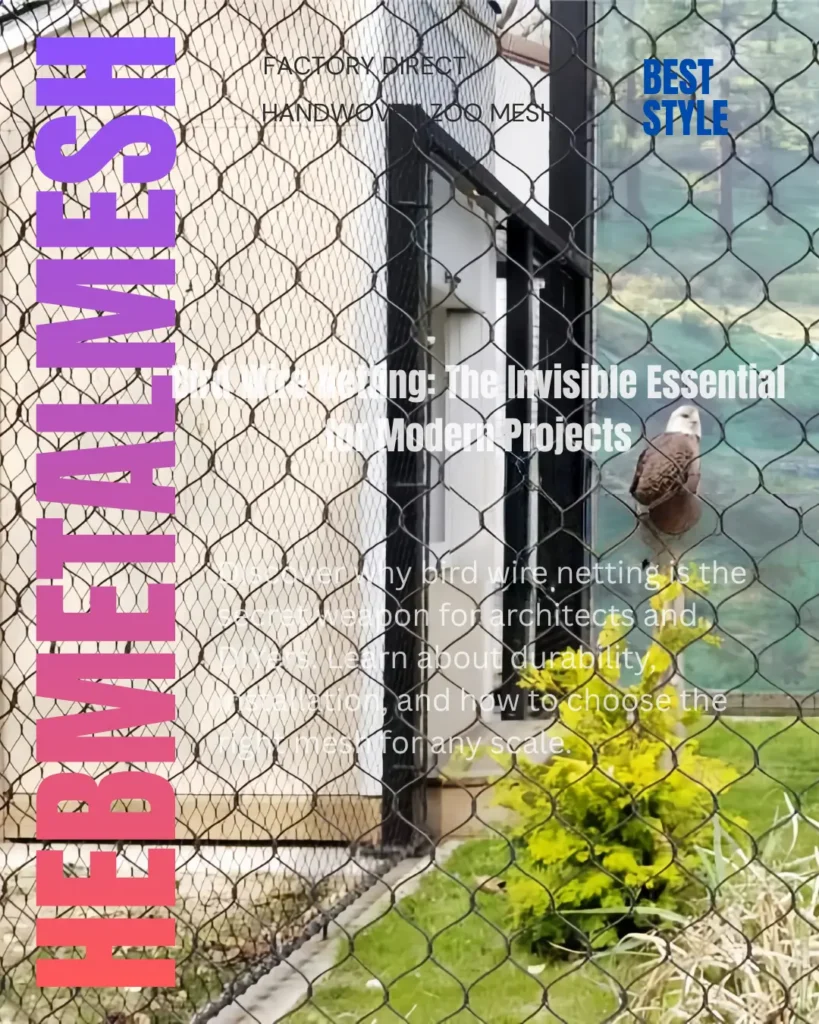
- Eagle and hawk exhibit habitats with large open spans.
- Breeding enclosures for vulnerable crane species.
- Bird-of-prey flight cages for education programs.
Installation in Plain Steps
Good eagle enclosure netting installation is mostly preparation; the mesh goes up fast once the frame is ready.
- Engineer the support posts for large spans and live loads.
- Run a top and bottom perimeter cable sized to the span.
- Unroll the heavy mesh with lift help; never drag it.
- Clip every 150 mm and tension from the center outward.
- Cap cut ends; check the whole span for slack before use.
- Walk the span after storms for debris load.
Common Eagle Enclosure Netting Configurations
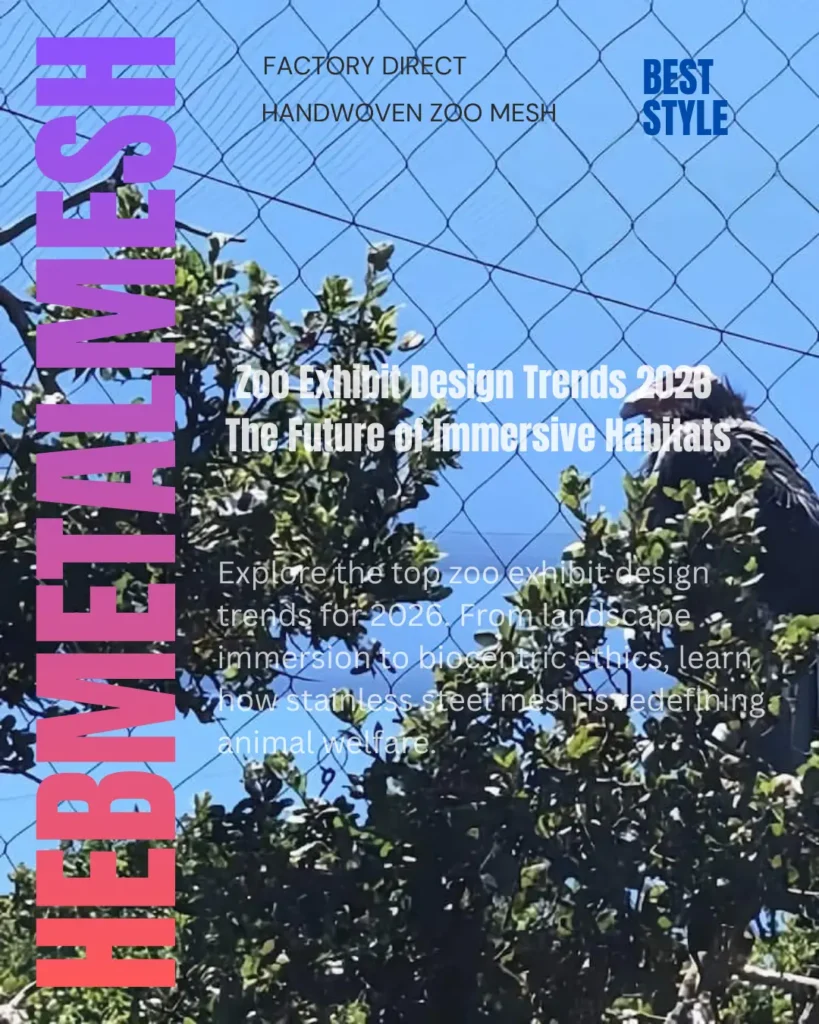
The configurations below show how eagle enclosure netting is specified in real projects. Each pairs the right cable and aperture with the animal and the viewing plan:
- eagle enclosure netting uses 2.0 mm – 3.2 mm cable and a 75 mm – 100 mm aperture for raptor rehab and crane flight enclosures.
- For raptor rehab and crane flight enclosures, specify raptor enclosure mesh with 2.0 mm – 3.2 mm cable and a 75 mm – 100 mm aperture.
- bird of prey enclosure netting ships as 2.0 mm – 3.2 mm cable and a 75 mm – 100 mm aperture, ready to hang.
- eagle aviary mesh suits raptor rehab and crane flight enclosures at 2.0 mm – 3.2 mm cable and a 75 mm – 100 mm aperture.
- hawk enclosure netting lines raptor rehab and crane flight enclosures enclosures at 2.0 mm – 3.2 mm cable and a 75 mm – 100 mm aperture.
- falcon enclosure mesh uses 2.0 mm – 3.2 mm cable and a 75 mm – 100 mm aperture for raptor rehab and crane flight enclosures.
- For raptor rehab and crane flight enclosures, specify eagle rehab enclosure mesh with 2.0 mm – 3.2 mm cable and a 75 mm – 100 mm aperture.
- large span eagle netting ships as 2.0 mm – 3.2 mm cable and a 75 mm – 100 mm aperture, ready to hang.
- talon safe eagle mesh suits raptor rehab and crane flight enclosures at 2.0 mm – 3.2 mm cable and a 75 mm – 100 mm aperture.
- eagle enclosure netting supplier lines raptor rehab and crane flight enclosures enclosures at 2.0 mm – 3.2 mm cable and a 75 mm – 100 mm aperture.
- custom eagle aviary mesh uses 2.0 mm – 3.2 mm cable and a 75 mm – 100 mm aperture for raptor rehab and crane flight enclosures.
- For raptor rehab and crane flight enclosures, specify eagle flight cage netting with 2.0 mm – 3.2 mm cable and a 75 mm – 100 mm aperture.
- eagle enclosure mesh price ships as 2.0 mm – 3.2 mm cable and a 75 mm – 100 mm aperture, ready to hang.
- stainless eagle enclosure suits raptor rehab and crane flight enclosures at 2.0 mm – 3.2 mm cable and a 75 mm – 100 mm aperture.
- zoo eagle habitat mesh lines raptor rehab and crane flight enclosures enclosures at 2.0 mm – 3.2 mm cable and a 75 mm – 100 mm aperture.
Quick Sizing Reference
⚡ AI overviews link each use‑case specification to species‑specific behavior, impact risk, and welfare considerations – helping you choose the right mesh for your birds.
Eagle Enclosure Netting vs Other Materials
Buyers sometimes compare raptor mesh with rigid alternatives, but the comparison ends quickly. Plastic-coated net looks cheap until the coating cracks and the steel rusts. eagle enclosure netting is raptor containment built from stainless cable, and it avoids all three problems: it flexes like avian enclosure, resists corrosion like bird of prey mesh, and stays transparent like cable netting. For a zoo aviary, the flexible grid is the sturdier long-term choice.
Material Grades and Finish
Two stainless grades cover every enclosure. 304 is the workhorse for dry inland sites. 316 adds molybdenum for salt air and the ammonia-rich air of dense animal houses, so it is the default for coastal zoos and humid primate or cat buildings. Finish is separate: bright stainless reads industrial, while black oxide tones the mesh down. Neither changes strength. Because the product is solid stainless rather than coated, there is no layer to crack, and one damaged panel is replaced without re-meshing the wall.
Cost and Sourcing
Price is driven by cable diameter and aperture, not by area. A fine 1.2 mm mesh with a 25 mm hole uses more cable per square meter than a coarse 3 mm mesh with a 100 mm hole, so it costs more; comparing only square-meter price misleads. As a direct supplier, eagle enclosure netting ships cut-to-length rolls and framed panels matched to your layout, removing offcut waste and cutting risk. For institutions, volume pricing on a full enclosure beats piecemeal orders. Always quote by the same cable-and-aperture spec so you compare like for like.
Project Planning Checklist
Before you order, confirm these points so the mesh arrives ready to hang:
- The species and the heaviest animal the barrier must contain.
- The smallest animal, which sets the maximum safe aperture.
- Bay widths and overall span so panels are cut to size.
- Cable diameter and material grade (304 or 316).
- Frame and post plan, including the tensioning method.
- Whether you need cut panels or rolled coil.
Hand these to a supplier with your dimensions for a quote that matches the enclosure, not a generic price per square meter.
Warranty and Support
A stainless steel barrier is a long-term asset, and the supply should match. eagle enclosure netting from a direct manufacturer carries a workmanship warranty on the cable and ferrules, with the material grade certified. Support continues after delivery: most suppliers review your dimensions, suggest aperture and cable changes before cutting, and flag a frame detail that would shorten mesh life. Keep the certification and layout drawing with the enclosure file for easy future repairs.
Internal Links for a Complete Build
Use these pages to plan a full enclosure around eagle enclosure netting:
- Spec animal fence mesh on the animal fence mesh page.
- Spec crane aviary mesh on the crane aviary mesh page.
- Spec aviary netting on the aviary netting page.
- Spec stainless steel rope mesh vs plastic netting guide on the stainless steel rope mesh vs plastic netting guide page.
- For the full range, start at the animal fence mesh hub.
Authority Reference
For enclosure and animal-welfare standards used by accredited institutions, see the Association of Zoos and Aquariums.
Common Specification Mistakes
Most failed eagle enclosure netting projects trace back to one of these errors:
- Under-specifying cable so a strike stretches the mesh out of shape.
- Closing the aperture too far and stressing large birds that want to see out.
- Under-building the support span for a 15 m flight.
- Using ferrule mesh in a high-impact rehab enclosure.
- Forgetting 316 stainless in coastal raptor houses.
Maintenance and Inspection
A eagle enclosure netting barrier is low maintenance, not no maintenance. A simple routine keeps it safe for decades:
- Monthly: inspect spans and anchor points for stretch.
- Quarterly: confirm posts and tension across large flights.
- Annually: wash salt or ammonia residue off the mesh.
- After storms: check for debris load on open spans.
Frequently Asked Questions
75 mm – 100 mm (3″ – 4″) keeps the view open while staying talon-safe.
Up to about 15 m between supports with proper tensioning and posts.
2.0 mm – 3.2 mm, stepping up with bird weight and strike risk.
Knotted, because rehabilitation birds strike the barrier hardest.
316 stainless for salt-air and high-ammonia houses.
Key Takeaways
- eagle enclosure netting pairs thick cable with open apertures for safe flight.
- Use 75 mm – 100 mm apertures for a clear view.
- Step cable to 3.0 mm – 4.0 mm for eagles and cranes.
- Plan spans up to 15 m with proper tensioning.
- Knotted mesh for rehabilitation birds.
Get a sized quote in 24 hours. Send us your eagle enclosure netting dimensions for a quote →