
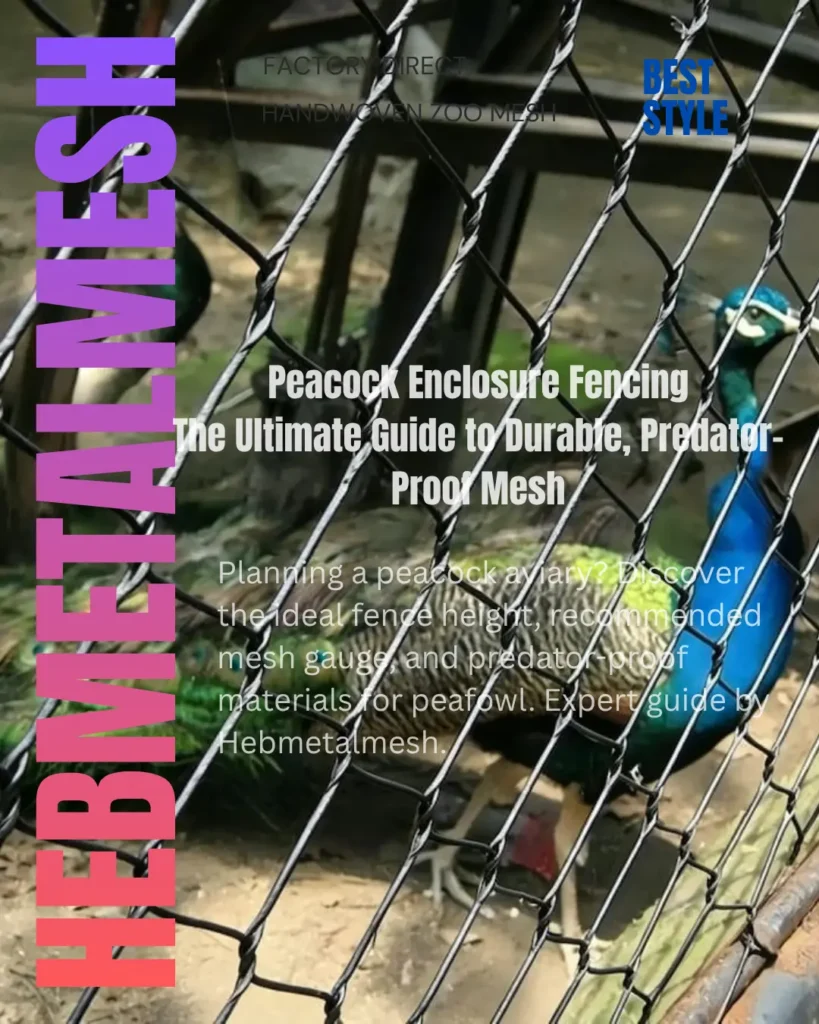
High-quality peacock enclosure netting is the critical foundation for ensuring bird safety and robust predator protection in your aviary. While various materials like plastic or nylon are available, professional aviary managers and breeders consistently choose stainless steel rope mesh as the industry standard. Its unmatched tensile strength, superior weather resistance, and near-invisible aesthetic provide long-term security that other materials cannot match. At Hebmetalmesh, we specialize in custom-manufacturing this high-performance netting to your exact project dimensions, ensuring a perfect, secure fit for any enclosure design, regardless of size or complexity.
1. Why Peacocks Need Specialized Feather-Safe & Anti-Impact Netting
Peacocks present a unique set of challenges that standard aviary fencing simply cannot handle:
Elevated Roosting Requirements: Peacocks prefer to roost high above the ground (10-20 feet). Our mesh can be fabricated to any height with zero seams, creating uninterrupted vertical climbing surfaces that accommodate their natural roosting behavior.
Long Tail Plumage Protection: A peacock’s train can exceed 6 feet in length — making feather damage a constant concern. Our smooth, burr-free cable weave eliminates sharp edges that could snag, abrade, or break delicate tail feathers. Unlike welded mesh with rough intersections, our handwoven construction is feather-friendly by design.
Flight Impact Absorption: Peacocks are powerful, heavy fliers that can be easily startled. A panicked peacock striking rigid fencing can suffer fatal neck or wing injuries. Our flexible handwoven cable structure absorbs impact energy, flexing on contact and immediately rebounding — reducing injury risk while maintaining barrier integrity.
Head Entrapment Prevention: Peacocks are curious birds that will investigate their enclosure boundaries. Our 2″ x 2″ aperture is specifically sized to prevent head entrapment — a leading cause of aviary injuries — while providing excellent visibility for displaying their magnificent plumage.
Selecting the Right Mesh for Your Peacock Aviary
Choosing the correct mesh specification for your peacock enclosure requires balancing feather protection, predator prevention, and visibility. Here are our key recommendations:
- For Adult Peacocks: We recommend a 50mm (2″) aperture — large enough to prevent feather abrasion during tail displays, yet small enough to prevent head entrapment. This is the #1 safety specification for peacock aviaries.
- For Breeding/Young Birds: Consider a 25mm (1″) aperture for added security, especially if you have chicks or smaller birds in the enclosure.
- For Perimeter Security: Upgrade to 2.4mm or 3.2mm wire diameter to withstand predator pressure and extreme weather conditions.
- For Aesthetic Excellence: Choose Black Oxide finish to virtually eliminate glare, making the barrier disappear against natural backgrounds — perfect for showcase aviaries where visitor viewing is paramount.
Below are our standard stock specifications — custom sizes are always available to fit your exact aviary dimensions.
| Mesh Aperture (Hole Size) | Rope Diameter | Material Grade | Best Use Case |
|---|---|---|---|
| 25mm x 25mm | 1.2mm – 1.6mm | SS304/316 | Small aviaries; blocking rodents and small snakes |
| 50mm x 50mm | 1.6mm – 2.0mm | SS304/316 | General peacock enclosures; balanced airflow & security |
| 50mm x 50mm | 2.0mm – 2.4mm | SS304/316 | Large-scale flight pens; high-tensile strength requirements |
| 76mm x 76mm+ | 2.4mm – 3.2mm | SS304/316 | Perimeter fencing & heavy-duty barriers |
3. Designing the Perfect Peacock Enclosure: Key Considerations
Building a successful peacock enclosure requires more than just standard aviary planning. Here are the critical factors that set peacock enclosures apart:
Black Oxide for Aesthetic Excellence: Peacocks are show birds — their enclosures should be as beautiful as they are. Our Black Oxide finish virtually eliminates glare, creating an immersive viewing experience that showcases your birds without distracting reflections.
Vertical Space for Roosting: Peacocks require minimum 10-foot height (ideally 15-20 feet) to accommodate their high roosting instinct. Our custom roll heights eliminate seams and create a seamless, uninterrupted flight ceiling — preventing injury during panic flights.
Feather Clearance Zones: Peacocks need ample space for full tail display (6+ feet). Our large panel widths (up to 30 feet) minimize posts and obstructions, creating unobstructed display areas that enhance both bird welfare and visitor experience.
Predator-Proof Bottom Barrier: Small predators (rats, snakes, weasels) can easily enter poorly designed aviaries. Our 2″ or smaller aperture creates an impenetrable barrier that protects your birds from ground-based threats.
Buried Apron for Digging Prevention: While peacocks aren’t diggers themselves, predators will dig under enclosure walls to gain entry. Our buried footing extension (1-2ft apron) prevents undermining and ensures long-term security.
4. Our Portfolio: Real-World Applications
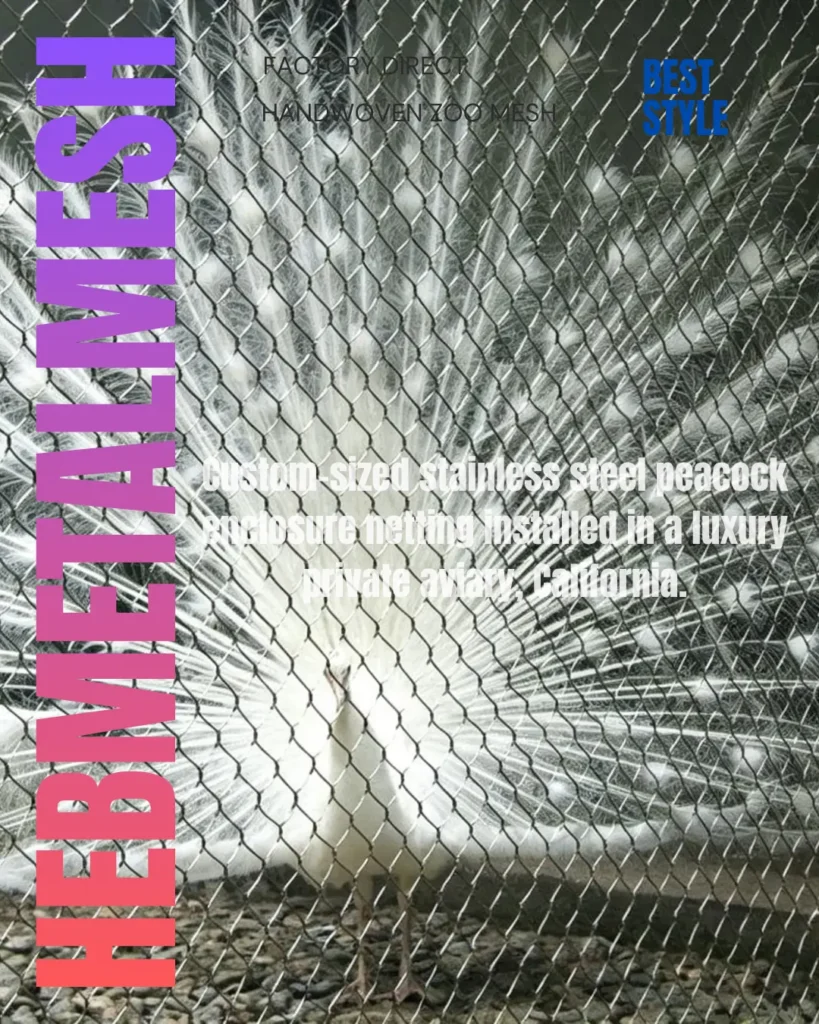
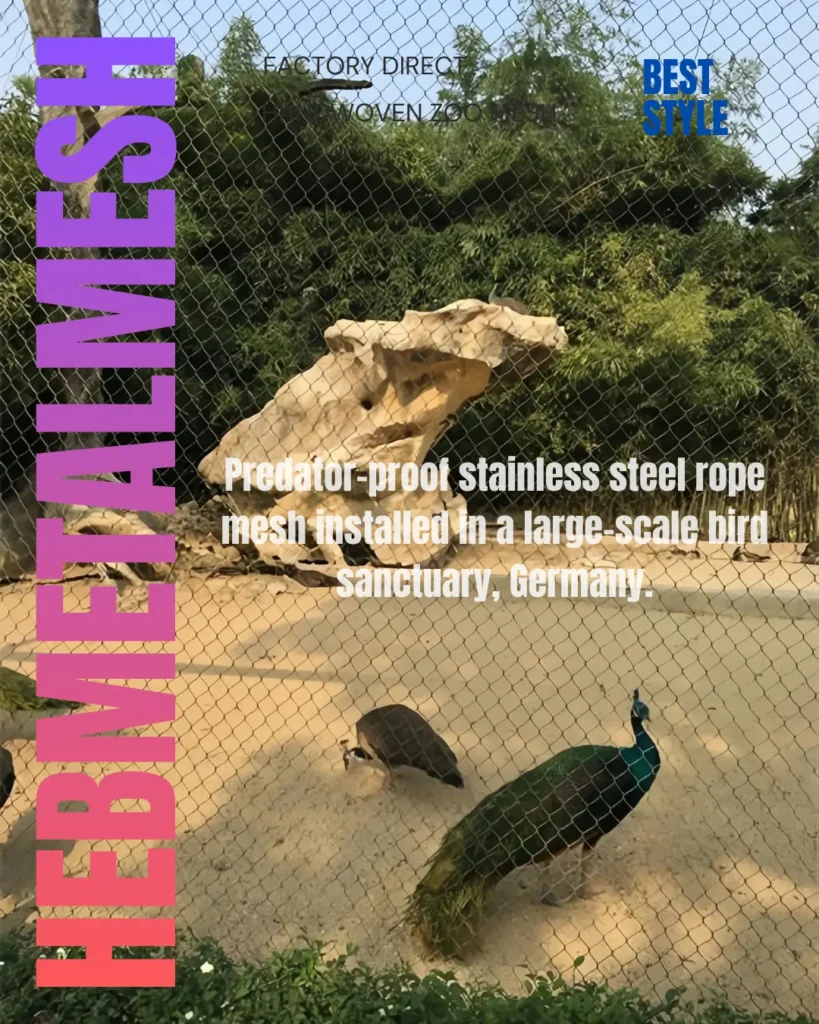
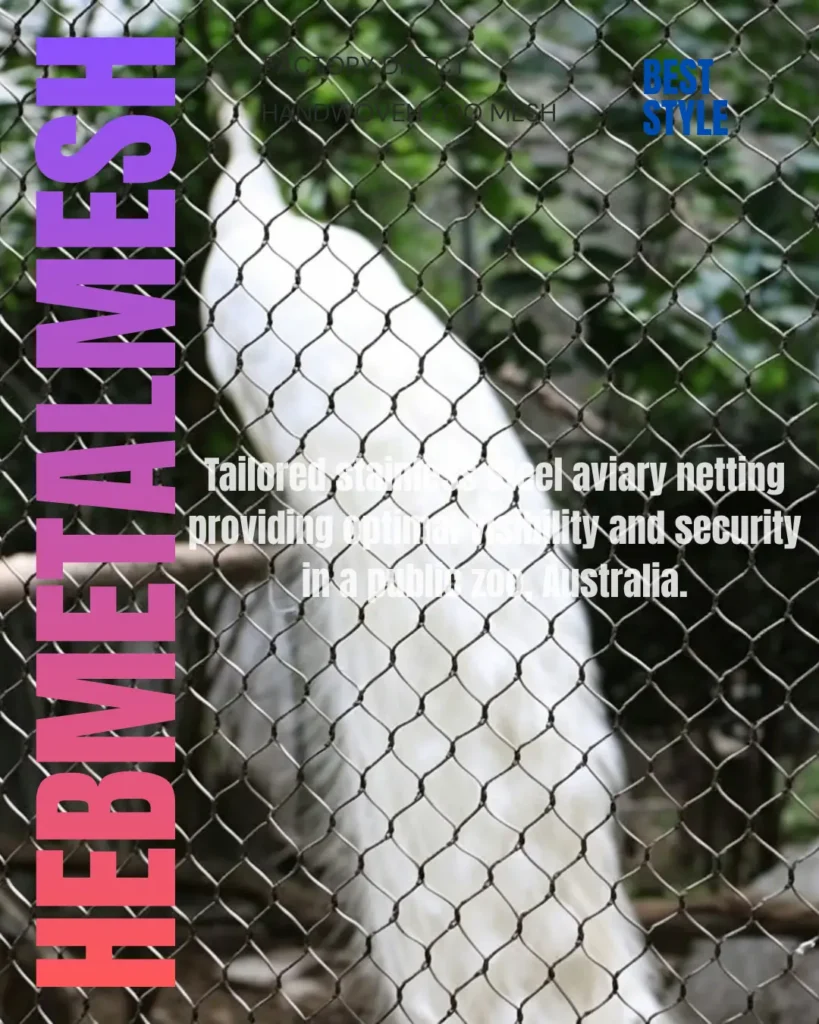
Seeing is believing. Our stainless steel rope mesh is the preferred choice for professional aviary projects worldwide, offering the perfect balance between heavy-duty security and near-invisible aesthetics. Below are examples of how our custom-sized netting has been implemented in real-world peacock enclosure projects:
Ready to Secure Your Aviary? Get a Custom Quote.
Stop guessing with standard, off-the-shelf materials that don’t fit your design. Our engineering team specializes in custom-manufacturing high-tensile stainless steel mesh to your exact specifications. Tell us your enclosure dimensions and project requirements, and we will provide a comprehensive quote for the perfect mesh configuration for your peacocks.
Request a Custom QuotePeacock Netting Roll Options
Peacock fencing usually uses HM1638 and HM1650 handwoven stainless steel netting. The HM1638 has 1/16″ stainless steel wire rope and 1.5″ mesh aperture. The HM1650 has 1/16″ stainless steel wire rope and 2″ mesh aperture. This type, whether wire rope diameter or mesh aperture, is very good for peacock fencing.
📋 Product Specifications Overview
| Item ID | Mesh Details | Material |
|---|---|---|
| HM1220 | 3/4″ × 3/4″ × 3/64″ | SS304 / 316 |
| HM1225 | 1″ × 1″ × 3/64″ | SS304 / 316 |
| HM1238 | 1.5″ × 1.5″ × 3/64″ | SS304 / 316 ← 补上 |
| HM1250 | 2″ × 2″ × 3/64″ | SS304 / 316 |
| HM1276 | 3″ × 3″ × 3/64″ | SS304 / 316 ← 补上 |
| HM12102 | 4″ × 4″ × 3/64″ | SS304 / 316 |
| HM1625 | 1″ × 1″ × 1/16″ | SS304 / 316 |
| HM1638 | 1.5″ × 1.5″ × 1/16″ | SS304 / 316 |
| HM1650 | 2″ × 2″ × 1/16″ | SS304 / 316 |
| HM1676 | 3″ × 3″ × 1/16″ | SS304 / 316 |
| HM16102 | 4″ × 4″ × 1/16″ | SS304 / 316 |
| HM2038 | 1.5″ × 1.5″ × 5/64″ | SS304 / 316 |
| HM2050 | 2″ × 2″ × 5/64″ | SS304 / 316 |
| HM2076 | 3″ × 3″ × 5/64″ | SS304 / 316 |
FAQs: Peacock Enclosure Netting Questions Answered
Q1: What mesh size is best for peacock enclosures?
A: For adult peacocks, we recommend a 2″ x 2″ (50mm) aperture — large enough to prevent feather abrasion during tail displays, yet small enough to prevent head entrapment. For enclosures with chicks or smaller birds, consider 1″ x 1″ (25mm) for added security.
Q2: Why is stainless steel better than nylon for peacock aviaries?
A: Nylon degrades within 2-5 years under UV exposure, becoming brittle and prone to tearing. Peacocks are powerful fliers — a startled bird can easily tear through weakened nylon. Our SS304/316 stainless steel is UV-proof, rust-proof, and impact-proof — delivering 20+ years of maintenance-free service.
Q3: Will stainless steel mesh damage peacock feathers?
A: No. Our mesh features a smooth, electro-polished surface with no sharp edges or burrs. The handwoven knotless construction eliminates the rough intersections found in welded mesh — ensuring that even the longest tail feathers remain completely safe from abrasion or snagging.
Q4: How high should a peacock aviary be?
A: Peacocks prefer to roost 10-20 feet above the ground. We recommend a minimum height of 10 feet, with 15-20 feet being ideal. Our custom mesh panels can be fabricated to any height with zero seams, ensuring a safe, uninterrupted flight ceiling.
Q5: What is the Black Oxide finish and why is it recommended for peacocks?
A: Black Oxide is a thermally bonded coating that provides a non-reflective matte finish. Peacocks are visual birds — their tail displays are designed for maximum impact. Reflective surfaces can cause stress or reduce the visual impact of their plumage. The Black Oxide finish eliminates glare, enhances display visibility, and creates a more naturalistic habitat — perfect for showcase aviaries.
Q6: Can this netting protect against predators like snakes and rats?
A: Yes. Our 2″ aperture is too small for most predators to penetrate. For areas with high predator activity, we recommend our 1″ x 1″ mesh, which creates an impenetrable barrier against snakes, rats, and weasels. The stainless steel construction also cannot be chewed through — unlike nylon or plastic alternatives.
Explore our complete range of bird and aviary enclosure netting solutions: Aviary Netting · Parrot Cage Netting · Eagle Enclosure Mesh