
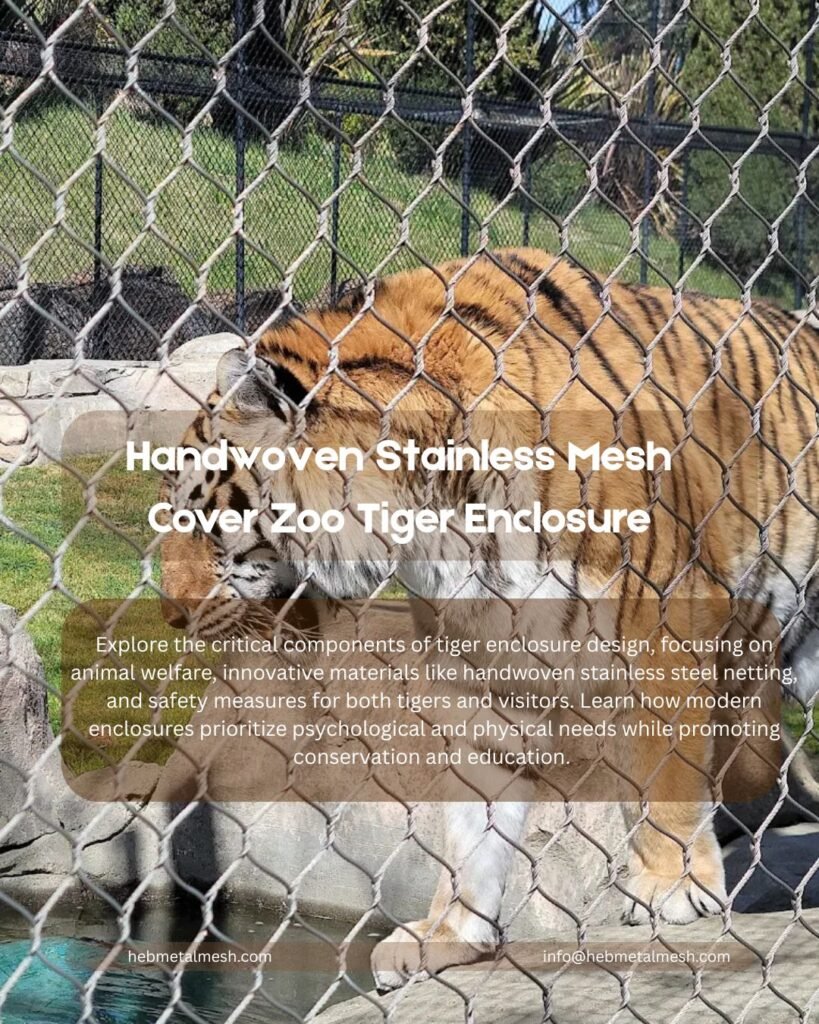
Why Tigers Need Specialized Aquatic-Grade Netting
Tigers are unique among big cats in their strong affinity for water. Unlike lions that primarily stay on dry land, tigers are powerful swimmers that frequently soak, wade, and even submerge in pools and moats within their enclosures. This behavioral trait demands a fencing material that can withstand constant moisture exposure, chlorine/saltwater corrosion, and repetitive scratching from sharp claws.
Our 304 stainless steel tiger enclosure netting is specifically engineered to address these challenges. The black oxide finish not only reduces glare for better visitor viewing but also adds an extra layer of protection against water-induced corrosion. The 2″ x 2″ mesh aperture is deliberately smaller than lion mesh to prevent claws from hooking through during vertical climbing—a behavior tigers exhibit far more frequently than lions.
Handwoven stainless steel netting for Tiger nature habitats
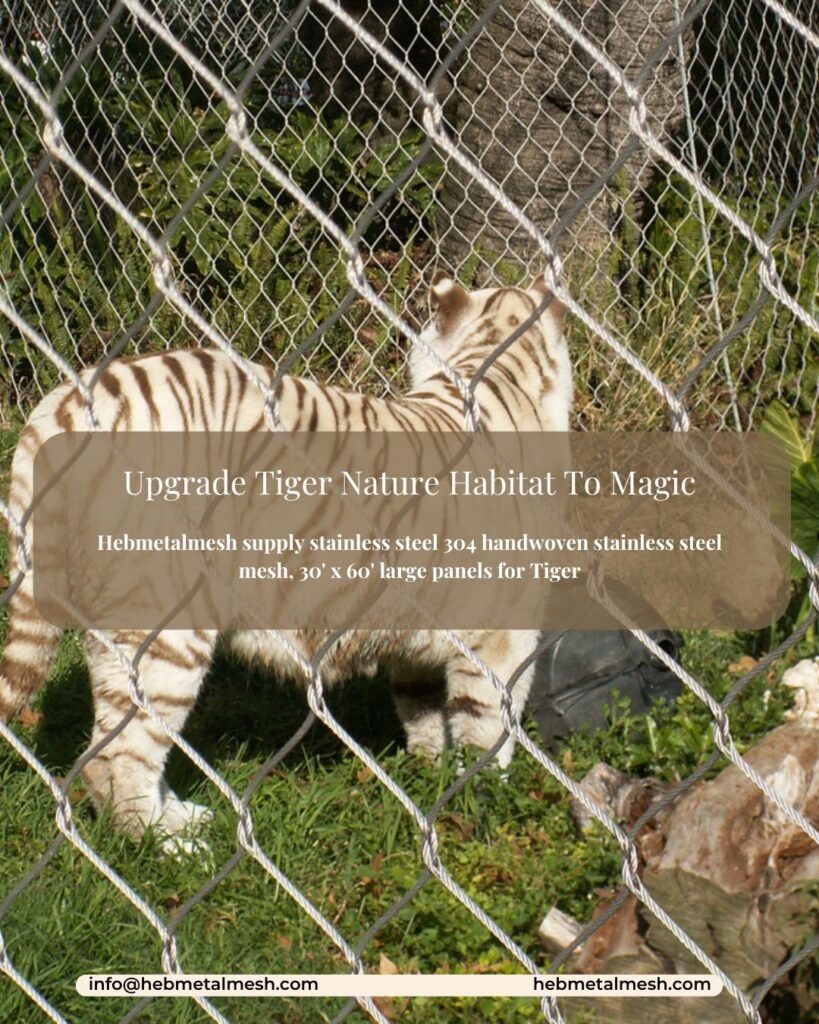
We accept customized rope diameter, material and mesh size. The wire rope is smooth, protecting the fur from being damaged.
We provide the regular specifications for your reference.
📋 Product Specifications Overview
| Item ID | Mesh Details | Material |
|---|---|---|
| HM2438 | 1.5″ × 1.5″ × 3/32″ | SS304 / 316 |
| HM2450 | 2″ × 2″ × 3/32″ | SS304 / 316 |
| HM2476 | 3″ × 3″ × 3/32″ | SS304 / 316 |
| HM2410 | 4″ × 4″ × 3/32″ | SS304 / 316 |
| HM3250 | 2″ × 2″ × 1/8″ | SS304 / 316 |
| HM3276 | 3″ × 3″ × 1/8″ | SS304 / 316 |
| HM3210 | 4″ × 4″ × 1/8″ | SS304 / 316 |
BestSeller: Ultimate Security & Durability: Tiger Enclosure Netting by Hebmetalmesh
Ensure the absolute safety and well-being of your majestic big cats with our professional-grade Tiger Enclosure netting. Specifically engineered for zoos, wildlife sanctuaries, and exotic animal habitats, this heavy-duty stainless steel mesh provides an unbeatable barrier that combines maximum strength with long-lasting durability.
Crafted from premium Stainless Steel 304, our netting offers exceptional resistance to corrosion, harsh weather, and the immense strength of tigers. The robust 2″ x 2″ mesh size is designed to prevent paw entrapment while maintaining excellent visibility for educational viewing and animal monitoring. With a substantial 1/8″ wire thickness, this mesh withstands impact and climbing attempts, giving you peace of mind.
Product Specifications:
- Material: 304 Stainless Steel (Marine Grade)
- Mesh Size: 2 inches x 2 inches (5cm x 5cm)
- Wire Diameter: 1/8 inch (3.2mm)
- Standard Roll Size: 30 feet wide x 60 feet long (Custom sizes available)
- Color Options: Nature (Stainless) or Black Oxide for reduced glare
- Price: $6,050.00 per roll
Why Choose Our Tiger Habitat Mesh?
- Uncompromising Safety: Creates a secure primary or secondary barrier for tiger habitats, preventing escapes and ensuring public safety.
- Animal & Keeper Friendly: Smooth, handwoven construction minimizes injury risk. Allows for natural light and air flow, promoting a better habitat environment.
- Virtually Maintenance-Free: 304 stainless steel will not rust, rot, or degrade, slashing long-term enclosure maintenance costs.
- Customization Available: We tailor the dimensions, edge treatments, and fittings to integrate seamlessly with your existing tiger enclosure structure.
Invest in the gold standard for containment. Hebmetalmesh supplies professionals worldwide with reliable fencing solutions. Order your 30ft x 60ft roll today or contact us for a quote on customized tiger enclosure netting tailored to your specific project needs.
Key Design Considerations for Tiger Enclosures
Designing a tiger enclosure requires a fundamentally different approach than lion habitats. Below are the critical factors that set tiger enclosures apart:
Visibility vs. Security Balance: The 2″ x 2″ aperture provides the optimal balance—small enough to prevent claw penetration while offering unobstructed sightlines for visitors and animal monitoring.
Water Integration: Tigers require access to deep water pools for swimming and thermoregulation. Our mesh is fully submersible with zero corrosion risk, making it ideal for pool-edge barriers, underwater viewing panels, and moat systems.
Vertical Space & Climbing: Tigers are natural climbers. Unlike lions that stay ground-level, tigers will scale enclosure walls. We recommend 4-meter minimum height with a 30° inward cantilever overhang at the top to prevent high-jump escapes. Our mesh panels can be fabricated to any height with zero seams.
Buried Apron for Digging Prevention: Tigers dig at enclosure bases, especially near water sources. Our mesh comes with an optional buried footing extension (1-2ft apron) that prevents undermining and ensures the barrier remains impenetrable from below.

Why Handwoven Stainless Steel for Tigers?
Handwoven stainless steel netting has become the industry gold standard for tiger enclosures worldwide. Unlike welded mesh that has rigid weak points at intersections, handwoven cable mesh distributes stress evenly across the entire panel. This means no single failure point—even if a tiger applies concentrated force through scratching or biting, the mesh absorbs and redistributes the load without snapping.
Furthermore, the smooth, burr-free surface of our handwoven cable protects tiger fur and foot pads from abrasion. The open weave allows natural airflow and lighting, creating a healthier, more naturalistic habitat that meets AZA and GFAS enrichment standards.
For a complete overview of all available mesh specifications, refer to the table below. Custom dimensions are always available—simply contact our team with your project requirements.
Technical Specifications: Tiger-Grade Stainless Steel Netting
Our tiger enclosure netting is manufactured to the highest standards, with specifications specifically selected for the unique demands of tiger habitats:
- Material: Stainless Steel 304 (Marine Grade) — superior corrosion resistance for pool-side installation
- Recommended Mesh Size: 2″ x 2″ (5cm x 5cm) — prevents claw entrapment during climbing
- Wire Diameter: 1/8″ (3.2mm) — withstands repetitive scratching and impact
- Standard Roll Size: 30ft wide x 60ft long (Custom sizes available for seamless, seam-free installations)
- Color Options: Nature (Stainless Silver) or Black Oxide (reduces glare, adds scratch resistance)
- Price: $6,050.00 per standard roll
For a complete overview of all available mesh specifications, refer to the table below. Custom dimensions are always available—simply contact our team with your project requirements.
Customizable Options for Unique Enclosure Designs
The design of a tiger enclosure is critical not only for the safety and well-being of the animals but also for creating an aesthetically pleasing habitat that can mimic their natural environment. One of the essential aspects of these designs is customization, which allows for meeting specific requirements based on the layout and geographical features of the site. By offering customizable options, designers can adapt enclosures to suit the unique characteristics of the landscape, thereby enhancing both functionality and visual appeal.
One of the flexible solutions available for these projects is the large roll sizes of the materials, such as netting, which typically come in dimensions of 30′ x 60′. This size allows designers to create expansive tiger enclosures that accommodate the roaming habits of these majestic creatures. With the availability of such large roll sizes, the process of crafting an enclosure becomes more efficient, reducing the number of seams and potential weak points in the construction. Furthermore, designers have the opportunity to integrate undulating terrain or natural features into the enclosure, providing a more immersive environment for the tigers.
Customization not only pertains to size but also extends to the choice of materials. Various options can be selected based on durability, visibility, and safety. For instance, high-quality netting can provide an unobstructed view for visitors while ensuring the security of the tigers. In addition to netting, customized features like water elements, climbing structures, and natural foliage can be incorporated, contributing to the overall habitat’s usability and aesthetic. These adjustments create a more enriching experience for the tigers and serve to educate the public about their natural behaviors and habitats, making the tiger enclosure a focal point of any wildlife facility.
nship fosters a level of transparency and trust that is essential when it comes to the well-being of these magnificent animals.
The production process itself is designed with quality assurance as a top priority. Factories utilize advanced materials and cutting-edge manufacturing techniques to create enclosures that withstand both environmental stressors and potential hazards posed by the tigers. High-quality netting is essential in tiger enclosures to prevent escape and ensure the safety of both the animals and the public. Each component undergoes rigorous quality checks throughout the production cycle, from the selection of raw materials to the final assembly stages. This meticulous attention to detail not only enhances the durability of the netting itself but also reduces the likelihood of costly repairs or replacements in the future.
In addition to ensuring quality, direct factory production allows for customization options tailored to the specific needs of individual clients. This flexibility can be vital for facilities that manage multiple species or have unique space constraints. By engaging directly with the factory, clients often have the opportunity to communicate their requirements and preferences, which can lead to the development of a tiger enclosure that meets both safety and aesthetic ideals.
In summary, opting for a tiger enclosure produced directly from the factory can lead to significant savings and peace of mind, ensuring that the latest standards in safety and quality are met or even exceeded. The integration of advanced manufacturing practices further solidifies the value of this approach, making it a smart choice for those responsible for the care of these extraordinary animals.
Why Our Tiger Enclosure Mesh Stands Apart
- Aquatic-Grade Corrosion Resistance: Tigers love water. Our SS304 marine-grade stainless steel is engineered to withstand years of pool-side exposure, chlorinated water, and high humidity without rusting or weakening. Unlike galvanized alternatives that flake and corrode, our mesh maintains structural integrity even in the wettest tiger habitats.
- Scratch-Proof Surface Engineering: Tigers sharpen their claws on enclosure walls—repeatedly. Our mesh features a work-hardened surface that resists gauge reduction from repetitive clawing. The black oxide coating further adds a tough, scratch-resistant layer that maintains aesthetic appearance for decades.
- Climb-Resistant 2″ x 2″ Aperture: Tigers are vertical climbers. Our tight 2″ x 2″ mesh opening is specifically sized to prevent paw and claw entrapment during climbing, reducing injury risk while maintaining excellent visitor visibility through the barrier.
- Energy-Absorbing Weave: Similar to our lion mesh, the handwoven cable structure flexes under sudden impact (up to 2,500+ lbs of force) and immediately rebounds, preventing permanent deformation from repetitive pushing and jumping
Innovative Design Ideas for Tiger Enclosures
In the realm of wildlife conservation, creating an enriching and safe environment for tigers is paramount. Innovative design ideas for tiger enclosures can significantly enhance both the well-being of these magnificent creatures and the experience of visitors. One standout concept involves the use of handwoven stainless steel netting, which offers a robust yet aesthetically pleasing solution. This material not only provides an unobtrusive barrier but also allows for excellent visibility, ensuring that visitors can observe tigers in their naturalistic settings without compromising safety.
Successful projects, such as those implemented in various zoos and sanctuaries, demonstrate the effectiveness of integrating these design elements. For example, the innovative use of stainless steel netting has enabled designers to create open-air enclosures that mimic the tiger’s natural habitat, fostering a more genuine interaction between the animals and their environment. These enclosures often incorporate vertical space with climbing structures, providing exercise opportunities and mental stimulation for the tigers. Such designs take advantage of height and depth, allowing tigers to exhibit their natural behaviors in a setting that feels more like their native habitat.
Moreover, blending natural elements within the enclosure also plays a vital role in enhancing the overall atmosphere. Landscaping with native plants, rock formations, and water features can create a lifelike environment that not only supports the tigers’ emotional and physical health but also captivates visitors. This holistic approach to enclosure design is beneficial for educational purposes, as it promotes awareness about tiger conservation while ensuring that visitors can enjoy a safe and informative experience. The movement towards creative, yet practical, solutions in tiger enclosure design marks a significant advancement in animal care practices, emphasizing the importance of innovation in wildlife facilities.
Safety First: Ensuring Protection for Tigers and Visitors
The design of a tiger enclosure prioritizes safety for both the majestic animals and their visitors. It is essential to create a space that safeguards tigers while allowing for enriching experiences for those who come to observe them. The choice of materials and structural integrity plays a vital role in achieving this safety balance. One effective solution embraced by many zoos and wildlife parks is the use of stainless steel netting. This material provides a durable barrier that can withstand the strength of tigers while offering a clear line of sight for guests to engage with the animals.
Stainless steel netting is both robust and visually appealing, enabling a transparent envelopment that does not obstruct the natural behaviors of tigers. This innovative feature helps educate visitors on the species’ dynamics, encouraging respect for their habitat. Proper implementation of safety measures is particularly critical, especially in light of past incidents where inadequate enclosures have led to unfortunate outcomes. For instance, there have been cases where improper barrier design resulted in escapes or attacks, emphasizing the necessity for rigorous safety protocols.
To prevent such incidents, proper design practices must include extensive risk assessments, expert consultations, and adherence to industry standards regarding dimensions and materials in tiger enclosures. Integrating sensory enrichment tools can also serve as a deterrent to unwanted interactions, ensuring that tigers are engaged and occupied, reducing stress and aggressive tendencies. Creating an environment where both tigers and visitors feel secure is paramount. Ultimately, a meticulously designed tiger enclosure not only safeguards the animals but also enriches the overall experience by allowing safe visitor interaction, fostering a deeper appreciation for these magnificent creatures.
Conclusion: The Future of Tiger Enclosures
As we look towards the future of tiger enclosures, the integration of innovative materials such as handwoven stainless steel netting presents numerous benefits that should not be overlooked. This unique material offers not only enhanced durability and safety but also enables the construction of habitats that closely mimic the natural environments of these majestic creatures. The use of stainless steel netting removes the risks associated with traditional materials, while maintaining visibility for visitors and ensuring the comfort of the tigers themselves.
Well-designed tiger enclosures are crucial for the overall welfare of these animals. An enclosure that prioritizes both safety and aesthetics facilitates a more engaging experience for zoo-goers, fostering a deeper appreciation for wildlife. Moreover, when enclosures are constructed with care and innovative materials, they can seamlessly blend into their surroundings, promoting a naturalistic atmosphere that benefits both the tigers and their visitors. This not only aids in the conservation efforts of the species but also advances public education about the importance of wildlife preservation.
In conclusion, it is imperative for zoo planners, wildlife park designers, and farms to consider innovative, safe, and customizable options when designing tiger enclosures. By embracing new technologies and sustainable practices, professionals in this field can create environments that prioritize the safety and health of tigers while also enhancing visitor experiences. Such thoughtful designs will help ensure the survival of these magnificent animals, enabling future generations to marvel at their beauty in settings that respect their natural behavior and habitat needs.
Need tiger enclosure mesh? We supply SS304 flexible rope netting in 2×2″ and 3×3″ — paw-safe, rust-proof, zoo-grade, Get a factory quote →
Various solutions for tiger enclosure system
The following are the common protection schemes and specifications for tiger fences.
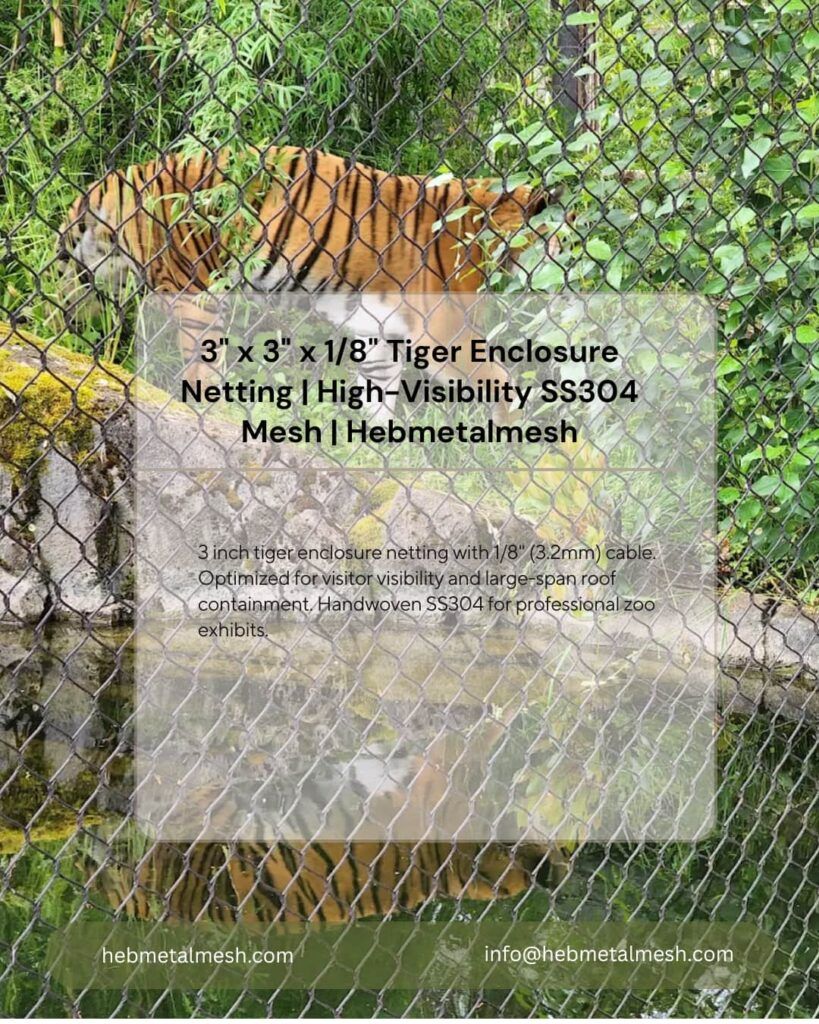
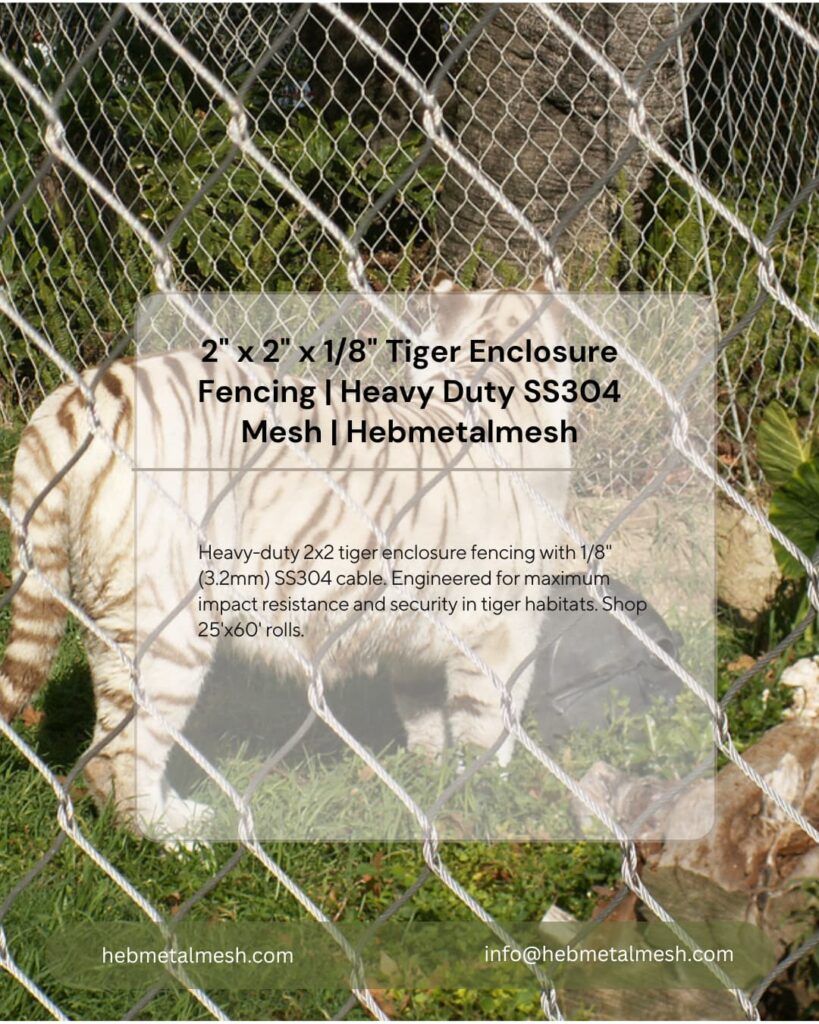
In addition, we also have the following stainless steel rope mesh product specifications suitable for application for tiger enclosure fence protection.
🛒 Shop Tiger Enclosure Mesh
In-stock stainless steel (SS304) flexible rope mesh for tiger enclosures, zoo exhibits & barriers. Choose your panel size or browse the full tiger netting range.
Need a custom size or cable diameter? Talk to our zoo mesh team →
FAQs: Tiger Enclosure Netting Questions Answered
Q1: Why is 2″ x 2″ mesh recommended for tigers instead of 3″ x 3″?
A: Tigers are more vertical climbers than lions. The smaller 2″ x 2″ aperture prevents claws from hooking through the mesh during climbing. A 3″ x 3″ opening would allow tiger claws to penetrate and potentially get trapped, causing injury and escape risk. This is the #1 safety distinction between tiger and lion fencing.
Q2: How does black oxide coating protect tiger mesh?
A: The black oxide finish serves dual purposes: (1) It significantly reduces glare from sunlight, improving visitor viewing and reducing tiger stress from reflective surfaces. (2) It adds an extra corrosion-resistant layer that protects against water exposure from pools and moats—critical for aquatic tigers.
Q3: Can tigers damage stainless steel mesh over time?
A: Our 304 stainless steel mesh has a tensile strength of 650-700 MPa and is work-hardened during weaving. While a tiger’s claws will mark the surface over time, the structural integrity remains unaffected. Our black oxide coating further protects against surface wear, and annual water rinsing is all the maintenance required.
Q4: What height is recommended for tiger enclosures?
A: We recommend a minimum of 4 meters (13 feet) in height, combined with a 30° inward overhang at the top to prevent high-jump escape attempts. Tigers can jump vertically up to 3 meters from a standing start, and with a running start, can clear even higher barriers.
Q5: Do you offer custom sizes for large tiger habitats?
A: Yes. We fabricate custom roll dimensions to fit your exact enclosure layout—whether you need panels up to 30ft wide, continuous lengths without seams, or specialized edge treatments for complex geometries. Contact us with your dimensions for a quote.
Q6: What size mesh is safe for a tiger enclosure?
For adult tiger enclosures we recommend 2″×2″ (50×50 mm) stainless steel rope mesh with 1/8″ (3.2 mm) cable — the same spec used on our in-stock 2×2 tiger fencing. Larger habitat barriers can use 3″×3″ (75×75 mm). Always confirm dimensions against current AZA and USDA 9 CFR standards for the specific species and facility.
Q7: What material is tiger enclosure mesh made of?
Tiger enclosure mesh is typically 304 or 316 stainless steel flexible rope mesh — knotless, anti-climb, and corrosion-resistant for indoor and outdoor zoo exhibits. 316 is preferred in coastal or high-humidity environments for extra rust resistance.
Explore our complete range of animal enclosure netting solutions: Animal enclosure mesh, Lion Enclosure Mesh · Leopard Cage Netting · Flexible Stainless Steel Mesh