
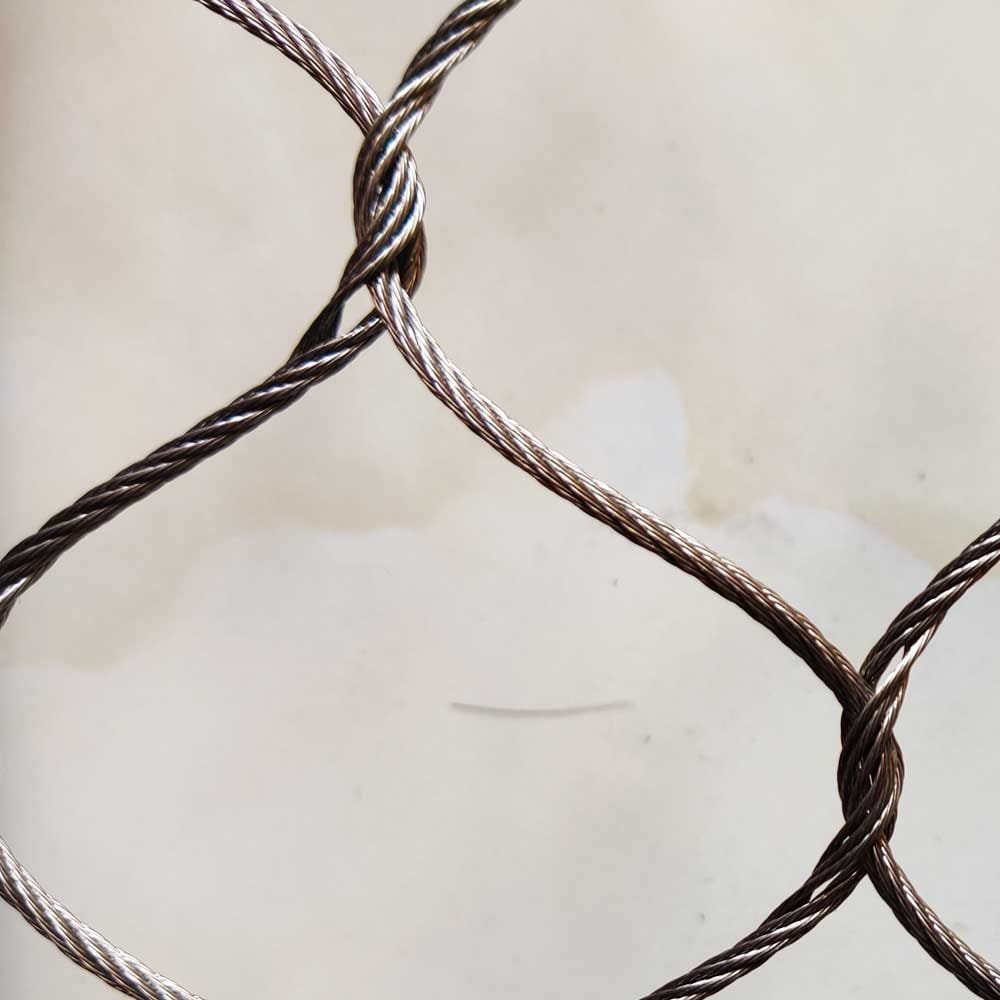
Every enclosure drawing starts with the animal. Aperture for the smallest bird, cable diameter for the strongest arm, height for the best jumper. That work fills most of the specification document.
Then someone cuts a panel open at two in the morning, and nobody ever asked what tool it would take.
The gap shows up on most sites. Teams plan containment in fine detail, then treat security as a gate, a camera and a padlock. But the fence line is the part an intruder touches first. The mesh decides whether he stands inside in ninety seconds or stands outside until dawn.
Anti-theft fencing for animal enclosures is a different brief. It asks different questions and produces different numbers, and those numbers rarely appear on a drawing written for the occupant alone.
Executive Summary
Anti-theft fencing for animal enclosures fails or holds in the first few minutes of an intrusion. Four numbers decide which: cable diameter, strand construction, aperture size and fixing type. A chain link panel opens with hand tools in under a minute. A 3 mm stainless wire rope panel with swaged ferrules resists the same tools long enough that the attempt turns noisy and slow.
Security and containment pull in opposite directions on aperture. Small openings stop hands and tools, but they also stop small birds. The workable answer is a layered build, not one magic mesh.
Most budgets go to the panel and skip the fixings, the gates and the ground line. Those three details decide whether a premium mesh does anything at all.
Specifying a fence that has to stop people, not just animals?
Send the site layout, the species list and the incident history. We return a cut-resistance figure, aperture and fixing schedule you can put in a tender — not a price per foot with no numbers behind it.
Quick Answer
Anti-theft fencing for animal enclosures needs a mesh that resists hand tools, an aperture too small to pass a hand or a cutting jaw, tamper-resistant fixings instead of clips, and a buried apron that closes the dig-under route. Cable diameter and strand construction decide cut time. Aperture decides reach. Fixings and ground detail decide whether the panel is the weak point at all.
Key Takeaways
- Containment specs protect the public from animals. Security specs protect animals from people. Write both.
- Single-strand wire, whether chain link or welded, cuts fast. Multi-strand cable resists cutters.
- A 2 inch aperture on a 3 mm cable slows a hand. A 4 inch aperture does not.
- Ferrules, clips and bolt heads are usually softer than the mesh around them.
- Gates and the ground line are where most attempts succeed.
- Small primates and birds carry the highest theft risk for the least barrier.
- Cameras record an incident. They do not delay one.
The Threat Model Comes First
You cannot specify a barrier against an attacker you have not described, so zoo break-in prevention starts with a short written brief. Three columns will do: who has tried, what they wanted, and how they got in.
Most incidents at animal facilities fall into four patterns, and each one attacks a different part of the fence.
- Theft of small animals. Primates, parrots and reptiles leave through a bag. The barrier only has to open to hand size.
- Release or sabotage. A cut panel lets a collection loose, sometimes as a protest, sometimes as a prank.
- Feeding and interference. Visitors push food through the mesh, which harms animals without any forced entry.
- Deliberate harm. Poisoning, projectiles or blunt force aimed at an animal that cannot retreat far enough.
Only the first two need a cut-resistant panel. All four respond to aperture control. That distinction saves money, because a facility facing feeding problems does not need a hydraulic-cutter-proof wall.
The threat assessment also settles where the money goes. If the last three incidents entered through a service gate, a premium panel along two hundred meters of fence changes nothing. Facilities that write this down usually find the fence line doing one job when it needs to do two, and an animal enclosure mesh chosen from the threat lands on a different cable than one chosen from the species list.
Why Chain Link and Welded Wire Fail the First Minute
Neither product was designed to stop a determined person with a tool bag.
Chain link is a single wire bent into a spiral. One cut opens a diamond, a second opens a doorway, and 24 inch bolt cutters go through soft galvanized wire in one squeeze.
Welded wire fails differently. The welds are the weak point, not the wire. A pry bar or a boot pops a line of welds quietly, and the panel peels back without a single cut. Thicker panels resist that, but the joint stays the joint.
Energy absorbing mesh compared with welded wire makes the difference concrete. Welded panels behave like a brittle plate under impact. Woven cable mesh deflects, absorbs and returns.
Wire rope mesh changes the physics. Each cable carries several strands, so a cutter must sever every strand it meets, and grade 316 work-hardens under a blade. Hand tools stop being practical on a bolt cutter resistant wire mesh, and a pry bar then has to attack the frame instead.
Cut Time by Barrier Type
These are field estimates from site tests with hand tools, not lab results. Your panel, grade and fixings will move them.
| Barrier | Hand-tool cut time | Quiet bypass | Typical failure |
|---|---|---|---|
| Chain link, 2 in mesh, 9 ga wire | 20–40 seconds | Yes, two cuts | Single wire severs at any point |
| Welded wire, 1 x 2 in, 12 ga | 1–3 minutes | Yes, welds pop | Joint fails before the wire |
| Welded wire, 2 x 2 in, 3 mm | 4–8 minutes | Partly, needs a pry bar | Local panel deformation |
| Wire rope mesh, 3 mm, 7 x 7, 2 x 2 in | 10–20 minutes, power tools | No | Ferrule or fixing, not the cable |
| Wire rope mesh, 4 mm, 1 x 19, 2 x 2 in | 20–40 minutes, power tools | No | Frame or gate hardware |
Ten minutes is the number that matters. Below it, an intruder works alone and leaves. Above it, he needs power tools and a reason to stay.
Cut Resistance Is a Wire and Grade Question
Three variables drive cut resistant mesh for animal enclosures, and they do not trade evenly.
Strand count beats wire thickness. A 3 mm 7 x 7 cable has forty-nine wires to sever. A 3 mm solid wire has one. The cutter jaw must seat on something round and moving, which is why cable defeats tools built for straight wire.
Grade decides how the blade behaves. Grade 304 work-hardens. Grade 316 does the same and adds molybdenum for chloride exposure. Neither is armor, but both dull a blade and raise the effort per cut.
Tension decides how the panel responds. A slack panel folds and lets the cutter find a clean angle. A tensioned panel with a perimeter cable pushes back.
Aperture Size: Block the Hand, Not Only the Animal
For a monkey or a small parrot, a 2 inch opening already stops escape. For a person reaching in, that is the mesh aperture that blocks hands and tools: a hand will not pass, a forearm will, and most cutting jaws cannot seat. A 4 inch opening accepts a hand, a stick and a pair of snips.
A 2 inch aperture on a large flight aviary adds cost and blocks light. On a bird collection with theft history, that cost is the cheapest part of the fix.
Chain link against rope mesh on lifetime cost is worth reading before you decide the aperture is too expensive, because the cheap panel usually carries the higher ten-year number.
Fasteners, Gates and the Weak Points
An experienced intruder ignores the mesh and hunts the fixings.
Tamper-Resistant Fasteners
Standard clips, hog rings and exposed hex bolts all open with tools that fit in a pocket. Tamper resistant fasteners for mesh panels change the tool the job requires, and that is the whole point. A security Torx or a one-way screw turns a two-second job into a search for the right bit.
Specify three things and skip the rest:
- One-way or security-head screws on every accessible fixing, with the driver held by the maintenance office.
- Concealed or capped fixings on the outside face, so the fastener is reachable only from inside.
- Welded or swaged terminations on the perimeter cable, so it cannot be unhooked and slackened.
Keeper Gates and Frames
An intruder resistant keeper gate needs a full-height frame, hinges on the inside face, and a lock out of bolt-cutter reach from outside. Double-leaf gates need a drop bolt at the meeting stile, because one lock on one leaf leaves the other free.
Ground Level and Height
Two bypasses cost almost nothing, and most drawings miss both.
The dig-under. A buried apron under enclosure fence, turned outward and set below grade, closes it. One meter of width on a two hundred meter perimeter is cheap insurance, and it defeats the most common amateur route into a pen.
The climb. Fence height to deter intruders is a judgment call, not a fixed figure. Two and a half meters stops an opportunist. Past that, cost climbs faster than deterrence, and a flared top buys more than another meter of straight panel.
Both sit behind most barrier problems that recur across modern zoos, and both get skipped when the drawing was written for animal behavior alone.
High-Value Collections
Theft risk does not track enclosure size. It tracks resale value and handling ease.
Protecting small primates from theft means thinking about bag size. A barrier that a person cannot pass a hand through, plus a lockable night house, closes most of that risk. Aviary theft protection follows the same logic, and there the security gain comes almost free because small birds need small aperture anyway.
For a high value animal collection security review, list the animals by replacement cost and handling difficulty. The top five get the better panel, the tamper-resistant fixings and the camera.
Layered Security Sits Around the Mesh
Fencing does one job: it buys time. Nothing else in the specification does that, and the fence cannot do the rest.
Layered security for zoo enclosures means the mesh buys minutes, detection confirms the attempt, and response uses those minutes. Cameras, lighting and patrols all record or respond. None of them slow a cutter.
The Association of Zoos and Aquariums publishes accreditation standards that treat perimeter control as part of animal welfare, not only as property protection. That framing helps when a security line item competes for budget against an exhibit project.
After a Break-In
Repairing mesh after a break-in is a second chance at the specification. Most teams waste it.
Cut out and replace the whole panel, not the damaged corner. A patched panel carries a stress riser at the joint, and the next attempt starts there.
Then fix the route, not just the hole. If the panel was cut, the aperture and grade were wrong. If a fixing was undone, the fastener was wrong. Writing the cause into the work order keeps the same failure from repeating across the site.
High-security mesh for predator enclosures covers the panel-level detail for the species that need the heaviest barrier.
Specification Checklist
A fence specification checklist for zoo security carries a barrier from intent to purchase in nine lines.
- Start a threat assessment for animal facilities: the last three incidents and their entry route.
- Set cable diameter and strand construction, not just “heavy duty”.
- Set aperture against the smallest animal and the largest hand.
- Name the grade, and require a mill certificate with the delivery.
- Specify swaged ferrules with a batch pull test.
- Specify security-head fixings and state who holds the driver.
- Detail the buried apron depth and the turn-out direction.
- Set gate hardware: hinges inside, drop bolt, lock out of cutter reach.
- Require a production sample panel and a written acceptance route.
Animal fence mesh for zoo and wildlife park perimeters can be quoted against all nine lines, which is the point of writing them down.
FAQ
Yes. Cameras record an incident and patrols respond to one, but neither slows a cutter. Treat the fence as the delay layer and cameras as detection, then check that the delay runs longer than the response.
Often, yes. Keep the posts and frame, then fit a cable mesh panel inside the existing line on stand-off brackets. You gain cut resistance and aperture control without a demolition phase.
Two inches is the practical compromise. It stops a hand and most cutting jaws, and it still passes light for a flight aviary. Below one inch, toes and beaks become the risk, so specify a smooth cable surface and check the frame detail.
Order one production panel and attack it. Bring the tools an intruder would carry, time the attempt, photograph the result. One panel settles arguments that drawings cannot.
Both, with different clauses. The keeper owns aperture, species risk and gate operation. The security manager owns cut resistance, fixings, ground detail and the incident record. One document, two sign-offs.
Get the numbers before the next incident writes them for you.
Tell us the species, the site exposure and the entry routes you have already seen. We will send cable diameter, strand construction, aperture and fixing schedule, plus the buried apron detail for your ground conditions.