
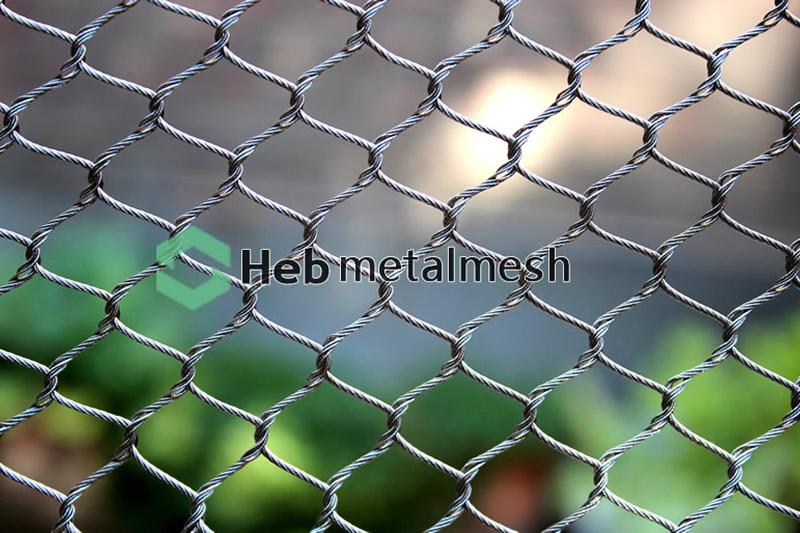
A mouse does not need a hole. It needs a gap the width of your little finger, and it will find one in a fence that looks sealed from three meters away.
Keepers spend weeks choosing mesh for hawk resistance, then lose a season of feed to rodents that walk in at the bottom rail. The mesh was never the weak point. The junction between mesh and ground was.
Rodent proof aviary mesh is a real specification, but it is a narrow one, and it only works when the detail around it matches. A fine panel fixed to a softwood base plate is a rodent highway with an expensive roof.
This guide covers what aperture actually stops what, why the base detail outperforms the panel, what an infestation costs beyond feed, and how to close an aviary that already leaks.
Executive Summary
Rodent proof aviary mesh works on one number: aperture. A house mouse passes a 1/4 inch gap, a rat passes 1/2 inch, and most aviary panels at 1 to 2 inches stop neither. That is why rodent problems persist in aviaries built to a perfectly good predator specification.
The practical answer is a split specification. Keep the field of the panel at 1 inch or wider for light, airflow and bird welfare, then close the bottom 600 mm and every penetration to 1/4 inch or with a solid barrier.
Rodents arrive at ground level and at junctions, not through the middle of a panel, and that is where the money should go. Fix the base detail first and the panel does the rest of the work.
Losing feed and sleep to rodents?
Send the aviary dimensions, the bird species and where you are seeing activity. We return a split specification: field aperture, skirt detail and the penetrations to seal, with panel sizes to match.
Quick Answer
To keep mice out of an aviary, close every gap to 1/4 inch or less, starting with the bottom 600 mm and every pipe, cable and door junction. Field panels at 1 inch or wider will not stop rodents and do not need to. The base detail is the barrier; the panel is not.
Key Takeaways
- A house mouse passes 1/4 inch, a rat passes 1/2 inch, and aviary panels at 1 to 2 inches stop neither.
- Rodents enter at the ground line and at penetrations, not through the panel field.
- A 600 mm skirt at 1/4 inch solves most of the problem for a fraction of a full re-mesh.
- Softwood base plates and foam sealant are gnawed through in a single night.
- Rodents cost more in contaminated feed and disease risk than in the feed they eat.
- Trapping clears an infestation; only proofing keeps it clear.
- Stainless steel is one of the few materials a rat cannot gnaw through.
Rodents Are Not Predators
The rodent exclusion versus predator exclusion distinction matters because the two problems have almost nothing in common, and keepers routinely apply the wrong fix.
A predator is large, arrives from outside, and tests the panel. A hawk hits the roof. A fox digs at the base. A cat climbs. Every one of those threats is answered by panel strength, tension and a secure perimeter, which is exactly what a good predator proof aviary> already provides.
A rodent is small, arrives from below, and tests the gaps. Strength is irrelevant to it. A 3 mm stainless cable at 200 kg breaking strain is an obstacle a mouse walks past on its way to a 6 mm gap at the door frame.
That is why a heavy-duty aviary can be predator proof and rodent porous at the same time, and why upgrading the panel never fixes a rodent problem. A heavier aviary panel raises the price and leaves every gap exactly where it was. The money goes to the wrong layer.
The Aperture Table
The single question behind every rodent specification is what size mesh keeps mice out, and the honest answer surprises most buyers: no practical aviary aperture does, across the whole structure.
| Aperture | Rat | Mouse | Where it makes sense |
|---|---|---|---|
| 2 in (50 mm) | Passes | Passes | Large flight aviaries, birds over 1 kg |
| 1 in (25 mm) | Passes | Passes | Most aviary panels; no rodent control at all |
| 1/2 in (12 mm) | Blocked | Passes | Rat exclusion only |
| 1/4 in (6 mm) | Blocked | Blocked | Skirts, penetrations, feed store |
Read the last column. A 1/4 inch aviary mesh aperture for rodents is the only one that works, and nobody builds a whole flight aviary at 1/4 inch, because the weight, cost and lost light would ruin it for the birds.
So the specification splits. The panel stays at 1 inch or wider. The barrier goes where the animals actually arrive.
Gauge Matters Less Than You Think
Aviary mesh gauge for rodents is a secondary question, and the industry overstates it. A mouse does not gnaw through a 1 inch panel to get in. It walks through it. Gauge matters at the barrier, where the material is being tested, and there the answer is stainless rather than thickness. Aperture size and cable diameter belong to the panel, where the bird is the constraint.
Rats gnaw wood, plastic, aluminum and lead. They do not gnaw through hardened stainless steel cable. A 1 inch stainless panel at the base outlasts three timber plates, and it never grows the gap that lets the next mouse in.
Where They Actually Get In
Walk an infested aviary at dusk and the entry points are consistent. They are rarely in the panel field.
The ground line. Mice in aviary settings almost always start at the base. Turf sits against the mesh, the mesh sits on a timber plate, and the plate rots or shrinks. A 6 mm gap under a base plate is a door.
The penetrations. Water pipes, power conduit, feeder legs and door hinges all pass through the envelope. Each one is a hole with a fitting in it, and the annular gap around the fitting is usually unsealed.
The climbing route. Rats climbing aviary mesh is common and easy to miss, because they use the panel as a ladder to reach feeders, nest boxes and roof junctions. A rat on the mesh at head height is telling you the base is already open.
The fix for all three is the same detail: a buried skirt aviary keepers build once and forget. Take the barrier 600 mm up the outside face, turn it outward at ground level, and bury 300 mm of it. The turn stops digging, and the buried leg stops the animal that follows the barrier down looking for the end.
Building the Skirt
An aviary skirt for rodents does not need to be the same material as the aviary mesh panels above it. It needs to be 1/4 inch or finer, whether that is woven stainless, welded hardware cloth or a fine wire rope mesh panel, and it needs mechanical fixing rather than foam.
- Fix the skirt to the frame with swage ferrule terminations or stainless fixings, not staples.
- Turn the bottom 300 mm outward and bury it, or pin it to a hard apron.
- Overlap the skirt and the panel by at least 100 mm, and close the overlap.
- Run the skirt across every doorway as a threshold, not around it.
What an Infestation Costs
Feed theft by rodents in aviary settings is the visible cost and the smallest one. A mouse eats around 3 g a day. A rat takes 25 to 30 g. Neither number explains the damage.
The real cost is contamination. A rodent eats, urinates and defecates in the same place, and it spoils far more than it takes. Feed bowls, stored seed and water fonts all become a disease route into the collection.
Rodent control in a bird collection is a biosecurity question, not a housekeeping one. BirdLife International tracks how disease moves between wild and captive birds, and the routes it describes are the same ones a mouse uses to cross from a feed sack to a nest box.
Rodent damage to aviary netting is usually indirect as well. Rodents do not eat stainless cable, but they chew cable ties, foam backing, timber frames and plastic fittings, and a chewed tie lets a panel go slack. Slack panels then fail in wind, and the failure gets blamed on the mesh.
Rodent borne disease aviary birds bring in is the cost keepers underestimate most, and it arrives long before anyone sees a mouse. Rodents carry Salmonella and Leptospira, and they move mites and lice between enclosures. They also draw in the predators that take eggs and chicks, so a rodent problem quietly becomes a snake problem.
Specifying a Barrier That Holds
Mouse proof aviary netting is a phrase worth using carefully with suppliers, because it describes the skirt, not the roll. Ask for the aperture at the barrier and the aperture in the field as two separate numbers, and apply that caution to any rodent proof aviary mesh quote you receive. A wire rope mesh buying guide will quote one aperture, because one is simpler to sell.
A rat proof aviary needs three things beyond the skirt: no gap over 1/2 inch anywhere on the envelope, stainless or galvanized fixings that a rat cannot chew free, and a feed store that closes properly. Most infestations trace back to an open feed bin rather than a failed fence.
Rodent proofing a bird aviary is therefore a sequence, not a purchase:
- Close the feed store and move it away from the enclosure wall.
- Fit the skirt at 1/4 inch, 600 mm up and 300 mm buried.
- Seal every penetration with a stainless collar or a metal plate.
- Replace timber base plates with stainless or concrete upstands.
- Re-tension the panels, check the perimeter cable and tension wire, and look for slack created by old chewed ties.
That order matters. Proofing before you remove the food source just moves the animals along the wall to the next gap.
Trapping or Proofing?
Trapping versus proofing an aviary is not a real choice, and treating it as one is why infestations return every autumn.
Trapping is a clearing tool. It reduces a population fast, it lets you see what species you actually have, and it buys time while materials arrive. It does not fix a structure. Bait carries its own risk in a bird collection, because secondary poisoning of a bird of prey or a scavenger is a real outcome and a reputational one.
Proofing is the durable fix, and it is slower, because it is a building job rather than a purchase.
Do both, in that order. Trap to clear, proof to prevent, then monitor with a few unbaited stations so you learn about the next attempt before it becomes a colony.
What to Do This Week
If the aviary already has activity, work in this order and resist the urge to re-mesh the whole structure.
- Photograph the base line at dusk. The gaps show up in low light.
- Clear a 300 mm strip of vegetation around the perimeter and watch it for runs.
- Bag and bin spilled feed daily for two weeks and record whether activity drops.
- Fit the skirt to the worst elevation first, not the whole building.
- Seal the penetrations with stainless collars.
- Re-check after rain, because a skirt that lifts in soft ground is not finished.
A check on wire quality before you buy saves a second purchase, because thin or mislabeled cable at the base will not survive the gnawing that a genuine grade 304 stainless panel shrugs off.
FAQ
No. A house mouse passes a 1/4 inch gap, so a 1 inch aperture is a doorway. The panel is fine for birds and predators; it does nothing against rodents.
Yes, and easily. Mice climb well on almost any surface, and they can jump around 300 mm from a standing start. Height is not a rodent barrier. Gaps are.
For a few seasons, yes, and then the zinc goes at the cut edges and the barrier rusts through. Stainless costs more up front and outlasts three galvanized skirts.
It will reduce activity and it will also stress the birds. A predator inside or beside an aviary is a welfare problem, not a control method.
Set unbaited monitoring stations along the base and check them monthly. Clean stations for three months, through a winter, means the envelope is closed. Activity that returns each autumn means a gap you have not found.
Close the gaps, not the whole aviary.
Send your aviary plan and we will specify the field aperture and the skirt separately, with the penetrations listed and the panel sizes cut to match. Most rodent jobs need a fraction of the mesh a re-build would.