
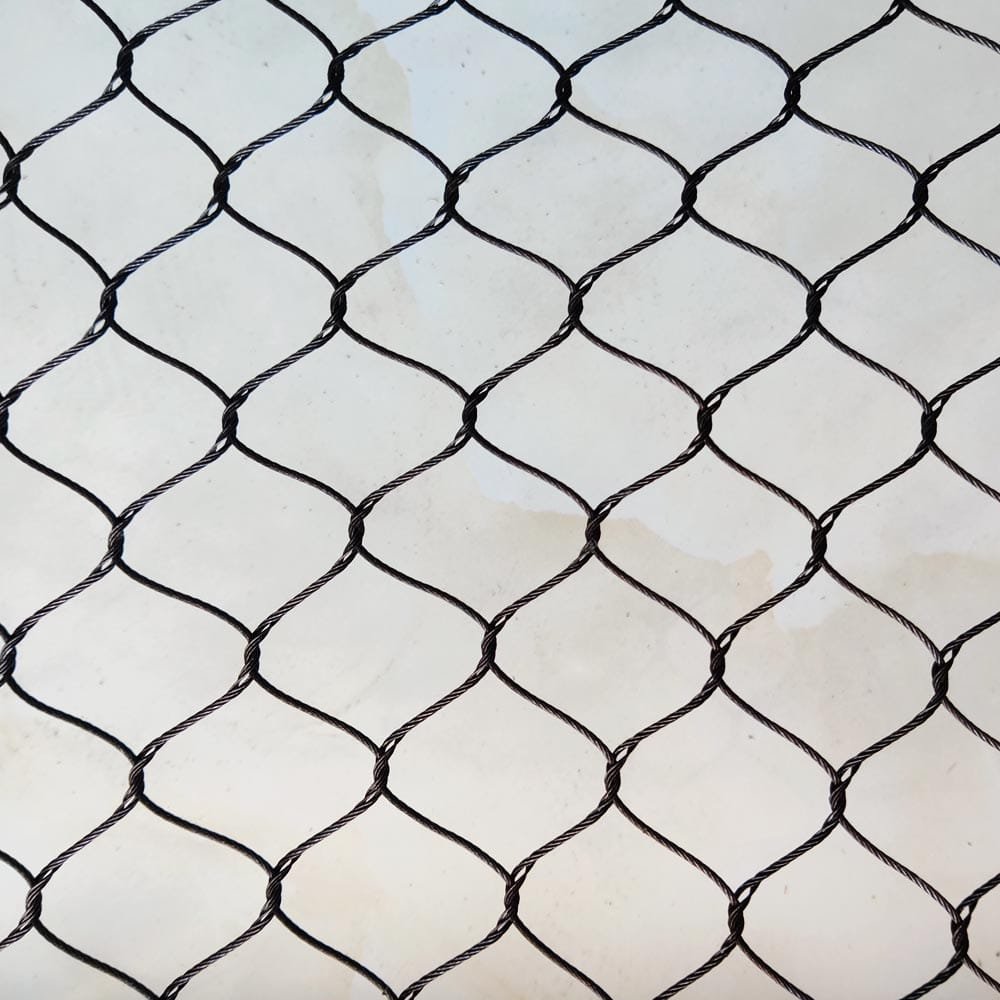
The first hard wind of the season is the test, and most garden frames fail it. The net holds. The posts are what let go.
A mesh cover over a bed or a fruit cage behaves like a sail, not a screen. Once it spans more than a few feet, every gust loads the posts, the ridge line and the ground anchors, and the weakest of those three decides whether the crop stays covered.
Most growers buy the net first and build the frame from whatever is in the shed. The mesh arrives, posts go in at whatever spacing the bed allows, and the whole thing behaves like a tent in bad weather. Crop netting support structure is the part that gets skipped, and it is the part that decides whether the cover lasts three seasons or fifteen.
This guide works from the ground up. Height, spacing, anchorage, tension, then the mesh.
Executive Summary
Build the frame around three numbers. Height clears the crop at its tallest point, post spacing follows the wind exposure, and end anchorage carries the full tension of the run.
Work in that order: crop height, then spacing, then anchors, then mesh. Reverse it and the cover sags into the plants by midsummer, and the repair costs more than the frame did.
A cable and post frame costs more than hoops up front and lasts a decade longer. The money belongs at the ends and the corners, not the middle of the run, because that is where the load actually arrives. Get those two details right and the rest of the build is straightforward arithmetic. Everything after that is measuring, ordering and a weekend with a post driver.
Quick Answer
A crop netting support structure is sized by crop height, wind exposure and run length, not by the net. Set posts every 8 to 12 ft depending on shelter, run a tensioned stainless cable along the ridge, and anchor both ends into ground that will not pull out. The mesh then hangs from the frame instead of loading it.
Key Takeaways
- The mesh is a sail. Wind load arrives at the anchors, not the middle of the run.
- Frame height is measured from the crop, so a raised bed raises the whole frame.
- Post spacing follows exposure, from 12 ft in a walled garden to 8 ft at a field edge.
- A slack ridge line is why covers sag into plants by August.
- Corner bracing is cheaper than a heavier post and does more work.
- A frame that comes apart in winter outlasts one that stays up.
Why the Frame Fails Before the Net Does
Wind does not push on a net the way it hits a wall, but it does not pass through cleanly either. A 1-inch aperture with a normal wire diameter blocks a share of the airflow, and that share turns into load.
The load travels. It runs from the mesh into the edge cable, along the cable to the corners, and down the posts into the ground. Every transition is a place where something can give, and growers usually inspect the wrong one.
A bent post mid-run looks dramatic and rarely matters. The failures that ruin a season happen at the ends, where a shallow anchor pulls out of soft ground, or at a corner, where two cables meet an unbraced post.
That is why the frame deserves a drawing before anything is ordered. Garden and crop protection netting is quoted by the roll, but the roll count only settles once the frame geometry is fixed.
Setting Height From the Crop
Height of netting frame above crops is the first measurement, and it is measured from the plant, not the ground. A frame set 6 ft above soil is a 4 ft frame over a bed that stands 2 ft high.
Leave 12 in of clear air above the tallest growth at full size. Less than that and the leading shoots push through the mesh, which abrades the tips and gives birds a perch right on top of the crop.
Cane fruit needs more. A row that reaches 6 ft wants a 7 ft frame, and a frame for netting a fruit cage wants 8 to 9 ft so a person can work inside without stooping. Height costs little at the post yard and a lot later, because raising a finished frame means resetting every anchor.
Raised Beds Change the Datum
Bird netting over raised beds catches people out because the bed itself is part of the height. A 24 in bed plus a 4 ft crop puts the top of the plant at 5.5 ft, and a frame built to 5 ft will not clear it.
Measure from the soil line in the bed, add the crop, then add the clearance. The same arithmetic applies to containers on a patio, where the pot rim sits well above grade and the frame gets built too low by exactly that amount. Mesh specifications for a 1-inch cover are worth settling at the same stage, since roll width limits how wide a single bay can be.
Width matters too. A frame tight to the bed edge leaves the outer row half covered, and birds work edges first.
Wind Load on Crop Netting and Edge Gaps
Wind load on crop netting scales with the square of wind speed, so a site that sees 40 mph gusts loads the frame four times as hard as one that sees 20. Exposure, not bed size, is the number that sets everything downstream of it.
Gusts arrive at an angle, so a cover with an open edge takes the load one panel at a time while a cover tied all round shares it. The difference shows up in the second season, not the first.
Birds work the same edges. Exclusion is an edge problem before it is a panel problem, because birds walk the perimeter hunting a gap rather than testing the middle of a panel.
Bury or weight the bottom edge. A 1-inch mesh aperture stops most medium birds, but a gap at the soil line lets them walk in, and the mesh above stops mattering once they do.
Bird pressure moves with the season too. Flocking species that ignore a bed in June will work it daily once fruit colors up, and the frame has to be closed before that shift rather than after. The BTO research on bird populations and foraging is a useful read on how local numbers build through the year.
Check the corners where two panels meet. That joint is where a tie works loose first, and a 2 in gap undoes a whole run.
Post Spacing and Span
Netting frame post spacing for crops follows the exposure above, not the shape of the bed. Two beds of the same size need different spacing if one sits against a wall and the other faces open ground.
| Exposure | Post spacing | Post size | Anchor type |
|---|---|---|---|
| Walled garden, dense hedge | 12 ft | 2 in steel | Screw anchor |
| Open garden, mixed shelter | 10 ft | 2.5 in steel | Screw anchor plus concrete collar |
| Field edge, coastal, exposed | 8 ft | 3 in steel | Concrete deadman |
Netting frame span between posts follows the same table from the other direction. Long spans save posts and cost cable, because a longer span needs a heavier ridge line to hold its shape under load.
The second table is the working set for common crops, assuming a sheltered to moderately exposed site. Drop one spacing step on a ridge or a shoreline.
| Crop situation | Frame height | Post spacing | Ridge support |
|---|---|---|---|
| Raised bed, leafy crops | 3 ft above bed | 10 ft | Single cable |
| Open ground, low crops | 2.5 ft above crop | 10 ft | Single cable |
| Cane fruit or fruiting hedge | 7 ft | 8 ft | Cable plus cross brace |
| Dwarf fruit cage | 8 to 9 ft | 10 ft | Cable grid |
| Half-standard tree | 12 ft | 12 ft | Cable grid and corner stays |
Read the two tables together and the logic is simple. Taller frames catch more wind, so they get shorter spans. A 7 ft frame at 12 ft centers is asking for trouble in a way a 3 ft frame is not.
A cable and post frame for garden netting is the pattern that survives this. Timber posts work in sheltered gardens and rot at the ground line in wet climates. Choosing a garden barrier type comes down to the same trade: the buried part of any post decides its life.
End Anchorage and Corner Bracing
End anchorage for a netting frame carries the tension of the entire run, and it is the single most under-built part of a crop netting support structure. Two posts at the end of a 40 ft run hold everything the ridge cable pulls against.
A screw anchor into firm soil holds a few hundred pounds and works for a short run. A concrete deadman buried 2 ft down and back-filled holds far more, and costs an afternoon. On a run longer than about 30 ft, or on sandy soil, the deadman is cheaper once you count the season you lose to a collapse.
We quote stainless steel garden netting against that anchor schedule rather than a generic breaking load.
Corner bracing on a netting frame does the work a heavier post cannot. A diagonal brace from the post to a ground stake turns a bending load into a compression load, and a 2 in post with a brace outperforms a 3 in post without one.
- Brace every corner, both directions.
- Brace the two end posts of the run, facing inward.
- Set braces at 45 degrees and land them on undisturbed ground.
- Check the anchor, not the post, when a frame starts to lean.
Corner posts take load from two directions at once, which is why they fail first. Four braced corners with unbraced middles will outperform the reverse every time.
Tensioning the Mesh Without Sagging It
Attaching netting to a frame without sag comes down to one rule: the frame holds the tension, and the mesh only holds its own shape. Tie mesh to a slack cable and it will sag within a month.
The stainless cable ridge line for netting is what makes this work. Run it end to end over the posts, tension it until it shows no droop, and terminate both ends with a proper fitting rather than a knot. A cable that stretches under load moves the sag straight into the mesh.
Then fix the mesh to the cable every 12 to 18 in along the ridge and the edges. Wide intervals let the panel bellows between clips, which opens the aperture at the fixing and closes it mid-panel.
Tension the mesh lightly, not hard. A cover pulled drum-tight transfers wind load into the mesh itself and abrades the wire at every clip. A cover with slight give moves as one surface and sheds wind.
For long runs, break the cable at an intermediate post with a turnbuckle so tension can be adjusted later. A 60 ft cable with no take-up point cannot be re-tensioned without dismantling an end. How a 1-inch roll covers a run explains the joining pattern that keeps a long panel working as one sheet.
Doors, Slopes and Seasonal Take-Down
A netting frame door for crop access needs its own frame within the frame, because a door cut into a tensioned panel will distort the panel around it. Build the opening between two posts, hang a framed door on them, and keep the mesh tension out of the leaf.
Set the door on the service side, sized for a wheelbarrow. A 30 in opening is the practical minimum, and 36 in is better if a barrow and a person pass at once.
A netting frame for a sloping garden has one extra problem. The ridge wants to follow the slope, and posts set to a level height leave the cover uneven. Step the ridge at each post and keep every post plumb.
A seasonal netting frame that comes apart earns its keep in cold climates. Build it in this order:
- Set the posts in bays of four or five, with bolted flanges at the base.
- Mark every part with a bay number before the first take-down.
- Store the cables coiled and tagged, never kinked.
- Check the anchors each spring, since frost moves them more than wind does.
A frame taken down in winter lasts twice as long as one that carries snow load for four months. Building a netting system around stainless rope mesh covers the fittings that make repeated assembly practical.
FAQ
Every 10 ft on a normal garden site, 12 ft in a sheltered one and 8 ft where the frame faces open ground or water. Taller frames need closer spacing, because they catch more wind.
At least 12 in above the tallest growth at full size, measured from the soil in the bed. Add the bed height first if the crop grows in a raised bed or a container.
On a run longer than about 30 ft, yes. A buried deadman or a concrete collar costs an afternoon and holds far more than a screw anchor in soft ground.
Usually a slack ridge cable rather than a slack net. Tension the cable first, add a turnbuckle at an intermediate post, then refix the mesh at 12 to 18 in intervals.
Yes, if the height was set for the tallest crop you plan to grow. A frame built for a 2 ft bed will not cover a cane row.
Tell us the crop, the bed size and how exposed the site is. We return post positions, ridge cable specification, anchor schedule and the roll count, with the mesh grade matched to your climate. Send your garden plan