What is heavy duty bird netting? Unlike standard garden mesh, heavy-duty bird netting is engineered from high-tensile materials like stainless steel rope mesh or UV-stabilized polyethylene. Designed to withstand environmental stressors, UV exposure, and physical impact, it provides a long-term (10+ year) barrier for commercial, agricultural, and architectural applications where failure is not an option.
1. The “Cheap Net” Tax: Why Your Current Solution is Failing
Let’s be real for a second: nobody wakes up on a Saturday morning excited to buy bird netting. You buy it because something you care about—your vineyard, your warehouse, or that expensive custom balcony—is currently being treated like a public restroom by local wildlife.
You’re annoyed, you’re in a rush, and you make the classic mistake. You head to the nearest big-box hardware store, grab a plastic roll with a picture of a happy robin on it, and think, “This $40 fix should do the trick.”
Welcome to the “Hardware Store Trap.”
The Psychology of the “Hardware Store Trap”
Retailers count on the fact that you’re looking for a “quick fix” rather than an “engineered solution.” The trap is simple: these nets are designed to look functional on a shelf, but they aren’t designed to survive the real world. They are often made of extruded polypropylene—basically the same stuff as a disposable grocery bag, just stretched into a grid.
In the store, it feels light and easy. Once it’s in the sun for three months? It becomes brittle. Once a hawk hits it at 30 mph? It shreds. The “Hardware Store Trap” works because the price point is low enough that when it fails, you don’t demand a refund; you just go back and buy another one. It’s a cycle of planned obsolescence that treats bird control like a consumable product rather than infrastructure.
The Hidden Costs of Labor: The $50 Net that Costs $1,000
If you’re running a business, a farm, or a facility, the price of the material is actually the smallest part of your invoice. The real killer is labor.
Consider this math:
- The “Cheap” Scenario: You buy a $50 plastic net. It takes two workers half a day to rig it up ($300 in labor). Six months later, it sags, tears, or the UV rays turn it into confetti. You have to pay those same workers to tear it down, dispose of it, and install a new one.
- The “Heavy Duty” Reality: You invest $300 in a high-tensile, stainless steel or industrial-grade mesh. It takes those same workers the same half-day to install.
By the end of Year Two, the “cheap” net has cost you $1,100 in recurring labor and replacement materials. The “heavy duty” net has cost you $600 total and still looks brand new. In SEO terms, we call this “optimizing for ROI.” In the real world, we call it “not being a sucker.” If you have to climb a ladder to fix it more than once, you’ve already lost the game.
The “Aha” Moment: From “Netting” to Architectural Strength
Here is where the lightbulb usually goes on for my clients. Most people think “bird netting” is a category of gardening supplies. It’s not. In the world of high-end construction and industrial design, we don’t call it netting; we call it Flexible Tensioned Mesh.
When you stop looking for a “net” and start looking for Architectural Strength, the entire game changes. You realize that the same material used to secure helipads on skyscrapers or create invisible enclosures in world-class zoos can be scaled down for your orchard or your commercial storefront.
The “Aha” Realization: You don’t need a thicker version of the plastic string you’ve been using. You need a structural material that treats “bird-proofing” as a permanent architectural feature.
When you shift your perspective from “How do I keep this bird out today?” to “How do I build a permanent barrier that the sun, wind, and predators cannot break?” you’ve moved from being a consumer to being an operator. And that’s where hebmetalmesh enters the chat—not as a garden supplier, but as a structural partner.
2. Anatomy of Strength: What Makes Bird Netting “Heavy Duty”?
In the SEO world, we talk about “authority” and “trust.” In the world of physical barriers, those aren’t just buzzwords—they are measured in tensile strength and material composition. If you want to stop being a repeat customer at the local hardware store, you need to understand the science of what actually holds up when the wind howls and the sun beats down.
“Heavy duty” isn’t a marketing label; it’s a technical specification. Here is the breakdown of the materials that actually do the heavy lifting.
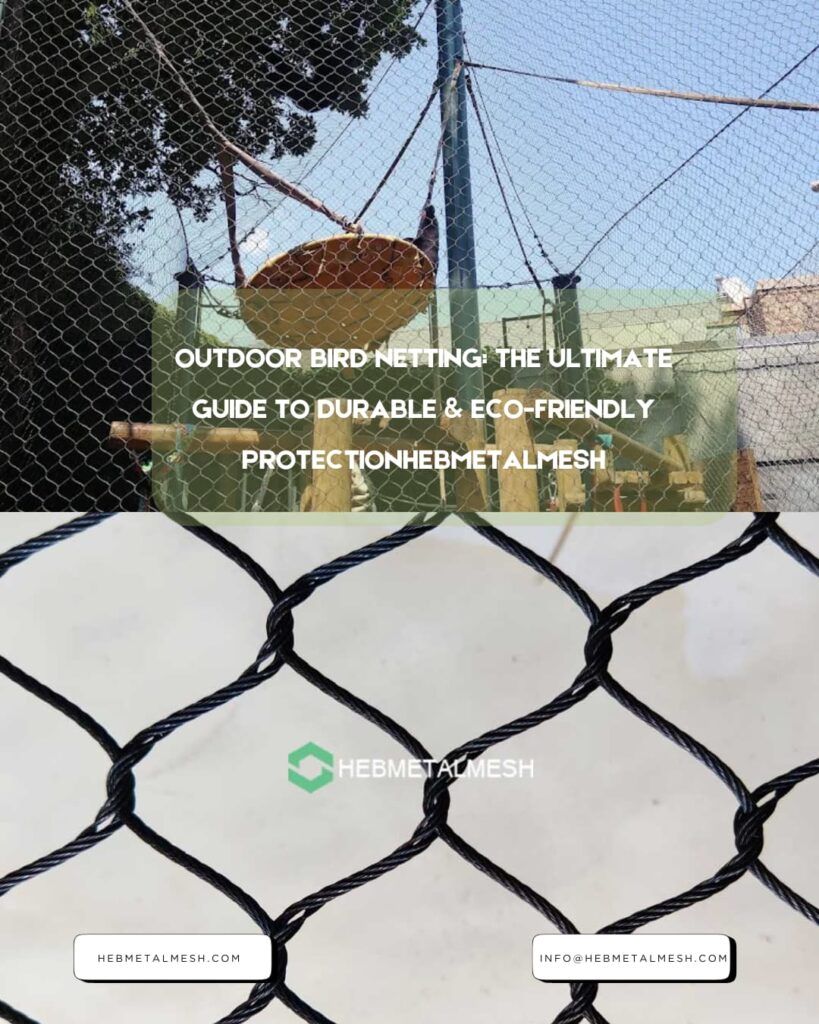
Material Science: HDPE vs. Stainless Steel
When you move past the “disposable” tier of netting, you generally find yourself choosing between two heavyweights. Both are “heavy duty,” but they serve very different masters.
- UV-Stabilized High-Density Polyethylene (HDPE): This isn’t your average plastic. Industrial HDPE is knotted under high tension and treated with chemical UV inhibitors. It’s designed for massive agricultural spans and commercial buildings. It’s flexible, relatively lightweight, and won’t rot or absorb water.
- Stainless Steel Rope Mesh (The Gold Standard): If HDPE is a fortress, stainless steel is a bunker. Specifically, Type 304 or 316 stainless steel. We’re talking about thin, high-strength cables woven into a diamond pattern. It is virtually indestructible, fireproof, and can handle extreme “point loads” (like a large bird or a falling branch) without deforming.
Breaking Strength: Why kN Matters More Than Brand Names
When you’re comparing bird netting, ignore the flashy packaging and look for the Breaking Strength. In engineering, this is often measured in Kilonewtons (kN) or pounds of force (lbf).
For a standard “heavy duty” application, you want to look at the math:
- Consumer Grade: Often breaks at less than 20 lbs of tension. A determined crow or a heavy snow load will snap it like a toothpick.
- Industrial HDPE: Can often withstand 50–100 lbs per strand.
- Stainless Steel Mesh: Can reach breaking strengths where the mesh itself is stronger than the structure you’re attaching it to.
F = m x a
In this context, F is the force exerted by a bird in flight or a gust of wind. If your netting’s breaking strength is lower than the force of a 10lb raptor hitting it at 25 mph, you don’t have a barrier—you have a suggestion.
The Mesh Structure: Knotted vs. Knotless vs. Woven
How the material is put together is just as important as what it’s made of.
- Knotted Mesh: The traditional choice. The knots provide “mechanical stops” that prevent tears from running. If one strand breaks, the whole net doesn’t unravel.
- Knotless Mesh: Smoother to the touch and often used in high-friction environments. It’s aesthetically cleaner but requires higher-quality polymers to maintain integrity.
- Woven Wire/Ferruled Mesh: This is the hebmetalmesh specialty. The stainless steel cables are either woven together or joined by seamless sleeves (ferrules). This creates a “spring” effect—the mesh can absorb a massive impact and snap back to its original shape.
UV Resistance: The Silent Killer
The sun is the greatest enemy of any outdoor installation. UV radiation breaks down the molecular bonds in cheap plastics, a process called photodegradation.
Heavy-duty netting is “Black Carbonized” or treated with stabilizers to ensure that the material doesn’t become brittle. If your netting turns gray or starts “dusting” when you touch it, the UV has already won. True industrial-grade mesh is rated for 10+ years of direct, brutal sun exposure.
Summary Table: Strength Specs at a Glance
| Feature | Industrial HDPE | Stainless Steel Mesh (AISI 316) |
|---|---|---|
| Primary Use | Large Scale Agriculture / Warehouses | Architectural / Zoo / High-Security |
| Tensile Strength | High (Polymer-based) | Extreme (Structural Grade) |
| Corrosion Resistance | Excellent (Non-metal/Non-rot) | Superior (Marine Grade / Acid-Resistant) |
| Visual Profile | Visible (Black or Stone colors) | High Transparency (Near-Invisible) |
| Fire Rating | Melts at High Temperature | Non-combustible (Steel) |
3. Industrial-Grade Applications: Where “Heavy Duty” is the Only Option
In the SEO world, we talk about “high-stakes keywords.” In the real world, these are “high-stakes environments.” When you move from a backyard garden to an industrial site, a failed bird net doesn’t just mean a few lost berries—it means expensive downtime, safety hazards, or even catastrophic equipment failure.
Here is how the pros use heavy-duty netting to solve problems that a $50 plastic roll couldn’t dream of touching.
1. Aviation & Hangars: FOD is the Enemy
In aviation, there is a term called FOD (Foreign Object Debris). Most people think of a stray bolt on a runway, but in a hangar, a bird nest is FOD.
- The Problem: Bird droppings are highly acidic and can corrode expensive aircraft paint and sensitive electronics. Worse, nesting materials near engines are a massive fire risk.
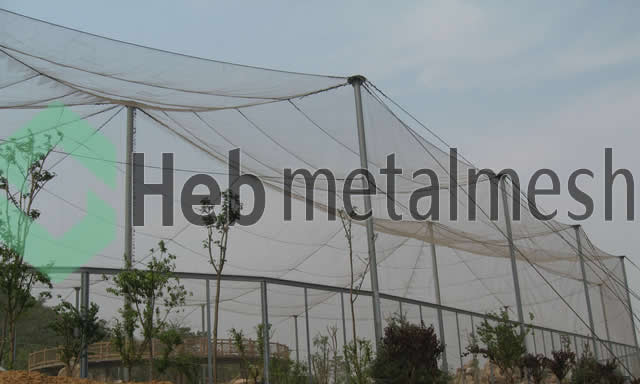
- The Heavy-Duty Fix: Large-span hangars require netting that can bridge 100+ foot gaps without sagging. Industrial HDPE or stainless steel cable mesh is tensioned with perimeter steel cables to create a “false ceiling.” This prevents birds from ever reaching the rafters, keeping the floor—and the multi-million dollar jets—pristine.
2. Agriculture: Protecting the “High-Yield” Investment
For a commercial vineyard or a berry farm, birds are a tax they can no longer afford to pay.
- The Shift in 2026: With new regulations regarding microplastics, many industrial farms are moving away from disposable nylon nets that shred and pollute the soil.
- The “Aha” Moment: Instead of draping nets over individual rows, smart operators are building permanent mesh enclosures. By using stainless steel or heavy-duty knotted HDPE, they create a “caged” environment that stays up year-round. It resists snow loads in the winter and provides over 90% light transparency for photosynthesis. It’s an infrastructure investment, not a seasonal expense.
3. Modern Architecture: The “Invisible” Barrier
Architects hate bird spikes. They’re ugly, they break, and they make a beautiful building look like a medieval torture chamber.
- The Solution: Heavy-duty stainless steel wire mesh (like the hebmetalmesh ferruled series) is becoming the go-to for “invisible” bird control.
- Why it works: Because the wire is so thin ($1.0mm$ to $2.0mm$) yet so strong, it disappears against the building’s facade from just a few yards away. It’s used to wrap balconies, ventilation shafts, and courtyards. You get the protection of a steel wall with the airflow and visibility of an open window.
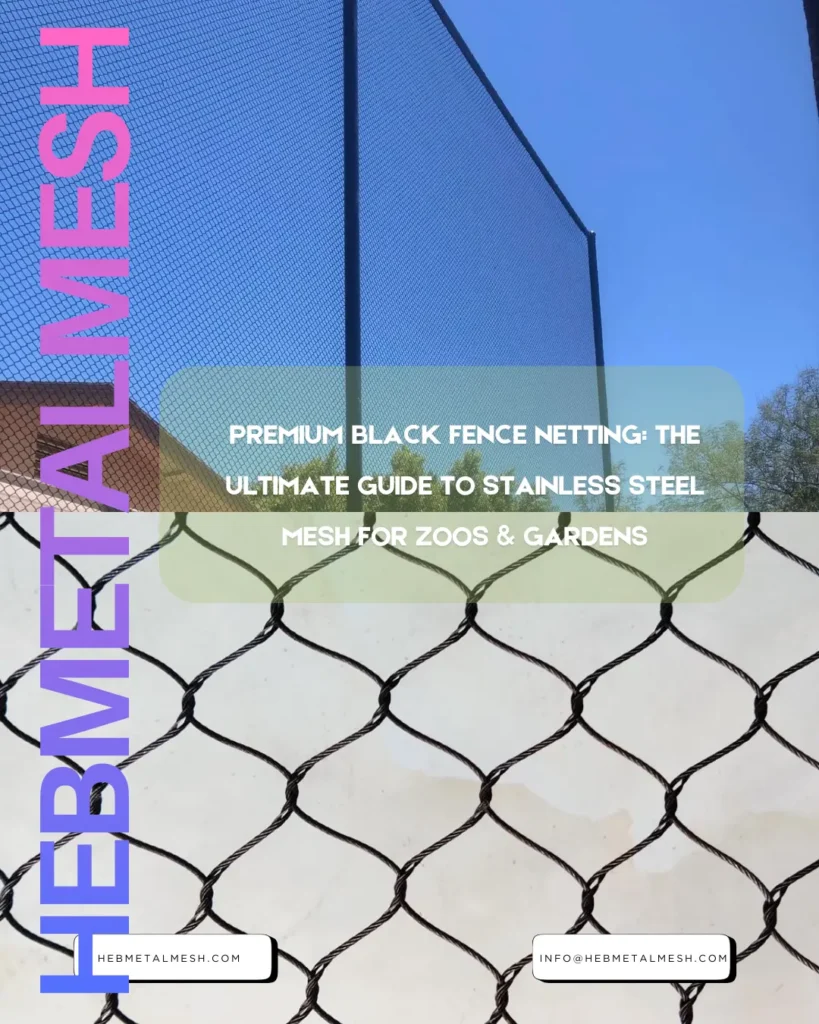
4. Zoo Enclosures & Aviaries: When the “Birds” weigh 20 lbs
If you’re building a sanctuary for eagles, macaws, or owls, “heavy duty” takes on a new meaning.
- The Challenge: You aren’t just keeping birds out; you’re keeping powerful, intelligent predators in. These animals have beaks that can snap plastic and talons that can shred nylon.
- The Spec: This is where AISI 316 Stainless Steel Rope Mesh shines. It is “chew-proof” and “claw-proof.” In zoo design, it’s chosen for its impact resistance—the mesh can flex when a bird flies into it, absorbing the energy without injuring the animal or breaking the barrier.
Executive Insight: The common thread in all these applications? Reliability. In an industrial setting, the cost of “checking the net” every month is a waste of resources. You need a solution that is “Set it and Forget it.”
4. Comparison Table: Commercial vs. Consumer Grade
In the SEO world, we often say, “Don’t tell them, show them.” If you’re still on the fence about whether to go with the plastic stuff or the industrial-grade solution, this table is your reality check.
We’ve broken down the specs based on real-world performance data as of 2026. This isn’t just about what looks better in a brochure—it’s about what still looks good after a hailstorm or three years of 100°F summers.
Heavy-Duty Bird Netting Comparison
| Feature | Standard “Hardware Store” Netting | Industrial HDPE (Premium) | hebmetalmesh Stainless Steel |
|---|---|---|---|
| Primary Material | Extruded Polypropylene | UV-Stabilized Polyethylene | AISI 316 Stainless Steel Rope |
| Typical Lifespan | 1–2 Seasons | 7–10 Years | 30–50+ Years |
| Breaking Strength | < 15 lbs per strand | 50–100 lbs per strand | 500+ lbs (Varies by gauge) |
| Pest Capability | Small songbirds only | Pigeons, Gulls, Hawks | Full Range (Macaws to Predators) |
| Environmental Load | Fails under snow/ice | Resists moderate loads | High-Load Certified |
| Chew Resistance | Zero (Rodents love it) | Moderate | 100% Bite-Proof |
| Visual Impact | High (Tangles/Sags) | Moderate (Clean grids) | Nearly Invisible (Black Oxide) |
Why the “Middle Ground” is Often a Lie
You’ll see a lot of products labeled “Professional Grade” that are really just slightly thicker plastic. In the industry, we call this “Marketing Strength.”
If you look at the Breaking Strength column, you’ll see the real story. A standard plastic net is a deterrent; a stainless steel mesh is a structural barrier.
Pro Tip: If you’re building a project that requires a permit or involves public safety (like a bridge, a stadium, or a commercial storefront), your insurance company likely won’t even recognize “Standard” netting as a valid exclusion method. They want to see materials that meet ASTM or ISO standards for longevity and fire resistance.
5. Installation Secrets the Pros Use (And Homeowners Ignore)
You can buy the most expensive mesh in the world, but if you hang it like a wet towel, it’s going to fail. Here is how the high-end installers (the ones charging $10,000+ per job) ensure their work lasts for decades.
1. The Perimeter Cable is Non-Negotiable
You never just “nail” netting to a wall. For a heavy-duty installation, you first install a stainless steel perimeter cable. The mesh is then “stitched” or clipped to this cable using hog rings or ferrules. This ensures the tension is distributed across the entire structure rather than pulling on a single point of the mesh.
2. Calculating the “Sag Factor”
In 2026, we have better tools for this, but the physics haven’t changed. Over a 50-foot span, even the best HDPE net will sag under its own weight or when wet. Pro installers build in a 2%–5% tension allowance.
- The “Aha” moment: If you use hebmetalmesh stainless steel, the “sag” is virtually non-existent because the material is self-supporting once tensioned.
3. Access Zips: Don’t Trap Yourself
The biggest reason people cut holes in their own bird netting? They need to change a lightbulb or fix a pipe.
- The Pro Move: Install heavy-duty industrial zippers into the mesh at strategic points. This allows for maintenance access without compromising the integrity of the barrier.
6. Where to Buy: Navigating Suppliers and Vetting the Best
In the SEO world, we talk about “filtering the noise.” When you’re searching for bird netting heavy duty, you’re going to see a million ads. Some are $20 on a clearance site, and some are $5,000 for a commercial roll.
If you want a solution that doesn’t shred the first time a hawk decides your garden is a buffet, you have to know how to vet a supplier. Here is your “BS-Detector” checklist for 2026.
The Industrial Vetting Checklist
Before you hit “Add to Cart,” look for these three technical markers on the spec sheet. If they aren’t there, you aren’t buying heavy-duty; you’re buying a glorified hairnet.
- Material Grade Certification: If it’s plastic, it must specify UV-Stabilized HDPE. If it’s metal, don’t settle for “steel”—demand AISI 304 or 316 Stainless Steel. 316 is the “Marine Grade” you want if you’re within 5 miles of the ocean.
- Knot/Joint Integrity: Look for “Hand-Woven” or “Machine-Knotted.” Avoid “Heat-Sealed” or “Extruded” joints for high-load areas; they are the first points to fail under tension.
- Seamless Panel Capability: High-end suppliers like hebmetalmesh can provide seamless panels up to $30′ \times 60’$. Why does this matter? Because every seam is a potential failure point and an eyesore.
Decoding the Spec Sheet: 2026 Keywords to Watch
- Aperture (Mesh Size): 1-inch (25.4mm) is the industry “sweet spot.” It stops sparrows and starlings but allows bees and pollinators to pass through—vital for sustainable farms.
- Wire/Twine Diameter: For stainless steel, look for 1.2mm to 2.0mm. For poly, you want a “denier” or “twine thickness” that feels substantial, not like fishing line.
- Black Oxide Finish: In the architectural world, this is the “Pro Secret.” A black oxide coating on stainless steel mesh makes it virtually invisible against a background, whereas shiny silver steel reflects light and screams “I HAVE A BIRD PROBLEM.”
7. The Future of Enclosures: Why “Invisible” Strength is Trending
The trend in 2026 isn’t just about blocking birds; it’s about Environmental Integration. We’re seeing a massive shift in luxury residential and high-end commercial projects toward “Invisible Strength.”
People are tired of looking through a “cage.” They want the safety of a heavy-duty barrier with the transparency of glass. This is why Stainless Steel Rope Mesh has moved from the zoo to the backyard.
The “Aha” Moment #2: The Catio and the Balcony
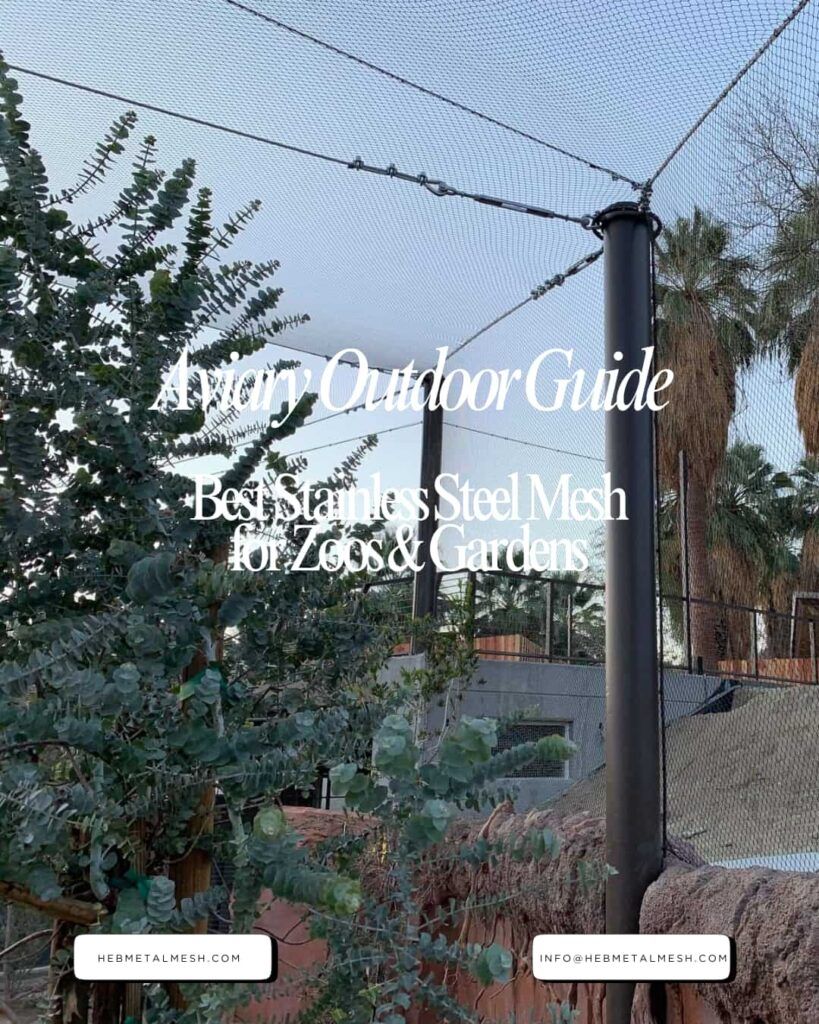
We’re seeing architects use industrial bird netting for “Catios” (cat patios) and high-rise balcony safety. Why? Because the same 1-inch stainless mesh that keeps a pigeon out of a warehouse can keep a 15lb Maine Coon safe on a 20th-floor balcony without ruining the city view.
The Takeaway: Don’t buy a product for the problem you have today. Buy the material that solves the problem for the next 30 years. When you invest in architectural-grade mesh, you aren’t just “fixing a bird issue”—you’re upgrading your property’s infrastructure.
Ready to Build Your Fortress?
I’ve laid out the blueprint. You can go back to the hardware store and play the “replacement game” every year, or you can step up to the big leagues.
hebmetalmesh specializes in the elite tier of hand-woven stainless steel mesh. Whether you’re covering a 10,000 sq. ft. aircraft hangar or just want a “buy it once” solution for your prize-winning blueberry patch, the store is open.
Stop Renting Your Results. Own Them.
If you’re tired of picking plastic shards out of your machinery or watching birds fly through your “heavy duty” netting, it’s time to upgrade to industrial-grade mesh.
- Unmatched Durability: Weather-proof, rust-proof, and predator-proof.
- Custom Specs: Precision sizes for any project scale.
- Direct-to-Project Shipping: Get the gear the pros use, delivered.
FAQ: Heavy Duty Bird Netting Essentials
The strongest type of bird netting is stainless steel rope mesh (specifically AISI 316 grade). Unlike plastic or nylon, stainless steel mesh is handwoven from high-tensile cables, making it immune to UV degradation, rodent chewing, and extreme weather loads. It offers a breaking strength significantly higher than synthetic alternatives, often exceeding $500$ lbs per strand depending on the gauge.
Yes. While standard garden netting only deters small birds, industrial-grade heavy-duty bird netting—particularly wire-based mesh—acts as a structural barrier. It is capable of stopping large raptors, climbing rodents, and even small-to-medium mammals like raccoons or foxes, making it the standard for zoo enclosures and high-value livestock protection.
Longevity depends entirely on the material:
Standard Plastic: 1–2 years before UV-brittleness sets in.
UV-Stabilized HDPE: 7–10 years in most climates.
Stainless Steel Mesh: 30–50+ years. Stainless steel is rust-proof and does not degrade under solar radiation, making it the most cost-effective long-term investment.
Industrial netting requires a tensioned cable system for maximum effectiveness. While DIY installation is possible for small areas, large-scale projects benefit from a perimeter wire frame. This prevents sagging, reduces wind resistance, and ensures the “invisible” look that high-end architectural mesh is known for.
For commercial and industrial projects, it is best to buy factory-direct from specialized manufacturers like hebmetalmesh. This ensures you receive material-grade certifications (such as AISI 316) and custom-sized seamless panels that aren’t available at retail hardware stores.