
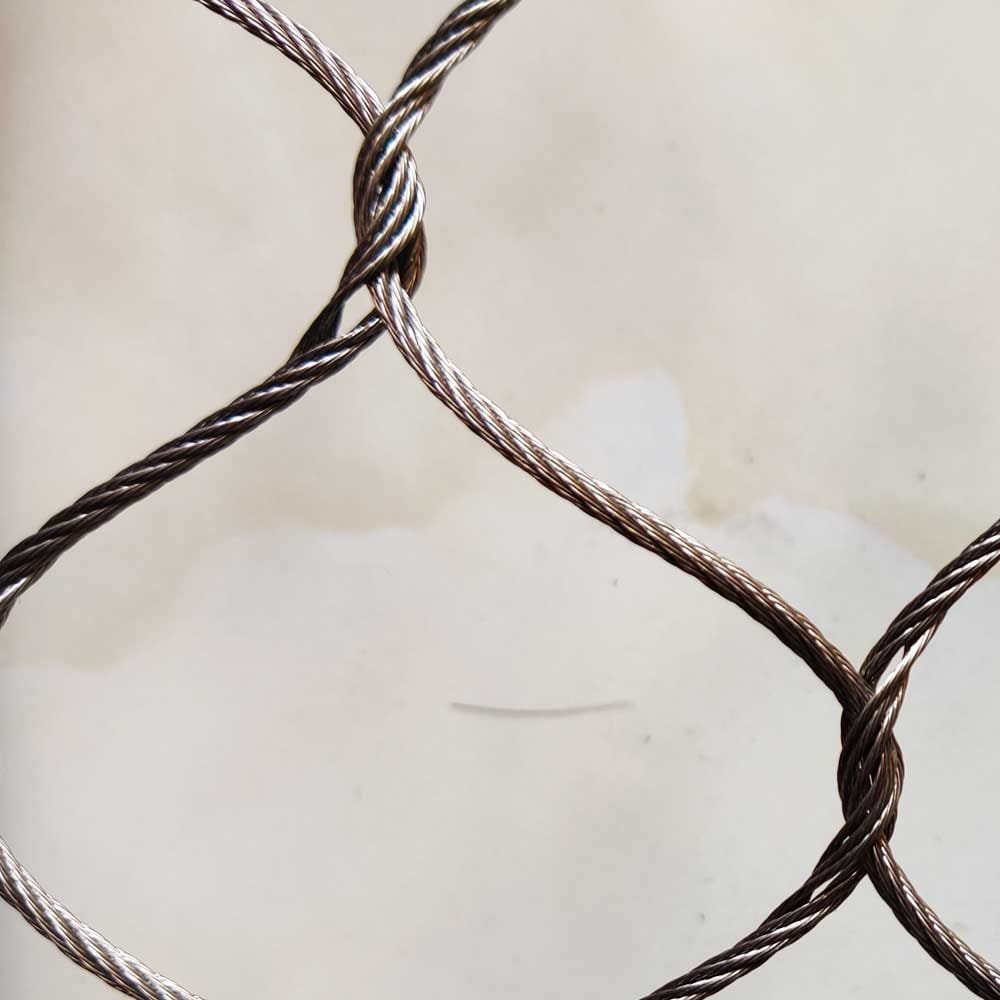
A zoo spends its capital on exhibits and its attention on the boundary last. That ordering looks reasonable until you walk the line. An exhibit holds keepers every morning, a camera over the gate and a public that notices when something reads wrong. A zoo boundary fence holds none of that. It runs behind the service yard, past a neighboring housing estate, and somebody inspects it on the days they remember.
That asymmetry decides almost everything about how the line gets specified. A boundary is not a large enclosure fence. It is a different structure with a different load case, a different failure consequence and a different inspection rhythm. Three numbers set it — how high, what aperture, how deep — and none come from the ground the line crosses. They come from the collection behind it.
Executive Summary
Three numbers specify a site boundary, and the collection decides all three. Effective height equals post height minus the highest surface an animal can launch from beside the line, which is rarely the figure on the drawing. Aperture follows the smallest body with access to the line rather than the largest animal on site, because a perimeter must hold anything that gets loose. Depth follows a soil survey, because burrowing happens where the ground is soft and a uniform apron spends most of its budget where nothing digs.
Length brings its own bill. Wind load tracks solidity, so a tight aperture nearly doubles the load on the longest run. Thermal movement across a hundred meters reaches tens of millimeters. A corner post carries about 1.4 times the tension of a straight one.
Quick Answer
Three numbers specify zoo perimeter fencing: effective height above the nearest climbable surface, aperture sized to the smallest animal with access to the line, and apron depth set by soil along it. Enclosure rules do not transfer, because a boundary must hold everything that gets loose rather than one species in one exhibit. Length then adds wind, thermal and corner loads that a short panel never sees.
Key Takeaways
- Effective height is post height minus the nearest launch point, so a tree, a lamp standard or a neighbor’s wall shortens the line.
- Aperture follows the smallest body with access, not the smallest on site, which keeps wind load sane on a long run.
- A corner post carries roughly 1.4 times the tension of a straight post, so a corner is a structure rather than a joint.
- A buried apron belongs where a soil survey says the ground is diggable, not along the whole perimeter.
- Damage clusters at gates, corners and the public side, so a weighted inspection route finds more than a uniform walk.
A Boundary Answers a Different Question
An enclosure fence answers what one animal can do to one panel. A boundary answers what anything on the site can do to a line nobody watches, and what happens when it fails. The first is an impact problem with a known animal and a short span. The second is a wind, thermal and human problem spread over kilometers.
The consequence gap is the reason to stop buying them as one item. An enclosure breach usually ends with an animal loose inside the site, where keepers can work it back. A boundary breach ends with that animal on a road. Zoo perimeter security is therefore less about stopping an intruder than about closing a line that fails quietly.
Where the two do share ground is the material. The same animal fence mesh serves both jobs, in a hand-woven stainless steel rope mesh that keeps its tension after a wire breaks and needs no coating for corrosion resistance. The numbers behind it do not transfer, and that is where most boundary projects go wrong.
Height Is Set by the Best Climber
Every perimeter drawing carries a height. Almost none carries the number that matters: the vertical gap between the top of the mesh and the highest surface an animal can launch from. A line standing three meters tall beside a two-meter wall has one meter of effective height.
Walk the line and measure launch points rather than posts. A mature tree inside the clear zone, a lamp standard, a sign frame, a neighboring wall, a parked trailer, a service roof — each turns a tall fence into a short one for the length of its shadow. Moving the line or pruning a limb usually costs less than raising the posts.
The question of perimeter fence height for zoo work has a real answer, and it is not one figure. It is the highest launch point inside the clear zone, plus vertical reach, plus a margin. Settle the clear zone at fence line first and post height becomes the last variable.
| Number | Set by | Common error |
| Effective height | Highest launch point inside the clear zone, plus vertical reach | Reading post height off the drawing |
| Aperture | Smallest body with access to the line | Sizing to the largest species on site |
| Apron depth and width | Soil survey along the line | A uniform apron on ground nothing can dig |
Aperture Follows the Smallest Animal That Can Reach the Line
Enclosure apertures are set per species, and that habit is the most common thing carried onto a boundary. A boundary must hold whatever gets loose, and that is not always what the exhibit was built for. A juvenile primate, an escaped parrot, a bird that never meant to leave its flight — all meet the same line.
The governing body is the smallest one with access to the line, a narrower set than the smallest animal on site. A small bird that never leaves an aviary never meets the boundary. That distinction keeps a mesh aperture for mixed collection work affordable, because sizing to the smallest animal anywhere on site drives the run finer than it needs to be.
Aperture also lands on the structure, and the enclosure version never shows that cost. Halving the aperture roughly doubles the wire in a square meter and nearly doubles the share of panel that wind can push against.
| Aperture | Rope diameter | Mesh mass | Open area | Relative wind load |
| 25 mm | 2.0 mm | 1.8 kg/m² | 86% | 1.9 |
| 50 mm | 2.0 mm | 0.95 kg/m² | 92% | 1.0 |
| 75 mm | 2.0 mm | 0.65 kg/m² | 95% | 0.7 |
A wire rope diameter of 2.0 mm across all three rows holds mass and solidity constant, so the table isolates what aperture alone costs. A boundary gets measured on site, so mesh supplied in rolls lets the cut list follow the ground rather than a drawing.
The Third Number Is Depth
Depth is where zoo perimeter fencing usually gets bought by the meter instead of by the survey. A buried apron for fence work is priced per meter of line, which makes a uniform apron look simple. It is not, because burrowing follows soft ground.
Walk the line with a probe, or commission a soil survey, and mark where an animal can actually excavate. Sand, made ground, topsoil over fill and river deposit get an apron. Compacted gravel, rock and paved hardstanding do not.
Width matters more than depth for most diggers, because they do not go straight down. A 600 mm outward return at 300 mm depth catches more than a 900 mm vertical trench, and it uses less mesh. Where the line crosses broken ground, ground conditions decide the fixing at each crossing.
What a Long Run Does to the Structure
Length is not a neutral multiplier. Wind load on long fence run rises with solidity and height, and it reaches the posts as a horizontal force at the top of a lever. A three-meter post carrying a coarse panel in a 40 m/s gust takes roughly 75 newtons per square meter, which on a hundred-meter run comes to more than two tons along the post line.
A boundary protects more than visitors. Managed collections hold breeding groups that work as genetic reserves, and the IUCN species conservation action program treats that role as part of a wider species plan. A breach is a conservation event, not only a safety one.
Post spacing on long fence run is a structural output, not a habit. Space posts to the load, and expect the spacing to tighten where the line turns or the ground changes. The perimeter fence foundation follows the same arithmetic, because a post carrying twice the load needs a base that can take it. Panel deflection between posts sets how far the mesh moves before it loads the edge cable and the swage ferrule.
An expansion joint in fence line handles the thermal budget. Stainless moves about 16 parts per million per kelvin, so a hundred-meter run grows roughly 60 mm between a cold night and a hot afternoon. Without a provision, that movement either pushes the posts or leaves the mesh slack, and the load path from mesh to post to ground fails.
Corner bracing on fence line is where the rest of it concentrates. Two tensions meet at an angle, and at ninety degrees the resultant is about 1.4 times either one. A corner post is a structure, not a joint, and it needs a brace or a backstay rather than a longer embedment. The predator-rated panels on high-risk sections follow the same corner rule.
Gates Are the Weakest Span
A line is only as strong as its openings, and a boundary holds more of them than an enclosure: service gates, vehicle access, pedestrian doors, emergency egress. Each breaks the mesh and loads a hinge post.
A service gate on boundary fence work carries three loads the panel does not. The leaf weight hangs on one post. Wind on an open leaf acts on a lever twice the height. And the latch must resist an animal that has found the one place where two edges meet.
Specify the gate as its own assembly, with hand-woven panels sized to the opening, a hinge post founded deeper than the line posts, and a frame that closes the gap at hinge and latch to the mesh aperture. That gap is where animals test first.
The Side That Faces the Public
Half a boundary is seen from outside, and that half carries constraints an enclosure never meets. Boundary fence visual impact decides planning consent in ways animal welfare arguments do not, and a public footpath along zoo boundary turns the line into a daily interface with people who have no reason to respect it.
A boundary that reads as a prison wall attracts objections a dark, fine mesh does not, and a black oxide finish recedes where bare stainless catches light. Anything the public can reach gets tested — pushed, climbed, hooked with a stick. The constraints that decide a boundary fence are the same ones a zoo meets, with animals on the inside.
Inspecting a Boundary You Cannot See
Nobody walks two kilometers of boundary every morning. That is the honest starting point, and it means the inspection has to be designed rather than assumed.
- Divide the line at gates, corners and changes of ground, because damage clusters there.
- Fix a waypoint at each section and record four things every visit: tension, mesh damage, post movement and the ground at the base.
- Weight the frequency. Gates, corners and the public side get monthly attention; the back run gets seasonal.
- Walk it after the events that matter — a storm, a tree failure, a reported sighting — not on a calendar alone.
A fence inspection route built this way finds what a uniform walk misses, and it produces the record an inspector will ask for after an incident. That record turns zoo perimeter fencing from a purchase into a maintained system.
FAQ
Yes, and on a boundary it is usually the wrong trade. Galvanized mesh costs less at purchase and then carries a recoating cycle for the life of the line, on a structure where access is the expensive part. Over twenty years the maintenance bill exceeds the difference in first cost.
Grade 316L mesh, wherever the line meets salt air or permanent ground contact. Molybdenum in the alloy raises the chloride concentration needed to break the passive layer, which separates a 316 boundary from a 304 one that stains within a season. Inland sites with no salt exposure can run 304.
By the square meter of mesh plus the fixings, not by one price per meter of line. Ask for aperture, wire rope diameter, panel or roll format and the fixing schedule itemized separately, because two quotes at the same rate can differ by a third once posts and anchors are counted.
No, and a run long enough to need joints should have them designed in. Roll length and handling decide where a joint falls, and an expansion joint there absorbs thermal movement instead of the posts. A joint at a post is cheaper than one mid-span.
Often yes, if the posts still carry the load the new mesh imposes. Survey the post line for section loss and foundation movement first, then check that existing spacing suits the wind load of the finer aperture. Re-meshing is a structural check before it is a material order.