
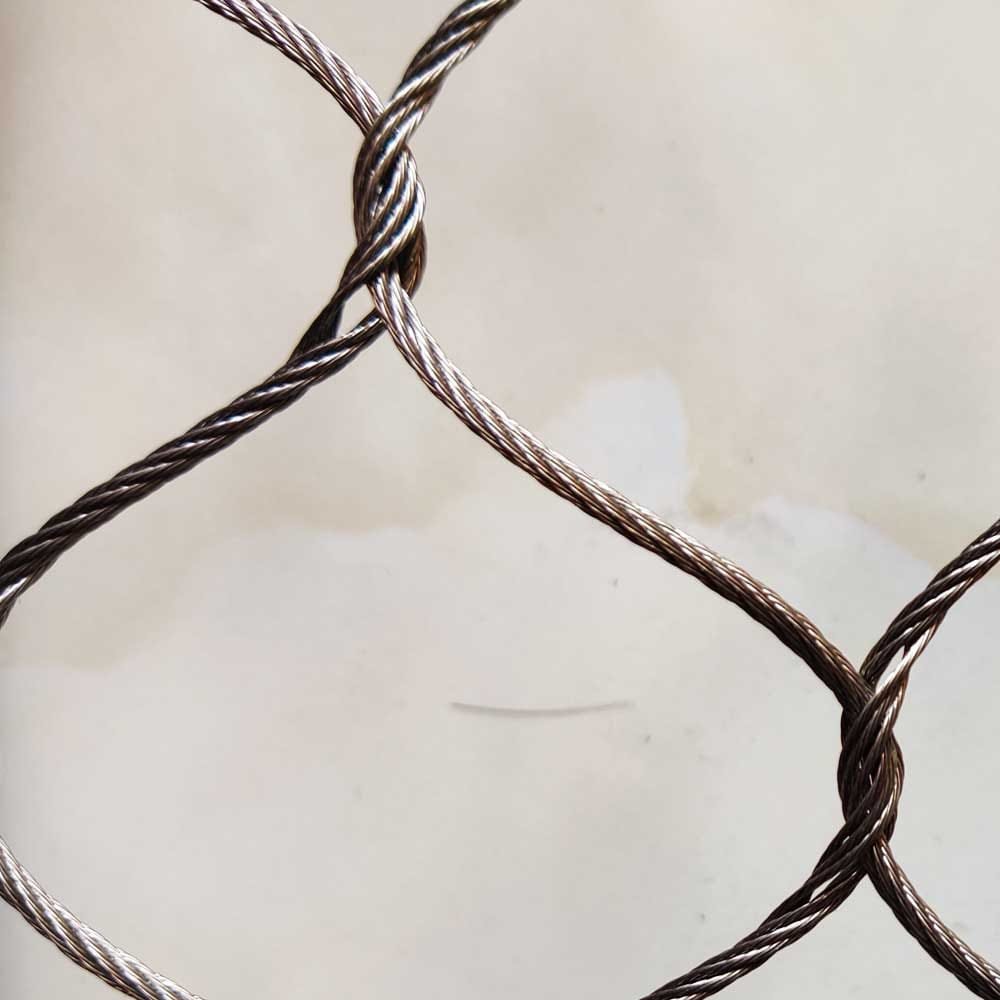
A mesh wall is one continuous surface, and that is why it holds. Cables share load, the edge cable ties the field to the frame, and no strand carries the animal’s weight alone.
Then someone cuts a doorway into it.
Escape reviews keep landing in the same places: the gate, the door, the feed port, the transfer chute. Not the middle of a panel, but the opening, where a moving part meets a fixed one and a gap must exist for the leaf to swing.
A zoo enclosure keeper door carries more risk per square meter than any other part of the barrier, and it gets the least design attention, arriving as a line on a door schedule and a hardware pack in a crate. What decides whether it holds: frame stiffness, latch logic, mesh termination, threshold gaps, inspection.
Executive Summary
A zoo enclosure keeper door works when five details line up: a door frame as stiff as the mesh frame, mesh terminated on that frame rather than on the leaf, a latch needing two independent actions, a threshold gap sized to the smallest animal, and a swing that puts animal pressure against the closing edge.
Miss one and the barrier rating drops to the weakest detail. A 3 mm wall with a hollow aluminum door frame is a 3 mm wall with an aluminum hole in it.
Specify the door as part of the barrier, not as architectural hardware. The door schedule belongs on the mesh drawing, with handing, latch type and threshold detail called out.
Quick Answer
A zoo enclosure keeper door holds when its frame matches the mesh frame in stiffness, the mesh terminates on that frame with a clamped edge cable, and the latch needs two separate actions to release. Size the gap under the leaf to the smallest animal’s skull, swing the door toward the keeper so animal pressure closes it, and fit captive hinge pins on the keeper side.
Key Takeaways
- The opening, not the panel, is where containment usually fails.
- A door frame that flexes more than the mesh frame becomes the weak link, whatever the mesh gauge.
- Two independent latch actions defeat paws, fingers and lips. One action does not.
- Cut mesh only on a frame line, then clamp and re-tension, or the corner aperture opens up.
- The threshold gap has to be smaller than the smallest animal’s skull, and digging species need an apron.
- Swing the leaf toward the keeper and cap the hinge pins so nobody lifts them out.
- Inspect hinges, latch engagement and frame welds at the door corners on a fixed schedule.
Why the Opening Decides Containment
Containment is a chain of load paths. The animal pushes, the mesh deflects, the edge cable picks up the load, and the frame carries it into the ground.
A door breaks that chain twice. It adds a frame that must stay rigid while carrying a moving leaf, and it forces a gap at the sill where the load path stops.
Animals find that gap fast. Primates test the bottom edge with fingers and feet, hoofstock lean and rub, and large cats push at the jamb to see what moves.
So the door is not a fixture bolted to a finished wall. It is a structural interruption and earns the same engineering as the panel beside it.
The high-security mesh used for predator enclosures sets the tone for the opening beside it. If the wall stops a 200 kg cat, the door has to match that, not the other way around.
Door Types and What Each One Costs You
Four types cover most zoo work, and each fails in its own way.
| Type | Typical opening | Where it fits | Main risk |
| Hinged keeper door | 0.9–1.2 m wide, 2.1 m high | Staff entry to yards, aviaries, service areas | Threshold gap and swing clearance |
| Sliding shift door | 0.8–1.5 m wide | Moving animals between pens and holding | Track fouling with sand, bedding or ice |
| Guillotine door | 0.8–1.2 m wide | Transfer chutes, crates, restraint areas | Dropping leaf if the cable or chain fails |
| Sally port | Two leaves, 2–4 m apart | Dangerous animals, keeper corridors | Both leaves open at once |
The animal shift door for zoo exhibits gets used more than any other element. Every pass wears the track, the rollers and the latch.
A guillotine door for animal transfer needs a mechanical stop that holds the leaf with the lifting line cut. Counterweight plus a pin, not a cable alone.
A sally port double door enclosure works only with an interlock. An interlock door for dangerous animals is not an upgrade; it is the reason the corridor exists.
Frame-in-Frame: Terminating Mesh at an Opening
The mesh has to end somewhere rigid. A frame that twists under load lets the edge cable go slack, and slack is how animals get purchase.
A door frame in wire mesh wall construction should match the mesh frame section for section, or go heavier. Weld or bolt it into the frame grid so the two act as one unit. Brackets alone move.
Match the stainless steel cable mesh panels to the frame you are building. Cable diameter, aperture size and alloy belong in the same conversation as the door section, because leaf load travels through both.
Cutting Without Losing Tension
Cut the mesh on the frame line, never through a free span, and clamp the cut edge back before releasing tension.
- Set and brace the door frame.
- Mark the opening and check the diagonal.
- Cut and clamp the edge at 150 mm intervals.
- Fit the edge cable and thimble around the opening.
- Re-tension the field and check the corner aperture.
That last step catches the common defect. A cut near a corner can leave a diamond wider than the specified aperture size, and a young animal finds it within a day.
The mesh termination at a door opening carries more load per clamp than anywhere else. Check the ferrules at the jamb after the first week, then again after a month.
The methods in this guide to attaching wire mesh to metal frames apply at the jamb too, with one addition: clamps at an opening work harder than clamps mid-panel.
Latches, Hinges and the Two-Action Rule
A latch that opens with one movement will open. Primates solve slide bolts, raccoons solve hooks, and parrots solve anything a beak can grip.
Require two independent actions: lift then slide, twist then pull, press then turn. They should need different hand shapes, so a paw cannot do both at once.
Latch Details That Matter
- No protruding handle, bolt end or pin on the animal side of the leaf.
- Latch engagement at least 20 mm deep, so a small frame shift does not release it.
- Padlock or carabiner point above 1.5 m and out of reach through the aperture.
- Operation possible with one gloved hand, because keepers wear gloves in winter.
- Self-closing keeper door spring or gravity return, so the door closes when someone forgets.
- Recessed striker plate, since an exposed plate gives an animal something to work.
The keeper door latch for primates deserves a bench test. Hand it to a keeper, ask them to open it in gloves, then study how a curious animal would attack it.
Hinges and Swing Direction
Swing the leaf toward the keeper, so animal pressure pushes it against the closing edge instead of away from it. Door handing and swing direction belong on the drawing, not in a verbal instruction on site.
Hinge pin security on animal doors means captive pins. Cap each hinge barrel or use a fixed-pin hinge, because a lift-off hinge is a removal tool.
Three hinges on a 2.1 m leaf, not two, each rated well above the breaking load of the leaf it carries. The bottom hinge takes the most load and wears first, especially where washdown runs down the jamb.
Thresholds and Gaps
The gap under a keeper door decides whether a small animal stays in. Set it against the smallest resident, not the largest.
A gap under 25 mm suits most birds and small mammals. Anything wider needs a sweep, a raised sill or a buried apron.
Hoofstock need a flush threshold with no trip edge; digging species need a barrier below the sill. Solve both per compartment, and run a dig barrier under enclosure door assemblies wherever an animal can reach soil.
Where a flush sill is mandatory, run the apron under the paving and keep the joint tight. On hoofstock yards the threshold gap under keeper door assemblies should stay under 20 mm and be checked after every bedding change.
Sight Lines and Keeper Safety
A door in a blind corner is a hazard, whatever the latch. Place the door so a keeper can view the whole compartment from the corridor, and add a viewing port where a solid panel blocks the view.
Mesh color and open area affect that view more than most people expect. A darker wire rope mesh with a wide aperture reads nearly invisible from 3 m; a bright tight weave turns the same view into a gray wall.
Keeper-safety standards from bodies such as the Association of Zoos and Aquariums treat sight lines as part of barrier design rather than a finishing choice, which matters at the door where a keeper pauses before stepping in.
Inspection Points That Find Trouble Early
Most door failures announce themselves weeks before they become escapes. Someone has to look with a wrench.
Work through these monthly, and after any event where the door took animal weight:
- Hinge wear, checked by lifting the leaf and looking for play at the barrel.
- Latch engagement depth, measured with a caliper at the striker.
- Weld cracks at the door frame corners, where flex concentrates.
- Broken strands at the clamp line, especially the bottom corners.
- Threshold erosion, since washdown and digging both strip bedding and soil.
- Guillotine cable and chain wear at the sheave.
- Interlock function on any sally port, tested with both leaves.
Log results against the door ID. A door that loses 2 mm of latch engagement in a month is telling you the frame is moving.
The panel fabrication details matter here too, because a door set into a modular panel inherits its stiffness. Frameless panels flex more, so the door frame has to compensate.
Specifying the Door on the Order
Put the door on the mesh drawing, not on a separate architectural sheet. The fabricator needs the opening size, frame detail and mesh termination in one place.
A keeper door schedule for zoo project documentation should carry:
- Door ID, compartment and species
- Opening width, height and sill detail
- Handing, swing direction and swing clearance
- Frame section and connection to the mesh frame
- Latch type, action sequence and lock point
- Hinge type, count and pin detail
- Mesh termination and edge cable detail at the opening
Specify keeper door hardware in stainless steel 316 whenever the wall is 316. Mixed alloys at a wet, frequently handled joint create a corrosion cell exactly where you cannot afford one.
Order the custom mesh panel sizes with the door openings already set out on the panel schedule.
The zoo mesh installation sequence should place the door frame before the mesh goes up. Retrofitting an opening into a tensioned field costs more and never looks right.
FAQ
The curator sets the containment requirement, the keeper lead checks that the door works in gloves and in a hurry, and the engineer signs the frame and hinge loads. Get all three on the schedule before fabrication, because a change after welding costs a new frame.
Only where the containment requirement is low and the frame is independent. A hollow-section door flexes under animal load, and its hinges and latch are built for human traffic. Use it for a service store, not a primate yard.
Between 0.9 m and 1.2 m clear, which passes a keeper with a wheelbarrow and a crate. Wider openings need a heavier leaf and frame, so widen only when equipment demands it.
You need one wherever a single door would let an animal reach a keeper or the public in one move. That covers big cats, bears, elephants and most primates; hoofstock yards usually manage with one door, a good latch and clear sight lines.
The same aperture as the wall, with no exception at the corner. The risk is execution rather than specification, because a cut near a corner can open a diamond wider than the drawing calls for. Check the mesh aperture at a door corner with a tape after tensioning.