
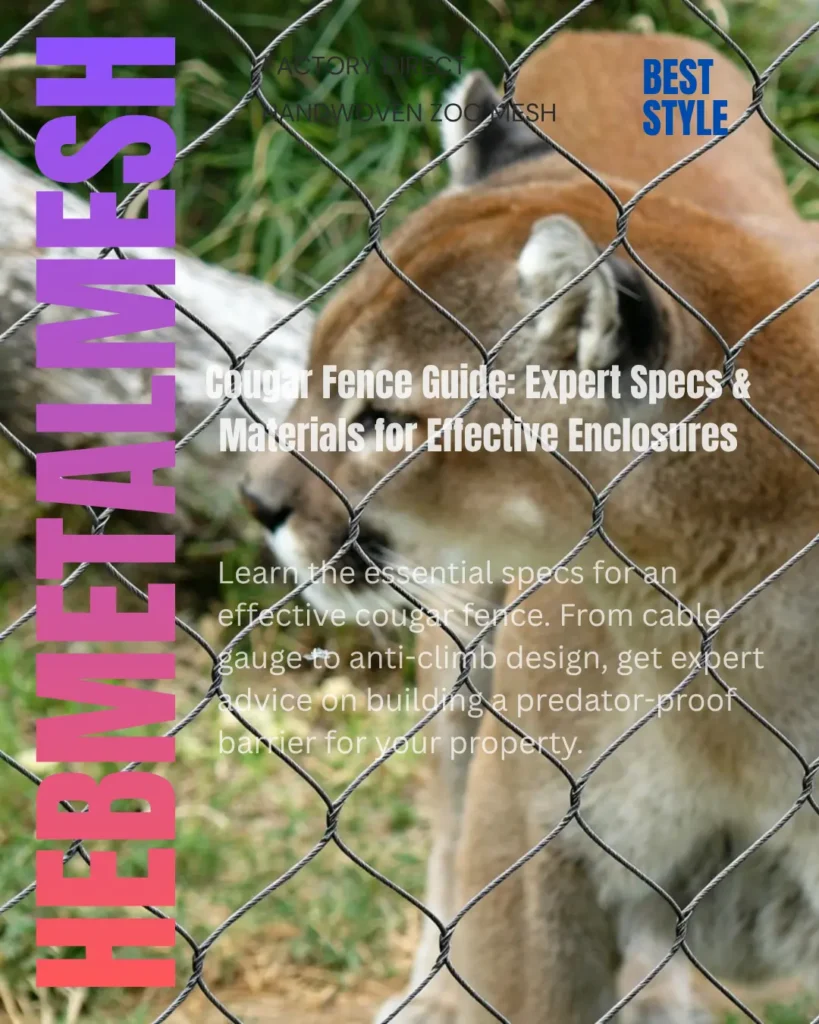
Effective cougar fencing requires high-tensile stainless steel cable mesh, typically at least 8–10 feet in height with an inward-leaning overhang. To prevent breaches, prioritize a 2-inch aperture to eliminate paw-holds and select 304 or 316-grade stainless steel for corrosion resistance. Avoid low-quality, thin-gauge fencing that can be climbed or torn. Proper installation—including deep-set posts and anti-dig aprons—is as critical as the material quality itself.
1. Choosing the Right Cougar Fence: Essential Components
An effective cougar barrier is a complete system, not just a static fence. To successfully deter mountain lions, your installation must address three distinct vectors of attack: vertical jumping (up to 18 feet), agile climbing, and determined digging. Relying on a single layer of fencing often leads to security gaps; instead, you must integrate high-tensile materials with structural design features that neutralize these predatory behaviors.
The core of a modern predator-resistant system relies on three primary components: high-tensile stainless steel cable mesh, structural steel posts, and precision tensioning systems. Unlike traditional fencing, cable mesh offers the flexibility to absorb impact without snapping and the transparency to blend into natural landscapes. When paired with heavy-duty steel posts, this mesh creates a barrier that predators cannot easily grip or tear through. Tensioning hardware is equally vital; it ensures the mesh remains taut, removing the “slack” that climbing animals use to find footholds.
For those securing livestock or residential areas, choosing the right material is the first step toward peace of mind. You can explore our animal fence mesh solutions to see which configuration best fits your specific terrain and security needs.
Comparison of Fencing Materials for Predator Control
| Material | Durability | Anti-Climb Capability | Visibility | Maintenance |
|---|---|---|---|---|
| Stainless Steel Cable Mesh | Exceptional | High (No footholds) | Excellent | Very Low |
| Chain-Link Fencing | Moderate | Low (Easy grip) | Moderate | High (Rusts) |
| Wood/Timber Fencing | Low | High (Initial) | Zero | Extreme (Rot) |
2. Technical Specifications for Maximum Security
Security is only as reliable as your material specifications. When building a barrier meant to withstand a mountain lion’s power, the grade of your materials defines the lifespan of your investment.
Material Grade: SS304 vs. SS316
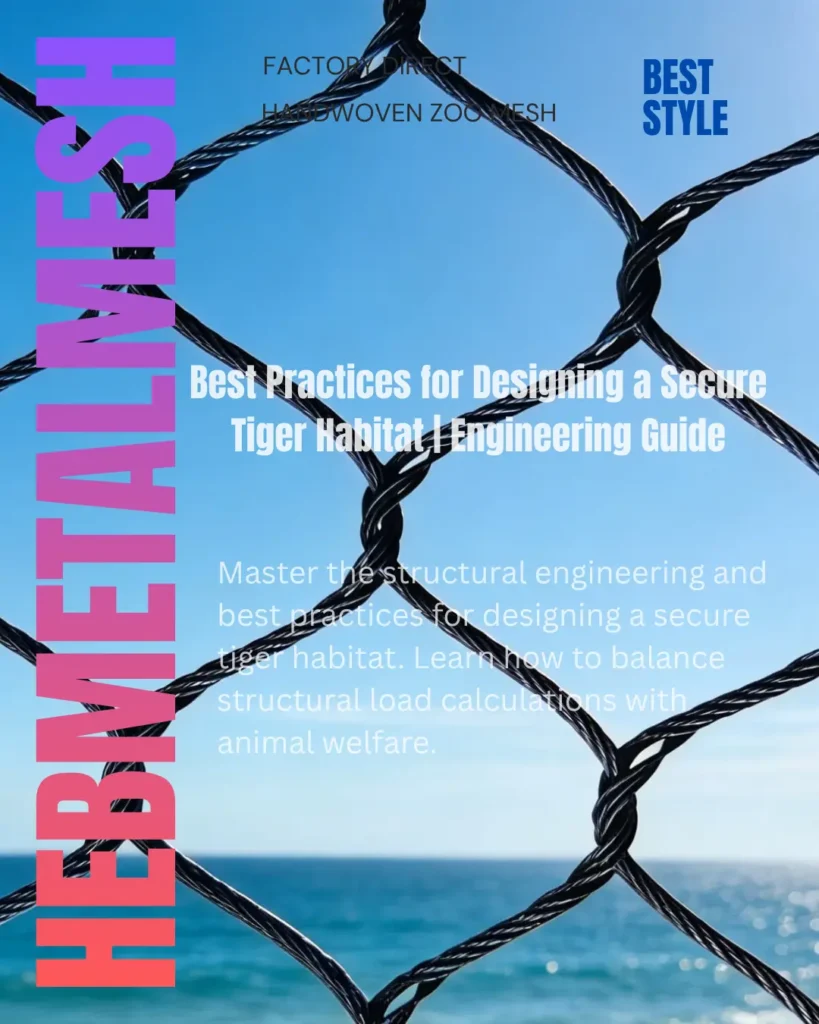
We recommend SS304 as the professional standard for most inland environments, offering excellent corrosion resistance for long-term outdoor exposure. However, if your property is located in coastal regions or areas with high humidity, SS316 is the superior choice. It contains molybdenum, which provides enhanced protection against salt-spray and industrial pollutants, ensuring your fence remains structurally sound for decades. From a professional China stainless steel cable mesh factory with 10+ years export experience, we have observed that selecting the correct alloy significantly reduces lifetime maintenance costs.
Mesh Aperture: The 2-inch Gold Standard
The “aperture”—the size of the diamond opening—is your primary defense against climbing. A 2-inch x 2-inch aperture is the gold standard for cougar-proof fencing. This size is specifically engineered to be too small for a cat’s paw to gain a secure foothold, effectively neutralizing their ability to scale the fence. If your priority is maximum landscape visibility rather than high-security containment, a 3-inch aperture may be used, provided the fence height and overhang are sufficient to deter jumping.
Cable Diameter and Threat Levels
Your choice of cable diameter determines the impact resistance of the wall:
- 1/16″ Diameter: Best for residential areas where the threat is light or the enclosure serves as a visual boundary.
- 3/32″ Diameter: A versatile balance of strength and aesthetics, perfect for general livestock protection.
- 1/8″ Diameter: The heavy-duty choice for big cat exhibits or high-predation zones. This gauge offers the highest breaking strength, capable of absorbing significant kinetic force from large felids.
For those ready to specify their project, you can view our professional wildlife fence products to compare these diameters and select the right grade for your environmental conditions.
3. Strategic Planning: Layout and Material Selection
Building a robust cougar fence begins with a site-specific strategy. Before purchasing materials, you must assess your property lines and local zoning regulations, as many municipalities enforce strict height and material ordinances for predator barriers.
Site Assessment and Layout
When mapping your layout, account for the terrain’s topography. Sloped land often requires design adjustments to ensure the mesh maintains consistent ground contact—critical for preventing dig-ins. Identify existing structures like sheds or trees; while they can serve as natural anchors, they may also act as “launching pads” for a leaping mountain lion. Always clear a buffer zone around the fence line to remove brush that might hide approaching predators or provide them with climbing cover.
Material Selection: The “Strength-First” Approach
Your choice of materials defines your security level. While residential fences often focus on aesthetics, cougar barriers require a functional, strength-first approach:
- Posts: Use treated wood or heavy-duty galvanized steel, spaced at 8–10 foot intervals.
- Mesh: High-tensile stainless steel cable mesh is the industry gold standard. It outperforms standard welded wire by offering superior flexibility, which allows it to absorb the kinetic energy of a jumping cat without snapping.
- Hardware: Never overlook the tensioning system. Using industrial-grade turnbuckles ensures the mesh remains taut, creating the “slip-effect” that prevents paw-hold climbing.
Proactive Wildlife Management
A fence is a deterrent, but it is most effective when paired with property management. Remove attractants such as pet food, unsecured trash, or fallen fruit from the enclosure area to avoid drawing wildlife toward your perimeter. For more detailed layouts and specialized hardware, visit our full product catalog.
4. Designing for Prevention: Jump, Dig, and Climb
When designing a perimeter to protect your property, you must think like the predator. Cougars are master athletes, capable of vertical leaps exceeding 15–18 feet. Because a standard 8-foot fence can be cleared by a determined cat, your design must include specialized countermeasures.
The 18ft Jump Challenge
The most effective way to defeat a cougar’s vertical agility is the installation of an inward-leaning overhang. By extending the top 2–3 feet of your fence at a 45-degree angle toward the protected area, you create a physical deterrent that forces the animal to jump upward and then move horizontally—a movement that is significantly more difficult for large felids. This simple geometry disrupts the trajectory of a jump and prevents the animal from gaining purchase on the top edge of the barrier.
Dig-Proofing
Cougars and other predators are persistent tunnelers. If the base of your fence is not secured, they will quickly dig underneath. To stop this, install a “buried apron.” This involves extending the cable mesh 12–24 inches underground and bending it outward away from the enclosure in an “L” shape. Alternatively, pouring a concrete footer at the fence base ensures that no amount of scratching or digging will allow for an entry point.
Anti-Climb Design
Traditional chain-link fencing is arguably the worst choice for cougar containment because the diamond pattern provides infinite “rungs” for a cat to climb. In contrast, high-tension stainless steel cable mesh offers a smooth, uniform surface. When properly tensioned, the mesh does not sag or provide a foothold for claws. This creates a “slip-effect” where the animal cannot gain the traction needed to pull itself upward. For those seeking professional-grade protection, you can explore our lion enclosure netting for designs engineered to eliminate these climbing risks.
5. Residential vs. Institutional: Choosing Your System
The requirements for a predator-resistant barrier change based on your goals, whether you are protecting a backyard pet or managing a commercial wildlife exhibit.
For Homeowners: Aesthetics and Integration
For residential properties, a fence should provide security without feeling like a prison. The primary concern is often the “cage” appearance. To solve this, many homeowners opt for a black oxide finish. This specialized coating absorbs sunlight and reduces glare, allowing the mesh to virtually disappear against natural foliage and wooded backdrops. It provides the necessary security to keep pets safe from nighttime wildlife threats while maintaining the beauty of your landscape.
For Zoos and Sanctuaries: Security and Compliance
Institutional buyers—such as zoos, sanctuaries, and wildlife preserves—face higher stakes, including strict regulatory requirements (such as AZA or EAZA standards). In these environments, impact resistance is paramount. A high-security system must be able to withstand the repeated kinetic force of large animals. This requires specific material combinations, such as heavier cable diameters and reinforced perimeter posts, to ensure that the fence remains rigid even under stress.
Choosing the right mesh configuration is critical for both security and transparency. For institutions requiring the best balance of strength and durability, we recommend you browse our SS304 3×3 1/8″ mesh. This specific configuration is widely trusted in professional animal management for its high breaking strength and proven ability to contain large felids while providing excellent sightlines for visitors. Whether you are safeguarding a small hobby farm or a large-scale predator habitat, the principles of high-tensile material selection remain the same: prioritize strength, ensure proper tension, and always plan for the animal’s natural climbing and jumping capabilities.
6. Maintenance and Long-Term Durability
Investing in a high-quality cougar fence is a long-term commitment to property security. While stainless steel is renowned for its resilience, longevity is only guaranteed when the system is properly maintained. A neglectful approach to maintenance can compromise the integrity of the most expensive mesh.
Annual Inspections
We recommend a thorough inspection of your fence system at least once a year, preferably before the winter season. Focus your attention on the primary tensioning points, where cable connectors and turnbuckles are located. Over time, environmental factors and seasonal ground shifting can cause slight loosening. Ensuring that the mesh remains taut is critical; a sagging fence provides the grip surface a mountain lion needs to climb. Simultaneously, check your steel posts for any signs of movement at the base or structural bending. If the posts tilt, the structural load of the mesh will shift, potentially creating weak spots in the perimeter.
Corrosion Management
Many property owners ask why we prioritize stainless steel over traditional galvanized steel. The answer lies in the 30-year lifecycle. Galvanized wire relies on a zinc coating that inevitably scratches, chips, and degrades over time, leading to rapid rust. Once the underlying steel is exposed, the fence becomes a liability. Stainless steel, specifically SS304 and SS316, is inherently corrosion-resistant throughout the entire thickness of the material. It does not rely on a surface coating that can wear away. In a 30-year application, stainless steel remains virtually unchanged, whereas galvanized alternatives often require costly repairs or full replacement within a decade.
Professional Advice
Designing a predator-proof barrier is a precise engineering challenge. Our team provides expert guidance on high-security installs, leveraging over a decade of manufacturing experience to help you avoid common pitfalls like improper tensioning or inadequate post-spacing. Whether you are navigating local height regulations or choosing between cable diameters, we are here to ensure your installation is built to last. For a complete look at our available materials and hardware, please visit our full product catalog.
Key Takeaways
- Height: For effective containment, ensure your fence is a minimum of 8–10 ft tall, combined with an inward-leaning overhang to discourage jumping.
- Material: Stainless steel cable mesh is the industry choice for durability and low-visibility, outlasting traditional fencing materials in harsh conditions.
- Aperture: Choose a 2-inch mesh to physically prevent paw-hold climbing. Use a 3-inch aperture only when your primary goal is maximum landscape transparency.
- Installation: Never skip the foundation. Always account for underground dig-aprons and utilize professional-grade tensioning hardware to maintain structural integrity.
Frequently Asked Questions (FAQ)
A minimum height of 8–10 feet is recommended for effective containment. The vertical jump of a mountain lion can exceed 15 feet, so the height must be paired with an inward-leaning overhang to be truly secure.
For large felids or high-threat environments, 1/8″ cable diameter is the industry standard. For residential areas where the goal is deterring smaller cougars or general predator protection, 3/32″ is usually sufficient.
A roof is not strictly necessary if you have a correctly designed inward-leaning overhang (45-degree angle). However, for total security in a high-predation area, a roof provides the best possible protection against all ingress vectors.
Yes, you can upgrade an existing chain-link fence by installing a high-tensile stainless steel mesh overlay and adding a top-guard or overhang extension. This is a cost-effective way to improve security without replacing the entire structure.
The best method is to bury the bottom edge of your mesh 12–24 inches deep in an L-shaped apron that extends outward away from the enclosure. This makes it impossible for the animal to burrow underneath the fence line.
Need a Custom Cougar Fence Solution?
Get a free quote from our engineering team. 10+ years of export experience.
Request a Quote Now