
Executive Summary
Choosing the right animal fence wire isn’t about finding the cheapest roll at the hardware store — it’s about understanding tensile strength, corrosion resistance, and total cost of ownership. Woven wire outperforms welded wire in every category: it flexes under impact, adapts to uneven terrain, and lasts decades without rusting. Stainless steel rope mesh offers the ultimate combination of strength, visibility, and zero maintenance. For livestock, predators, or high-value enclosures, the smart money is on professional-grade materials that eliminate the “patch-and-repair” cycle entirely.
✅ Stop Patching Your Old Fence
Why settle for hardware store mesh that rusts in two seasons? Get the industrial-grade animal fence wire used by pros and zoos worldwide.
- 🔒 Corrosion-resistant stainless steel & high-tensile options
- 📏 Custom sizes for any project — from chickens to tigers
- 🏭 Factory-direct pricing — no middleman markup
Introduction — Why Your Animal Fence Wire Choice Matters
Let’s be honest: nobody wakes up excited to spend a mortgage payment on animal fence wire. Usually, the journey starts when a coyote decides your chicken coop looks like an all-you-can-eat buffet, or your dog clears the old wooden slats.
The “cheap fence” trap is real. You buy the green-coated rolls from the big-box store, spend a weekend stapling, and feel accomplished. Then six months later, the wire is sagging. A year later, the “rust-resistant” coating is peeling. Now you’re back at the store, buying more wire to patch a problem that shouldn’t exist.
The secret most suppliers won’t tell you: A professional-grade fence is not a static wall — it’s a dynamic tension system. Think of cheap wire like paper: poke it, it tears. Lean on it, it folds. But a high-quality animal fence wire — specifically high-tensile woven or hand-knotted stainless steel — works like a trampoline. When a 150-pound animal hits it, the fence gives and snaps back. That flexibility prevents snapping and, more importantly, prevents animal injury.
🔗 Related Reading: For a deeper dive into safeguarding your entire property — from livestock to family pets — check out our guide on Animal Barrier: Protecting Your Property and Your Pets . It covers perimeter strategies that complement your fencing choices.
Understanding Animal Fence Wire — Key Terminology
Wire Gauge Explained
Gauge refers to the thickness of the wire. Here’s the confusing part: the smaller the number, the thicker the wire.
12.5-gauge is the “Goldilocks” of fencing — thick enough for massive breaking strength (around 1,350 lbs of pressure for high-tensile) but flexible enough to install without specialized heavy machinery.
Galvanization & Coatings
Galvanized steel wire has a zinc coating that protects against rust. However, the welding process often burns off this protective coating at the most critical point — the joint. This is why you see “bleeding” rust spots at every intersection of a welded fence after just one rainy season.
For maximum corrosion resistance, stainless steel (304 or 316 grade) is virtually immune to the elements — a 30-to-50-year investment.
Tensile Strength
High-tensile wire is high-carbon steel treated to handle extreme tension. Because it’s so strong, you can pull it tighter and use fewer fence posts — saving you a fortune on cedar or T-posts. Once tensioned, it stays tensioned. No sagging when a cow leans on it or snow piles up.
Types of Animal Fence Wire — Pros, Cons & Best Uses
Woven Wire (The King)
Woven wire — specifically high-tensile, hand-knotted stainless steel mesh — is the undisputed heavyweight champion of animal fence wire.
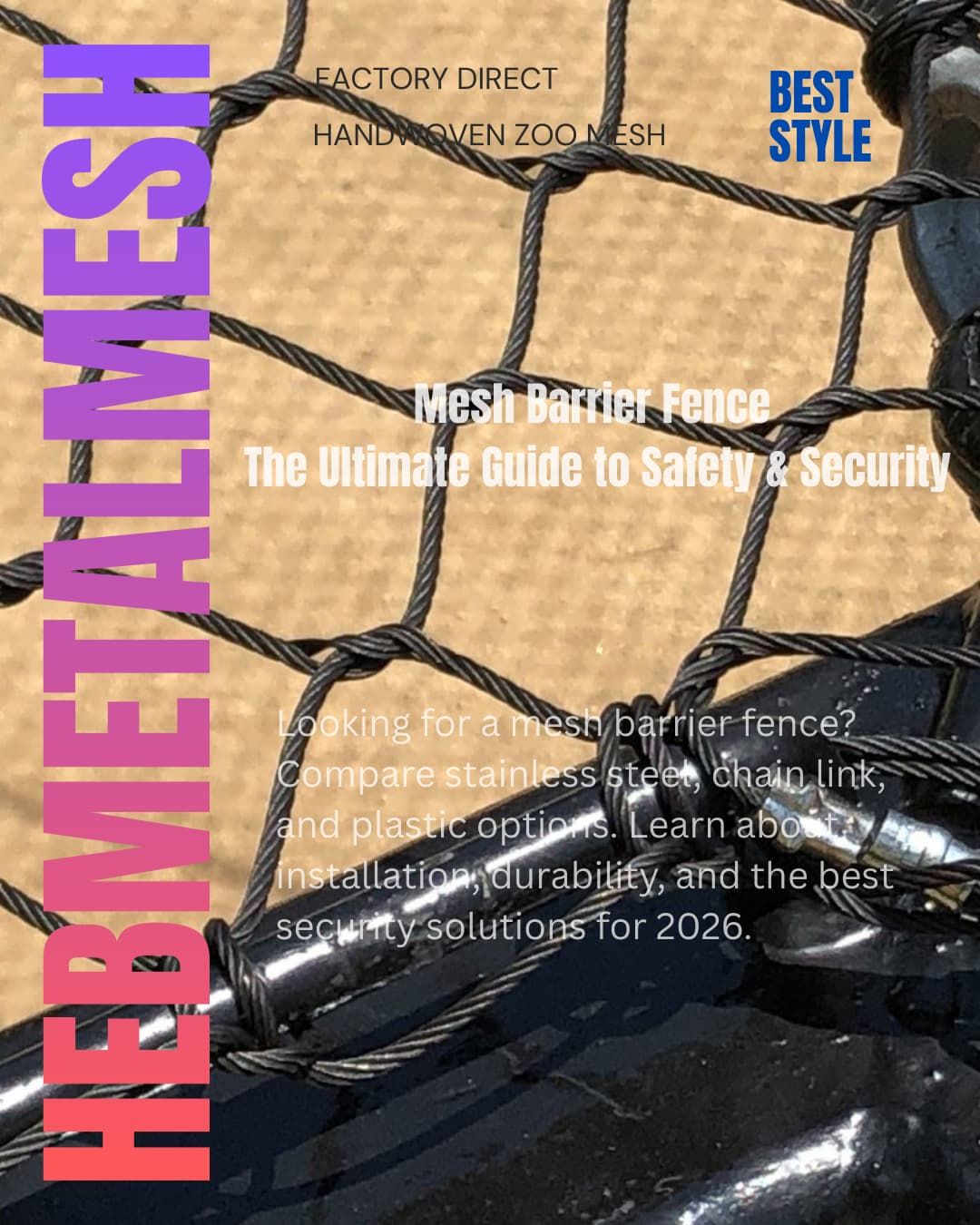
Unlike welded wire, which is rigid and brittle, woven wire is “articulated.” Each intersection is wrapped in a knot (like a Fixed Knot or S-Knot) that allows wires to slide slightly and then lock.
Key advantages:
- Impact Resistance: Energy distributes across the entire “fabric” of the mesh. It flexes and springs back.
- Adapts to Terrain: The only choice for uneven ground. Because joints aren’t fused, the mesh can “rack” (tilt) to follow contours without losing strength.
- Longevity: No welds to break or rust. A high-quality stainless steel woven mesh outlasts three cheap welded fences.
Welded Wire
Welded wire is the most common “off-the-shelf” solution. Vertical and horizontal wires are spot-welded at intersections. It looks neat, it’s cheap, and it’s remarkably fragile.
The problems:
- Every weld is a rigid point of failure. When an animal leans or the ground shifts, welds snap. Once one goes, the entire panel unzips.
- Welding burns off galvanization at the joint — the most critical point for rust.
- Verdict: Great for temporary vegetable gardens; a disaster for animal containment.
High-Tensile Wire
High-tensile wire is the backbone of modern agriculture. It offers more “stopping power” with thinner, lighter wire — much easier to haul across a 10-acre perimeter.
Stainless Steel Rope Mesh
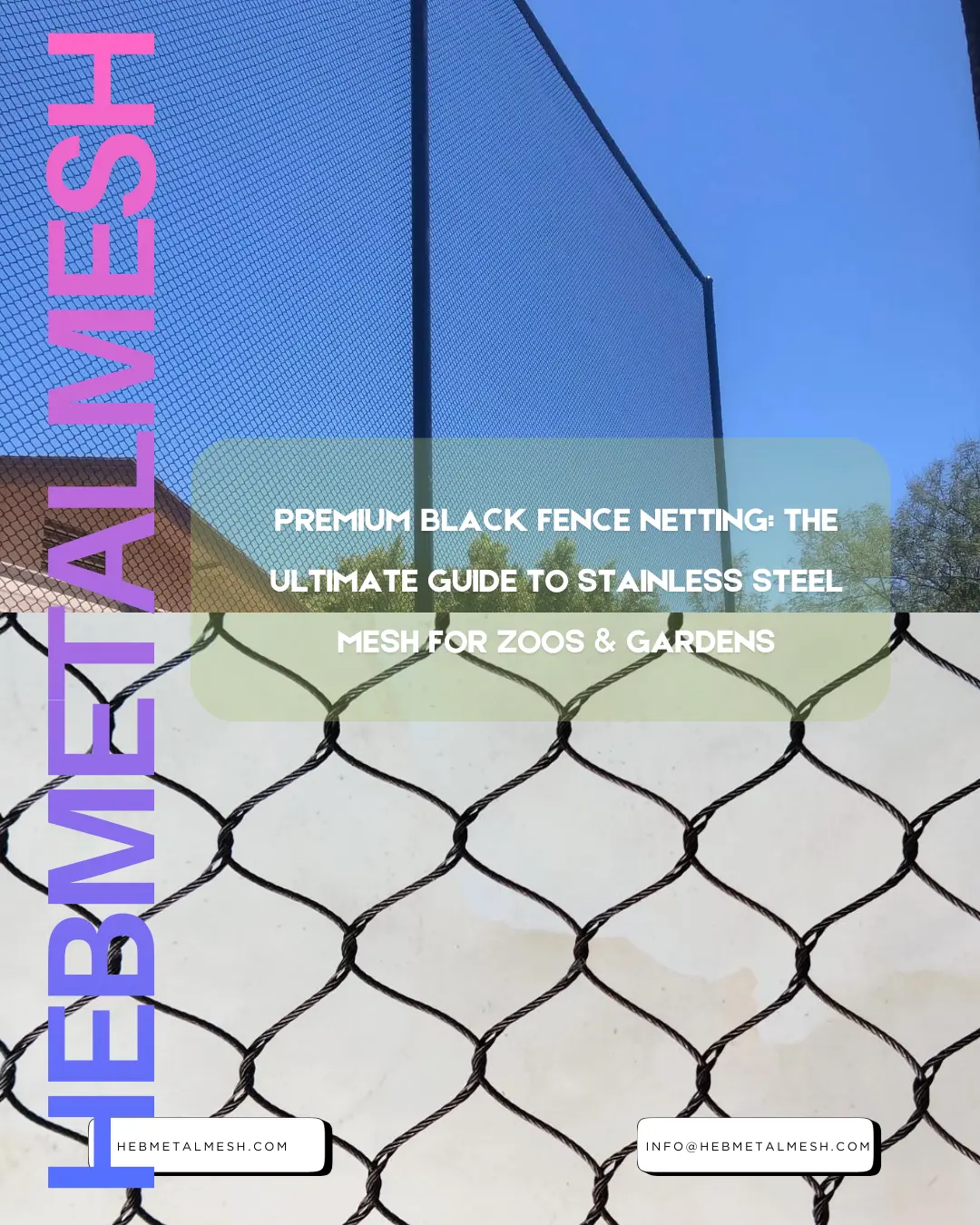
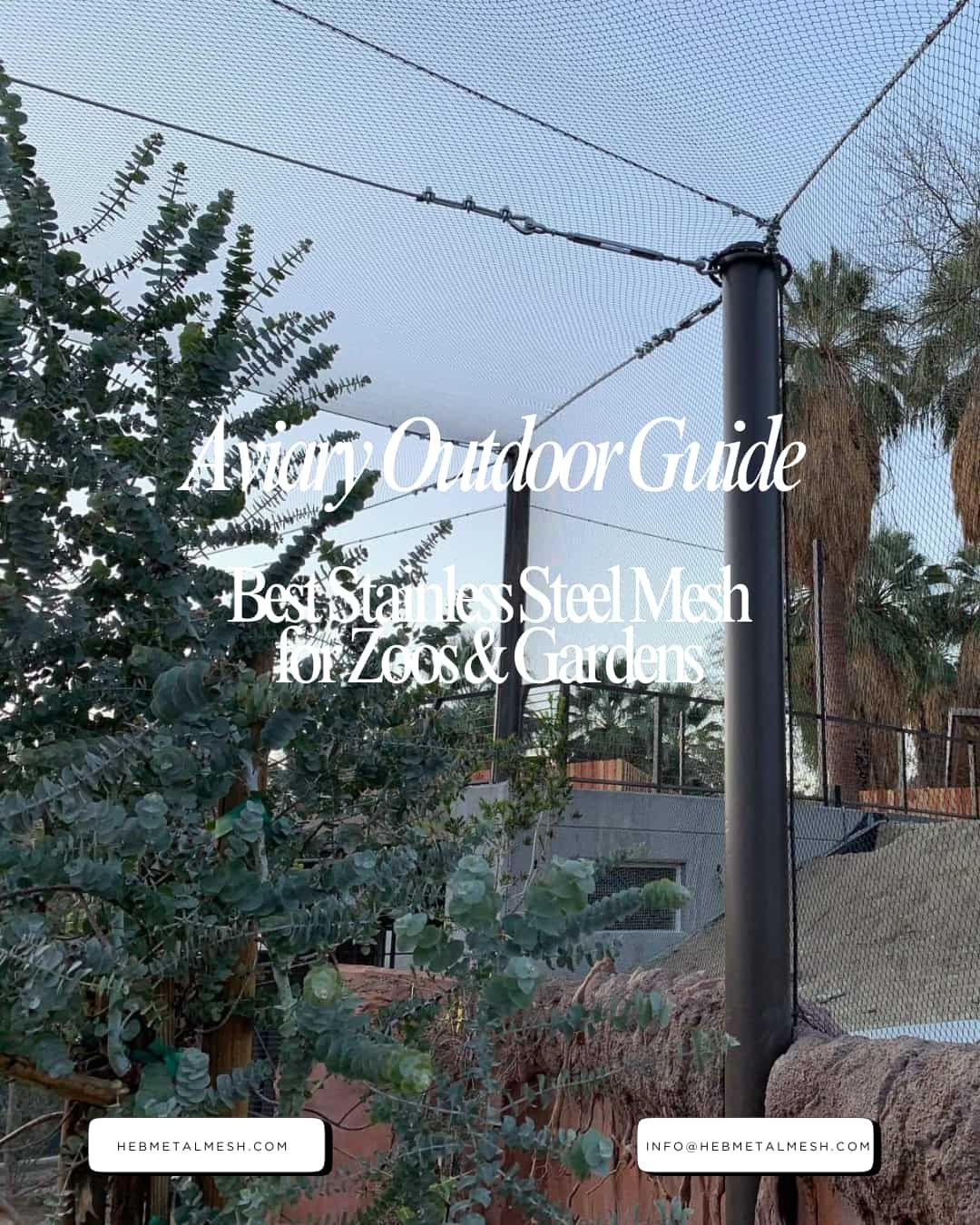
This is the “secret weapon.” While farmers use high-tensile steel, high-end estates and world-class zoos use stainless steel rope mesh.
- Aesthetic Edge: Thin but incredibly strong. Disappears into the landscape, preserving your view.
- Ultimate Corrosion Resistance: Perfect for coastal or high-humidity areas.
- Impact Memory: Acts like a high-tech safety net — catches lunging animals without injury or deformation.
How to Choose the Right Animal Fence Wire for Your Needs
For permanent fencing, invest in high-tensile woven wire. For temporary or rotational grazing, electric animal fence wire (polywire or solid wire) works well.
Wildlife consideration: Smooth wire placed 16–40 inches from the ground prevents wildlife entanglement.
Key Specifications to Evaluate Before Buying
1. Wire Gauge & Diameter
Thicker wire (lower gauge) for larger animals; finer gauge for poultry and small pets.
2. Mesh Size
Smaller openings (e.g., 0.5″ × 0.5″) block rabbits and rodents; larger openings suit cattle.
3. Coating & Corrosion Resistance
- Galvanized: Good for most agricultural needs. Class 3 galvanization offers extended lifespan.
- Stainless Steel (304/316): Best for coastal areas and long-term investments.
4. Roll Length & Width
Standard widths: 24″, 36″, 48″, 60″. Lengths: 50′, 100′, 1640′ rolls. Maxi rolls (30′ × 60′) minimize seams and weak points.
Installation Best Practices for Animal Fence Wire
Running and Securing Wire
Height, spacing, and number of wires vary by animal and purpose. For cattle, 54″ minimum. For mixed livestock, a 48″ fixed-knot woven wire with 13 horizontal line wires is recommended.
Tensioning Techniques
High-tensile wire should be tensioned to 200–250 pounds. Use ratchet in-line strainers (also called “ratchets”) — they allow you to tighten the fence months or years after installation if the ground shifts.
Pro tip: For long runs over 500 feet, pull from the center of the line, not the end. This ensures tension distributes evenly across all posts.
Post Selection & Fastening
Use treated wood posts. Drive staples at a slight diagonal for maximum holding power.
Critical rule: Don’t “dead-staple.” When attaching mesh to line posts, do not drive staples all the way in. The wire needs to slide through the staple to expand and contract with temperature changes.
Safety During Installation
High-tensile steel and stainless steel rope mesh are under immense pressure. If a wire snaps, it becomes a whip.
- Wear eye protection — non-negotiable
- Never tension a wire with a sharp kink — that’s a structural weak point
- Stand on the opposite side of the fence from the tensioning tool
Maintenance & Longevity — Making Your Fence Wire Last 20+ Years
Regular maintenance keeps your animal fence wire performing for decades:
- Check tension seasonally (temperature changes affect wire)
- Inspect for rust, sagging, and wildlife damage
- Replace damaged sections immediately
The numbers speak for themselves: A standard wire fence may need replacement every 5-7 years. A stainless steel fence is designed to last 30 to 50 years. When you factor in labor costs of repeated replacements, stainless steel is the most economical choice over a 15-year period.
Cost Considerations — Budgeting for Quality
The “Cheap Fence” Tax:
The “Aha” moment: Paying $1,000 today feels painful. But paying $300 every two years to fix a failing fence adds up fast. The “expensive” professional-grade animal fence wire is actually the only way to save money.
Conclusion — Making the Right Investment
At the end of the day, the animal fence wire you choose is the only thing standing between your project’s success and a costly, frustrating failure. You can spend your weekends patching “cheap” welded wire, or you can invest in the structural integrity of a professional-grade woven mesh.
By choosing specialized materials — like the hand-knotted stainless steel mesh from hebmetalmesh.com — you aren’t just buying a product. You’re buying peace of mind. You’re ensuring your animals are safe, your property is secure, and your investment lasts for the next thirty years.
Key Takeaways
- ✅ Woven wire beats welded wire every time — it flexes under impact, adapts to terrain, and lasts decades without rusting
- ✅ 12.5-gauge is the industry sweet spot — strong enough for livestock, flexible enough for DIY installation
- ✅ Stainless steel (304/316) offers 30-50 year lifespan with zero maintenance — the most cost-effective choice long-term
- ✅ Proper installation matters — H-braces at corners, correct tensioning, and never “dead-stapling” are non-negotiable
- ✅ Factory-direct suppliers eliminate middleman markup and provide specialized quality you won’t find at big-box stores
FAQs
Q1: What gauge wire is best for animal fencing?
Lower gauge numbers indicate thicker, stronger wire. For larger livestock like cattle and horses, 12.5 to 14 gauge is recommended. For smaller animals like poultry and rabbits, 16 to 19 gauge may suffice. High-tensile wire offers superior strength even at smaller diameters.
Q2: What is the difference between woven wire and welded wire fencing?
Woven wire fencing ties horizontal and vertical wires together with knots, offering significantly more strength and flexibility — it flexes under impact and returns to shape. Welded wire is spot-welded at intersections; it’s more rigid and affordable but can break at weld points under pressure from larger animals.
Q3: How high should animal fence wire be for cattle?
Cattle fencing should be at least 54 inches tall. For mixed livestock with varying sizes, a 48-inch fixed-knot woven wire fence with 13 horizontal line wires is recommended. Wire spacing should be closer near the ground and wider as the fence gets taller.
Q4: How do I prevent my animal fence wire from rusting?
Choose hot-dip galvanized steel wire with a heavy zinc coating for maximum corrosion resistance. For the ultimate protection, choose stainless steel (304 or 316 grade) — it’s virtually immune to rust and lasts 30-50 years even in coastal conditions.
Q5: Can I use electric fence wire for all types of livestock?
Yes, electric fence wire works for cattle, sheep, goats, horses, pigs, and even deer. High-tensile wire is ideal for permanent electric fences, while polywire suits temporary or portable setups. For long fence lines exceeding 200m, use high-conductivity wire like turbo wire or turbo braid.
Ready to Upgrade Your Perimeter?
Whether you’re securing a backyard for a high-energy pup or engineering a professional enclosure, the right materials make all the difference.
Browse Zoo-Grade Wire Now →Factory-direct pricing • Custom sizes • 30+ year lifespan