
Executive Summary
The right bird aviary mesh size is the smallest opening through which the smallest bird in the aviary cannot push its head — and the strongest wire diameter the resident species cannot bite through. For finches and canaries choose a mesh aperture of 20 mm (3/4″); for budgies and cockatiels 25–38 mm (1″–1.5″); for parrots and macaws 38–51 mm (1.5″–2″) in 2.0–3.2 mm stainless rope that a 2000 PSI macaw bite cannot cut. This guide explains how aviary mesh size is measured, provides a bird aviary mesh size chart by species, covers material strength, predator protection, ventilation and feather safety, and shows how the choice fits into the full aviary build. The reference specification is the aviary netting product page.
Choosing Aviary Mesh Size? Get a Free Quote
Send us your bird species, aviary dimensions, and climate. We return a mesh grade, aperture, and cable diameter recommendation within 24 hours.
Request My Free Quote →Quick Answer: What Size Mesh Should a Bird Aviary Use?
Use the smallest aperture the bird cannot escape through and the heaviest cable the species cannot damage: 20 mm (3/4″) for finches and canaries, 25 mm (1″) for budgies and parakeets, 25–38 mm (1″–1.5″) for cockatiels and conures, 38–51 mm (1.5″–2″) for African greys and amazons, and 51 mm (2″) with 2.0–3.2 mm rope for macaws. A bird aviary wire mesh spacing smaller than the bird’s head prevents bird escape; the wire diameter and 304 stainless steel grade handle the biting, chewing and weather. The full aviary mesh size guide below works through each species in turn, so you can read straight to the row that matches your birds. When in doubt, choose the finer aperture — it costs a little more and prevents a lot of trouble.
Key Takeaways
- Size the mesh aperture to the smallest bird’s head: 20 mm for finches, 25–51 mm for larger parrots and macaws.
- Wire diameter is as important as aperture — macaws need 2.0–3.2 mm stainless rope they cannot bite through.
- Stainless steel rope mesh prevents bird escape and predator access for 20–30+ years without sagging or rusting.
- Fine mesh maximizes feather safety and ventilation while keeping claws and beaks from snagging.
- When in doubt, go finer — the aperture is the only part of the aviary you cannot retrofit cheaply.
Aviary husbandry and enclosure-sizing guidance in this article follows standards published by the Smithsonian’s National Zoo.
How Aviary Mesh Size Is Measured
Two numbers define any aviary mesh size: the mesh aperture and the wire diameter.
The mesh aperture is the open space between strands — the hole the bird could potentially push through. It is stated in millimetres and inches: 20 mm (3/4″), 25 mm (1″), 38 mm (1.5″), 51 mm (2″), 76 mm (3″) and 102 mm (4″) are the standard steps. The aperture you need is set by the smallest bird’s head, not its body — a bird can compress feathers and squeeze through an opening only slightly smaller than its skull. The right aviary mesh aperture size — the actual hole dimension — is the single most important spec on the drawing. Many buyers search for what size mesh for bird aviary answers and land on generic advice; the species chart in this guide turns that into a concrete number for your flock.
The wire diameter is the thickness of the stainless cable itself, from 1.2 mm (3/64″) up to 3.2 mm (1/8″). It sets the fence’s strength against chewing, impact and predator attack. Bigger birds need heavier wire, independent of the aperture.
Together, aperture and wire diameter are the whole of choosing aviary mesh size — get those two right and the rest of the build is straightforward.
Bird Aviary Mesh Size Chart
The fastest way to size the mesh is to find your species on the bird aviary mesh size chart:
| Resident Birds | Mesh Aperture | Wire Diameter | Best for |
| Finches, canaries | 20 mm (3/4″) | 1.2–1.6 mm | Small-songbird flights |
| Budgies, parakeets | 25 mm (1″) | 1.6–2.0 mm | Starter aviaries |
| Cockatiels, conures | 25–38 mm (1″–1.5″) | 1.6–2.0 mm | Mixed community flights |
| African greys, amazons | 38–51 mm (1.5″–2″) | 2.0–2.4 mm | Strong chewers |
| Macaws | 51 mm (2″) | 2.4–3.2 mm | Large parrot flights |
A stainless steel aviary mesh size of 51 mm keeps a macaw’s body out of trouble while a 3.2 mm rope holds against a bite force commonly cited at 2000 PSI. Some buyers call the opening the aviary mesh hole size — it is the same number as the aperture, and the one you should write on the order. For mixed aviaries, size for the smallest resident and the strongest chewer at the same time; the chart above handles both, and species-specific ranges live on the parrot enclosure netting, crane aviary mesh and eagle enclosure netting pages. The complete roll and panel range is on the bird netting mesh product page.
Mesh Size for Small Birds vs Parrots
Aviary mesh size for small birds is about escape prevention first. Finches and canaries need a 20 mm aperture because their skulls are small enough to wedge into larger openings. The wire itself can be light — 1.2–1.6 mm — because small birds cannot damage stainless cable.
Aviary mesh size for parrots is about chewing second. A cockatoo or macaw can shear soft wire, so the aperture matters less than the wire diameter and grade. Parrots need 304 stainless steel rope of at least 2.0 mm, with macaws specified at 2.4–3.2 mm, and aviary mesh size for macaws typically lands on 51 mm openings that give a strong, bite-proof grid without looking like a cage.
The general rule: small birds pick the aperture, large birds pick the wire.
Material Matters: Why Stainless Steel Rope Mesh
A bird netting mesh size is only as good as the material holding the opening open. Nylon bird netting sags, UV-degrades and stretches, so a “25 mm” net is 35 mm after two summers — and the bird is gone. Galvanized cage wire rusts at the welds and carries zinc that hook-billed birds can ingest.
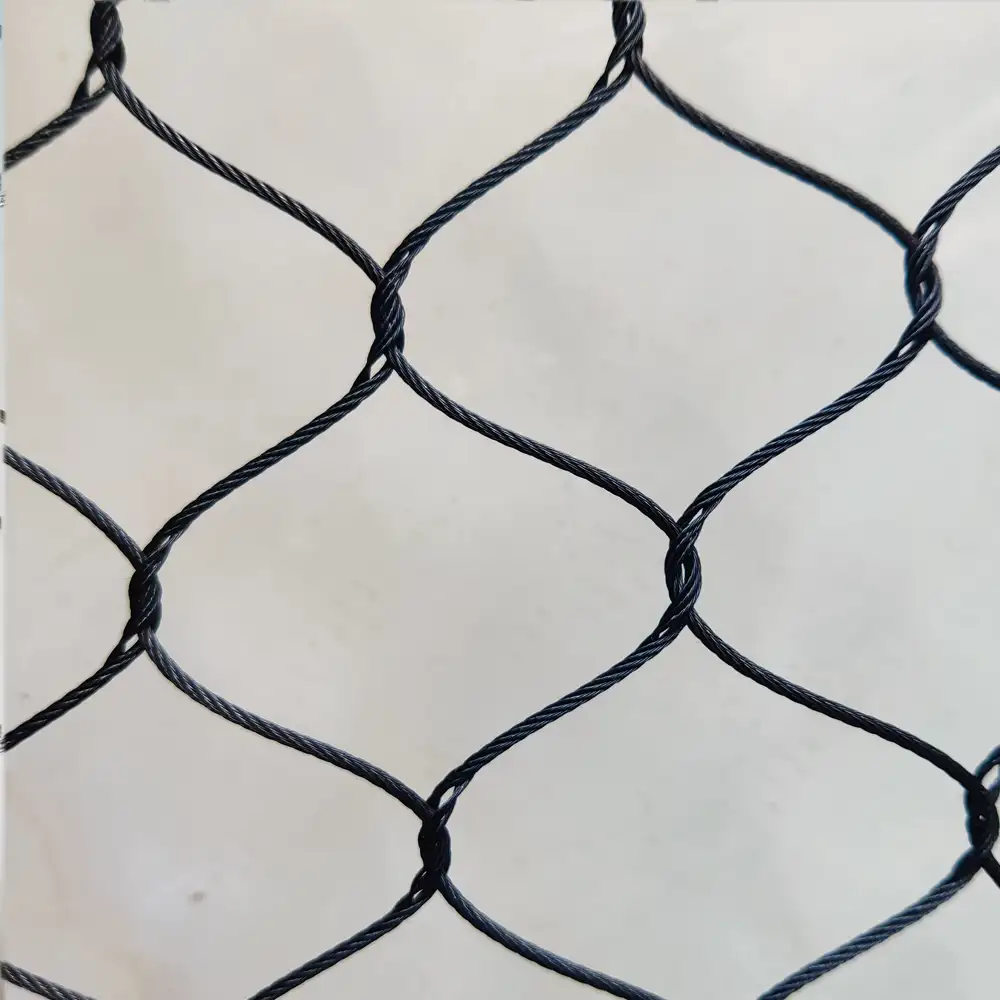
Stainless steel rope mesh — 304 stainless steel cable joined by ferrules or hand-woven — holds its mesh aperture for decades. It does not sag, rust, or weaken in sunlight, and a predator that can tear polymer netting cannot cut stainless cable. This is why the bird aviary mesh size you specify today is still the bird aviary mesh size you have in twenty years.
Predator Protection, Ventilation, and Feather Safety
Choosing the right mesh size for bird enclosure projects means balancing three jobs beyond containment:
- Predator protection. Fine apertures stop raccoons, cats and rats reaching through; stainless cable stops them tearing in. For ground-level aviaries, bury an L-shaped apron so nothing digs under.
- Ventilation. Apertures of 25–51 mm let air move freely, keeping humidity and ammonia down — the open grid is one of the main reasons rope mesh aviaries have healthier birds.
- Feather safety. Smooth stainless strands with swaged edges give no sharp points for tails and wing tips to snag. The flexible rope yields slightly on impact instead of cutting, which protects feather safety during panics in the flight.
These three are why the same bird aviary wire mesh spacing is used in zoo exhibits, where inspection regimes are strict, and in backyard flights, where the birds are pets.
Rolls, Panels, and Installation
Mesh ships as a bird aviary mesh size chart standard of the HM code table — rolls for long runs and pre-cut panels for framed flights. Sheets are produced up to 9 m × 18 m, so a walk-in aviary is clad in a few large pieces with seams clipped at 100 mm overlaps. Attach the mesh with stainless clamps and a border cable on every edge, tension each bay, and re-tension after 30 days as the cable settles. Use stainless hardware only — plated staples corrode within a season and restart every problem you solved. The same aperture applies to the roof: a bird that can reach the ceiling will try the seam, so roof panels use the same bird aviary mesh size as the walls.
FAQ
For finches and canaries use 20 mm (3/4″); for budgies and cockatiels 25–38 mm; for parrots and macaws 38–51 mm — size to the smallest bird’s head and the heaviest chewer’s jaw.
20 mm (3/4″) or finer — a finch skull can wedge through anything larger, and the fine aperture also stops predators reaching in.
51 mm (2″) aperture in 2.4–3.2 mm stainless rope, because a macaw’s bite can shear lighter wire regardless of opening size.
Stainless steel rope mesh lasts 20–30+ years and holds its aperture; polymer bird netting sags and enlarges over two or three seasons.
Yes — 25–51 mm apertures let air flow through the flight, which lowers humidity and keeps birds healthier than solid-walled housing.
Fine apertures stop reaching in, stainless cable stops tearing in, and a buried apron stops digging under — three separate defenses, one product.
Buy from a supplier that states the HM code and ships a sample; measure the actual opening with a ruler before accepting a large order.
Size to the smallest resident for the aperture and the strongest chewer for the wire diameter — the chart above covers the combination.
The bird aviary mesh size question has a short answer: size the opening to the smallest skull and the wire to the strongest beak, in stainless that does not change with the years. Contact us with your species list and aviary dimensions, and we will send the right aperture, wire diameter and panel layout for your build.