
Executive Summary
Finding quality zoo mesh for sale comes down to buying from a manufacturer that can prove the stainless steel grade, send a sample panel, and stand behind a 10+ year warranty. The market splits into direct manufacturers, online marketplaces, local distributors, and trade referrals, and each channel needs the same verification: material grade (SS304 or SS316), rope diameter and aperture matched to the species, and paperwork that includes mill certificates. This guide walks through the channels and the checklist so you can buy stainless steel zoo mesh with confidence. The reference specification is the animal fence mesh product page.
Buying Zoo Mesh? Get a Free Quote
Send us your animal species, enclosure dimensions, and climate. We return a mesh grade, aperture, and cable diameter recommendation within 24 hours.
Request My Free Quote →Quick Answer: Where Can I Find Quality Zoo Mesh for Sale?
The most reliable way to find quality zoo mesh for sale is to buy directly from a stainless steel zoo mesh manufacturer or a specialized supplier that will send material samples and certificates. Verify the material grade (SS304 or SS316), the wire rope diameter (1.2–3.2 mm), the aperture size (20–102 mm), and request a sample panel before committing to a full order.
Zoos, wildlife parks and sanctuaries all need the same thing from their fencing: a barrier strong enough to contain the animal, rust-proof enough to survive decades outdoors, and open enough to preserve the visitor view. That combination is exactly what stainless steel wire rope mesh delivers, which is why it has replaced bars and welded panels in modern exhibits. But where to find quality zoo mesh at a fair price takes more than a quick search, because the market is split between reputable manufacturers, resellers, and marketplace sellers of very uneven quality. This guide explains what makes mesh good, where the reliable channels are, and exactly what to verify before you spend.
Key Takeaways
- Buy directly from a stainless steel zoo mesh manufacturer that sends samples and mill certificates.
- Verify material grade, wire rope diameter, and aperture size before ordering; 304/316 stainless is non-negotiable.
- Marketplaces and distributors work, but only after the grade and warranty are confirmed in writing.
- Expect
10–22/m² for aviary-grade mesh and20–38/m² for carnivore-grade mesh as planning figures.
Zoo enclosure procurement guidance in this guide follows the standards published by the <a href=”https://www.waza.org/” rel=”nofollow” target=”_blank”>World Association of Zoos and Aquariums (WAZA)</a>.
What Makes Zoo Mesh “Quality” in the First Place
Before looking for zoo mesh for sale, you need to know what you are buying. Four attributes separate a 20-year enclosure from a five-year liability:
- Material grade. Real quality animal enclosure mesh is made from 304 or 316 stainless steel. SS304 contains 18% chromium and 8% nickel, giving it excellent corrosion resistance in normal zoo atmospheres; SS316 adds molybdenum for coastal or high-chloride sites. If a seller will not state the grade on paper, walk away.
- Rope construction. Premium mesh is built as stainless steel wire rope mesh — strands of 1.2–3.2 mm wire rope crossed and joined by stainless ferrules, or woven by hand as hand woven mesh for fully flexible, shape-conforming panels.
- Dimensions. The aperture size (20–102 mm) and rope diameter must match the species: 20–51 mm for birds and small primates, 51–102 mm for big cats where mass is the design driver.
- Finish and edge quality. Natural or black oxide surface, cleanly swaged cut ends, and no loose ferrules.
When a supplier can talk about these specifics and back them with documents, you are dealing with a serious manufacturer rather than a reseller.
Where to Find Quality Zoo Mesh: Four Reliable Channels
1. Buy Directly from Zoo Mesh Manufacturers and Suppliers
The most direct route to quality zoo mesh for sale is a direct zoo mesh manufacturer that produces stainless steel rope mesh itself. Buying factory-direct gives you the widest customization, the best unit pricing, and direct access to the engineers who can size the mesh for your species. Look for zoo mesh manufacturers and suppliers that publish their HM code tables, state rope diameter and aperture ranges openly, and produce panels up to 9 m × 18 m so large enclosures are clad in a few sheets. Hebmetalmesh is exactly this type of supplier — start from our stainless steel animal enclosure mesh page to see the catch-all product range, then drill into the species pages below.
2. Buy Zoo Mesh Online from Marketplaces
Online marketplaces such as Alibaba, Amazon and Shopify make it easy to buy zoo mesh online and compare dozens of listings side by side. The convenience comes with risk: many listings are resellers who cannot vouch for the actual material grade, and stainless steel is frequently mislabeled as “chrome” or “galvanized” at first glance. If you do use a marketplace, filter for sellers with factory photos, published specifications, and a track record of zoo projects, and always request a sample before ordering in volume.
3. Work with Local Distributors
Construction and fencing distributors often carry stainless steel zoo mesh supplier lines and can provide competitive freight and local support. Distributors are a good middle ground when you need mesh quickly and want to inspect it in person. Confirm that the distributor is an authorized agent of a real manufacturer and that they can pass along mill certificates and warranty terms, not just a product photo.
4. Trade Shows, Zoological Networks and Referrals
Zoo architects and keepers talk, and referrals from institutions running similar exhibits are among the strongest signals you can get. Industry events and zoological associations frequently host suppliers, and a supplier who has delivered custom zoo mesh panels for accredited facilities will usually let you visit reference enclosures.
How to Verify Quality Before You Buy
No matter which channel you choose, apply the same verification steps to every quote for zoo mesh for zoo enclosures:
- Request zoo mesh samples before purchase. A physical sample tells you immediately whether the rope is true stainless (magnet test, weight, sheen), whether the ferrules are tight, and whether the aperture size matches the spec sheet.
- Check the paperwork. Ask for mill test certificates, tensile test reports, and any third-party inspection results. A reputable stainless steel zoo mesh supplier keeps these on file without hesitation.
- Confirm the warranty. 10+ years against rust and manufacturing defects is the norm for SS304/SS316 rope mesh; shorter terms are a warning sign.
- Check references. Ask for 2–3 zoo or sanctuary projects of comparable size and follow up.
These steps are the practical core of zoo mesh quality standards — the difference between a supplier’s marketing and a verifiable product. Document every claim in the purchase order: grade, aperture, panel dimensions, finish, and warranty period. A supplier that hesitates to commit these to writing is the strongest red flag of all, so walk away and keep searching until you find a zoo mesh supplier with certifications you can verify on paper.
What Quality Zoo Mesh Should Cost
A zoo mesh price comparison across suppliers is only meaningful when the specification is identical, because price scales directly with rope diameter and aperture density. As an indicative planning range:
| Mesh Spec | Typical Range (per m²) |
| 1.2–2.0 mm rope, 25–51 mm aperture (birds, primates) | 10–22 |
| 2.4–3.2 mm rope, 51–102 mm aperture (big cats) | 20–38 |
These are planning figures; the real quote depends on panel size, finish, and quantity. Beware any offer far below these ranges — the metal is either thinner, lower grade, or not stainless at all. Ordering large panels reduces both unit cost and install labor, because fewer seams mean fewer edge fittings, and factories that produce panels up to 9 m × 18 m can cut freight cost per square meter by shipping full sheets rather than trimmed pieces. Always include freight, customs and install hardware in your comparison, not just the panel price. For a fuller treatment of what drives cost, see our animal enclosure netting price guide.
Matching the Mesh to the Enclosure
Once you know how to buy stainless steel zoo mesh, the final step is matching the spec to the animal. The species pages on this site carry the detailed numbers:
- Big cats: lions and tigers need 2.4–3.2 mm rope with 76–102 mm apertures — see lion enclosure netting and tiger enclosure mesh.
- Birds: aviaries use 1.2–2.0 mm rope with 20–51 mm apertures — see aviary netting.
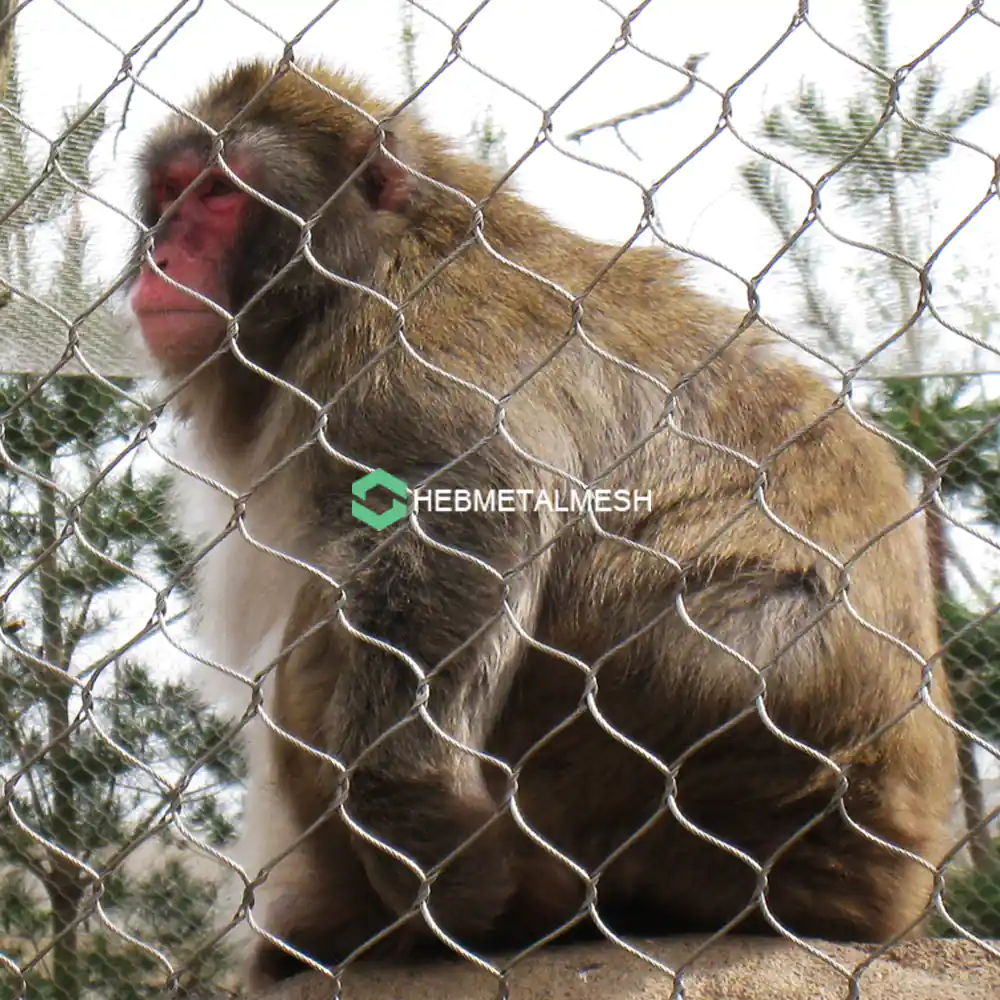
- Primates: monkeys and apes need tamper-proof 2.0–3.2 mm mesh — see monkey enclosure netting.
- Raptors: eagles need feather-safe, claw-proof mesh — see eagle enclosure netting.
Every one of these builds on the same quality animal enclosure mesh base material — SS304/SS316 rope mesh with verified enclosure safety performance.
Final Buying Checklist
Before you sign a purchase order for quality zoo mesh for sale, confirm all of the following:
- Material grade stated as SS304 or SS316, with a mill certificate.
- Rope diameter and aperture size matched to the housed species.
- Sample panel inspected and approved.
- Supplier can produce panels to your exact dimensions (up to 9 m × 18 m).
- Quality assurance terms, warranty (10+ years) and delivery schedule in writing.
- Freight and lead time quoted with a firm date.
If every box is ticked, you have found a direct zoo mesh manufacturer you can rely on for this project and the next. Compare zoo mesh manufacturers and suppliers with this checklist and the shortlist writes itself — a quote request with species, panel sizes and finish preference will then return specs, samples and a priced offer for your quality zoo mesh for sale.
FAQ
The most reliable sources are direct stainless steel zoo mesh manufacturers and specialized suppliers that send samples and certificates; marketplaces and local distributors work if you verify the material grade first.
It can be, but only after you verify the seller is a real manufacturer, request a sample, and confirm the 304/316 grade with a mill certificate — many marketplace listings are resellers.
Ask for a mill test certificate, do a magnet and weight check on a sample, and confirm the grade is printed on the commercial invoice; 304 is weakly magnetic, lightweight, and never rusts in normal use.
Yes, and you should. Any serious supplier offers zoo mesh samples before purchase — a sample reveals rope quality, ferrule tightness, and true aperture size.
Indicatively 10–22 per m² for aviary-grade 1.2–2.0 mm mesh and 20–38 per m² for carnivore-grade 2.4–3.2 mm mesh, before framing and freight.
Mill test certificates for the stainless grade, tensile test reports, and ideally third-party inspection; ISO 9001 quality assurance is a strong plus.
Typical delivery time for custom panels is 2–4 weeks production plus sea or air freight; standard sizes ship faster. Confirm the date in writing.
Many factories set a minimum order quantity per specification, but custom mesh producers can usually accommodate small first orders for trial enclosures — ask directly.
The short version: where to find quality zoo mesh comes down to buying from a manufacturer that can prove the grade, show you a sample, and stand behind a 10+ year warranty. For a spec-matched quote on your next enclosure, contact us — we will size the mesh, quote the panels, and arrange samples before you commit.