
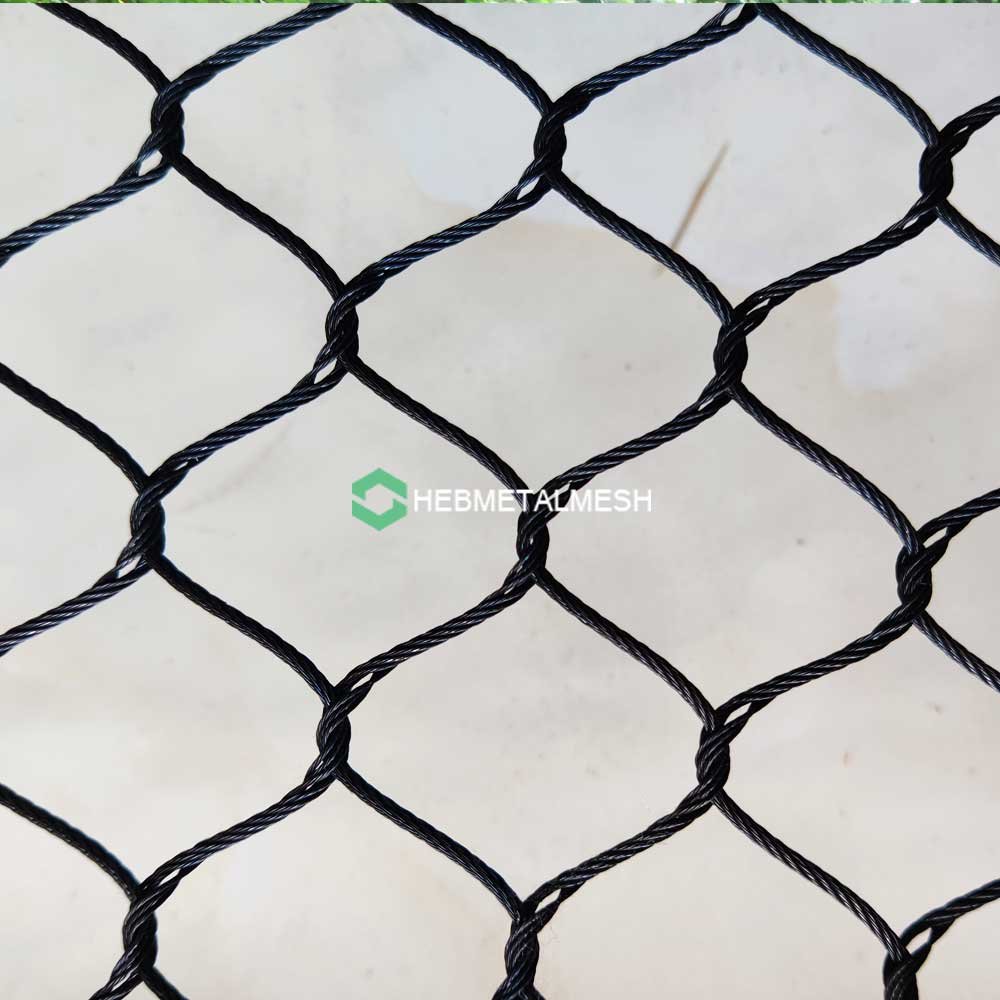
Executive Summary
Animal fence price is driven by five variables, and only one of them is the material. The material sets the base rate, but the animal sets the mesh aperture and cable diameter, the site sets the perimeter length and height, and the grounding and structure set the installation labour. Animal fence price for a stainless steel rope mesh enclosure therefore cannot be quoted from a catalog — it is quoted from a spec sheet. This guide breaks the cost into its five drivers, shows how containment netting prices are expressed per square meter, per meter, and per foot, compares materials on cost per year rather than cost per panel, and explains where a budget can be trimmed without touching safety. The reference specification is the animal fence mesh product page.
Budgeting an Animal Enclosure? Get a Free Quote
Send us your species, perimeter length, height, and site conditions. We return a graded mesh recommendation and a budget breakdown within 24 hours.
Request My Free Quote →Quick Answer: What Does Animal Fencing Cost?
There is no single number, because the animal sets the specification — which is why animal fencing prices cannot be quoted from a catalog. The honest answer is that animal fence cost is built from five line items: material and grade, mesh aperture and cable diameter, enclosure height and perimeter length, site conditions, and installation labour. For stainless steel rope mesh — the standard for zoo and sanctuary containment — the material is quoted per square meter, the hardware and labour are quoted separately, and the total is best judged as cost per year of service rather than cost per panel. Send your species and dimensions to a supplier and you will get a real number; this guide tells you what that number is made of and which parts you can influence.
Key Takeaways
- Material sets the base rate, but the animal sets aperture and cable diameter.
- Height and perimeter length usually move the total more than material grade does.
- Site conditions — terrain, access, wind load — drive installation labour.
- Compare materials on cost per year of service, not on initial price.
- Professional installation is not optional for tensioned stainless mesh.
- Never trim animal enclosure fencing cost by downgrading containment; trim the landscaping instead.
- Containment netting prices are quoted per square meter, with hardware separate.
The Five Cost Drivers
1. Material and grade. This is the base rate. 304 stainless steel is the standard grade; 316 costs more and is specified for coastal or high-spray sites. The grade premium is real but smaller than most buyers expect compared with the other drivers.
2. Mesh aperture and cable diameter. These are set by the animal, and they are the most common cost surprise. A smaller aperture means more cable per square meter, and a heavier cable diameter means more steel. A small-primate enclosure and a big-cat enclosure can differ substantially in animal fence material cost per square meter even with the same grade.
3. Enclosure height and perimeter length. Perimeter length multiplied by height is the area you are buying. In most projects these two numbers move the total more than the material choice does, which is why enclosure design should be settled before any quote is requested.
4. Site conditions. Terrain, access for equipment, wind loading, and the condition of existing structure all affect installation. A flat, accessible site with a sound frame costs far less to clad than a sloping site that needs new posts.
5. Installation labour. Tensioned stainless steel rope mesh is not a DIY product at zoo scale. It requires jacks, torque specifications, and experience reading a panel under load. Installation labour is a real line item, and it is the one most often underestimated in the first budget.
For a deeper breakdown of each driver, our zoo enclosure fencing cost guide covers them in detail, and the zoo netting pricing guide explains how suppliers structure a quote.
Material Comparison on Cost per Year
The most useful comparison is not the animal containment netting price you see on a panel quote but cost per year of service — the installed price divided by realistic service life, plus maintenance.
| Material | Relative upfront cost | Realistic service life | Maintenance | Cost per year |
| Hand-woven 304/316 stainless mesh | Higher | Decades | None — no coating or painting | Lowest |
| Welded wire mesh | Lower | Years | Periodic repair, galvanizing wear | Higher |
| Chain link | Lower | Years | Frequent repair, sag, rust | Higher |
| Timber | Medium | Years | Staining, rot, board replacement | Higher |
| Vinyl / coated systems | Medium | Years | Coating repair, replacement | Higher |
| Electric offset (as backup) | Low | Years | Energiser, insulators, testing | N/A as primary |
The table is the reason stainless rope mesh is specified for serious animal enclosures despite the higher ticket. It is the only option in the comparison that needs no coating, no repainting, and no mid-life replacement, which is why the total cost of ownership is the lowest on the list.
Price by Measurement: Per m², Per Meter, Per Foot
Containment netting cost per square meter is the supplier’s standard unit: the panel area you need, priced against the grade, aperture, and cable diameter you specified. Stainless steel mesh price per m2 moves with cable diameter most of all, because heavier cable means more steel per square meter.
Animal fence price per meter and zoo fencing cost per meter are the units used once the height is fixed — multiply the running metres of perimeter by the height to get area, then apply the per-square-meter rate. In North American projects, animal fence price per foot is the common unit, and it is simply the same arithmetic in imperial: perimeter feet times height, at the area rate.
Custom sizes are quoted to the drawing, so a custom animal enclosure netting price follows the same per-square-meter logic plus a fabrication allowance. When you request a quote, ask for the rate per square meter, the hardware allowance, and the installation estimate separately. Bundled single-number quotes make comparison between suppliers almost impossible.
Installation Cost: DIY vs Professional
Animal fence installation cost is the line item most likely to blow a budget, and it splits into two very different cases. For a domestic run of fencing, a competent owner can install and save the labour. For a tensioned stainless steel rope mesh enclosure, professional installation is effectively mandatory: the mesh has to be pre-stretched, tensioned to a torque specification, and finished with border cables and clamps rated for the load.
The reason is practical rather than commercial. Under-tensioned panels sag, and a sagging panel is a climbing aid for the animal and a visual failure for the exhibit. Over-tensioned panels stress the frame. Getting it right takes jacks, gauges, and experience — and the cost of getting it wrong is a rebuild, not a touch-up.
That said, there is a legitimate hybrid approach: site preparation, post setting, and non-structural work can often be done in-house, with the specialist crew brought in for tensioning and finishing. This is where most projects find real savings without touching the containment system.
How to Budget for Animal Enclosure Fencing
Budget for animal enclosure fencing in this order:
- Fix the specification first. Species, aperture, cable diameter, grade, height, perimeter. Without these, every quote is a guess.
- Price the area. Perimeter length times height, at the quoted rate per square meter for your specification.
- Add the system, not just the panels. Border cable, clamps, tensioning hardware, and fixings are part of the containment.
- Add installation. Get the labour number in writing, including equipment and access requirements.
- Add a contingency. Site conditions are the most common source of overruns; ten to fifteen percent is a normal allowance.
- Convert to cost per year. Divide the total by the expected service life and compare options on that basis.
For a species-specific worked example, the animal enclosure mesh cost guide shows how the per-square-meter arithmetic plays out, and our SS304 zoo fencing reference covers the standard specification.
Where to Save — and Where Not To
There are legitimate savings in a containment project, and there are savings that cost more than they save.
Where to save: phase the landscaping and enrichment, which can be added in later budget cycles; do site preparation and non-structural work in-house; order the full perimeter in one run rather than in stages, which avoids remobilisation costs; and buy factory direct to remove intermediary margin.
Where not to save: the containment system. Downgrading the grade, opening the aperture, or lightening the cable to hit a budget number is the single most expensive decision available, because it converts a decades-long asset into a maintenance liability — and in the worst case, into a safety incident. Electric offsets and secondary barriers are additions to a proper barrier, never replacements for one.
For sourcing guidance, read where to find quality zoo mesh and our zoo mesh supplier evaluation guide.
FAQ
There is no meaningful average, because the animal sets the specification. Expect the total to be driven by area (perimeter times height), aperture and cable diameter, and installation labour — in that order of magnitude.
It depends on grade, aperture, and cable diameter. Heavier cable and tighter apertures cost more per square meter. Request the rate for your exact specification, with hardware and installation quoted separately.
Yes, on cost per year. A stainless panel that lasts decades with no repainting, recoating, or replacement is routinely cheaper over the life of the enclosure than a cheaper material replaced twice.
Not at zoo scale. Tensioned stainless mesh requires jacks, torque specifications, and experience. Site prep and post setting can be done in-house, with a specialist crew for tensioning and finishing.
Phase the landscaping and enrichment, do non-structural site work in-house, order the full perimeter in one run, and buy factory direct. Never downgrade the containment system.
Conclusion
Animal fence price is a specification problem before it is a shopping problem. Fix the species and dimensions, price the area at the correct specification, add the system and the installation, carry a contingency for site conditions, and compare options on cost per year rather than on the initial invoice. Done that way, the budget holds and the enclosure performs for decades. For practical examples of pricing across different enclosure types, our netting cost guide and the general fencing cost overview are useful next reads, and the monkey enclosure design guide shows how specification and budget interact on a real build.
If you are budgeting a project, send us your species, perimeter, and height. We will confirm the animal containment mesh specification and the budget breakdown that fits your animals and your site.
Ready to Price Your Enclosure?
Tell us the animal species, perimeter length, height, and site conditions. We reply with a mesh grade, aperture, and a budget breakdown within 24 hours.
Talk to a Mesh Specialist →