
Executive Summary
Choosing a zoo mesh supplier is a procurement decision with a safety consequence: the mesh is the barrier between animals, keepers, and the public. The reliable way to choose is to evaluate four things — material quality, manufacturing capability, certifications, and cost per year of service — and to treat the cheapest initial price as a red flag rather than a target. A zoo mesh supplier that manufactures from 304 stainless steel, fabricates to custom dimensions, holds quality control and safety certifications, and quotes a system rather than bare panels is the one worth contracting. This guide walks through the full selection process for zoo and sanctuary buyers, with a practical checklist at the end. The reference specification is the animal fence mesh product page.
Evaluating Zoo Mesh Suppliers? Get a Free Quote
Send us your animal species, enclosure dimensions, and climate. We return a mesh grade, aperture, and cable diameter recommendation within 24 hours.
Request My Free Quote →Quick Answer: How Do You Choose a Zoo Mesh Supplier?
Evaluate the supplier the way you would evaluate the mesh: on material, capability, and evidence. Confirm the supplier manufactures in 304 or 316 stainless steel, not coated substitutes; confirm they fabricate to custom dimensions and provide a tensioning specification; confirm their certifications and case studies; and compare on cost per year of service, not per panel. A serious supplier asks about your species before quoting, because the aperture and cable diameter are set by the animal, not by a catalog. This guide is the step-by-step version of that answer, written for procurement teams, zoo architects, and sanctuary managers.
Key Takeaways
- The mesh is a safety barrier; supplier selection is a safety decision, not a price decision.
- Material is non-negotiable: 304/316 stainless steel outlasts every coated alternative.
- Aperture and cable diameter are set by the animal; a good supplier asks before quoting.
- Certifications and case studies are evidence; testimonials are not.
- Custom fabrication matters because every enclosure footprint is different.
- Compare on cost per year of service, not initial price.
- A professional supplier provides installation and tensioning support, not just panels.

What Zoo Mesh Is and Why the Supplier Matters
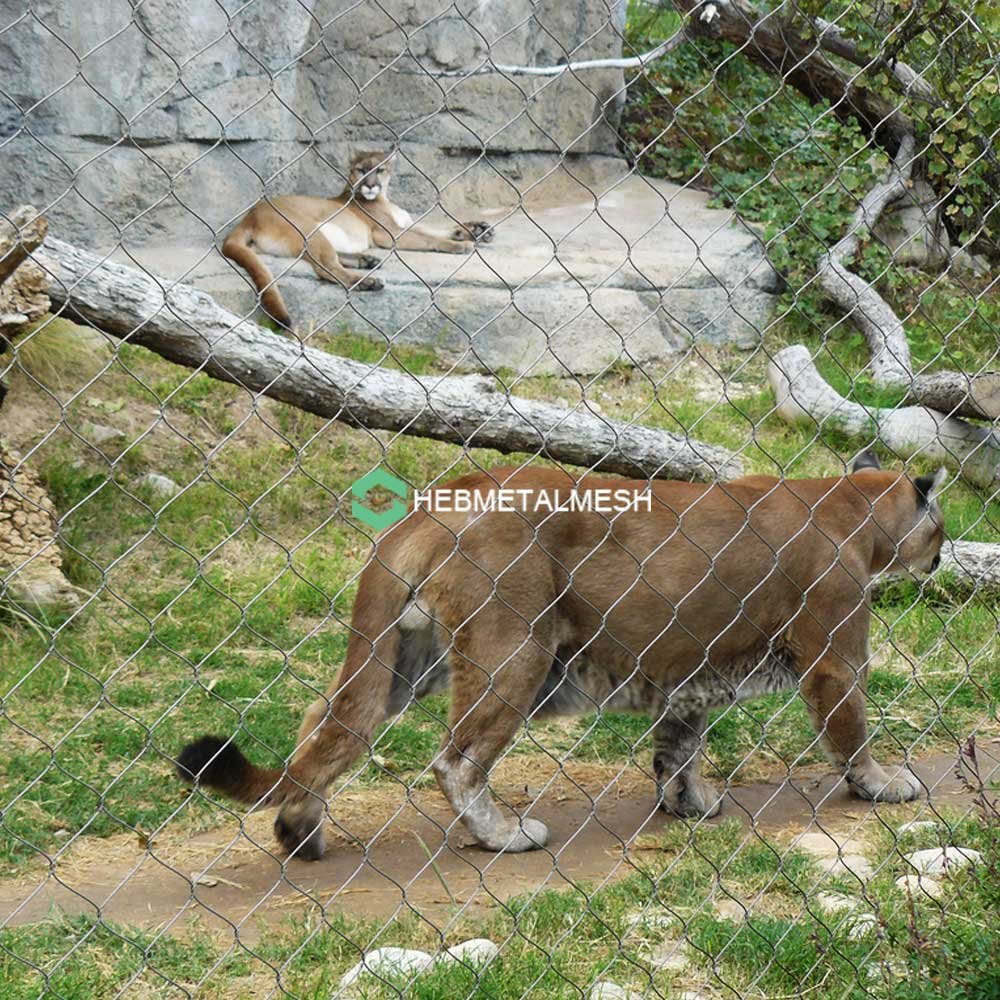
Zoo mesh is a specialized animal enclosure product: wire mesh engineered to contain animals safely while staying transparent enough for viewing. It is the difference between an enclosure and a cage. The mesh must hold the animal, protect the keeper, resist weather, and disappear visually — four requirements that only stainless steel construction reliably meets.
The supplier matters because the mesh is only as good as the manufacturing. A hand-woven stainless steel panel is defined by its weave quality, its tolerance, and its border cable work — all of which live in the factory, not on the quote. Choosing a zoo mesh supplier is therefore choosing a manufacturing partner, and the selection criteria below are the ones that predict whether the partner will deliver.
Stainless Steel vs the Alternatives
The material decision is the foundation of every other choice. Stainless steel zoo mesh supplier options — the stainless steel mesh supplier for zoos in the trade shorthand — are compared against coated and welded alternatives in the table below.
| Property | 304/316 stainless steel mesh | Welded wire mesh | Coated / polymer mesh |
|---|---|---|---|
| Animal chew resistance | High — solid strands, no welds | Low — weld joints fail | Low — coating removed |
| Corrosion | 304/316 by composition | Galvanizing wears | Coating damage exposes core |
| Service life | Decades | Years | Years |
| Transparency | High at viewing distance | Moderate | Moderate |
| Maintenance | None — no painting or coating | Periodic | Periodic |
| Recycling | Fully recyclable | Partially | Coating complicates |
Stainless steel netting is the only material in the comparison that needs no coating, no painting, and no mid-life replacement. For the wider material logic across zoo builds, our stainless steel rope mesh application guide covers where the material is specified.

What to Check in a Zoo Mesh Supplier
Material and grade. Confirm the supplier works in 304 stainless steel as the standard and 316 for coastal or high-spray sites. Ask for the grade on the quote — a supplier that does not specify the grade is not manufacturing to spec.
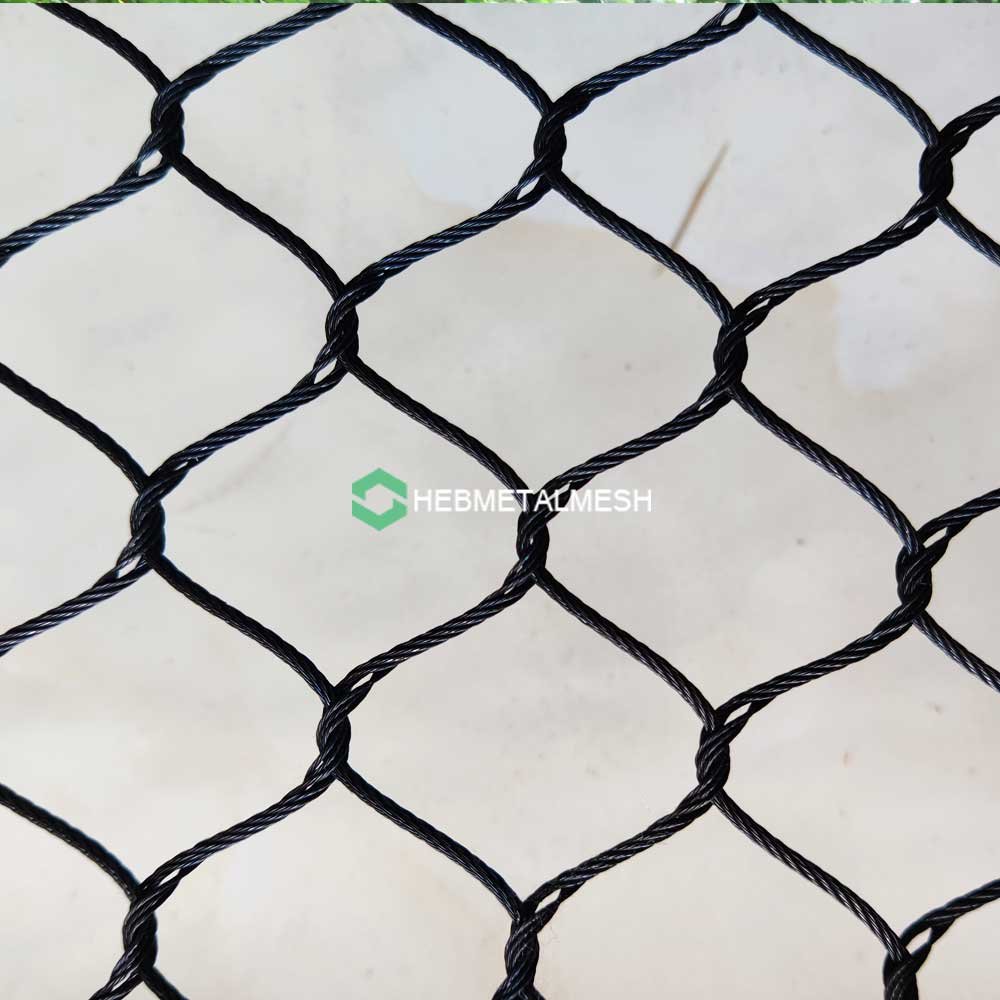
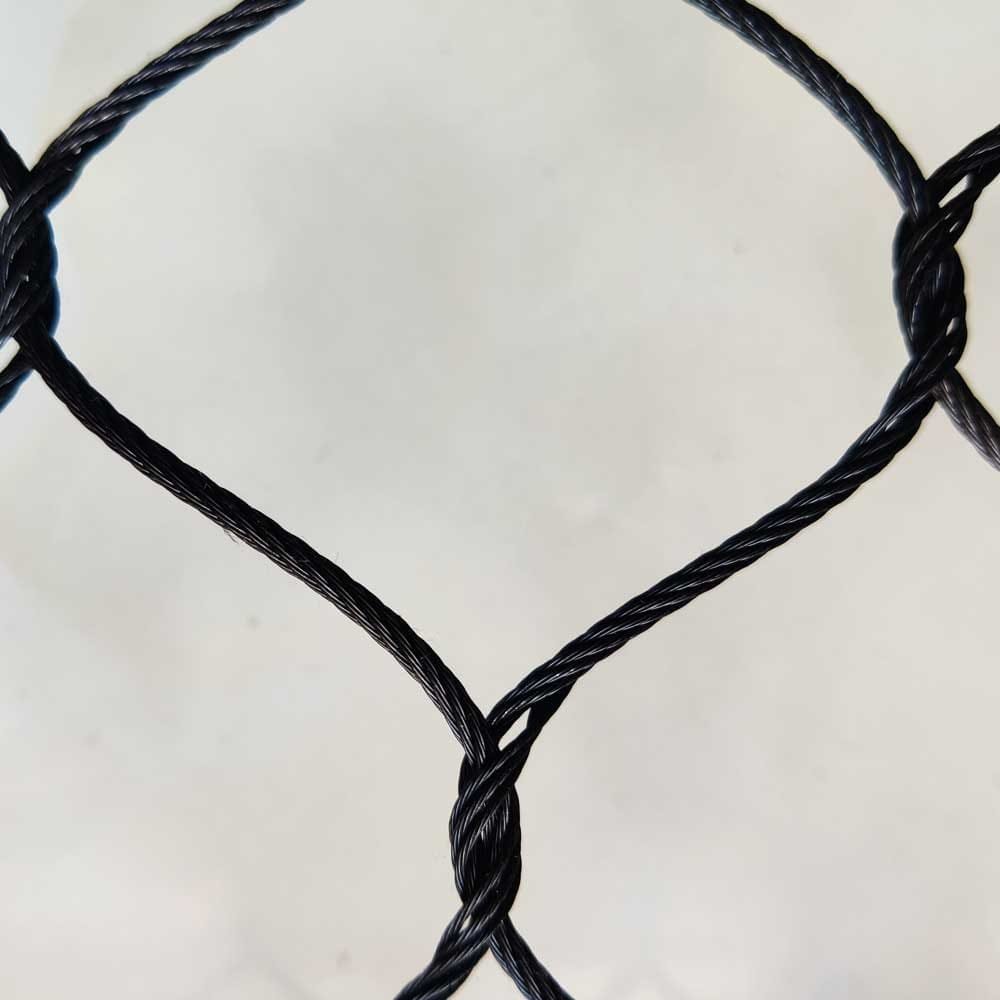
Manufacturing capability. A zoo mesh manufacturer should weave, tension, and finish panels in-house, and fabricate border cables and clamps to match. The weave quality — consistent aperture, smooth strand ends — is the visible proof of capability.
Custom fabrication. Every enclosure footprint is different. A custom zoo mesh manufacturer should quote to your dimensions, not force you into a catalog size. Aperture, cable diameter, and panel size are all set by your species and site.
Quality control. Zoo mesh supplier quality shows in how the factory checks aperture tolerance, strand termination, and tension consistency — the details that separate a factory from a workshop.
For a practical example of the specification side, our animal enclosure mesh guide shows how SS304 mesh is applied across exhibits.
Evaluating a Zoo Mesh Manufacturer
Evidence over claims. Look for case studies of completed zoo and sanctuary projects, especially ones similar to yours. A supplier with a portfolio of primate, big-cat, and aviary builds has solved the problems you are about to face.
Factory direct. A zoo mesh supply factory — the zoo mesh factory direct model — controls quality, lead time, and price in one place, whether for a zoo mesh manufacturer china or any other source. Intermediaries add cost and dilute accountability. China-based zoo mesh supplier china options and factory-direct sourcing generally work the same way: the shorter the chain, the tighter the control.
Technical support. The supplier should provide a tensioning specification, installation guidance, and a maintenance schedule. A supplier that sells panels and disappears is selling material, not a solution. For the installation side, our aviary net installation guide covers the kind of documentation a serious supplier provides.
Warranty and after-sales. Confirm what the warranty covers, how long it runs, and how the supplier handles a field issue. The answer tells you whether they stand behind the product.
Certifications, Ethics, and Compliance
A zoo mesh supplier should be able to document compliance, not just claim it. Look for supplier certification that covers material traceability and quality management, and confirm the factory follows ethical practices — fair labor and sustainable sourcing are part of the decision, because the buyer is a public institution.
Compliance also runs to the enclosure itself. Standards like those from the Association of Zoos and Aquariums (AZA) cover mesh size, strength, and material for animal enclosures, and a competent supplier should know how their product maps to those requirements. This is animal welfare delivered through procurement: the enclosure design must prevent injury, prevent escape, and support natural behavior, and the mesh is where that starts.

Installation and Technical Support
The mesh is only as good as its installation, and a good supplier provides the specification for it. Tensioning stainless steel rope mesh requires jacks, torque specifications, and experience reading a panel under load; the two classic field failures are sagging panels and loose edges, both of which are installation failures, not material failures.
A professional supplier provides a tensioning spec, supplies border cable and clamps as part of the system, and can support the install crew on site or remotely. For the long-term side, our natural habitats guide and the sustainable enclosure design guide cover how the built environment and the maintenance program come together.
Cost and Value: Cost per Year of Service
The initial cost of zoo mesh varies with material, aperture, cable diameter, and panel size — and that variation is exactly why initial price is the wrong comparison. The right comparison is cost per year of service: divide the installed price by the expected service life. A stainless panel at a higher upfront price that lasts two decades without replacement, repainting, or repair is routinely cheaper than a coated panel replaced twice in the same period.
When comparing quotes — whether from a zoo mesh wholesale supplier or a one-off source — include the system: border cable, clamps, tensioning hardware, and installation. A cheap panel quote that excludes the system is not comparable to a complete quote. For a detailed breakdown of the numbers, see what drives zoo enclosure fencing cost.
Checklist for Supplier Selection
Use this checklist when comparing zoo mesh suppliers — every serious zoo enclosure mesh manufacturer should be able to answer each line:
- Material: 304/316 stainless steel specified on the quote
- Manufacturing: in-house weaving, tensioning, and finishing
- Custom fabrication: panels quoted to your dimensions
- Quality control: documented aperture tolerance and strand termination
- Evidence: case studies of similar zoo and sanctuary projects
- Certifications: material traceability and quality management
- Technical support: tensioning spec, installation guidance, maintenance schedule
- Warranty: clear coverage and after-sales process
- Cost: compared per year of service, with the full system included
FAQ
Evaluate material (304/316 stainless steel), manufacturing capability, certifications, case studies, and cost per year of service. A supplier who asks about your species before quoting is a supplier who understands the product.
Hand-woven stainless steel rope mesh in 304 grade, with 316 for coastal or high-spray sites. It cannot be chewed through, needs no coating, stays transparent, and lasts decades.
The upfront cost is higher than coated alternatives, but the service life is measured in decades with no repainting or replacement. Over the life of an enclosure it is usually the cheapest option per year of safe service.
actory-direct sourcing gives you control over quality, lead time, and price, and it removes the cost and accountability gaps of intermediaries. Confirm the factory’s certifications and case studies before contracting.
Material traceability and quality management certification, plus demonstrated compliance with enclosure standards such as AZA guidelines. Evidence matters more than claims.
Conclusion
Choosing a zoo mesh supplier is a safety decision wearing a procurement suit. Evaluate material, capability, certifications, and cost per year of service; ask the supplier about your species; and contract for a system — mesh, border cable, tensioning, and support — rather than panels. Done that way, the supplier becomes a partner and the mesh becomes the quiet, reliable barrier that the animals, keepers, and public never have to think about. For a look at how the material is applied across a complete animal enclosure build, our gorilla enclosure build guide and the monkey enclosure design guide are useful references.
If you are evaluating suppliers, send us your species and dimensions. We will confirm the animal enclosure mesh specification that fits your animals, your climate, and your budget.
Ready to Evaluate Your Zoo Mesh Options?
Tell us the animal species, enclosure footprint, and site climate. We reply with a mesh grade, aperture, and cable diameter recommendation within 24 hours.
Talk to a Mesh Specialist →