
Executive Summary
Stainless steel rope mesh applications span far beyond animal fencing. The same material that quietly holds a zoo exhibit together also shapes building facades, stops falls on high-rise balconies, and carries climbing plants up a city wall. It is a tension-loaded lattice of twisted stainless cables, and its defining quality is that it combines transparency with strength in a way welded panels cannot. This guide maps the nine application families that account for most of what we ship, and for each one explains what the mesh actually does on site, which grade to specify, and which detail decides whether the install lasts. If you are comparing materials rather than choosing one, our stainless steel rope mesh vs welded wire mesh comparison covers the trade-offs in depth.
Have an Application in Mind? Get a Free Quote
Tell us the project type, aperture, and environment. We return a stainless steel rope mesh specification and a price within 24 hours.
Request My Free Quote →Key Takeaways
- One material, many jobs: the same cable mesh serves as an animal barrier, a facade skin, a fall guard, and a plant support.
- Transparency is the shared reason across every application. The mesh protects without blocking light or view.
- Grade follows environment: 304 stainless steel inland, 316 stainless steel near salt water or in coastal architecture.
- Mesh aperture decides what the barrier holds, from a finch to a leopard; never size it by guesswork.
- Tension is what makes rope mesh work. Slack panels fail in every application, not just enclosures.
- Hand-woven mesh outperforms welded panels where impact, corrosion, and flexibility all matter at once.
- Custom stainless steel rope mesh panels remove on-site cutting, which removes the weakest link in any install.
What Makes This Material Different
Rope mesh is not woven from single wires like hardware cloth. Each strand is a small cable of twisted filaments, so the panel flexes under load and springs back instead of taking a permanent bend. That elasticity, combined with high tensile strength and corrosion resistance, is why the same product appears in projects as different as a tiger exhibit and a museum atrium.
Two physical facts drive most specification decisions. First, the cable construction shrugs off repeated impact, which is exactly what animals, weather, and pedestrians deliver. Second, the open lattice keeps sightlines clear, so a barrier never feels like a wall. Those two properties explain nearly every use case in this article.
Application 1: Zoo Enclosures
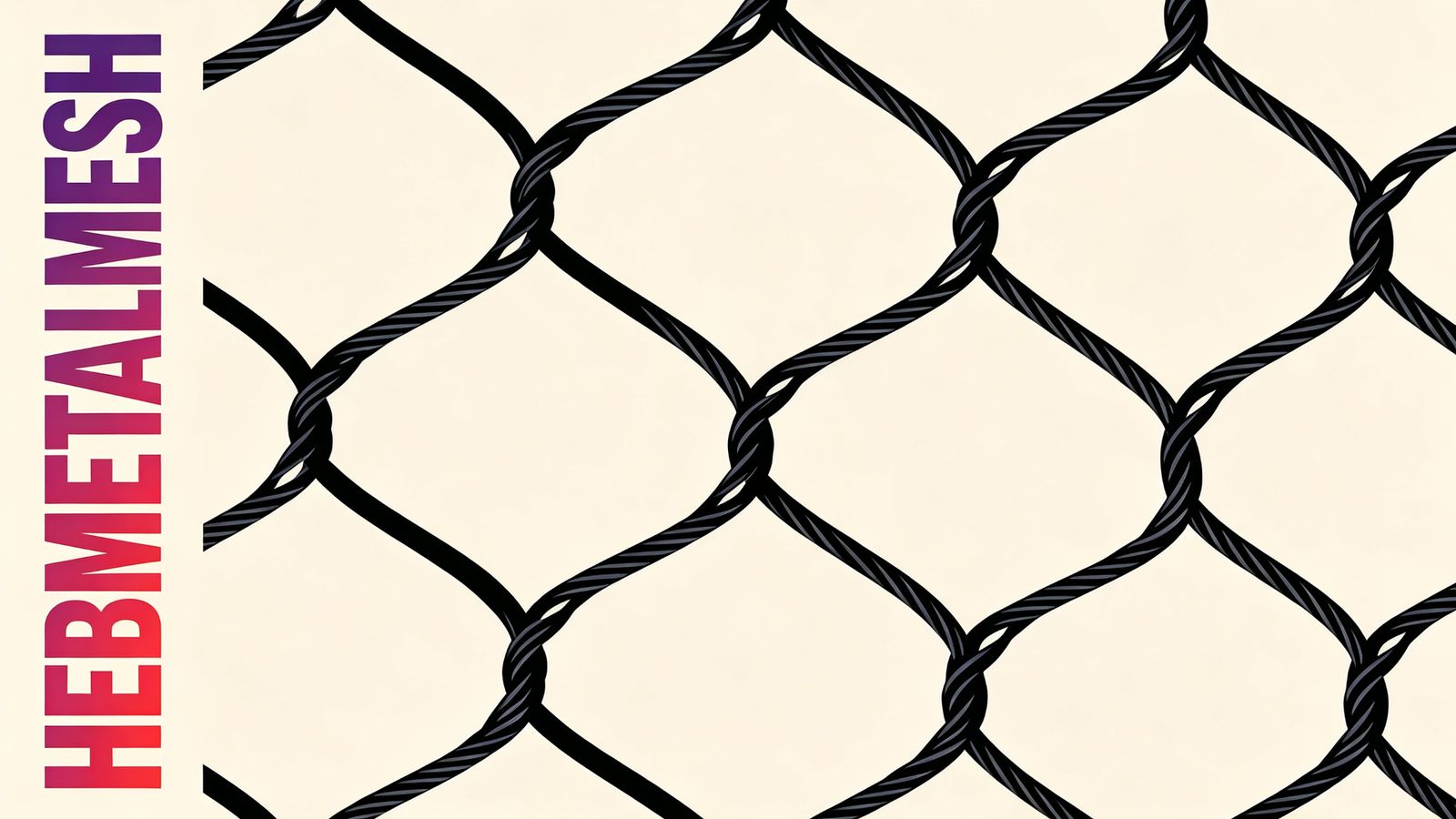
Stainless steel rope mesh for zoo enclosures is the most demanding application on this list, because the animals test it every day. Big cats lean on it, primates climb it, and hoofstock rub against it. The mesh has to hold without injuring the animal and without ever looking like a cage from the visitor side.
For large carnivores, specify a tight aperture and a heavier cable; for primates, the climbing surface is a feature, so the mesh becomes part of the habitat. Fastening is where most zoo jobs fail, not the panel itself, which is why we recommend factory-finished edges and stainless hardware throughout. For the full range of barrier options, from rope mesh to welded specialty panels, our animal fence mesh product page lists apertures, finishes, and sizing for every species category. Keepers who want the design logic should read our stainless steel rope mesh in zoo enclosure fence guide.
Application 2: Aviary Netting
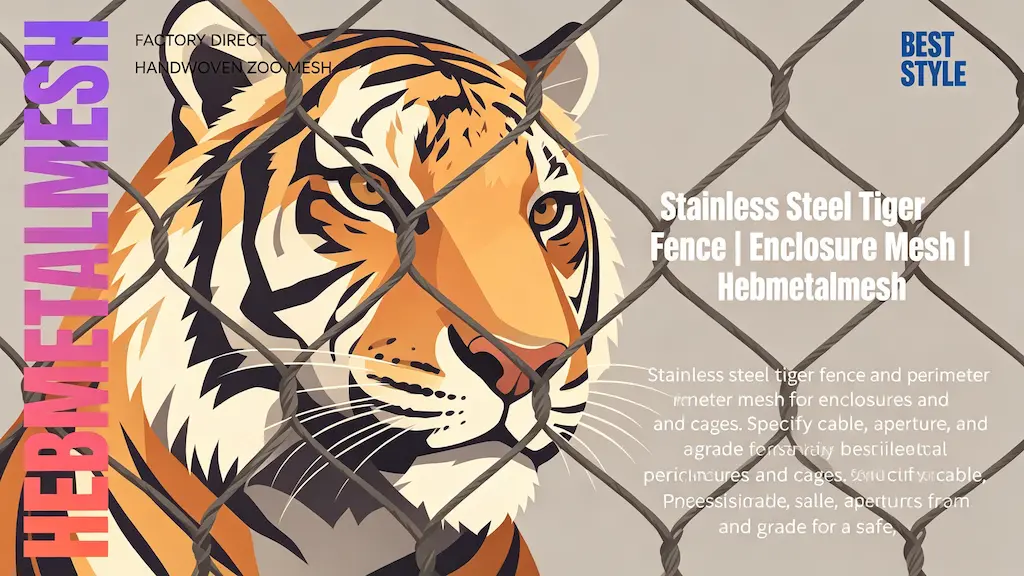
Stainless steel rope mesh aviary netting protects birds from predators while letting them fly the full length of the flight. A 1-inch aperture keeps most raptors and corvids out of a songbird aviary, while parrots need a larger opening and a cable strong enough to survive a beak.
Birds recover from brushing a soft rope-mesh panel quickly, unlike the feather damage welded wire can cause on an impact. Outdoor flights in coastal regions should move up to 316 stainless steel, because salt-laden air attacks even good grades at the fasteners first. The same reasoning that selects stainless steel rope mesh for aviaries applies to walk-in structures; our walk-in aviary design piece covers the layout side.
Application 3: Building Facades
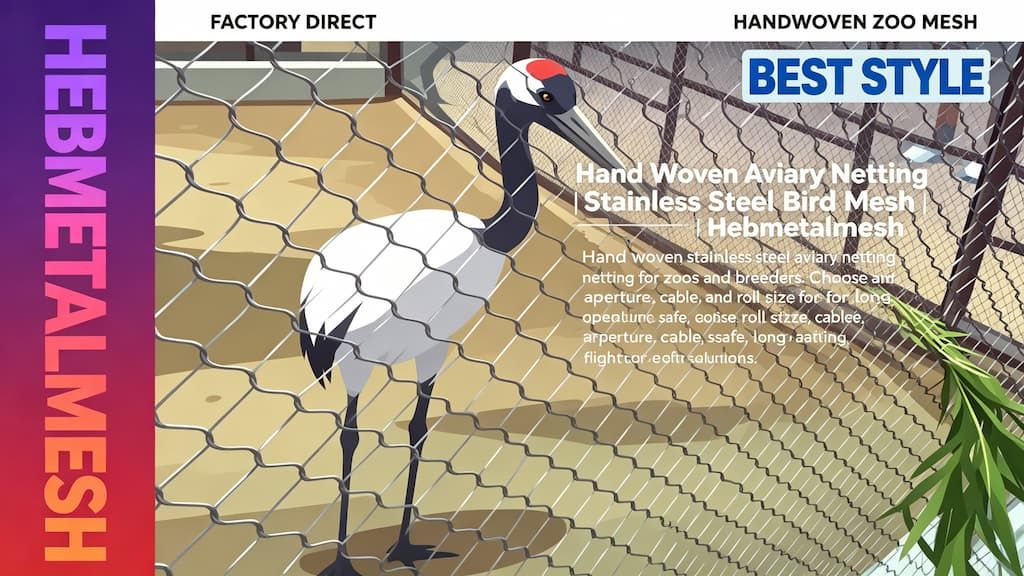
Stainless steel rope mesh for building facades is the architectural cousin of the zoo barrier. Hung in tension from floor to floor, it wraps balconies and shading screens in a metal veil that reads as texture rather than obstruction.
Because the facade is the public face of a building, surface finish and module size carry as much weight as strength. Black-oxide and bright finishes are the two standards; both age gracefully outdoors. Facade mesh must also be sized for wind load, not just aesthetics, so the border cable and anchor points need an engineer’s sign-off. For the broader design picture, our stainless steel cable mesh architecture overview shows how architects spec these panels.
Application 4: Safety Barriers and Fall Protection
Stainless steel rope mesh safety barrier systems guard roof edges, stairwells, and public walkways where a railing alone would block the view. The mesh does the guarding while the sightline stays open, which is why it shows up in museums, airports, and high-rise atriums.
For true fall protection, the engineering changes completely: the mesh and its anchors must carry a defined load per code, not just keep a curious visitor at bay. A rated stainless steel rope mesh fall protection panel is engineered from the border cable up, with heavier cable, tighter fastener spacing, and load-bearing capacity proven on paper before install. Contractors planning a rated system should confirm the aperture and anchor detail with the mesh supplier rather than adapting a decorative panel.
Application 5: Green Walls and Vertical Gardens
Stainless steel rope mesh green wall structures are the quiet workhorse of urban planting. The mesh gives climbing plants a tensioned grid to grip, lets light and air reach the foliage from both sides, and carries the full weight of a mature vine without sagging.
Wire rope mesh for vertical garden installations is typically mounted a few inches off the wall so the plants can climb both faces and the wall behind stays dry. Choose a mesh size the plant can thread through; too small and tendrils cannot grip, too large and the growth looks patchy. For architects, the stainless steel cable mesh architecture references above double as planting guides.
Application 6: Tensile Structures and Suspension Bridges
Stainless steel rope mesh tensile structure panels serve as infill in bridge parapets, canopy systems, and free-form roofs. The mesh follows curves that rigid panels cannot, which is why it appears in some of the most photographed footbridges of the last decade.
On a stainless steel rope mesh for suspension bridges installation, the panel is usually secondary to the structural cables but must still handle wind and vibration for decades. That longevity is the same corrosion resistance and fatigue life the material shows in zoo work, just applied on a civil scale.
Application 7: Balustrade Infill
Stainless steel rope mesh balustrade infill panels replace glass in stair rails, balconies, and mezzanine edges. They give the same transparency as glass but shrug off impacts, never shatter, and need no cleaning schedule.
The practical detail is edge termination. A balustrade panel is only as good as its border cable and the clamps that hold it, so factory-finished edges and stainless fittings are non-negotiable. Specifiers comparing materials should also weigh the maintenance side; our maintenance tips for stainless steel wire rope mesh page lists what a rope-mesh balustrade actually needs per year.
Application 8: Custom Panels for Special Projects
Custom stainless steel rope mesh panels exist because standard rolls rarely match a project. Aperture, cable diameter, panel width, edge treatment, and finish are all adjustable, and factory cutting beats field cutting every time.
When a project needs a specific mesh aperture or a panel that drops into a fixed frame, the correct move is to spec it at the factory and ship it ready to hang. Our how to choose the right wire rope mesh guide walks through the sizing decisions panel by panel.
Application 9: Where Rope Mesh Beats Welded Wire
The stainless steel rope mesh vs welded wire mesh decision comes down to three tests: impact, corrosion, and flexibility. Rope mesh wins all three. Welded panels are cheaper and stiffer, which suits flat, static fencing, but they crack at the welds under repeated load and cannot follow a curve.
For enclosures holding active animals, for coastal sites, and for any design that bends, rope mesh is the durable answer. If the project is a straight, low-impact fence line, welded wire may be the budget choice, and the comparison article linked above gives the full scoring.
Specifying the Right Grade and Aperture
Two specification rules cover most mistakes. Grade first: 304 stainless steel for inland and indoor work, 316 stainless steel for salt water, coastal air, or chemical environments. Aperture second: the opening must be smaller than the smallest thing the barrier must hold, whether that is a finch, a raccoon, or a toddler’s head. Wire diameter follows load, not aesthetics.
Keep a hand-woven mesh standard for anything that takes impact. The twisted-cable construction distributes force across neighboring strands, so a localized hit does not split the panel the way a weld junction does.
FAQs
What are the main stainless steel rope mesh applications?
Animal enclosures and aviaries, building facades, safety barriers and fall protection, green walls, tensile structures and bridge infill, balustrade panels, and custom architectural screens. The same material serves all of them because it combines transparency, strength, and corrosion resistance.
Can stainless steel rope mesh be used outdoors?
Yes. It is designed for outdoor service, and it outperforms galvanized options in coastal environments. Choose 316 stainless steel for salt-air exposure; 304 is fine for most inland locations.
How is rope mesh different from welded wire mesh?
Rope mesh is woven from twisted stainless cables, so it flexes, absorbs impact, and follows curves. Welded wire is stiffer, cheaper, and better suited to flat static fencing, but it cracks at weld points under repeated load and corrodes sooner at the junctions.
What mesh aperture should I use for a bird aviary?
It depends on the smallest bird to keep in and the largest predator to keep out. A 1-inch aperture is a common starting point for songbirds; larger birds can use bigger openings. Match the aperture to the species, not to the frame.
How long does stainless steel rope mesh last?
In normal outdoor service, 304 or 316 stainless rope mesh is expected to serve for decades with basic tension checks. The fasteners and border cables are what need attention; the mesh itself is the longest-lived part of the assembly.
Can panels be made to custom size?
Yes. Aperture, cable diameter, width, length, edge treatment, and finish can all be specified at the factory, which removes on-site cutting and gives the install a clean, finished edge.
Talk to a Rope Mesh Application Engineer
Not sure which aperture or grade fits your project? Our team specs stainless steel rope mesh for zoos, architects, and contractors every day.
Get Expert Help →