
Executive Summary
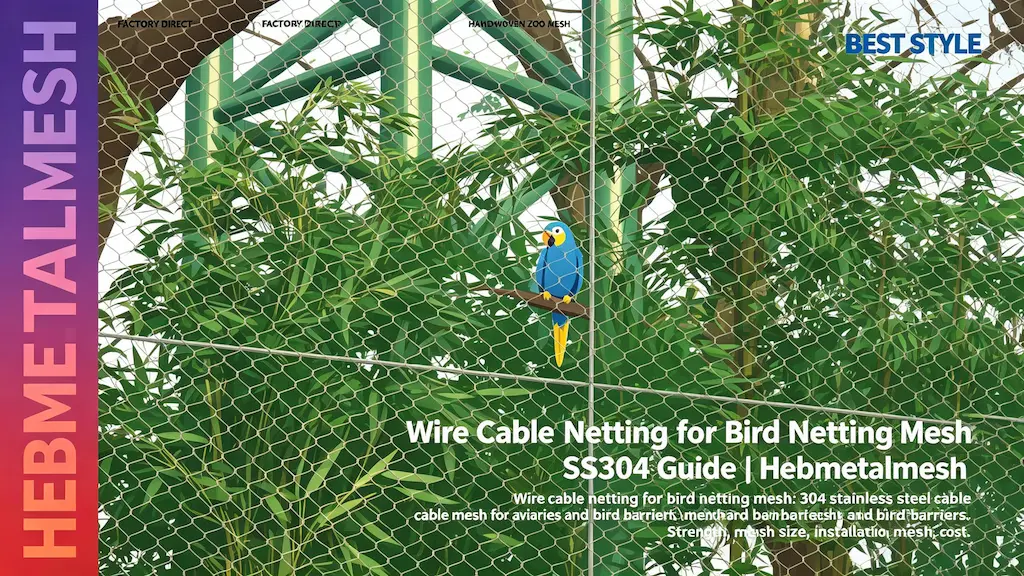
Wire cable netting for bird netting mesh is stainless steel rope cable woven into panels that contain birds and keep birds out. It serves two jobs at once: as an aviary enclosure mesh it holds birds inside a flight space, and as a bird barrier it protects buildings, crops, and gardens from bird damage. Wire cable netting for bird netting mesh built from 304 stainless steel outperforms plastic and fabric alternatives on every measure that matters — strength, rust resistance, UV life, and longevity. This guide covers what the material is, why it beats plastic netting, how to select mesh size and cable diameter, where it is applied across aviaries and properties, and what installation and maintenance involve. The reference specification is the bird netting fence aviary mesh product page.
Specifying Wire Cable Netting for Birds? Get a Free Quote
Send us your bird species or site, enclosure dimensions, and climate. We return a mesh grade, aperture, and cable diameter recommendation within 24 hours.
Request My Free Quote →Quick Answer: What Is Wire Cable Netting for Bird Netting Mesh?
Wire cable netting for bird netting mesh — wire cable bird netting, in the trade shorthand — is a panel of interwoven stainless steel cable, typically 304 grade, used as both an aviary enclosure mesh and a wire mesh bird barrier. The diamond weave is strong enough to contain large parrots and eagles, small enough to exclude pest birds, and open enough to pass light and air. It does not rot, sag, or degrade under UV the way plastic netting does, and it cannot be chewed through by the birds it holds. The bird netting mesh range covers the standard apertures and cable diameters for both jobs.
Key Takeaways
- Wire cable netting serves two jobs: holding birds in an aviary and keeping birds out of a site.
- 304 stainless steel cable outperforms plastic and fabric netting on strength, rust, and UV life.
- Mesh aperture is set by the bird: the head of the smallest resident or the largest intruder.
- Cable diameter follows bird size; heavier birds need heavier cable in a tighter weave.
- The open weave passes light and air, which keeps enclosures healthy and barriers unobtrusive.
- Installation tension and border cables determine field performance more than panel price.
- The same material serves zoos, private aviaries, farms, and commercial buildings.
What Wire Cable Netting Is
Wire cable netting is not welded wire and not plastic mesh. It is solid stainless steel cable — the same construction used in architectural cable mesh — woven strand over strand into a diamond pattern. The weave is the engineering: because the strands interlock rather than being welded or knotted, the panel has no weak joint and no failure point under repeated load. Each intersection flexes slightly, which lets the whole panel absorb impact and return to shape.
The diamond pattern also explains the transparency of bird netting mesh wire cable. At normal viewing distance the mesh nearly disappears, which is why it is specified for aviaries where visitors watch birds, and for buildings where a view must stay open. This combination — strength, flexibility, transparency — is what separates wire cable netting from every other bird netting mesh option.
Why Stainless Steel Beats Plastic and Fabric Netting
Bird netting wire mesh is often compared with plastic netting, and the comparison ends quickly when the requirements are listed.
| Property | Stainless steel cable netting | Plastic / nylon netting | Welded wire mesh |
| Bird chew resistance | High — solid cable | Low — torn and cut | Medium — joints fail |
| Rust and corrosion | 304/316 stainless | N/A — plastic degrades | Galvanizing wears |
| UV life | Decades | Years | Years |
| Strength under load | High — interlocked strands | Low — stretches and sags | Medium — welds fatigue |
| Transparency | High at viewing distance | Low — knots block view | Moderate |
| Aesthetic | Architectural finish | Visible plastic | Industrial |
Stainless steel bird netting and stainless steel cable bird netting are the same product family: 304 stainless cable woven by hand into panels. The material is rust resistant by composition, needs no coating, and outlasts every other option in the comparison. For a look at how the same material serves large aviary builds, the hand woven zoo mesh guide explains the construction in detail.
Applications: Aviaries and Bird Enclosures
The first job of cable netting for bird aviary — and bird netting mesh for aviary builds — is containment. Aviary enclosure mesh made from stainless cable holds everything from finches to macaws, and it is the standard for facilities where birds fly, breed, and are displayed. The mesh must be sized to the residents: the head of the smallest bird sets the aperture, and the cable diameter follows the weight and beak strength of the largest.
In an outdoor aviary, bird aviary netting mesh is the envelope — walls and roof — and it must carry wind load, rain, and the daily activity of the birds. The transparency of the weave keeps the birds’ sightlines open, which reduces the caged feeling and supports natural behaviors. For a full guide to outdoor builds, our outdoor bird aviary guide walks through the design, and bird aviary mesh sizing covers the aperture question directly. For the wider aviary product logic, the stainless steel rope mesh application guide explains where the material is used across zoo and aviary builds.
Applications: Bird Barriers for Property
The second job of wire cable netting for bird control is exclusion. Bird netting mesh for buildings protects storefronts, roof lines, balconies, and signage from roosting and nesting birds; bird netting mesh for farms protects orchards and crops; and the same panels protect gardens and ponds. A wire mesh bird barrier does the job without harming birds — the mesh simply denies access — and without blocking light or air.
The property application differs from the aviary application in one important way: the mesh is often installed on an existing structure rather than as a free-standing envelope. That makes attachment and tensioning the design problem, and it is why border cables and clamps are part of the specification, not an afterthought. For the bird-infestation angle specifically, our bird screen wire mesh guide covers how the same material protects property from pest birds.
Mesh Size and Cable Diameter Selection
Two numbers define the spec: aperture and cable diameter. For an aviary, the mesh aperture is set by the head of the smallest bird that must stay inside. For a bird barrier, the aperture is set by the largest bird that must be kept out — pigeons need a larger aperture than sparrows, but the logic is the same: no head passes through.
Cable diameter follows the load. Aviary residents that climb and bite need heavier cable; barrier installations under wind load need cable sized to the span. Hand woven bird netting mesh in 2 mm to 3 mm cable covers most aviary and property applications, with heavier cable specified for large-bird exhibits. The aperture and cable are specified together, because the same bird sets both. For the standard options, our aviary mesh specification guide lists the common dimensions.
Installation and Tensioning
Wire cable netting installation is a precision job. The two classic field failures are sagging panels and loose edges: sag appears when panels are not pre-stretched and tensioned to spec; loose edges appear when border cables are undersized or clamps skipped. Both turn a tensioned barrier into a slack net — and a slack net is either a climbing aid for a resident bird or a gap for an intruder.
Installation is a professional job for large spans. Tensioning stainless cable requires jacks, torque specifications, and experience reading a panel under load. The installer works from the same spec sheet that selected the mesh, verifying aperture and tension on site. For the step-by-step procedure, our aviary mesh installation guide covers the process, and the bird netting buying guide covers what to check when sourcing panels.
Maintenance and Longevity
Stainless steel cable netting is a low-maintenance system, and low maintenance means inspection, not neglect. The material needs no painting, no coating, and no chemical treatment, which removes the largest recurring upkeep costs of plastic and galvanized alternatives. The open weave drains and dries quickly, and the panels clean with water and standard sanitizers — a real advantage in an aviary, where hygiene matters.
The maintenance discipline is a scheduled perimeter check: tension, seams, clamps, and attachment points, monthly as a baseline, with an immediate check after storms. For the routine, our bird netting maintenance guide and the aviary mesh cost guide cover the practical details.
Cost and Value
Wire cable netting for bird netting mesh costs more upfront than plastic netting, and the comparison that matters is cost per year of service. A stainless panel that lasts decades without replacement, re-stretching, or repair is routinely the cheapest option over time — even at a higher initial price. For a building owner, that means one installation instead of repeated plastic replacement; for a zoo, it means an enclosure that does not need a mid-life rebuild.
The budget should include the system, not just the panels: border cable, clamps, tensioning hardware, and professional installation are part of the containment. For sourcing guidance, read where to find quality zoo mesh.
FAQ
It is stainless steel rope cable woven into panels that both contain birds in an aviary and exclude birds from a property. The diamond weave is strong, transparent, rust resistant, and lasts decades.
Yes. Stainless steel cable cannot be torn, cut, or stretched by birds, does not degrade under UV, and needs no replacement every few years. Plastic netting is a temporary fix; stainless cable netting is a permanent one.
The aperture is set by the bird: the head of the smallest resident (aviary) or the largest intruder (barrier) must not pass. Cable diameter follows bird size and load — 2 mm to 3 mm covers most applications.
No. Solid stainless steel cable exceeds anything a bird’s beak can damage, and the smooth round strands give the beak nothing to grip. Birds chew through plastic and fabric netting, not stainless cable.
Decades. 304 stainless steel is rust resistant by composition, needs no coating or painting, and outlasts the structure it is mounted on in most installations.
Conclusion
Wire cable netting for bird netting mesh is one material that solves both halves of the bird problem: it holds the birds you want inside an aviary and keeps the birds you do not want out of a property. Specify 304 stainless steel cable, set the aperture from the bird, size the cable to the load, install to tension, and inspect on schedule — that sequence produces a durable netting that outlasts every alternative. For a look at how the material serves the natural habitat side, our natural habitats guide is a useful next read.
If you are ready to spec your build, send us your bird species or site details. We will confirm the aviary netting range specification that fits your birds, your climate, and your budget.
Ready to Spec Your Bird Netting?
Tell us the bird species or site, dimensions, and climate. We reply with a mesh grade, aperture, and cable diameter recommendation within 24 hours.
Talk to a Mesh Specialist →