
Summary
This guide helps zoos, wildlife parks, and private facility managers select the right stainless steel leopard mesh for big cat enclosures. You’ll learn how aperture size, wire diameter, and hand-woven construction work together to create a claw-safe, escape-proof barrier that accommodates leopards’ natural climbing behavior while delivering decades of corrosion-free service with minimal maintenance.
Ready to spec your enclosure? Request a quote for stainless steel leopard mesh →
Browse Hebmetalmesh Leopard Enclosure Netting Produce page →
Key Takeaways
- Leopards are arboreal climbers – they need mesh that prevents claw hooking during vertical ascents
- 2″ x 2″ aperture is the recommended standard – it’s small enough to block claws but large enough for clear viewing
- 1/8″ (3.2mm) wire diameter provides the strength needed for big cat containment
- Hand-woven stainless steel outperforms welded wire in flexibility, safety, and longevity
- SS304 suits most environments; SS316 is best for coastal or high-humidity locations
- 30° inward overhang and buried aprons are essential design elements for escape prevention
- Rope mesh offers 3x higher ROI over 10 years compared to welded wire alternatives
Why Leopards Need Specialized Stainless Steel Mesh
Leopards are the most arboreal of all big cats. Unlike lions that patrol open grasslands or tigers that swim through waterways, leopards are master climbers that spend a significant portion of their lives in trees—resting, stalking prey, and even storing kills in branches. This unique behavioral trait demands a fundamentally different fencing approach.
Standard chain-link or welded wire fencing simply cannot meet the demands of a leopard enclosure. These materials feature rigid intersections that can fail under repeated stress, and their larger apertures create dangerous opportunities for claws to hook through during climbing attempts. When a leopard’s claw gets caught in oversized mesh, panic ensues—and panic leads to injury, escape attempts, or both.
Stainless steel leopard mesh is specifically engineered for these climbing specialists. The material’s hand-woven construction creates a flexible yet unbreakable barrier that moves naturally with the enclosure’s terrain. Unlike rigid welded panels that leave dangerous gaps around trees and rock outcroppings, flexible rope mesh conforms to irregular surfaces, eliminating escape routes and creating a more naturalistic environment.
For facility managers and zoo designers, the choice of enclosure mesh isn’t just about containment—it’s about animal welfare, public safety, and long-term operational costs. A poorly chosen mesh can lead to escapes, injuries, constant repairs, and reputational damage. The right stainless steel leopard mesh, properly specified and installed, provides peace of mind for decades. To understand how different mesh options compare for various species, check out this guide to the 3 best wire mesh options for animal fence in zoo projects.
Understanding Leopard Mesh Specifications
Selecting the right mesh for your leopard enclosure requires understanding their unique arboreal behavior. Leopards don’t just climb—they climb with power, precision, and persistence. Their sharp, retractable claws are designed to grip bark and rock, and they will test every inch of their enclosure’s boundaries.
Aperture Size: The Critical Factor
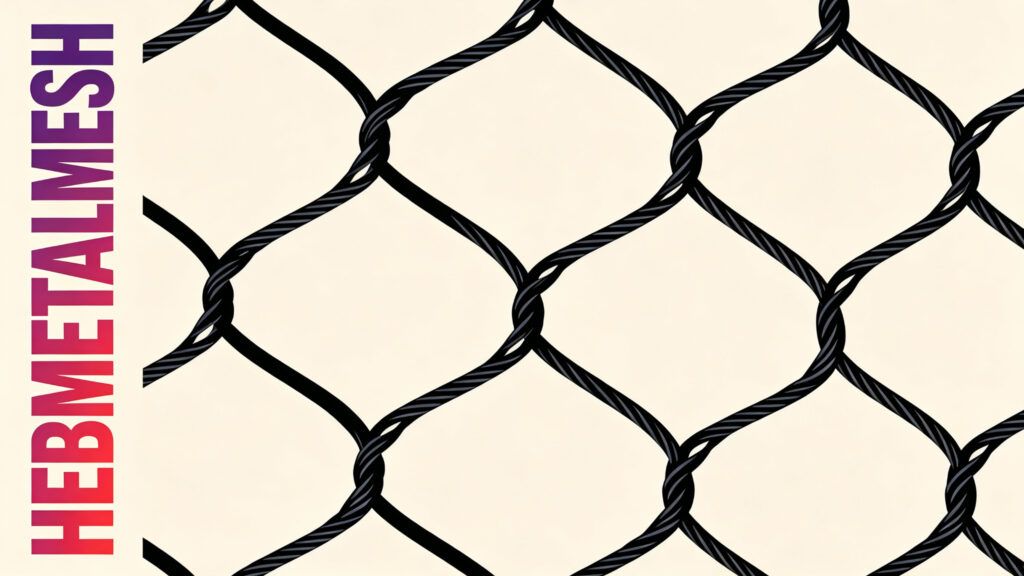
The mesh aperture—the open space between cables—is the single most important specification for leopard enclosures. Industry experts strongly recommend a 2″ x 2″ (51mm x 51mm) aperture to prevent claws from hooking through during vertical climbing.
Why does this matter? A 3″ aperture might seem only marginally larger, but that extra inch creates enough space for a leopard’s claw to penetrate and catch. Once hooked, the animal can hang from the mesh, potentially damaging the barrier or injuring itself in the struggle to free its claw. The 2″ x 2″ specification is deliberately sized to be claw-safe while maintaining excellent visitor visibility.
Some facilities opt for 1.5″ x 1.5″ apertures for added security, particularly for younger or smaller leopards. However, smaller apertures reduce visibility and can increase material costs. The 2″ x 2″ standard strikes the optimal balance between safety and transparency.
Wire Diameter: Strength Under Tension
Wire diameter directly correlates with tensile strength and resistance to damage. For leopard enclosures, 1/8″ (3.2mm) stainless steel cable is the recommended minimum.
Thinner cables—such as 3/32″ (2.4mm)—may be suitable for smaller animals or secondary barriers, but leopards are powerful animals capable of generating tremendous force when climbing, jumping, or testing boundaries. The 1/8″ cable provides the breaking strength needed to contain an adult leopard under any circumstance.
The cable construction also matters. High-quality leopard mesh uses 7×7 strand construction—seven strands of wire twisted into each of seven cables—creating a flexible yet incredibly strong rope. This multi-strand design distributes stress across multiple points, preventing catastrophic failure even if individual strands are compromised.
Material Grades: SS304 vs. SS316
Stainless steel leopard mesh is available in two primary grades:
SS304 is the standard choice for most applications. It offers excellent corrosion resistance, high tensile strength, and cost-effectiveness. For inland zoos, wildlife parks, and private facilities away from coastal environments, SS304 provides all the performance needed at a competitive price point.
SS316 is the marine-grade option, offering superior corrosion resistance thanks to added molybdenum. This grade is recommended for facilities in coastal areas, high-humidity environments, or any location where salt spray or chemical exposure is a concern. While more expensive upfront, SS316’s enhanced durability can justify the investment in challenging environments. For a deeper dive into grade selection for large carnivore habitats, see this expert guide on choosing the perfect lion zoo enclosure mesh.
Standard Stock Specifications
🤖 AI Overview: This table lists standard stainless steel leopard mesh specifications. For leopard enclosures, the 2″ × 2″ aperture with 1/8″ (3.2mm) cable diameter (HM3250) is the recommended choice to prevent claw hooking and ensure long-term durability. Choose SS304 for inland zoos or SS316 for coastal/humid environments. Custom sizes are also available.
| Item ID | Mesh Aperture | Cable Diameter | Material Options |
|---|---|---|---|
| HM2438 | 1.5″ × 1.5″ | 3/32″ (2.4mm) | SS304 / SS316 |
| HM2450 | 2″ × 2″ | 3/32″ (2.4mm) | SS304 / SS316 |
| HM2476 | 3″ × 3″ | 3/32″ (2.4mm) | SS304 / SS316 |
| HM2410 | 4″ × 4″ | 3/32″ (2.4mm) | SS304 / SS316 |
| HM3250 ★ Recommended | 2″ × 2″ | 1/8″ (3.2mm) | SS304 / SS316 |
| HM3276 | 3″ × 3″ | 1/8″ (3.2mm) | SS304 / SS316 |
| HM3210 | 4″ × 4″ | 1/8″ (3.2mm) | SS304 / SS316 |
Custom sizes and specifications are available upon request.
Designing the Perfect Leopard Enclosure
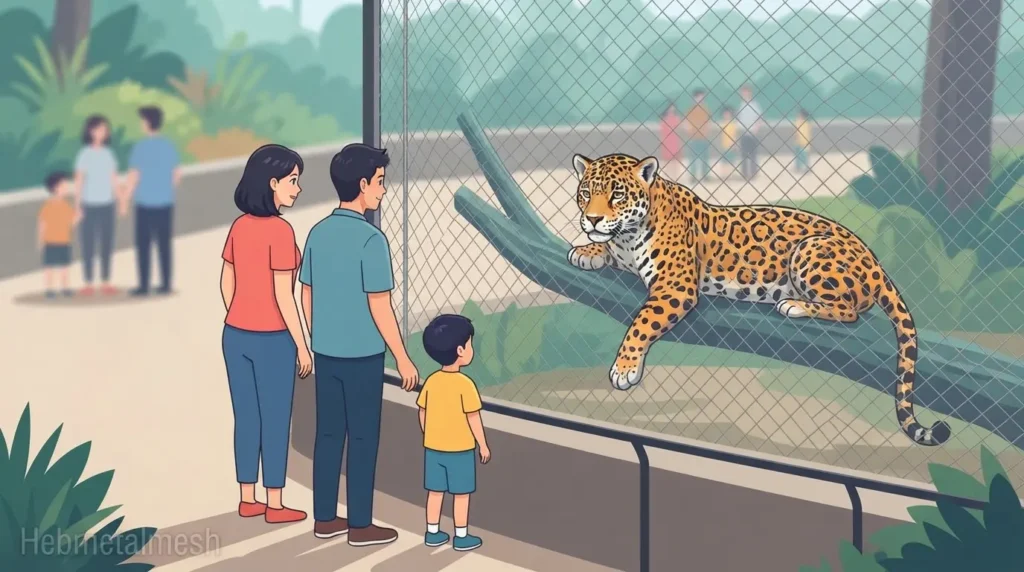
A well-designed leopard enclosure must accommodate their arboreal lifestyle and explosive athleticism. These are not passive animals—they are active, curious, and constantly testing their environment.
Vertical Space and Climbing Structures
Leopards require minimum 4-meter (13-foot) height with integrated climbing trees, branches, and rock shelves. In the wild, leopards spend hours in trees, and captive environments must replicate this opportunity. The mesh panels should be fabricated to the full enclosure height with zero seams, ensuring uninterrupted climbing surfaces that don’t create weak points.
When designing vertical spaces, consider that leopards will climb to the highest point available and survey their territory. The mesh must extend to the full height without gaps, and any overhead structures must be equally secure.
The 30° Inward Overhang
Like tigers, leopards are capable high-jumpers. A cantilever overhang at the top of all enclosure walls prevents escape attempts by creating a physical barrier that climbing animals cannot navigate.
This overhang is particularly critical for leopards, as they are known to use tree branches as launching points. A leopard can spring from a branch toward the top of an enclosure wall—the inward overhang ensures that even if they reach the top, they cannot grip and pull themselves over.
Rock Wall Integration
Leopards naturally inhabit rocky terrain. Their claws are adapted for gripping stone, and they will climb any vertical surface that offers purchase. Our flexible mesh conforms to irregular surfaces, eliminating gaps that rigid fencing would leave and creating a more naturalistic, enrichment-rich environment.
When integrating mesh with rock walls, the hand-woven construction allows the material to follow contours seamlessly. Rigid welded panels, by contrast, leave triangular gaps at corners and irregularities—gaps that a determined leopard can exploit.
Buried Apron
While less prone to digging than lions, leopards will still test enclosure bases. A buried footing extension (1-2 feet) prevents undermining and ensures barrier integrity. This apron should extend outward from the base of the vertical mesh, buried below grade to prevent animals from digging under the fence.For more detailed guidance on fence net design in leopard habitats, read this article on the importance of fence nets in zoo leopard habitats.
Hand-Woven vs. Welded: Why Construction Matters
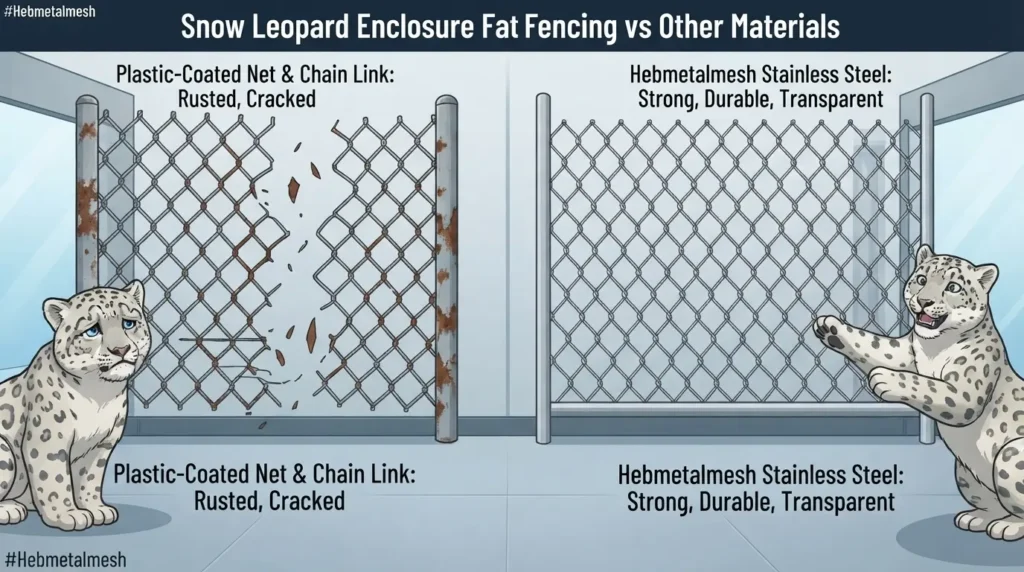
The debate between hand-woven stainless steel rope mesh and welded wire is not academic—it has real implications for animal safety, enclosure longevity, and total cost of ownership.
The Problem with Welded Wire
Welded wire consists of individual steel strands crossed at right angles and fused at every intersection. This creates a stiff, unyielding panel that works for straight-line fencing but struggles with complex geometry.
The welds themselves are the weak point. Under repeated stress from climbing animals, welds can fail—and when a weld snaps, the entire panel’s integrity is compromised. Worse, broken welds create sharp edges that can lacerate animals.
Welded wire also suffers from “white rust” corrosion, particularly in humid environments. The galvanized coating that protects the steel eventually degrades, leading to rust that weakens the material and creates unsightly stains.
The Advantages of Hand-Woven Rope Mesh
Hand-woven stainless steel rope mesh is a sophisticated, textile-like material made from high-tensile cables. Unlike welded wire, it offers 3D conformability and a “soft-catch” physical profile that is revolutionary for animal safety.
No weld points means no weld failures. Each intersection is a flexible crossover, not a rigid fused point. The mesh moves with the animal rather than resisting rigidly, reducing the risk of impact trauma.
90%+ transparency means visitors see animals, not bars. This visual clarity enhances the visitor experience while maintaining complete security.
30+ year lifespan in corrosive environments means one installation, one investment. Unlike welded wire that may need replacement within a decade, hand-woven stainless steel mesh is a permanent infrastructure solution.
3x higher ROI over 10 years despite higher upfront costs. When you factor in replacement costs, labor, and animal welfare considerations, rope mesh is the clear economic winner.For a comprehensive look at leopard-specific netting options, explore the full product range for leopard enclosure fence netting mesh.
Installation Best Practices
Proper installation is as important as proper specification. Even the best mesh will underperform if installed incorrectly.
Tensioning Systems
Stainless steel leopard mesh must be properly tensioned to perform as a barrier. The mesh should be stretched taut but not over-tensioned—excessive tension can stress the cables and fittings, while insufficient tension creates sagging that animals can exploit.
Professional installation typically uses stainless steel turnbuckles, cable clamps, and frame attachments designed specifically for rope mesh systems. These components allow for precise tension adjustment and accommodate the natural expansion and contraction of materials with temperature changes.
Frame Considerations
The support structure must be robust enough to handle the loads imposed by climbing leopards. Schedule 40 steel pipe is the industry standard for enclosure frames, with corner posts typically specified as 2-3/8″ pipe.
The mesh attaches to the frame using specialized fittings that distribute load evenly. Proper attachment prevents stress concentration at individual points, which could lead to premature failure.
Seam and Joint Management
For large enclosures, multiple mesh panels may need to be joined. These seams must be as strong as the mesh itself, using overlapping panels or specialized joining hardware. Zero-seam fabrication is available for custom-sized enclosures, eliminating potential weak points entirely.
Maintenance and Longevity
One of the strongest arguments for stainless steel leopard mesh is its minimal maintenance requirement. Unlike galvanized or painted alternatives that require regular inspection and touch-up, stainless steel is inherently corrosion-resistant.
Cleaning Protocols
Stainless steel mesh can be cleaned with standard pressure washing or mild detergents. The smooth surface prevents debris accumulation and resists bacterial growth—important considerations for zoo environments with strict sanitation requirements.
Neither wire nor galvanized mesh is a good choice for long-term sanitation. Wire rusts, creating rough surfaces that harbor bacteria. Galvanized coatings degrade, exposing bare steel to corrosion. Stainless steel avoids both problems.
Inspection Schedule
Even the most durable mesh benefits from regular inspection. Annual visual inspections should check for:
- Loose or damaged fittings
- Signs of cable wear or abrasion
- Frame integrity
- Tension consistency
- Any signs of attempted animal damage
With proper installation and regular inspection, stainless steel leopard mesh typically provides 30+ years of service—a lifespan that spans multiple generations of animals and facility staff.
Frequently Asked Questions
1. What size mesh is best for a leopard enclosure?
The recommended aperture is 2″ × 2″ (51mm × 51mm) with a 1/8″ (3.2mm) cable diameter. This combination prevents claws from hooking through during climbing while providing excellent visitor visibility and sufficient strength for big cat containment.
2. Can I use welded wire instead of hand-woven mesh for a leopard cage?
While welded wire has a lower upfront cost, it’s not recommended for permanent leopard enclosures. Welded wire is prone to weld-point failure, corrosion, and can cause impact trauma to animals. Hand-woven stainless steel rope mesh offers superior flexibility, safety, and a 30+ year lifespan—delivering 3x higher ROI over 10 years.
3. What’s the difference between SS304 and SS316 stainless steel mesh?
SS304 is the standard grade, offering excellent corrosion resistance for most inland applications. SS316 contains added molybdenum for superior corrosion resistance, making it the better choice for coastal facilities or high-humidity environments.
4. How high should a leopard enclosure wall be?
Leopards require a minimum height of 4 meters (13 feet) with an inward overhang at the top to prevent escape attempts. The mesh should extend to the full height without seams, and climbing structures should be integrated throughout the enclosure.
5. Is stainless steel leopard mesh safe for the animals?
Yes. Stainless steel is non-toxic and won’t harm animals. The smooth, hand-woven surface prevents injury from sharp edges, and the flexible construction absorbs impact forces rather than resisting them rigidly. It’s also easy to clean and sanitize, reducing disease transmission risks.
Ready to Secure Your Leopard Enclosure?
Choosing the right stainless steel leopard mesh is one of the most important decisions you’ll make for your facility’s safety, animal welfare, and long-term budget. With the right specifications—2″ × 2″ aperture, 1/8″ cable diameter, hand-woven construction, and appropriate stainless steel grade—you’ll create a barrier that lasts decades.
Get a sized quote in 24 hours. Send us your stainless steel leopard mesh dimensions for a quote →
Hebmetalmesh is a professional factory and proud ZAA (Zoological Association of America) member with decades of expertise in supplying high-quality, custom-fabricated mesh solutions for zoological applications.