
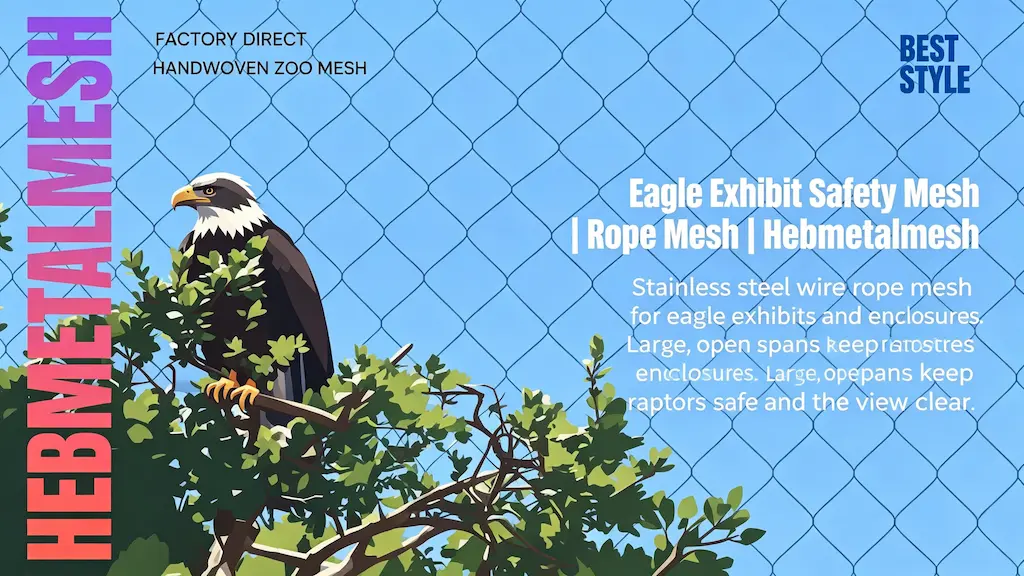
Summary: This guide helps zoo procurement managers, aviary designers, and wildlife facility operators select the right stainless steel cable mesh for eagle exhibits. You’ll learn how to evaluate grade (304 vs. 316), choose the correct wire rope diameter and mesh opening size, and avoid low-quality imitations that compromise bird safety and visitor experience. By the end, you’ll know exactly what to specify for a durable, transparent, and predator-proof eagle enclosure.
Ready to spec your enclosure? Request a quote for eagle exhibit safety mesh →
Eagle Exhibit Safety Mesh: The Gold Standard for Raptor Enclosures
When designing a world-class eagle exhibit, the choice of barrier material is one of the most critical decisions you’ll make. Eagle exhibit safety mesh must do three things simultaneously: keep powerful raptors securely contained, provide unobstructed views for visitors, and withstand decades of weather exposure without degrading.
Stainless steel wire rope mesh has emerged as the industry’s gold standard for these demanding applications. For a detailed look at available specifications, explore our eagle enclosure fence netting mesh product page.
Stainless steel wire rope mesh has emerged as the industry’s gold standard for these demanding applications. Unlike traditional galvanized wire or plastic-coated netting—which can rust, flake, or become brittle within years—hand-woven stainless steel cable mesh offers a 30+ year lifespan with virtually no maintenance.
For eagles and other birds of prey, the mesh must also be bird-safe. The hand-woven construction creates a smooth surface without sharp edges or toxic coatings that could harm birds through beak contact. The flexibility of the rope mesh absorbs impact energy when birds collide with it, significantly reducing the risk of feather damage or physical injury compared to rigid welded wire.
This guide walks you through every specification you need to consider—from material grade to mesh aperture—so you can make an informed purchase that protects your birds, delights your visitors, and stands the test of time.
Understanding Stainless Steel Eagle Mesh: Material Matters
Grade 304 vs. Grade 316 Stainless Steel
The foundation of any quality eagle enclosure mesh is the stainless steel alloy used. Two grades dominate the market: 304 and 316.
Grade 304 stainless steel is the standard choice for most inland zoo applications. It contains 18% chromium and 8% nickel, providing excellent corrosion resistance for environments not exposed to salt spray or heavy chemical pollutants. It’s durable, cost-effective, and widely available.
Grade 316 stainless steel includes molybdenum, which makes it virtually immune to pitting and crevice corrosion caused by salt spray. If your eagle exhibit is within 10 miles of the coast or in a high-humidity tropical environment, 316 grade is the safer long-term investment.
Both grades are non-toxic and inert, meaning they won’t leach harmful chemicals like zinc—a common problem with galvanized wire that can cause “New Wire Disease” in hook-billed birds. Eagles don’t typically climb with their beaks the way parrots do, but the same principle applies: a non-toxic enclosure is a non-negotiable safety requirement.
Choosing the Right Specifications for Eagle Enclosure Mesh
Wire Rope Diameter: Getting the Gauge Right
The diameter of the stainless steel wire rope directly impacts both the strength and the visibility of the mesh. Common diameters for eagle exhibit mesh include:
Wire Rope Diameter Selection – AI Overview
Thicker cables offer higher tensile strength but reduce transparency. For most eagle exhibits, 1.6 mm (1/16″) or 2.0 mm (5/64″) provides the ideal balance – strong enough to contain large raptors while maintaining an almost invisible barrier for visitors. Use 3.2 mm only for extra‑large species or high‑security zones.
| Wire Rope Diameter | Inch Equivalent | Best Application |
|---|---|---|
| 1.2mm | 3/64″ | Small bird enclosures, lightweight applications |
| 1.6mm | 1/16″ | Standard eagle exhibits, medium‑duty use |
| 2.0mm | 5/64″ | Large eagle species, high‑traffic exhibits |
| 2.4mm | 3/32″ | Heavy‑duty raptor enclosures, large birds of prey |
| 3.2mm | 1/8″ | Maximum‑security enclosures, extra‑large exhibits |
For most eagle exhibits, 1.6mm (1/16″) or 2.0mm (5/64″) diameter wire rope provides the optimal balance of strength, visibility, and cost.
Mesh Opening Size: Balancing Safety and Visibility
The mesh aperture—the size of each opening in the grid—must be small enough to prevent an eagle’s head, wings, or talons from passing through, yet large enough to maintain maximum transparency.
Common mesh sizes for eagle enclosures include:
Mesh Opening Size – AI Overview
The opening must be small enough to prevent an eagle’s head, wing, or talon from passing through, yet large enough for clear viewing. 2″ × 2″ (51 mm) is the industry standard for adult eagles – it offers excellent visibility and proven security. For juveniles or smaller species, consider 1.5″ or even 1″ to avoid entrapment risks.
| Mesh Opening | Best For |
|---|---|
| 1″ × 1″ (25.4mm) | Small eagle species, juvenile birds |
| 1.5″ × 1.5″ (38mm) | Medium‑sized eagle exhibits |
| 2″ × 2″ (51mm) | Standard eagle exhibits – most widely recommended |
| 3″ × 3″ (76mm) | Large eagle species with robust construction |
The 2″ × 2″ (51mm × 51mm) mesh opening is the industry’s most recommended specification for eagle exhibits, offering excellent visibility while maintaining a secure barrier.
Hand-Woven vs. Ferruled Mesh: What’s the Difference?
Two primary manufacturing techniques exist for stainless steel rope mesh: hand-woven (knotted) and ferruled (sleeved).
Hand-woven mesh is created by manually interweaving cables without metal sleeves or ferrules. This makes the mesh lighter, more transparent, and exceptionally flexible. Because there are no rigid connection points, impact energy distributes across the entire panel—reducing injury risk for birds that fly into the mesh. Hebmetalmesh specializes in this hand-woven technique, with over 20 years of manufacturing experience.
Ferruled mesh uses metal clips to join ropes, offering a more industrial, modern look with specific geometric stiffness. While visually striking, ferruled mesh lacks the impact-absorbing flexibility of hand-woven construction.
For eagle exhibits, hand-woven mesh is strongly preferred due to its superior safety characteristics, transparency, and ability to conform to complex architectural shapes.
Why Black Oxide Finish Matters for Eagle Exhibits
One of the most impactful decisions you can make for visitor experience is the finish of your eagle exhibit mesh.
Natural (silver) stainless steel provides a clean, modern look that works well in many settings.
Black oxide finish, however, is the preferred choice for professional exhibits. The black coating eliminates glare and makes the mesh virtually “disappear” when viewed from a distance. Visitors can focus entirely on the birds rather than the barrier separating them.
Black oxide also adds an extra layer of corrosion protection. Major zoological institutions increasingly specify black oxide mesh for raptor exhibits precisely because it enhances both aesthetics and durability.
Beyond material selection, the visual impact of your eagle exhibit matters too. For additional insights into specialized eagle fencing solutions that combine durability with aesthetics, explore our guide on white eagle fence solutions.
Installation and Panel Sizing: What You Need to Know
Eagle exhibit mesh panels are fully customizable to fit your specific enclosure dimensions. Typical panel sizes range from:
- Height: 1′ to 30′
- Width: 1′ to 65′
Custom sizing eliminates fabrication waste and ensures seamless installation across large spans. The mesh’s flexibility allows it to adapt to various terrain types and architectural shapes without requiring specialized tools or ongoing maintenance.
Installation is straightforward. The mesh can be fixed to stainless steel tube frames or tensioned with stainless steel fittings. Because the material is lightweight yet strong, installation costs are typically lower than with traditional fencing alternatives.
Avoiding Low-Quality Eagle Mesh: Red Flags to Watch For
Not all eagle exhibit mesh is created equal. Here are the warning signs of low-quality products:
1. Welded Instead of Hand-Woven Construction
Welded mesh has rigid connection points that can break under stress. Hand-woven mesh distributes force across the entire panel, making it far more durable and safer for birds.
2. Galvanized or Plastic-Coated Materials
These materials degrade within years, creating health hazards for birds. Galvanized wire can cause zinc poisoning. Stainless steel lasts 30+ years without degradation.
3. Inconsistent Mesh Openings
Quality hand-woven mesh uses precision molds to ensure consistent aperture sizes. Irregular openings create escape risks and entrapment hazards.
4. No Customization Options
Reputable manufacturers offer custom panel sizing at no additional cost. Limited sizing options often indicate a reseller rather than a manufacturer.
5. Unverified Grade Claims
Always request material certifications confirming 304 or 316 stainless steel. Some suppliers substitute lower-grade materials that corrode rapidly.
Eagle Exhibit Safety Mesh: Key Takeaways
- Choose stainless steel over galvanized or plastic-coated mesh for 30+ year durability and bird safety
- Grade 316 is recommended for coastal or high-humidity environments; Grade 304 works for most inland applications
- 1.6mm (1/16″) or 2.0mm (5/64″) wire rope diameter provides optimal strength-to-visibility ratio
- 2″ × 2″ (51mm) mesh opening is the industry standard for eagle exhibits
- Hand-woven construction absorbs impact energy and protects birds from injury
- Black oxide finish eliminates glare and enhances visitor viewing experience
- Custom panel sizing up to 30′ × 65′ ensures seamless installation
- Work with a direct manufacturer like Hebmetalmesh to avoid reseller markups and quality issues
Frequently Asked Questions
1. What is the best mesh size for an eagle enclosure?
The most widely recommended mesh opening for eagle exhibits is 2″ × 2″ (51mm × 51mm) . This size provides excellent visibility while preventing eagles from getting their heads, wings, or talons through the mesh. For smaller eagle species or juvenile birds, 1.5″ × 1.5″ (38mm) may be appropriate.
2. How long does stainless steel eagle mesh last?
High-quality 304 or 316 grade stainless steel mesh has a lifespan of 30+ years when properly installed. It resists UV radiation, acid rain, and extreme temperature fluctuations without becoming brittle or corroding.
3. Is stainless steel mesh safe for eagles?
Yes. Stainless steel mesh is non-toxic and inert—it contains no zinc or other harmful coatings that can poison birds. The hand-woven construction creates a smooth surface without sharp edges, and the flexibility absorbs impact energy to prevent injury.
4. What’s the difference between 304 and 316 stainless steel for eagle mesh?
Grade 304 is the standard choice for most inland applications. Grade 316 contains molybdenum, making it virtually immune to salt spray corrosion—essential for coastal exhibits. Both grades are non-toxic and durable; the choice depends on your specific environment. Choosing the right material grade is just the first step. For a broader perspective on fencing solutions specifically designed for eagles, our guide on eagle fence panels covers everything from safety standards to installation best practices.
5. Can eagle exhibit mesh be customized to fit unusual enclosure shapes?
Yes. Hand-woven stainless steel mesh is highly flexible and can be custom-sized to fit any architectural shape or terrain. Panels can be manufactured up to 30′ in height and 65′ in width, with no additional customization fees.
Comparison Table: Eagle Exhibit Mesh Specifications
Specification Comparison – AI Overview
This side‑by‑side comparison helps you quickly decide between material grades, diameters, finishes, and construction methods. The “Recommended” column reflects best practices from leading zoos and wildlife facilities. Always prioritise stainless steel (304 or 316), hand‑woven construction, and a black oxide finish for the best balance of safety, durability, and visitor experience.
| Specification | Recommended | Alternative | Notes |
|---|---|---|---|
| Material | 304 or 316 Stainless Steel | Galvanized wire | Stainless steel lasts 30+ years; galvanized rusts within years |
| Wire Rope Diameter | 1.6mm (1/16″) or 2.0mm (5/64″) | 1.2mm – 3.2mm | Thicker rope = stronger but less transparent |
| Mesh Opening | 2″ × 2″ (51mm) | 1″ – 4″ | 2″ is industry standard for eagles |
| Construction | Hand‑woven (knotted) | Ferruled (sleeved) | Hand‑woven absorbs impact, safer for birds |
| Finish | Black oxide | Natural silver | Black eliminates glare, improves viewing |
| Panel Size | Custom up to 30′ × 65′ | Stock sizes only | Custom sizing reduces waste, ensures perfect fit |
| Lifespan | 30+ years | 5–10 years | Stainless steel is a permanent solution |
| Maintenance | None | Regular replacement | Stainless steel requires zero upkeep |
Final Thoughts: Investing in Quality Eagle Exhibit Mesh
Selecting the right eagle exhibit safety mesh is one of the most important investments you’ll make for your zoo, wildlife park, or aviary. For a comprehensive guide on designing and building the ultimate eagle enclosure, from layout to material selection, our detailed resource covers everything you need to know.
Selecting the right eagle exhibit safety mesh is one of the most important investments you’ll make for your zoo, wildlife park, or aviary. The mesh you choose will protect your birds, shape your visitors’ experience, and determine your facility’s maintenance costs for decades to come.
By specifying 304 or 316 stainless steel, choosing a hand-woven construction with 2″ mesh opening and 1.6mm–2.0mm wire rope diameter, and opting for a black oxide finish, you’ll create an enclosure that’s safe, beautiful, and built to last.
For a detailed look at available specifications and to request a quote for your project, visit the eagle enclosure fence netting mesh product page. Hebmetalmesh has been a trusted manufacturer of hand-woven stainless steel netting for over 20 years, serving zoos and wildlife facilities worldwide.
Whether you’re building a new eagle exhibit or upgrading an existing enclosure, investing in high-quality eagle enclosure fence netting mesh ensures your birds remain safe, your visitors stay engaged, and your facility operates maintenance-free for generations to come.
Get a sized quote in 24 hours. Send us your eagle exhibit safety mesh dimensions for a quote →
For enclosure and animal-welfare standards used by accredited institutions, see the Association of Zoos and Aquariums.