Key Takeaways
- 1 inch netting provides essential security for small animals, balancing containment with visibility and material efficiency.
- Choosing the right material, such as stainless steel or galvanized steel, greatly impacts the longevity and effectiveness of 1 inch netting.
- Applications for 1 inch netting range from zoo enclosures to agricultural protective barriers, emphasizing its versatility.
- Custom, handwoven 1 inch netting offers superior safety, durability, and flexibility compared to generic rolls.
- Consulting key factors like strength requirements and installation methods is crucial when sourcing 1 inch netting for projects.
Introduction: Precision Protection with 1 Inch Netting
Need to keep tiny creatures in or out? Are you designing a secure, high-visibility enclosure for small animals or birds? The precision of 1 inch netting is often the critical and defining answer for projects that demand absolute security and safety for smaller inhabitants. When the target species is diminutive—be it a small primate, a finch, or even a pest you are trying to exclude—a mesh opening of 1 inch (or 25.4mm) offers the perfect balance between containment, visual clarity, and material economy.
This comprehensive article serves as your ultimate resource, guiding you through the specifications, materials, and specialized applications of this crucial product. We aim to help you choose the right type of 1 inch netting for your project, ensuring maximum safety and longevity.
As a specialized manufacturer and ZAA-member factory, Hebmetalmesh understands the stringent demands of professional, safety-critical environments. The detail that follows is rooted in years of engineering experience providing custom solutions to the world’s leading zoological and architectural projects.
Chapter 1: Understanding 1 Inch Netting – Beyond Just the Size
What is 1 Inch Netting? The Core Specifications Explained.
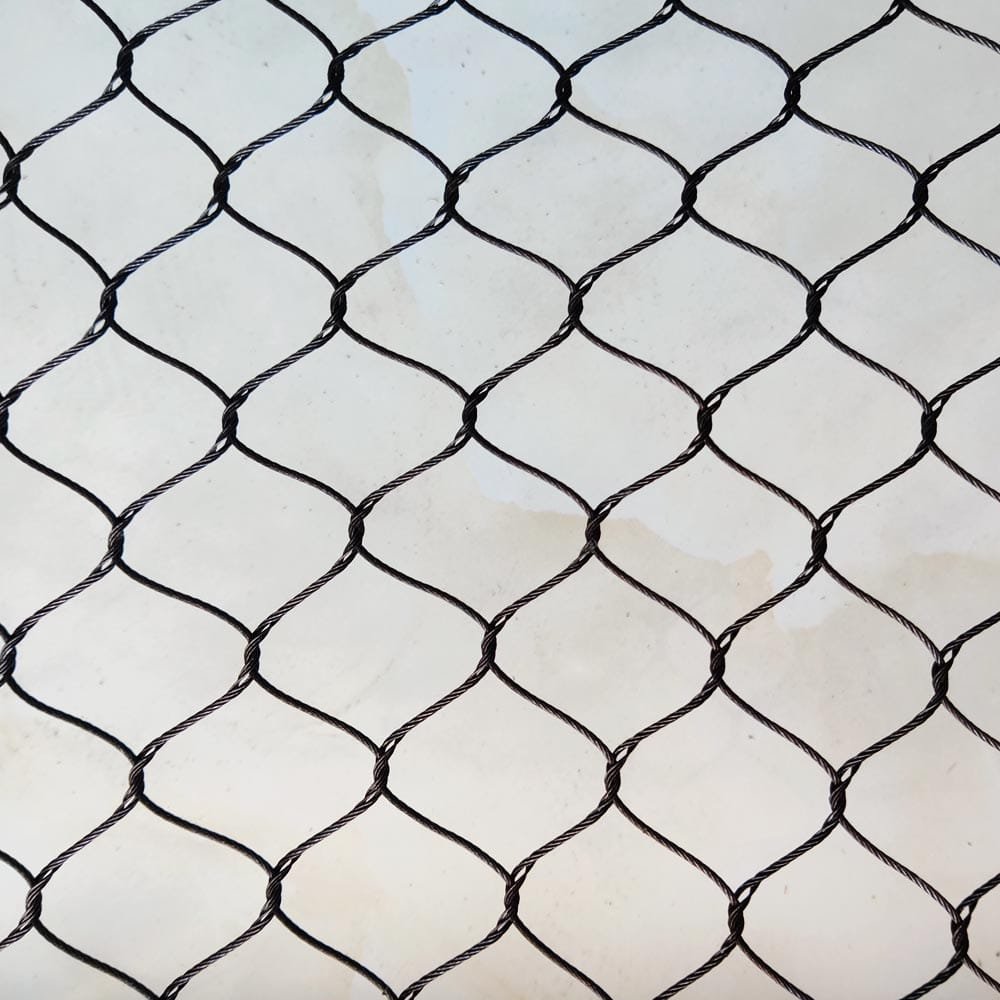
When specifying mesh, the term 1 inch netting defines only the mesh size, which is the center-to-center distance between the parallel wires or cables. However, the true strength, aesthetic, and longevity of the final product depend on two other critical specifications: Wire Diameter and Material.
The Importance of Wire Diameter/Gauge
Wire diameter, often referred to as the gauge, dictates the structural integrity and visual profile of the mesh. In a 1 inch mesh opening, varying the wire thickness dramatically changes the final product:
| Wire Diameter | Gauge (Approx.) | Strength | Visibility | Primary Use Case |
|---|---|---|---|---|
| 1.2 mm | 18 | Light Duty | Excellent (Nearly transparent) | Small bird aviaries, decorative, light screening. |
| 2.0 mm | 12 | Medium/Heavy Duty | Good | Small primate enclosures, safety netting, light fall protection. |
| 3.0 mm | 11 | Heavy Duty | Moderate | High-tension architectural facades, robust 1 inch netting for large animal containment, high wind load areas. |
Thicker Wire: Provides greater tensile strength and rigidity. This is essential for large spans, areas subject to high wind loads, or applications where animal pressure is a concern. The trade-off is slightly reduced visibility.
Thinner Wire: Offers maximum flexibility and nearly disappears against a backdrop, ideal for creating a seamless visual barrier in displays like walk-through aviaries.
Material Selection: The Defining Choice
The material used in the construction of the 1 inch netting is arguably the most critical decision, defining its lifespan, resistance to corrosion, and long-term value. This selection is so vital that we dedicate the next chapter to it.
Chapter 2: Material Showdown – Choosing the Right 1 Inch Netting
Stainless Steel vs. Galvanized vs. Plastic: Which 1″ Netting is Best?
Choosing the right material for your 1 inch netting is paramount. It determines the lifespan of your installation, how it resists the elements, and ultimately, the long-term cost.
304 / 316 Stainless Steel Cable Netting (Hebmetalmesh’s Core Focus)
This is the premium choice and the gold standard for professional applications. Stainless steel cable netting is meticulously engineered for strength, safety, and permanence.
- Ultimate Corrosion Resistance: 316 stainless steel (marine grade) is unparalleled for use in coastal regions, high humidity, or chemical environments. The standard 304 stainless steel offers superb general-purpose resistance.
- Supreme Strength-to-Weight Ratio: Despite its lightweight appearance, handwoven stainless steel cable netting can resist high loads and maintain its form under tension for decades.
- Long-Term Cost-Effectiveness: While the initial outlay is higher, the material’s lifespan (often 30+ years with zero maintenance) results in a far lower total cost of ownership than repeated replacements.
- Aesthetic & Low-Maintenance: The material is virtually invisible when correctly tensioned, offering an unobstructed view, which is critical for animal exhibits and architectural facades.
Ideal for: Permanent, professional, safety-critical, or corrosive environments (zoos, coastal aviaries, high-end architecture).
Hot-Dipped Galvanized Steel Netting
Galvanized steel is often the best compromise for strong, budget-conscious agricultural or industrial projects.
- Good Corrosion Resistance: A protective zinc coating provides excellent resistance against standard weather conditions.
- Strong and Cost-Effective: It offers a robust barrier at a fraction of the price of stainless steel.
- Potential for Rust: The coating can be scratched or compromised during installation or by animals, leading to rust over time.
Ideal for: Agricultural fencing, industrial partitions, chicken runs, and garden protection where the expected lifespan is moderate.
Plastic/Polyethylene Netting
This is the lightest-duty option for temporary or non-critical applications.
- Lightweight, Inexpensive, Easy to Handle: Requires minimal skill for installation.
- Limitations: Highly susceptible to UV degradation, easily chewed through by animals (even small rodents), and has low tensile strength.
Ideal for: Temporary garden protection, light-duty plant support, or bird exclusion from berry patches.
| Material | Lifespan | Strength | Corrosion Resistance | Cost (Relative) | Best For |
|---|---|---|---|---|---|
| Stainless Steel | 30+ Years | Highest | Excellent | Highest | Zoos, high-end architecture, permanent enclosures. |
| Galvanized Steel | 5-15 Years | High | Good | Moderate | Farming, industrial partitions, budget fencing. |
| Plastic | 1-3 Years | Low | N/A | Lowest | Temporary garden use, light crop protection. |
Chapter 3: Applications – Where 1 Inch Precision is Non-Negotiable
Top Uses for 1 Inch Mesh Netting Across Industries.
The small aperture of 1 inch netting makes it uniquely suitable for environments requiring precision containment or exclusion of small subjects.
Zoo & Animal Enclosures
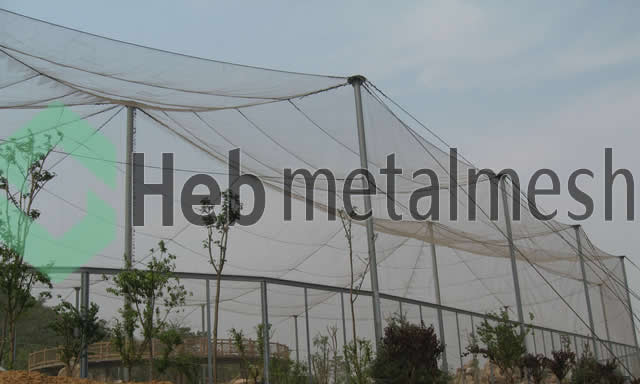
For zoological applications, 1 inch netting is a standard requirement for enclosures housing species small enough to pass through larger mesh sizes. For zoo applications, see our zoo mesh page.
- Small Primate Enclosures: Species like tamarins, marmosets, and small lemurs require a small mesh size to prevent their escape.
- Reptile and Small Mammal Exhibits: Used for containing smaller lizards, rodents, or other exhibits where safety and clear viewing are paramount.
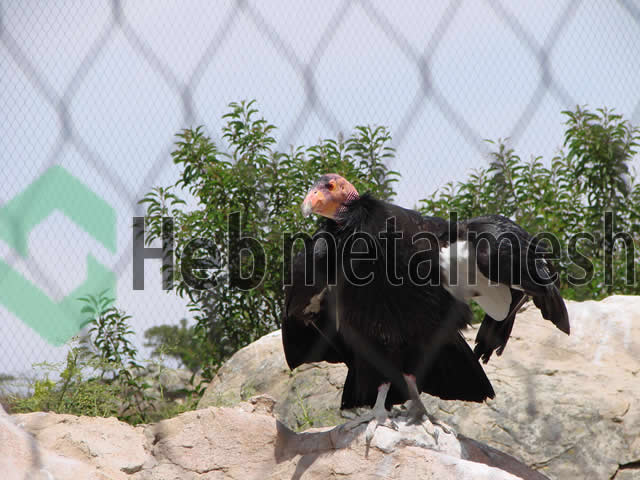
- Bird Aviaries for Small Species: Essential for finches, canaries, and other small passerines. The 1 inch netting not only prevents escape but also acts as a secure double-barrier against wild bird ingress.
Expert Angle: Handwoven stainless steel mesh (like that manufactured by Hebmetalmesh) is designed to be smooth and consistent, preventing the sharp burrs often found in machine-welded mesh. This is a key animal welfare point, minimizing the risk of toe or talon injuries to delicate species.
Aviaries & Bird Cages
Whether commercial or private, aviaries require netting that provides safety without obscuring the residents. The thin cable of 1 inch netting in stainless steel balances high security against maximizing the visitor’s view. It is essential for preventing the escape of small birds while ensuring a safe, predator-resistant habitat.
Farming & Agriculture
In the agricultural sector, the small mesh size is used defensively:
- Poultry Netting: Ideal for creating secure runs for chicks and small fowl, protecting them from smaller predators like weasels.
- Protective Netting: Used to create enclosures around vegetable gardens to guard against small pests like rabbits and squirrels.
- Beehive Ventilation/Pest Barrier: Small apertures allow for essential ventilation while keeping unwanted pests out of the hive structure.
Industrial & Architectural
The strength and versatility of stainless steel 1 inch netting extends into structural uses:
- Safety Netting: Used in construction or high-bay storage facilities for debris containment.
- Filtration and Screening: Where durable, non-corrosive material is needed for filtering small particulate matter.
- Decorative Facades and Balustrades: Custom 1 inch cable netting can be used as subtle infill for railings or as aesthetic climbing aids for plants on architectural features.
Sports & Recreation
While larger meshes dominate many sports, 1 inch precision netting is used for specialized applications:
- Goal nets for small-target games or practice.
- Practice cage netting designed to contain small, high-velocity objects.
Chapter 4: The Professional Advantage: Why Custom, Handwoven Netting Matters
Beyond the Roll: The Benefits of Custom-Fabricated & Handwoven Mesh.
While off-the-shelf, generic rolls of wire mesh (often called “chicken wire”) might suffice for temporary garden fixes, they have severe limitations regarding safety, durability, and load-bearing capacity. For any professional or permanent installation, custom, handwoven cable netting provides unparalleled advantages.
Superior Safety & Animal Welfare
Handwoven mesh is constructed by meticulously weaving stainless steel cables, resulting in a smooth, consistent structure with no sharp burrs or edges. This makes it intrinsically safer for sensitive species. Furthermore, the tension is evenly distributed across the entire panel, eliminating weak spots common in welded meshes.
Unmatched Durability & Longevity
Every connection point in handwoven cable mesh is mechanically secure, ensuring that the integrity of the material is not reliant on a weld (which can fatigue or rust). This structure allows the 1 inch netting to withstand constant tension, dynamic wind loads, and environmental stress for many decades.
Total Design Flexibility
One of the most significant advantages of custom mesh is the ability to order total design flexibility. Hebmetalmesh specializes in:
- Custom Panel Sizes and Shapes: Panels can be manufactured to fit exact measurements for complex, non-rectangular enclosures.
- Variety of Attachment Options: Custom edge cables, loops, or eyes can be integrated directly into the design, simplifying installation.
- Creating Complex 3D Structures: The highly tensile and flexible nature of the handwoven material allows engineers to create complex, volumetric, and aesthetically appealing 3D structures perfect for modern zoos and aviaries.
As a professional factory, Hebmetalmesh offers this level of customization and technical support, providing engineered solutions that far exceed the quality of standard mesh rolls.
Chapter 5: Key Considerations Before You Buy
7 Critical Questions to Ask When Sourcing 1 Inch Netting.
Before making a purchasing decision, a consulting engineer should walk through these seven critical questions to ensure the final product meets the project demands and longevity expectations.
- What is the primary threat? (Is it escape of a small animal, intrusion of a predator, protection against a fall, or merely aesthetic screening?) The answer dictates the required strength (wire diameter) and material (stainless vs. galvanized).
- What is the total area and required panel dimensions? Custom panels reduce waste, installation time, and the need for awkward on-site splicing.
- What are the wind/load requirements? Large, unbroken spans of 1 inch netting can catch significant wind. High-tension installations may require thicker cable diameters (2mm or 3mm) to manage the load.
- What is the installation method? Will the mesh be secured to a rigid pipe frame, or will it require a perimeter tensioning cable system? Ensure your supplier provides compatible hardware.
- What are the longevity expectations? Are you planning for a 5-year farm fence (galvanized) or a 30-year permanent zoo exhibit (stainless steel)?
- Are there specific certifications needed? For animal enclosures, compliance with guidelines from organizations like the ZAA (Zoological Association of America) or AZA is mandatory.
- Does the supplier offer technical support and customization? For complex projects, you need an engineering partner, not just a seller.
Chapter 6: Spotlight: 1 Inch Stainless Steel Zoo Mesh for Professional Enclosures
The Gold Standard: 1″ Stainless Steel Mesh for Animal Habitats.
When dealing with animal habitats, security is non-negotiable, and animal welfare is paramount. This is why 1 inch stainless steel netting is the undisputed gold standard. Its unique properties—flexibility, high tensile strength, and corrosion resistance—make it the only viable choice for long-term professional animal containment.
We pay close attention to ZAA (Zoological Association of America) guidelines, which often specify a minimum mesh size to prevent the escape of smaller animals and prevent toe/talon entrapment. The handwoven structure of the 1 inch netting ensures no rigid squares can injure delicate appendages.
Installation Best Practices
Successful installation requires a structural, often steel, perimeter frame. The stainless steel cable netting is attached to this frame using specialized hardware (ferrules, clamps, and turnbuckles). Proper tensioning is essential not only for structural integrity but also for achieving the material’s signature near-invisibility.
As a professional factory and ZAA member, Hebmetalmesh specializes in engineering and hand-weaving 1 inch stainless steel cable netting for some of the world’s most demanding animal habitats. We provide detailed CAD drawings and technical guidance for installation.
Explore our zoo mesh solutions.
Chapter 7: Frequently Asked Questions About 1 Inch Netting.
Frequently Asked Questions About 1 Inch Netting.
A: Strength depends heavily on the cable diameter. For example, a 2mm stainless wire in a 1″ mesh can have a tensile strength of over 3,000 lbs/ft². It is certainly suitable for containing small primates and resisting significant environmental factors like high wind loads and snow accumulation.
A: Price varies widely by material and quality. Plastic netting may cost less than a dollar per square foot, galvanized steel is moderately priced, while custom handwoven stainless steel cable netting is a premium, long-term investment priced by project scale, wire diameter, and complexity. Request a detailed quote for accurate project pricing.
A: Yes, 1 inch netting, particularly made from sturdy stainless or galvanized steel, is highly effective at excluding squirrels, chipmunks, and many smaller rodents from gardens, fruit trees, or attic vents. The aperture is too small for them to pass through.
A: Professional zoo mesh is typically sourced directly from specialized manufacturers (like Hebmetalmesh) who offer customization, technical drawings, and guarantee compliance with animal welfare standards. It is rarely found in general hardware retailers.
A: Installation requires a robust structural frame (often steel or wood), edge cables to distribute load evenly, and professional tensioning hardware such as turnbuckles and ferrule clamps. For safety-critical installations, it is highly recommended to work closely with your supplier’s engineering team to review the structural plan.
A: Mesh size (1 inch) refers to the center-to-center measurement between adjacent parallel wires. Clear opening (or hole size) is the actual open gap. For a 1 inch mesh made with a 2mm cable diameter, the actual clear opening will be approximately 23.4 mm (or 0.92 inches). This difference is negligible for general use but can be vital for strict containment needs.
Conclusion & Clear Next Steps
The selection of 1 inch netting is a decision that boils down to three factors: material quality, structural stability, and intended use.
For light, temporary garden jobs, inexpensive plastic mesh may suffice. For durable agricultural or industrial use, hot-dipped galvanized steel netting is a solid and cost-effective solution. However, for permanent, safety-critical, or professional animal enclosures and architectural applications, custom handwoven stainless steel cable netting is the superior, long-term solution.
We are committed to providing the highest quality and safest enclosure materials for animals and visitors alike.
For DIY/Standard Products: Browse our online store for ready-to-ship mesh solutions.
For Professional Projects: Have a complex enclosure or architectural project? Contact our expert team for a custom quote and technical support.