Executive Summary
Selecting the right animal fence is one of the most critical decisions you’ll make as a farm or livestock owner. The wrong fence means escaped animals, predator losses, and costly repairs. The right fence — whether high-tensile woven wire, electric, or stainless steel mesh — delivers decades of reliable livestock containment with minimal maintenance. This guide breaks down how to choose animal fence for livestock by species, terrain, and budget, with real cost data and installation best practices. For permanent, predator-proof solutions, handwoven stainless steel mesh offers a 30-year lifespan with zero rust and unmatched strength.
🔒 Need a Permanent, Zero-Maintenance Animal Fence?
Handwoven stainless steel mesh from Hebmetalmesh delivers 30+ years of rust-proof, predator-proof protection — with zero maintenance. Custom roll sizes up to 30’×60′ minimize seams and installation time.
Browse Product Page →Key Takeaways
- Species matters most — cattle need 48″ high-tensile electric or barbed wire; horses require 54–60″ board/rail or mesh; goats and sheep need woven wire with 4″×4″ openings.
- Stainless steel outlasts everything — AISI 304/316 handwoven mesh offers 30+ years rust-free, outperforming galvanized wire that corrodes in 5–10 years.
- Cost per acre ranges $630–$5,900 — woven wire averages $1.50–$2.50 per linear foot; premium stainless steel runs higher but eliminates replacement costs.
- Installation on uneven terrain requires flexible woven or mesh fencing — welded wire snaps under stress; woven wire “racks” to follow hills.
- Black Oxide finish creates near-invisible barriers — ideal for zoos, equestrian properties, and high-visibility pastures.
Introduction: Why the Right Animal Fence Matters
Every farmer knows the sinking feeling: you wake up to find livestock wandering the road or predators have breached your perimeter. An animal fence isn’t just a boundary — it’s your first line of defense against loss, liability, and endless repair cycles.
The difference between a cheap fence and a professional-grade system isn’t just materials — it’s peace of mind. A high-quality animal fence absorbs impact like a trampoline, flexing under pressure from a 200-pound buck or a panicked steer, then snapping back to shape. Cheap welded wire? It snaps at the joints. Galvanized mesh? It rusts and sags within years.
This guide walks you through how to choose animal fence for livestock, covering species-specific requirements, material comparisons, cost breakdowns, and installation tips — so you can make a decision that lasts decades, not seasons.
Understanding Your Animal Fencing Needs
Assessing Your Land and Terrain
Before buying any animal fence, evaluate your property. Rocky soil may require different post-setting techniques than clay. Steep slopes demand flexible fencing that can contour without losing tension — woven wire excels here because its knotted joints allow the mesh to “rack” and follow the land.
Identifying Your Primary Fencing Goal
Are you keeping animals in or keeping predators out? For livestock containment, permanent fencing with high-tensile wire or woven mesh works best. For predator protection, combine physical barriers with electric strands. For rotational grazing, portable electric fencing offers flexibility at lower cost ($120–$600 per acre).
Budget and Longevity Considerations
The cheapest animal fence is rarely the most economical. Galvanized wire may cost less upfront but rusts within 5–10 years, especially in humid or coastal environments. Stainless steel (AISI 304/316) costs more initially but delivers 30+ years of maintenance-free service — a true “buy once, benefit for a lifetime” investment.
Types of Animal Fencing — A Complete Breakdown
Woven Wire Fencing (Hand-Knotted Stainless Steel Mesh)
The gold standard for permanent livestock containment. Unlike welded wire that snaps at joints, woven wire uses hand-knotted intersections that slide and lock under pressure. Hebmetalmesh’s handwoven 304-grade stainless steel mesh offers:
- 30+ year lifespan with zero rust or corrosion
- Impact absorption — distributes energy across the entire “fabric” of the mesh
- Uneven terrain adaptability — follows hills without losing strength
- Mesh sizes from 1″×1″ (small birds) to 4″×4″ (large hoofstock and predators)
Best for: Permanent enclosures, cattle, horses, goats, sheep, predator-proof perimeters.
High-Tensile Electric Fencing
Cost-effective and psychologically deterrent. Electric animal fence delivers a mild shock that trains livestock to respect boundaries. Works well for rotational grazing and large pastures.
Pros: Lower cost, flexible, easy to install. Cons: Requires power source, regular maintenance, animal training needed.
Best for: Cattle, dairy operations, temporary grazing setups.
Barbed Wire Fencing
Common for cattle containment but not recommended for horses or wool-producing sheep due to injury risk.
Best for: Cattle only, interior fencing.
Board and Rail Fencing
Ideal for horses due to high visibility — horses need to see the fence to avoid running through it. Aesthetic appeal but higher maintenance and cost.
Best for: Horse pastures, residential equestrian properties.
Stainless Steel Mesh Fencing
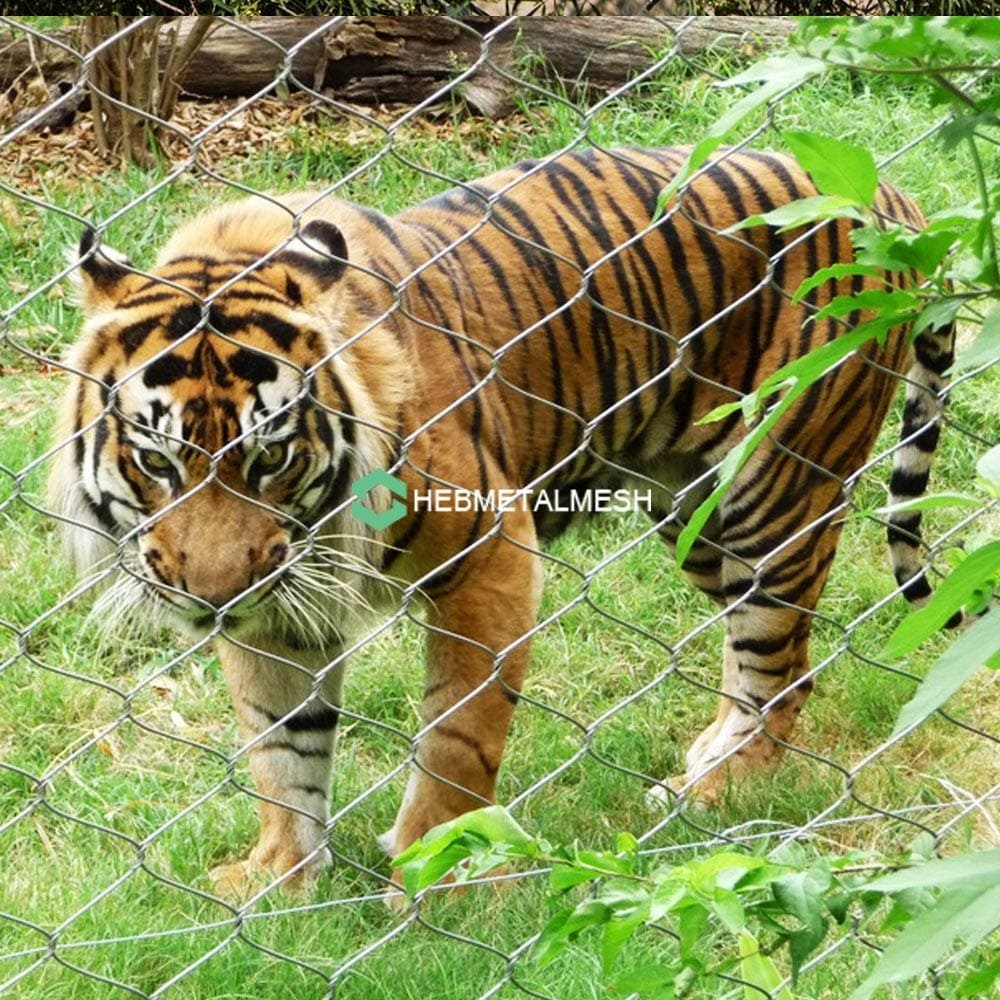
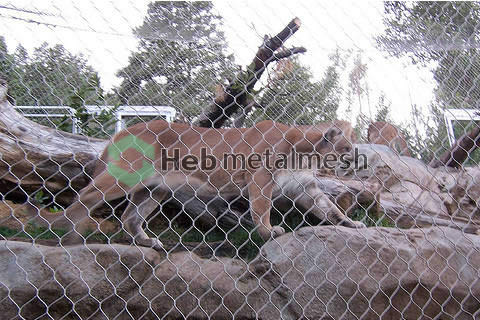
Hebmetalmesh’s 1.5″×1.5″ diamond mesh with 1/16″ wire thickness offers superior strength and near-invisibility. Available in Natural Silver or Black Oxide finish — Black Oxide eliminates glare and makes the mesh “disappear” against natural backgrounds.
Roll dimensions: 30′ wide × 60′ long, minimizing seams and weak points.
Best for: Zoos, aviaries, high-security enclosures, premium farm perimeters.
Animal Fence Selection by Species
Best Animal Fence for Cattle
- Height: Minimum 48 inches
- Recommended: High-tensile electric or barbed wire with electric current
- Alternative: Woven wire for permanent perimeter fencing
Best Animal Fence for Horses
- Height: 54–60 inches
- Recommended: Board/rail fencing or stainless steel mesh (safest, most visible options)
- Why: Horses need to see the fence to avoid impact injuries
Best Animal Fence for Goats and Sheep
- Height: 40–46 inches with 5–6 wires
- Recommended: Woven wire with 4″×4″ openings to prevent horn entanglement
- Add: Electric strands for predator protection
Best Animal Fence for Poultry and Small Animals
- Recommended: Welded wire or stainless steel mesh with small openings (1″×1″)
- Height: Minimum 3 feet
Animal Fence Cost Breakdown (2026 Data)
| Fence Type | Cost per Linear Foot | Cost per Acre (approx.) | Lifespan |
|---|---|---|---|
| Standard Woven / Galvanized Wire | $1.50 – $2.50 | $2,500 – $5,000 | 5–15 years |
| High-Tensile Specialty Systems | $2.50 – $3.50 | $3,500 – $6,000 | 15–25 years |
| Stainless Steel Mesh (304 Grade) | $4.00 – $8.00+ | $5,000 – $10,900+ | 30+ years |
| Temporary / Portable Electric | $0.50 – $1.50 | $120 – $600 | ~5 years |
Note: Costs vary by terrain, labor, and customization. Hebmetalmesh offers custom roll sizes at no additional cost to reduce installation waste.
How to Install Animal Fence — Step-by-Step
Step 1 — Plan Your Fence Layout
Map pasture boundaries, water sources, and gate locations. Determine wire count and post spacing based on species.
Step 2 — Select and Prepare Posts
Choose treated wood or galvanized steel. Post spacing: 8–12 feet for woven wire, 30–50 feet for high-tensile electric.
Step 3 — Install and Tension the Wire
For woven mesh, secure at corners first, then stretch and staple. For electric, maintain proper tension and test the energizer.
Step 4 — Test and Maintain
Inspect monthly for loose tension, vegetation growth, and damage. Stainless steel requires minimal upkeep — just visual checks.
Permanent vs. Temporary Animal Fencing
| Feature | Permanent Fencing | Temporary Fencing |
|---|---|---|
| Durability | 20–50+ years | ~5 years |
| Cost per acre | $2,500 – $10,900+ | $120 – $600 |
| Maintenance | Low (stainless steel: zero) | Moderate |
| Best for | Long‑term enclosures, perimeter security | Rotational grazing, seasonal use |
Conclusion
Choosing the right animal fence comes down to three factors: species, terrain, and budget. For cattle, high-tensile electric offers cost-effective containment. For horses, visibility and safety come first — board/rail or mesh fencing. For goats and sheep, woven wire with 4″ openings prevents escapes and predator attacks.
But if you’re looking for the ultimate “set it and forget it” solution, handwoven stainless steel mesh delivers unmatched durability — 30+ years rust-free, impact-resistant, and adaptable to any terrain. Whether you’re protecting a zoo exhibit, a horse pasture, or a livestock operation, investing in professional-grade animal fencing isn’t an expense — it’s a legacy investment in safety and peace of mind.
📋 Not Sure Which Animal Fence Fits Your Farm?
Download our free Animal Fence Selection Checklist — species requirements, terrain assessment, and budget calculator included.
Get the Free Guide →FAQ — 5 PAA User Questions
Q1: What is the best type of fence for livestock?
The best animal fence depends on your species. Cattle benefit from high-tensile electric or barbed wire with electric current. Horses need board/rail or mesh fencing (54–60″ tall) for visibility and safety. Goats and sheep require woven wire with 4″×4″ openings to prevent horn entanglement, combined with electric strands for predator protection.
Q2: How much does it cost to fence an acre for animals?
Costs range from $630 to $5,900 per acre, with an average around $1,700. Standard woven/galvanized wire runs $1.50–$2.50 per linear foot; stainless steel mesh costs more upfront but eliminates replacement costs over 30+ years.
Q3: How tall should an animal fence be?
Cattle: 48″ minimum. Horses: 54–60″ for perimeter fencing. Goats: 40–46″ with closely spaced wires. Wire mesh fences: at least 3′ tall; for wildlife exclusion, 4′ minimum (6’+ for deer).
Q4: What is the difference between woven wire and welded wire fencing?
Woven wire uses knotted intersections that allow the mesh to flex under impact and adapt to uneven terrain — it distributes energy across the entire fence “fabric.” Welded wire has rigid joints that snap under pressure, creating weak points that fail over time. For permanent, professional-grade livestock containment, woven wire is the superior choice.
Q5: How do I maintain my animal fence?
Stainless steel mesh requires virtually zero maintenance — no rust, no painting, no replacement. For other fences: inspect monthly for loose tension, vegetation growth, and damage. Check electric fence energizers and grounding systems regularly. Repair breaks immediately to prevent escapes.