1. Executive Summary
The optimal primate cage material for modern zoo enclosures and private sanctuaries is 304 or 316-grade stainless steel wire mesh, specifically in a hand-woven or flexible cable ferrule construction. Unlike traditional welded wire or galvanized steel, flexible stainless steel mesh provides the necessary tensile strength to contain high-energy primates while offering a “soft” impact surface that prevents limb injuries during leaps.
To ensure safety and longevity, the material must meet three critical criteria:
- Corrosion Resistance: 316 stainless steel is essential for outdoor or humid environments to resist acidic waste and cleaning agents.
- Non-Toxicity: Materials must be zinc-free to prevent “hardware disease” (heavy metal poisoning) common in primates who chew on cage bars.
- Aperture & Gauge: A mesh opening (aperture) small enough to prevent “finger trapping” and a wire diameter (gauge) of 2.0mm to 4.0mm to withstand the biting force of larger species.
2. Introduction: Why Material Choice is Life-or-Death for Primates
When designing a habitat for primates, you aren’t just building a fence; you are engineering a high-stress environment that must withstand one of the most destructive forces in nature: primate intelligence. Primates—ranging from the agile lemur to the immensely powerful orangutan—interact with their environment using a combination of high-velocity movement and tactile exploration. This makes the choice of primate cage material a literal matter of life and death. A material that is too rigid can cause compound fractures when a primate strikes it at speed; a material that is too weak can be unraveled by dexterous fingers; and a material that is chemically unstable can lead to chronic poisoning.
Historically, facilities relied on heavy iron bars or galvanized fencing. However, as our understanding of primate biomechanics and toxicology has evolved, the industry has shifted toward specialized alloys and flexible weaving techniques. Choosing the right material today requires a balance of:
- Physical Safety: Eliminating sharp edges, pinch points, and brittle welds that can snap under tension.
- Biological Security: Ensuring the material is non-porous and easy to disinfect to prevent the spread of zoonotic diseases.
- Psychological Welfare: Utilizing high-transparency materials that reduce the visual barrier between the animal and its environment, lowering stress levels for the inhabitants.
In the following sections, we will break down the technical specifications of the top-rated materials on the market to help you source the most durable and cost-effective solution for your custom habitat.
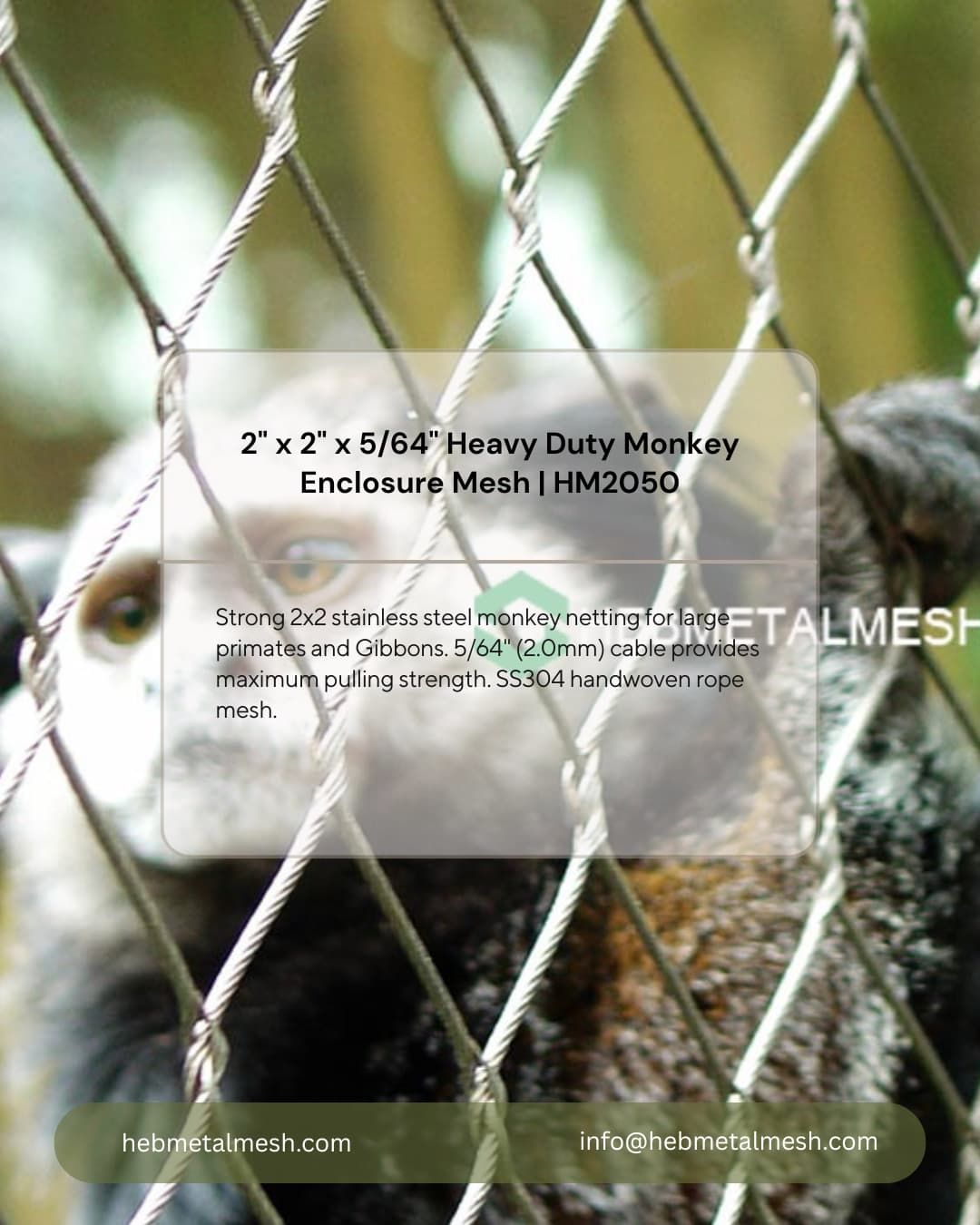
3. Core Primate Cage Materials: A Comparative Analysis
When selecting a primate cage material, you are essentially choosing between three categories: high-performance alloys, budget metals, and specialized observation panels. For most professional applications, the decision rests on the specific grade of steel and the weaving method.
Stainless Steel Mesh: 304 vs. 316
Stainless steel is the industry standard because it does not require toxic anti-rust coatings. However, not all stainless steel is created equal.
- 304 Stainless Steel: This is the most common grade. It is excellent for indoor enclosures and provides high tensile strength. It is cost-effective but can show “tea staining” (surface rust) if exposed to salt air or heavy outdoor moisture.
- 316 Stainless Steel: Often called “Marine Grade,” 316 contains molybdenum, which makes it highly resistant to chlorides and the harsh ammonia found in primate urine. For outdoor sanctuaries or tropical climates, 316 is the only material that guarantees a 20+ year lifespan.
Flexible Rope Mesh vs. Welded Wire
The construction method is just as important as the metal itself.
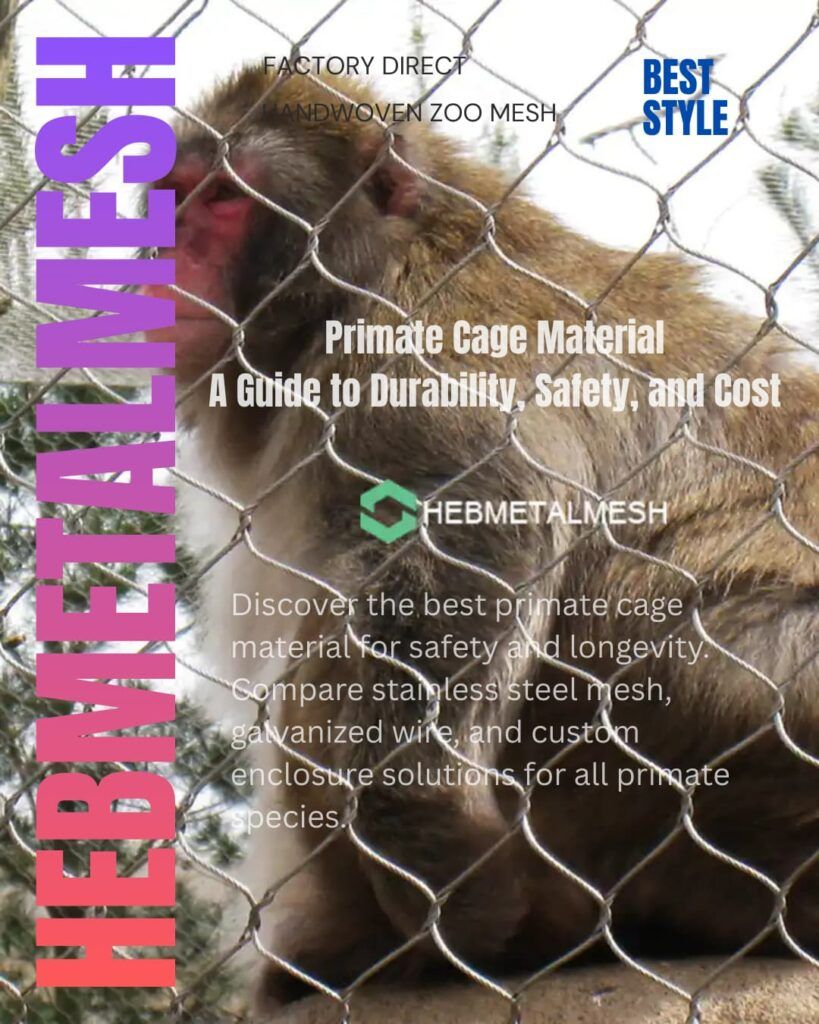
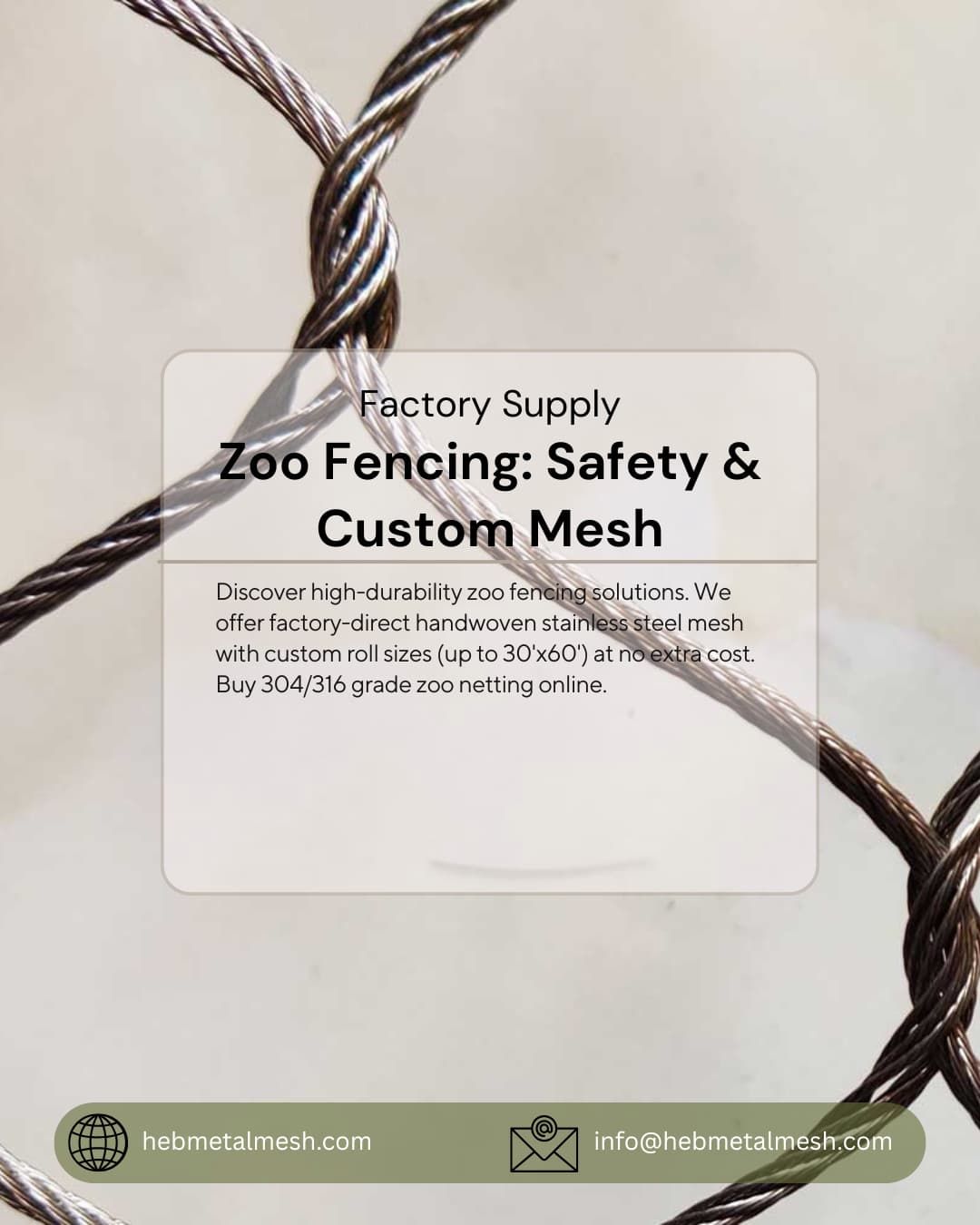
- Hand-Woven Rope Mesh: This is a flexible, fabric-like metal mesh. It is the preferred primate cage material for modern “immersion” exhibits. Because the wires are interwoven rather than welded, the mesh can “give” when an animal jumps against it, absorbing energy and preventing injury.
- Welded Wire Mesh: Rigid and cheaper, welded wire is suitable for smaller, less active primates. However, the weld points are “stress concentrators.” Over time, the repeated shaking and climbing by a large primate can cause these welds to fatigue and snap, creating dangerous sharp points.
4. Species-Specific Material Requirements
Different primates interact with their environment in unique ways. A one-size-fits-all approach to materials often leads to either overspending or enclosure failure.
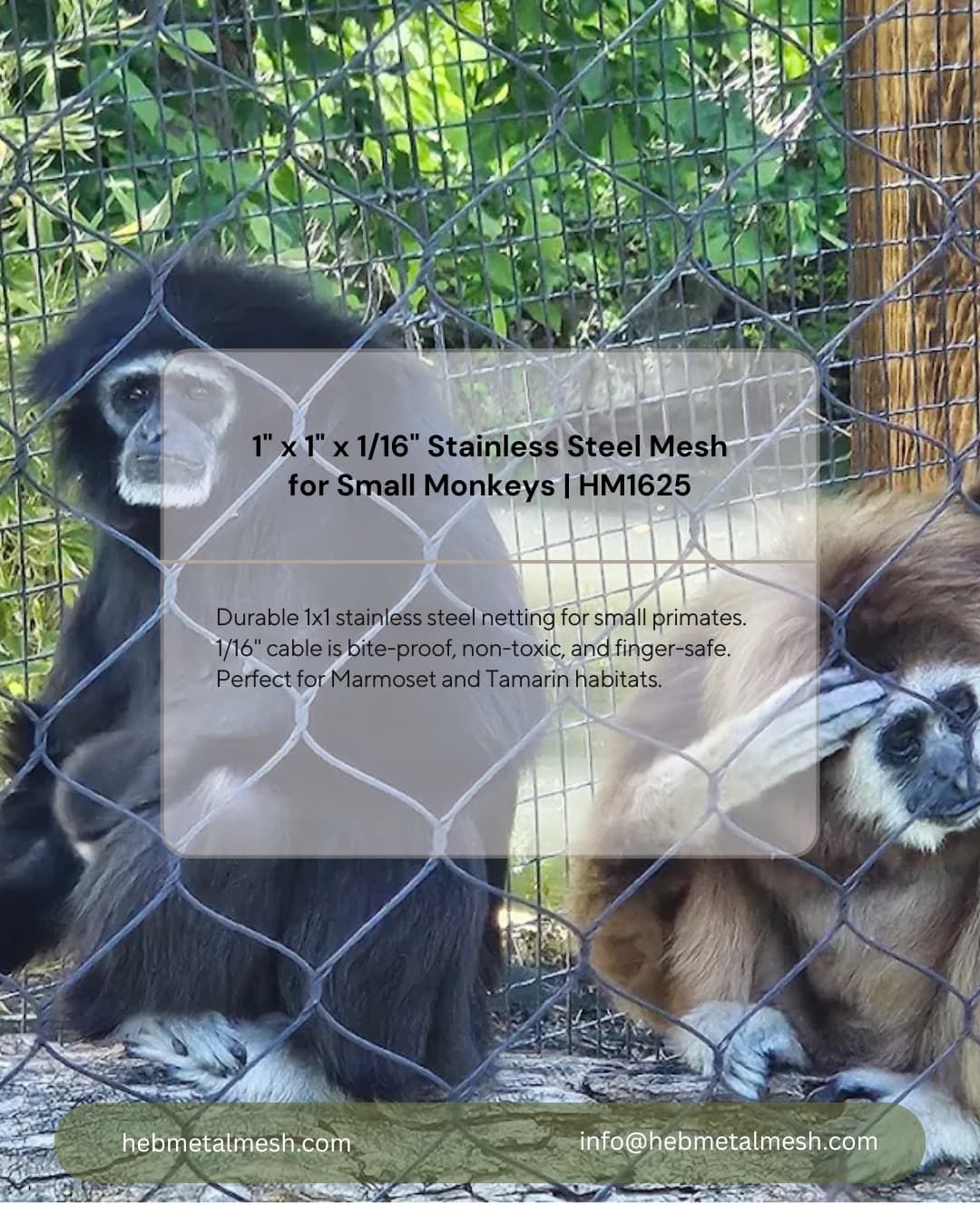
Small Primates (Marmosets, Tamarins, Lemurs)
For these smaller species, the primary concern is aperture size.
- Recommended Material: 1.2mm to 1.6mm wire diameter.
- Mesh Opening: 20mm x 20mm to 30mm x 30mm.
- Goal: Preventing the primate from getting its head or limbs stuck in the mesh while maintaining high visibility for these highly active, visual animals.
Medium Primates (Macaques, Capuchins, Guenons)
These species are notoriously destructive and possess high “manipulative intelligence.” They will find loose wires and unwrap them.
- Recommended Material: 2.0mm to 2.4mm wire diameter.
- Mesh Opening: 38mm x 38mm to 50mm x 50mm.
- Goal: Resistance to constant picking and pulling at the mesh knots.
Large Primates (Chimpanzees, Gorillas, Orangutans)
The strength requirements for Great Apes are astronomical. They require materials that can withstand sheer brute force and heavy impact.
- Recommended Material: 3.2mm to 4.0mm wire diameter.
- Mesh Opening: 50mm x 50mm to 100mm x 100mm.
- Goal: Maximum tensile strength. At this level, only 316-grade stainless steel cable mesh is recommended to ensure the structure doesn’t sag or deform under the weight of a 200kg ape.
5. The Engineering of Safety: Breaking Strength and Mesh Aperture
When you buy primate cage material online, you must look at the “Breaking Load” specifications. A high-quality mesh will provide a technical data sheet showing the Newton (N) force required to break the wire.
For example, a standard 2.0mm stainless steel cable typically has a breaking strength of approximately $3.12\text{ kN}$. If you are housing a primate capable of generating $2.0\text{ kN}$ of force during a dynamic leap, you must ensure your mesh and its mounting hardware provide a safety factor of at least 3:1.
Aperture Safety Rule: Always ensure the mesh opening is either small enough that a finger cannot pass through, or large enough that an entire arm can pass through freely. The “middle ground” is where most primate trap-and-break injuries occur.
6. Cost-Effective Options for Building a Custom Primate Habitat
Budget is often the biggest hurdle when transitioning from basic containment to a world-class sanctuary. While it is tempting to choose the cheapest primate cage material upfront, the “Total Cost of Ownership” (TCO) often tells a different story.
Here is how to optimize your budget without compromising the safety of the animals:
The “Hybrid Habitat” Strategy
You do not necessarily need high-cost stainless steel mesh for 100% of the enclosure.
- Solid Barriers: Use poured concrete, masonry blocks, or heavy-duty treated timber for the back walls and weather-shielded areas. These materials are excellent for thermal regulation and are significantly cheaper per square foot than metal mesh.
- Strategic Mesh Placement: Reserve the premium 316 stainless steel hand-woven mesh for the viewing fronts and the ceiling (if it is an open-air top). This provides maximum visibility for caretakers and sunlight for the primates while focusing your investment where it matters most.
Life-Cycle Costing: Stainless vs. Galvanized
When evaluating cost-effective options for building a custom primate habitat, consider the 10-year outlook:
- Galvanized Wire: Low initial cost. However, due to primate waste acidity and cleaning chemicals, it often requires replacement every 3–5 years. Additionally, the medical costs associated with potential zinc toxicity can be astronomical.
- Stainless Steel Mesh: Higher initial investment (approximately 2–3x the cost of galvanized). However, it lasts 20–30 years with zero structural degradation. Over a decade, stainless steel is actually the cheapest material per year of service.
Standardize Your Panel Sizes
Custom shapes (triangles, trapzoids) lead to material waste during the cutting process. By designing your enclosure frame to accommodate standard roll widths—typically 1 meter, 1.5 meters, or 2 meters—you can reduce “drop-off” waste. Buying primate cage material online in bulk rolls rather than pre-cut pieces can save an additional 15–20% on material costs.
DIY Installation vs. Professional Labor
Flexible rope mesh is surprisingly “DIY-friendly” for those with basic mechanical skills. Unlike rigid bars that require heavy welding equipment on-site, stainless steel cable mesh can be laced onto a frame using simple hand tools and ferrules. By sourcing the material directly from a factory-direct store (like the Hebmetalmesh Store) and handling the lacing yourself, you can reallocate labor budgets toward enrichment features like climbing structures and automated feeding systems.
7. Sourcing and Logistics: Where to Buy Primate Cage Materials Online
In 2026, the global supply chain for zoo-grade materials has shifted. It is no longer necessary to rely solely on local general-purpose hardware distributors who often lack the specialized knowledge required for primate safety. Modern architects and sanctuary owners now favor a “Direct-to-Manufacturer” approach.
Why Buy Directly from the Source?
When you search for where to buy durable primate cage materials online, you will encounter two types of sellers: general animal supply distributors and specialized manufacturers.
- Cost Control: Buying factory-direct typically saves 20% to 30% by eliminating middleman markups.
- Technical Expertise: Manufacturers like Hebmetalmesh provide detailed specifications on breaking strength and alloy composition that a general reseller cannot verify.
- Customization: Primates don’t live in “standard” squares. Sourcing from a specialist allows you to order massive, seamless panels (up to 30ft x 60ft) which reduce the number of weak points and joints in your enclosure.
Shipping and Logistics of Heavy Mesh
Shipping 1,800 square feet of stainless steel wire mesh isn’t like ordering a book. To ensure your primate cage material arrives in pristine condition, look for these logistical standards:
- Packaging: For hand-woven mesh, rolls should be wrapped in moisture-proof plastic and secured in wooden crates or heavy-duty cardboard tubes to prevent warping.
- Freight Classification: Ensure the supplier understands international freight codes (such as HTS 7314.14 for stainless steel cloth). This prevents unexpected customs delays and duty fees.
- Global Reach: Top-tier suppliers now offer air-freight for urgent repairs and sea-freight for large-scale habitat construction, making it just as easy to source mesh from a specialist across the ocean as it is from a local shop.
The “Store” Advantage
For smaller projects or immediate needs, online shops (like the Hebmetalmesh Store) have simplified the process. You can now select your wire diameter, aperture size, and roll length with a few clicks, seeing real-time pricing and estimated lead times. This transparency is crucial for maintaining project timelines in custom habitat builds.
8. Conclusion & Expert Recommendation
Selecting the right primate cage material is the most significant investment you will make in your facility. While galvanized options or nylon netting might seem like budget-friendly alternatives, they carry hidden costs in the form of veterinary bills, frequent replacements, and safety risks.
The Verdict: For a permanent, safe, and professional-grade habitat, 316-grade stainless steel hand-woven mesh is the gold standard. It provides the “soft” impact safety primates need, the visibility visitors desire, and the “set it and forget it” durability that facility managers require.
By focusing on high-quality alloys and flexible construction, you aren’t just building a cage—you are creating a secure environment where primates can thrive for decades to come.
📥 Downloadable Resource: 5 Critical Questions to Ask Your Primate Cage Material Supplier
Before you finalize your purchase of primate cage material, use this checklist to vet your supplier. A high-quality manufacturer, like Hebmetalmesh, will be able to answer these questions with technical documentation.
Why it matters: Many low-cost “316” meshes are actually lower-grade 201 or 304 steel. An MTR proves the chemical composition (specifically the Chromium, Nickel, and Molybdenum content) to ensure it won’t rust in your specific environment.
Why it matters: Hand-woven mesh (interlocked wires) offers the best visibility and a “soft” feel for primate hands. Ferruled mesh uses small metal sleeves to join the wires; while strong, these ferrules can sometimes be picked at by curious primates like Capuchins. Know which one fits your species’ behavior.
Why it matters: Don’t guess. For large primates, you need the exact Newton (N) rating. A reputable supplier of durable primate cage materials should provide a spec sheet showing that the mesh can handle the dynamic impact of a leaping animal.
Why it matters: Primate skin is sensitive. High-quality primate cage wire mesh should have “knuckled” or smoothed edges. If the edges are raw or sharp, you will need to spend extra on specialized U-channel framing to hide the hazard.
Why it matters: Every seam (where two pieces of mesh meet) is a potential point of failure. If you can buy a single 20-meter long panel directly from a specialized store, you eliminate the need for dangerous mid-air lacing and create a much stronger, more aesthetic enclosure.