Introduction: Redefining “Eagle Fencing” for Animal Care Professionals
In the world of professional animal husbandry, names can be deceiving. If you search for “eagle fencing” today, your results page is likely flooded with residential chain-link companies, backyard perimeter solutions, and hardware store wire. However, for zoo architects, wildlife park managers, and sanctuary operators, these options aren’t just insufficient—they are potentially dangerous.
Containing a bald eagle, a harpy eagle, or a golden eagle requires more than a simple barrier. It requires an engineered habitat solution that accounts for high-velocity flight impact, predatory strength, corrosive environmental factors, and the critical need for visitor visibility. When we speak of eagle fencing in a professional context, we are discussing high-tensile, handwoven stainless steel mesh systems designed specifically for the world’s most powerful raptors.
At Hebmetalmesh (Shijiazhuang Netting Trading Co., Ltd.), we have spent years bridging the gap between industrial manufacturing and zoological conservation. We understand that an eagle enclosure is not just a fence; it is a bio-secure, life-sustaining environment. This guide serves as the definitive resource for selecting, specifying, and implementing professional-grade eagle fencing that prioritizes both animal welfare and structural longevity.
Section 1: What is Professional Eagle Fencing? (Beyond Chain Link)
Clarifying the Niche
To the uninitiated, a wire is just a wire. But to a raptor specialist, the difference between a standard galvanized fence and professional zoo mesh is the difference between a temporary fix and a forty-year investment. Professional eagle fencing is a specialized category of stainless steel aviary netting characterized by its high strength-to-weight ratio and its ability to absorb energy without deforming.
Material is Key: Why Type 316 Stainless Steel Reigns Supreme
Most residential fencing uses galvanized steel, which relies on a thin coating of zinc for protection. In a zoo environment, this is a recipe for failure.
- Corrosion Resistance: Eagles produce nitrogen-rich waste that, combined with rain and humidity, becomes highly corrosive. Type 316 Stainless Steel contains molybdenum, which provides superior resistance to pitting and crevice corrosion.
- Non-Toxicity: Unlike galvanized materials which can cause heavy metal poisoning (zinc toxicosis) if a bird chews on the wire, stainless steel is biologically inert and safe for all avian species.
- Longevity: While traditional fencing might need replacement every 5 to 10 years, our stainless steel mesh is designed to last 30+ years in nearly any climate, including coastal regions with high salt spray.
The Construction Advantage: Handwoven vs. Welded
The structural integrity of eagle fencing comes from its weave.
- Handwoven Resilience: Unlike welded wire, which can snap at the joints under stress, handwoven stainless steel mesh utilizes a “knotted” or “interlaced” design. This allows the mesh to behave like a fabric. When an eagle strikes the mesh during flight, the force is distributed across the entire panel rather than being concentrated on a single weld point.
- Flexibility: Handwoven mesh can be draped over complex architectural shapes—domes, tunnels, and irregular rockwork—making it the preferred choice for modern, immersive zoo designs.

Section 2: Critical Technical Specifications for Eagle Enclosures
When designing a raptor habitat, generalities won’t suffice. You need specific metrics to ensure the safety of the birds and the public.
Mesh Size Analysis: 1.5″ x 1.5″ vs. 2″ x 2″ vs. 3″ x 3″
The “aperture” or mesh size is the most critical decision in your project planning. It dictates visibility, safety, and price.
1. 1.5″ x 1.5″ (38mm x 38mm)
This is the gold standard for most eagle and large raptor species.
- Safety First: This size is small enough to prevent “toe-trapping” or beak entanglement. If an eagle attempts to grab the mesh, the 1.5″ opening limits their ability to get a full grip that could lead to broken talons or leg injuries.
- Predator Proofing: It effectively keeps out smaller local predators (like raccoons or large rodents) that might try to enter the enclosure to steal food or harass the birds.
2. 2″ x 2″ (50mm x 50mm)
Commonly used for very large species (Steller’s Sea Eagles) or in massive walk-through aviaries.
- Visibility: The larger aperture provides a better viewing experience for visitors, as there is less “metal” obstructing the line of sight.
- Structural Efficiency: Larger mesh sizes require less material, making them a cost-effective choice for covering vast spans where the birds are unlikely to spend significant time clinging to the walls.
3. 3″ x 3″ (76mm x 76mm)
Reserved for specific architectural applications.
- Fright Barriers: Often used as a secondary “perimeter” fence several feet away from the main enclosure to prevent the public from getting too close.
- Mega-Habitats: In enclosures spanning several acres, 3″ mesh may be used for the high ceiling panels where birds rarely interact with the surface.
Wire Diameter & Tensile Strength
The thickness of the wire (measured in millimeters) must correlate with the bird’s power.
- 1.2mm to 1.5mm: Ideal for lighter raptors and general aviary sides.
- 2.0mm to 2.4mm: Recommended for heavy eagles. This diameter provides the high tensile strength needed to withstand the “shock load” of a 15lb eagle hitting the mesh at 30mph.
Customization: The Hebmetalmesh Difference
We recognize that no two zoo projects are the same. We offer:
- Seamless Large-Scale Rolls: We can manufacture custom panels up to 30′ x 60′ (or larger). Minimizing joins is crucial; every seam is a potential point of failure and a visual distraction.
- Black Oxide Finish: While natural stainless steel is beautiful, it can cause glare in bright sunlight. Our Black Oxide treatment is a chemical process that darkens the wire without adding a thick, flakey coating. It makes the mesh virtually “disappear” against a natural backdrop, providing an unparalleled view for visitors.
BestSeller Eagle Fencing: Unrivaled Stainless Steel Aviary Netting for Majestic Birds
Secure your most impressive raptors and large birds with Eagle Fencing, the premium stainless steel aviary netting engineered for ultimate strength and longevity. Specifically designed for demanding applications like eagle enclosures, hawk aviaries, and large-scale zoo habitats, this robust netting provides a safe, reliable, and visually unobtrusive barrier.
Crafted from high-grade Stainless Steel 304, our mesh offers exceptional resistance to corrosion, rust, and harsh weather conditions, ensuring a lifetime of service with minimal maintenance. The 1.5″ x 1.5″ diamond mesh pattern paired with a substantial 1/16″ wire thickness creates an incredibly durable fence that prevents predator entry and contains even powerful birds without risk of bending or breaking.
Each heavy-duty roll measures 30 feet wide by 60 feet long, offering extensive coverage for large flight cages and perimeter fencing. Choose between a Natural stainless steel finish that blends seamlessly with the environment or a sleek Black Oxide coating for reduced glare and enhanced aesthetic appeal.
Product Highlights:
- Built for Raptors & Large Birds: The “Eagle Fencing” standard provides the perfect balance of visibility and impenetrable strength.
- Premium 304 Stainless Steel: Superior corrosion resistance for decades of reliable performance in any climate.
- Heavy-Duty Construction: 1.5” mesh made from 1/16” thick wire ensures maximum security and prevents deformation.
- Large, Ready-to-Install Rolls: 30ft x 60ft rolls minimize seams and speed up installation on big projects.
- Customization Available: Need a specific size, shape, or configuration? We specialize in tailored solutions to fit your exact aviary or zoo habitat design.
Invest in the security and well-being of your avian specimens. Eagle Fencing by Hebmetalmesh is the trusted choice for professional zoos, wildlife sanctuaries, and bird conservatories worldwide.
Brand: Hebmetalmesh
Price: $3,980.00 per roll
Order & Custom Quote: https://hebmetalmesh.com/store/1-5-x-1-5-diamond-holes-30-x-60-rolls-natures-or-black-oxide/
Section 3: Applications: Where True Eagle Fencing is Essential
Zoo & Public Aquarium Raptor Exhibits
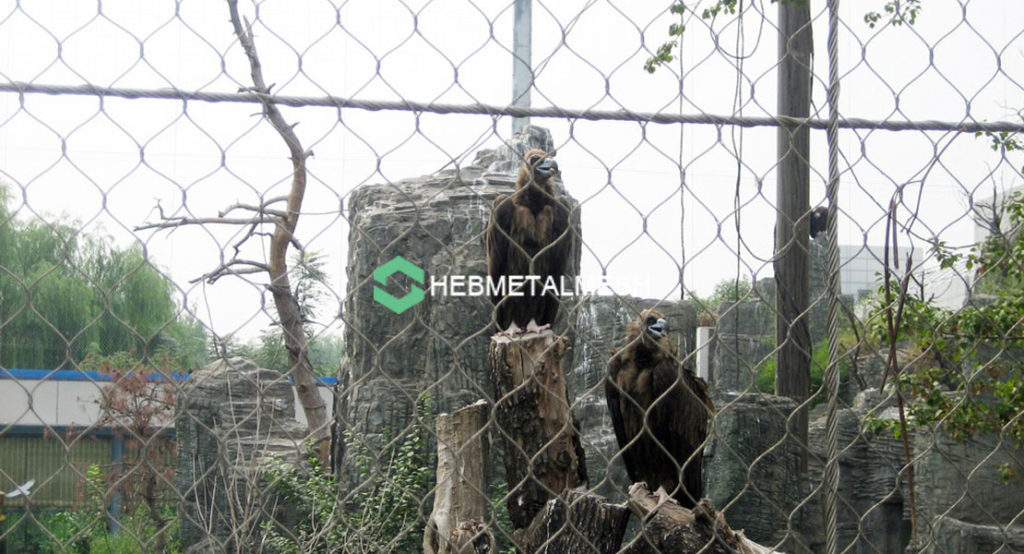
In public-facing exhibits, the fencing must balance three conflicting goals: keeping the bird in, keeping the public out, and looking invisible. Our handwoven mesh allows for “open-air” feeling habitats that meet all modern AZA (Association of Zoos and Aquariums) standards for animal welfare and public safety.
Wildlife Rehabilitation & Breeding Centers
For injured eagles or those in breeding programs, the environment must be stress-free. The soft, flexible nature of handwoven mesh prevents “wing-feather breakage” that often occurs when birds flap against rigid chain-link or wooden slats.
Large Public Aviaries and Bird Parks
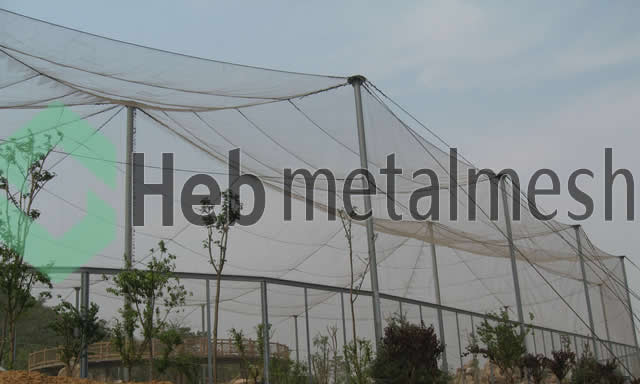
Spanning the volume of a walk-through aviary requires a material that is light enough for the support structure but strong enough to handle wind loads and snow accumulation. Our stainless steel netting is aerodynamic, allowing wind to pass through without creating the “sail effect” that can collapse traditional structures.
Beyond Eagles: Multi-Species Versatility
While named “eagle fencing” due to the strength requirements, this material is the industry choice for:
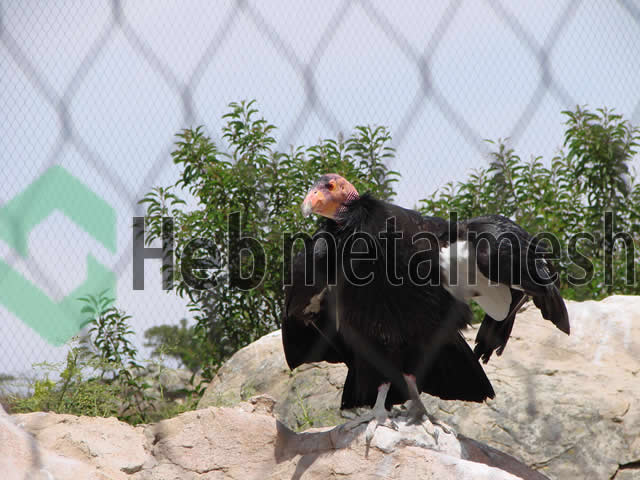
- Condors and Vultures: Requiring immense vertical space and strong mesh.
- Cranes and Storks: Who need soft-landing surfaces to prevent leg injuries.
- Large Primates: Our 2.4mm wire is frequently used for lemur and monkey enclosures due to its “climb-proof” durability.
Section 4: Comparative Analysis: Eagle Fencing vs. Other Enclosure Methods
| Feature | Hebmetalmesh Stainless Steel | Standard Chain Link | Welded Wire Mesh | Nylon Netting |
|---|---|---|---|---|
| Lifespan | 30+ Years | 5-10 Years | 5-15 Years | 2-5 Years |
| Impact Absorption | High (Elastic) | Low (Rigid) | Very Low (Brittle) | Moderate |
| Visibility | Excellent (Black Oxide) | Poor (Bulky) | Moderate | Poor (Thick strands) |
| Bird Safety | Smooth, No Sharp Edges | High risk of snags | Sharp weld points | Entanglement risk |
| Maintenance | Zero | High (Rust/Paint) | Moderate (Rust) | High (UV degradation) |
The “Cheap” Trap
Many contractors initially opt for nylon or plastic netting to save on upfront costs. However, eagles have incredibly sharp beaks and talons. A bored or determined raptor can shred nylon in minutes. Furthermore, UV rays degrade plastic, leading to catastrophic failures. Stainless steel is a “one-and-done” investment that pays for itself in avoided maintenance and replacement costs within the first decade.
Section 5: The Hebmetalmesh Advantage: Your Partner in Habitat Design
Choosing a supplier is as important as choosing the material. Hebmetalmesh isn’t just a factory; we are a partner in your project’s success.
Global Expertise
We have supplied mesh for world-class zoos and wildlife parks across North America, Europe, and Asia. We understand the international shipping logistics and the rigorous documentation required for large-scale government and private contracts.
End-to-End Support
- Free Samples: We provide physical samples of different wire diameters and mesh sizes so your team can conduct strength tests and visual assessments.
- Technical Consultation: Not sure about the load-bearing requirements for a 100-foot span? Our engineers can provide the technical data your architects need to design the support cables and frame.
- Direct Manufacturer Pricing: By cutting out the middleman, we provide industrial-grade Type 316 Stainless Steel at a price point that makes large-scale conservation projects viable.
Section 6: Planning Your Project: A Buyer’s Checklist
To ensure your eagle fencing project goes smoothly, follow this professional checklist:
- Define the Species: Are you housing a single Golden Eagle or a breeding pair? This determines the “aggression” level the mesh must withstand.
- Calculate Surface Area: Don’t forget to account for the “sag” and tensioning requirements. Always order 5-10% more material than the flat square footage.
- Specify the Environment: Is the exhibit near the ocean? If so, Type 316 is mandatory. For inland projects, Type 304 may be acceptable, though 316 remains the professional preference.
- Select Aesthetic Finish: Will “Natural” stainless look too industrial? Most professional exhibits now specify “Black Oxide” for its superior invisibility.
- Audit the Installation Hardware: Ensure your turnbuckles, ferrules, and cables are also made of stainless steel. Mixing metals (like using galvanized clips on stainless mesh) causes galvanic corrosion.
Conclusion: Securing the Future of Raptor Conservation
True eagle fencing is more than just a barrier; it is an engineered solution that stands between a successful, safe exhibit and a costly, dangerous failure. By moving away from residential-grade materials and toward specialized, handwoven stainless steel mesh, you are investing in the safety of your animals, the security of the public, and the longevity of your facility.
Hebmetalmesh remains committed to providing the durable, safe, and customizable material foundation required for the world’s most ambitious habitats.
Ready to elevate your enclosure design?
- Explore Our Eagle Netting Product Page to see our full range of specifications.
- Contact Us for a Custom Quote to discuss your specific dimensions and technical requirements.
- Consult with our Specialists: Email us your CAD drawings or sketches for a preliminary material assessment.
FAQ: Frequently Asked Questions about Eagle Fencing
A: For most large eagles, a 1.5″ x 1.5″ (38mm) mesh is recommended. It prevents toe and beak entanglement while providing high structural strength. For maximum visibility in very large exhibits, 2″ x 2″ (50mm) is a popular secondary choice.
A: Vinyl-coated chain link is rigid and bulky. The vinyl coating can be peeled off by powerful beaks, leading to rust and potential ingestion hazards. Stainless steel mesh is more flexible, significantly more durable, and offers much better visibility (especially in black oxide).
A: Yes. We specialize in custom-weaving panels to your exact dimensions (e.g., 30ft x 80ft) to reduce the number of seams in your project, which improves both strength and aesthetics.
A: Our Black Oxide is a chemical conversion coating, meaning it is part of the metal surface itself. It does not flake or peel like paint or plastic coatings, making it ideal for the high-wear environment of a raptor enclosure.