
A golden eagle is not one size. The species runs from 3,000 to 6,125 grams, and that span is not measurement noise — it is sex. The female is the heavy end by a wide margin. So an enclosure described as built for “a golden eagle” is an enclosure built for a bird weighing either three kilos or six, and somebody has quietly decided which.
The ambiguity costs nothing until two birds share a panel. Then it becomes two errors at once: an opening generous enough for the male to work, and a panel rated for a bird half the weight of the one that will hit it.
Executive Summary
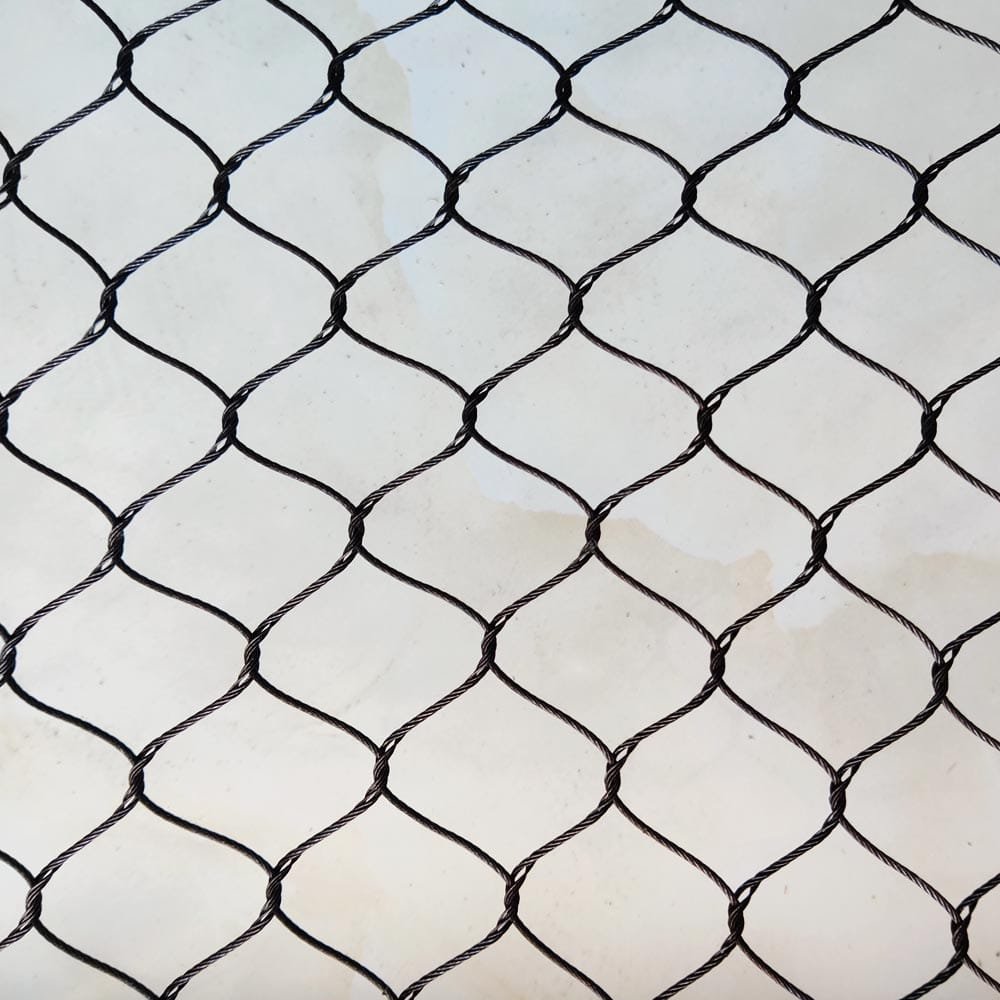
Body weight is the input every eagle enclosure specification actually uses and almost never writes down. A single figure cannot serve, because this species spans more than two to one in mass from a small male to a large female, and the two ends of that span do different jobs. The aperture is a containment figure, set by the smallest head that must not pass, which belongs to the lightest bird. The panel rating is a load figure, set by the largest mass that can reach the mesh with speed behind it, which belongs to the heaviest bird. Nothing in the trade requires those to be the same individual, and in any breeding aviary they never are. A specification copied from one reference bird is therefore right on one criterion and wrong on the other, and the error stays hidden for as long as one sex occupies the flight alone. The reference specification is the hand woven eagle enclosure mesh product page.
Holding a pair? Give us the weight of the smaller bird and the weight of the larger one, and we will return the aperture for one and the panel rating for the other.
Quick Answer: Why does one eagle weight not size an enclosure?
Because the enclosure answers two questions and two different birds ask them. Containment is a head-width problem, settled by the bird with the smallest skull. Structural load is a mass problem, settled by the bird carrying the most mass. One figure satisfies one criterion and quietly fails the other, and no average repairs it.
Key Takeaways
- The species spans 3,000 to 6,125 grams, just over two to one, and that range is sex rather than scatter.
- Aperture is set by the smallest head in the collection.
- Panel rating is set by the heaviest bird that can reach the mesh.
- Moving from 51 mm to 38 mm pitch adds about a third more wire, so tightening is structural, not cosmetic.
One species, a range of two to one
Why one eagle figure fits only half the birds is easiest to see in the published measurements. Cornell Lab puts the species at 3,000 to 6,125 grams, with a wingspan of 185 to 220 cm. Read as a specimen sheet, that looks like a tolerance band. Read as a population, it is two populations overlapping.
How far apart the two sexes sit is the first number worth putting on the drawing. In golden eagles, as in most raptors, the female is the larger bird, so the two ends of that range belong to different sexes: a male near 3.0 kg and a female near 6.1 kg differ by more than two to one. A line reading “golden eagle, 4.5 kg” has split the difference and is wrong at both ends.
A weight is never used on its own, which is the root of the confusion. It stands in for three dimensions read off three parts of the bird: the culmen, the line along the top of the bill, sets nothing structural; the head width sets the aperture; the mass sets the load. Most bad eagle specifications let one of the three answer for the other two, and the aperture and cable pairings we build run from 20 mm to 102 mm of pitch against rope from 1.2 mm to 3.2 mm.
Two criteria that pull in opposite directions
Why the specification is usually copied from the wrong bird is that one reference animal is convenient. Somebody measures a bird, writes a weight, and both criteria get answered from it. The convenience is real. The arithmetic is not.
The two criteria move in opposite directions as soon as you tighten them: containment improves, and the panel stiffens. A narrower aperture excludes more and also adds wire, because at a fixed panel size the number of strands crossing a given height scales as the reciprocal of the pitch. Halving the pitch doubles the wire in the same square meter.
| Pitch | Rope | Clear opening | Strands per meter of height | Open area |
| 51 mm | 2.4 mm | 48.6 mm | about 20 | 91 percent |
| 38 mm | 2.4 mm | 35.6 mm | about 26 | 88 percent |
| 25 mm | 2.0 mm | 23.0 mm | about 40 | 85 percent |
What a smaller aperture costs in wire is a structural bill, not a cosmetic one. Going from 51 mm to 38 mm raises the strand count by roughly a third, which lifts the panel’s own mass and its stiffness along with its containment. The heavier panel is not weaker — it is stiffer, and stiffness decides how much of an arrival is passed on to the frame instead of absorbed. Where a very tight opening is genuinely required, the 1 inch netting specification shows the wire count that 25 mm pitch implies before the frame is priced.
The bird the aperture is sized on
What the lightest bird in the aviary sets is the aperture, and this is the criterion most often applied to the wrong animal. Containment asks about the smallest rigid cross-section that must not pass, which for a bird is the skull.
Why the aperture follows the head and not the body comes down to how a bird tests an opening. It does not walk through a wall sideways. It arrives head first and works the gap with its bill and then its shoulders, which makes head width the binding dimension and the tarsus — the leg, the part a keeper handles the bird by — a poor guide to anything structural. Cornell describes the head as small relative to the body and the tail as long, and that is exactly why a rule built on body size misjudges it: mass scales with the cube of a linear dimension, so a six kilogram female is only about fifteen percent wider across the skull than a four kilogram male while carrying half again the mass.
Why the tail is longer than the head is wide matters more than it appears. The tail projects well behind the bird and swings when it turns, so it is the part most likely to touch a panel in a maneuver, and the part a tight opening catches most reliably. Narrowing the aperture does not make an enclosure kinder to a long tail; a small diamond weave catches it sooner. Where a collection holds more than one eagle species, the eagle netting options by species show how the same head-width logic carries across.
The bird the load is sized on
What the heaviest bird in the aviary sets is the panel rating, and that bird is almost always the female. A panel does not fail because a bird leaned on it. It fails because a mass arrived with speed behind it, and the energy in that arrival rises with the mass.
How much a heavier bird adds to the same panel is a question about energy rather than static load, which is why the number has to be quoted against a named bird rather than an average. The same approach speed with twice the mass doubles the energy the panel must absorb, and the deflection that produces is what the frame has to tolerate. The breaking load of the rope is only the beginning of the answer; what a buyer actually needs is the rating after the safety factor has been applied, and a rating means nothing unless the mass behind it is stated. Our eagle impact and load figures are quoted that way for a reason.
Here the two criteria collide cleanly. The bird that sets the aperture is the light one. The bird that sets the rating is the heavy one. A specification carrying a single weight has silently decided those are the same individual, and nothing on the drawing records that decision.
Why a pair is the hard case
Why a pair is harder than a single bird is that a pair is the ordinary case where both criteria bind on the same panel at once. A bird held alone only ever exercises one of them.
What a male and a female do to one panel is pull its two requirements apart in opposite directions. The male wants a tight opening and asks almost nothing of the structure. The female asks a great deal of the structure and would tolerate something looser. Specify to the male and the panel is under-rated. Specify to the female and the male is handed an opening it can work, and a male that can work an opening is a male that will.
The resolution is not a compromise figure. It is to take the aperture from the smaller bird and the rating from the larger one, and to accept that the panel comes out a little over-built for him and a little tight for her. Both errors fall in the safe direction, which is more than can be said for the midpoint. That is why the eagle aviary build sequence matters here: the frame has to carry the heavier of the two figures, not the one that happens to be on the mesh line.
What a juvenile changes about the numbers
What a juvenile changes about the numbers is less than the trade usually claims, and the popular rule of thumb gets the variable wrong. A young eagle is not a scaled-down adult. It reaches adult mass before it reaches adult proportions, and its first plumage carries longer flight feathers relative to the body than the adult set that replaces them — a difference worth measuring as wing chord rather than judging by eye.
How to tell which sex you actually have is not obvious in a young bird either, because the size gap separating the sexes is the very cue you cannot read before the bird is grown. Golden eagles cannot be sexed on plumage. That is the argument for specifying the whole range: if nobody can say which bird will be in the flight in three years, the only defensible brief carries both ends. How the numbers change when the bird is weighed is worth recording for the same reason, since a bird held through a long service life will be weighed many times, and the figure on the day of the order is the least informative.
How to write two weights into one order
How to write two weights into one order is a matter of refusing to average them. Put the containment figure on one line: the aperture, and the head width it was chosen against. Put the structural figure on the next: the panel rating, and the mass it was derived from. Two lines, two criteria, two named birds.
The order should say which bird is which. “Opening set for a 3.4 kg male, rating set for a 6.1 kg female” is a sentence a factory can work to. “Golden eagle enclosure” is not, and it will be answered with whatever already sits on the shelf — which is how a tight aperture ends up on a panel never rated for the heavier bird. The eagle enclosure mesh schedule is where those two lines belong, because the mesh is the last thing to arrive and the first thing blamed.
FAQ
In golden eagles, yes, as in most raptors. The female sits at the top of the published range and the male at the bottom, so the heaviest bird in any pair is the female. That makes her the one who sets the panel rating and him the one who sets the aperture.
Not in the way it feels. A wider opening is easier to see and less likely to catch a wing tip, but it also admits a head, and a bird with its head through a gap is in more danger than one that strikes a taut panel.
Yes, provided the rating comes from the heaviest bird in the collection rather than an average. A panel rated for a 6.1 kg bird covers every golden eagle. A panel rated for 4.5 kg covers about half of them, and which half depends on the sexes you hold.
If your brief carries one eagle weight, send us both ends of the range and we will return the aperture for the smaller bird and the rating for the larger one, as two lines on one schedule.