
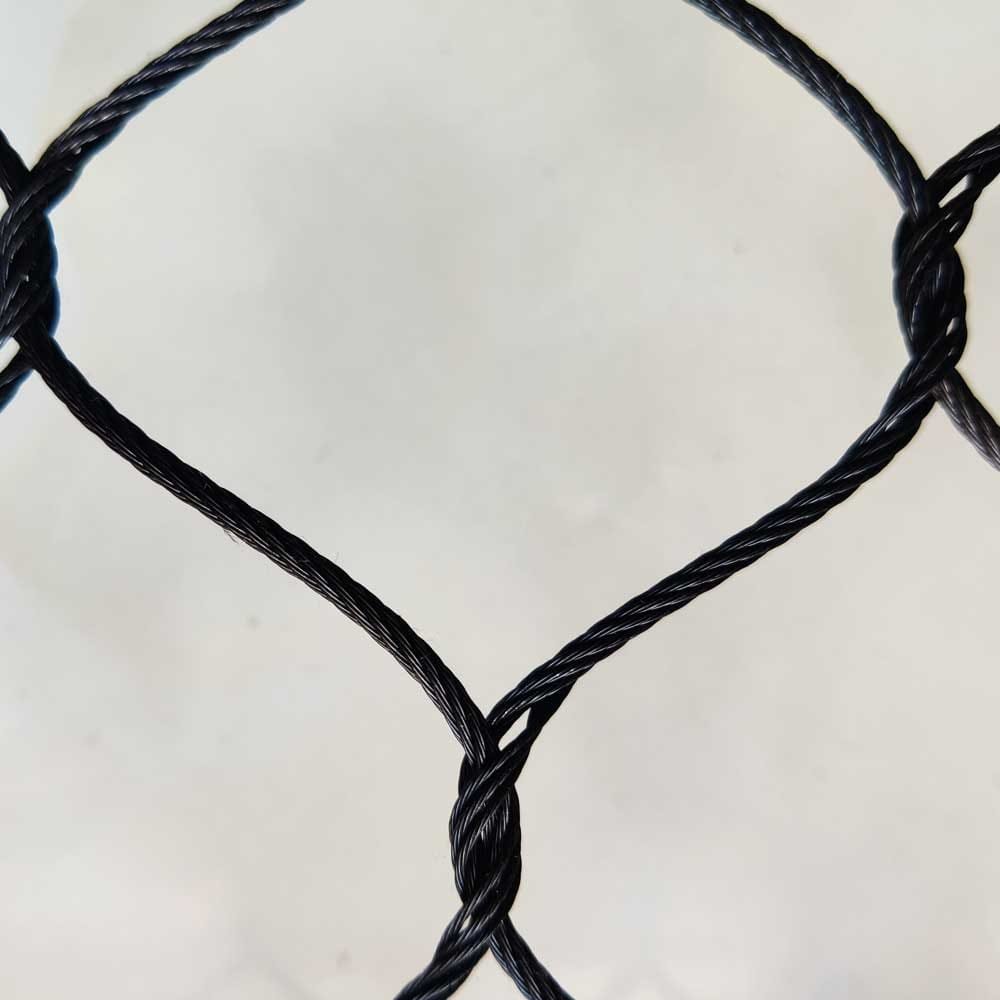
A mesh pool fence is not chosen the way a boundary fence is chosen. Nobody tests a garden fence by asking what a four-year-old can do to it. A pool barrier is judged by exactly that question, and it is the one fence on a property whose critical dimensions are settled for you before you start shopping: how high it stands, whether the mesh gives a foothold, whether the gate closes itself, and whether anything nearby can be climbed. Get those four right and the material decision becomes straightforward.
Executive Summary
A mesh pool fence works as a safety barrier by removing the two things a child uses to reach water: a foothold, and an unobstructed line that makes the pool look reachable. Four numbers decide whether any barrier passes. A barrier height of at least 1.2 m measured on the outside face. A mesh fine enough, and taut enough, that it offers no toehold and no gap a small body passes through. A gate that closes and latches on its own, every time, from any approach angle. And a clear zone around the barrier with nothing climbable left inside it. A removable mesh barrier is assembled from tensioned panels anchored into the deck, so the socket and the anchor matter as much as the mesh. This guide follows the sequence a real installation follows: fix the four numbers, design the frame, measure the pool, write the specification, then inspect the barrier and re-install it every season. The reference specification is the core product page product page.
Send us the pool footprint, the deck material and the gate position. We will return panel sizes, socket layout, tensioning hardware and a planning price.
Request a Pool Barrier Quote
Quick Answer:
Choose a mesh pool fence by starting with the barrier and working back to the material. Set the barrier height at 1.2 m or more on the outside face, pick a mesh whose opening is small enough to deny a foothold, hang the gate on a self latching hinge and a latch out of a small child’s reach, and clear everything climbable out of the zone around the barrier. Only then choose the panel: a tensioned, corrosion-resistant mesh that lifts out for the season and can be re-tensioned when it goes back in.
Key Takeaways
- A pool barrier is a compliance device, not a boundary fence. Height, footholds, the gate and the clear zone are the only four things that make it work.
- The gate is the failure point on almost every barrier; a self latching gate is worth more than a heavier mesh.
- A removable mesh barrier stores its load in the deck socket and the base plate, so the anchor detail belongs in the specification.
- Water chemistry decides how long the barrier lasts: a saltwater pool fence lives in a far harsher environment than a chlorine one, and mixed metals at the anchors are where it shows first.
- Write the barrier as a one-page document with measured dimensions, the socket drawing and the tension figure.
The Four Numbers That Decide a Pool Barrier
Almost every failed pool barrier fails on geometry rather than on material. Start a mesh pool fence design by fixing these four values before you open a catalogue.
| Criterion | What it controls | Typical target |
| Barrier height | Prevents a straight reach over the top | 1.2 m (48 in) minimum, measured outside |
| Mesh opening | Denies a toehold and stops a small body passing | No foothold, no gap under the frame |
| Gate operation | Closes and latches without being prompted | Self-closing, latch out of a child’s reach |
| Clear zone | Removes anything climbable near the barrier | Nothing within the zone on either side |
The pool barrier height requirement is the one number people most often miss low, because height is normally measured from the wrong side. Measure it outside the barrier, from the finished deck, and check it along the whole run: a deck that rises toward the pool quietly erodes the barrier as it goes.
Why a Mesh Barrier Works Where a Solid Panel Does Not
A solid panel does the opposite of what a pool area needs. It blocks the view, so the pool stops being watched; it catches wind, so it needs heavier posts; and it gives a child a smooth surface with nothing to hold and everything to lean on. A tensioned mesh barrier behaves in the opposite way on all three counts.
The pool barrier clear zone is easier to keep with mesh because the barrier itself occupies so little of it. You can see the pool from the house through the mesh. Open area lets wind through instead of loading the frame, so a mesh barrier survives a storm that would take panels down. And the mesh presents no flat surface to push against: the panel deflects, then recovers, and the load path runs into the edge cable and the anchors rather than into a rigid face. General yard containment is a separate duty from a water hazard, and the two barriers should be specified apart.
The Removable Architecture: Deck Sockets, Anchors and Tension
A removable mesh pool fence is really a set of tensioned panels standing in sockets, not a fence in the ordinary sense. That distinction drives the whole installation. Each panel carries its tension into a vertical post, the post drops into a pool fence deck socket or a base plate, and the socket transfers everything into the deck. Where the deck is timber you fasten into structure, never into board alone. Where it is concrete or paving, pool fence anchoring depends on the substrate: a cast-in or resin-anchored socket for a permanent barrier, a surface-mounted base plate with the load spread across it for one that comes out each season.
The consequence for the specification is simple. The sockets, the post section and the base fixings are not accessories; they are the load path. Ask any mesh pool fence supplier for the socket drawing and the anchor detail before you discuss mesh, because a barrier that pulls its anchors out of a deck has failed regardless of what the mesh is made of.
Tension, and Why It Is Part of the Specification
Tension is what turns a piece of mesh into a barrier. A slack panel can be pushed aside, and a panel pushed aside is not a barrier. Hand-woven rope mesh is specified with a stated tension, held by an edge cable terminated at each end with a swage ferrule, and the breaking load of that cable sets the ceiling on how tight the panel can safely be set. Tension is applied by in-line hardware rather than by pulling the panel tight by hand.
This is where the pool barrier gate latch and the panel specification meet. The gate sits in the same run, so it has to hold the same tension while still swinging freely. Write the tension figure into the order, record it at handover with a gauge, and check mesh pool fence tension again after the first hot spell, because the first thermal cycle is where the tension loss shows. A tensioned barrier can be re-tensioned; a barrier detailed without tensioning hardware cannot, and has to be rebuilt instead. The strand construction behind that figure is set out in the rope-net selection guide.
Water, Salt and Chlorine
A pool environment is chemically aggressive in a way most fences never see. Splash, evaporation and drift put chlorides on the barrier, and the chlorinated atmosphere of an indoor pool is harsher still, because it never washes off. Under those conditions the first trouble normally appears at the fixings, where stainless hardware meets galvanised or aluminium components and galvanic corrosion begins at the joint.
Handle that as a materials question, not a maintenance question. Choose 316 stainless over 304 wherever salt is present, keep dissimilar metals apart with isolating washers, and treat a saltwater pool fence as coastal-grade work even if the sea is nowhere near it. The wider method for reading an exposure and matching a material to it belongs to the fencing materials guide, which is where the corrosivity classes and compatibility logic are set out in full.
Where Pool Barriers Actually Fail
Four locations account for nearly every barrier failure, and none of them is the middle of a panel.
The gate comes first. Gates fail because hinges sag, or because the latch stops engaging as the deck moves. Second is the groundline, where a post meets the deck or the soil and where water and oxygen are both plentiful. Third is the anchor itself, which fails gradually as the tension opens the fixing hole rather than all at once. Fourth is the top of the barrier, where an object left inside turns a compliant barrier into a step: the non climbable zone matters as much as the height, because it is what makes the height mean anything.
A useful pool barrier checklist stays short for that reason. Walk the run. Look at the gate, then the groundline, then the anchors, then the inside face for anything a child could stand on.
Measuring the Pool and Marking the Fence Line
Pool fence measurement is the stage that decides how much of the barrier is custom. Record the pool footprint, the barrier line you intend to follow, and any obstacles that line has to cross: filter housings, steps, irrigation, lighting, existing drains. Note the deck material at every segment, because it changes the anchor detail.
Then work out the panel count, keeping the run as a series of straight, equal panels. Panel width drives cost more than mesh area does, so a layout that uses repeatable widths is cheaper than an exact fit that produces one of everything. This is also the point to settle who is permitted to build a barrier at this location, which is a property question rather than a mesh question, and it is covered in the property fence rules guide.
Writing the Order and Budgeting It
A removable mesh pool fence should be specified as a single document with the mesh, the tension and the anchor all on the same page. The mesh pool fence specification needs six lines: nominal opening, cable diameter, alloy and finish, panel size and count, tension, and the socket and anchor detail. Without the tension figure and the anchor detail, a quotation is not comparable with another quotation, because a mesh-only rate leaves the fixings, which can add 10-20% to the barrier cost, undefined. The full panel, socket and tensioning set is described on the animal enclosure mesh product page.
Budget in the same order the cost actually accumulates: cable diameter, then opening size, then panel size, then the fixings. A pool barrier is also a long-life asset, so price it against service life rather than purchase price, and read how to verify a mesh specification before you approve a mill certificate.
Inspection, Seasonal Removal and Reinstallation
Pool fence removal and reinstallation is routine work, but it is also the most dangerous week of the year for the barrier, because the pool is open and the barrier is partly absent. Plan the sequence so the barrier is back before the pool is usable.
Make a pool fence inspection checklist part of the routine rather than a response to a problem. Tension, latch engagement, hinge condition, anchor tightness, corrosion bloom at every fitting, and anything newly climbable inside the clear zone. Run it at the start of the season and again at mid-season.
FAQ
The commonly adopted minimum is 1.2 m, measured on the outside face, and many codes add requirements for the gate and the space beneath the barrier. Local rules vary, so confirm the figure that applies to your property before ordering.
Yes. An above ground pool fence normally uses surface-mounted posts on the pool’s top rail or a deck plate, which raises the barrier above the water line and removes the climbable step the pool wall itself would otherwise provide.
Fine enough to deny a toehold rather than fine enough to be opaque. The test is not the number; it is whether a small foot can find purchase in the opening.
If the panels were detailed with in-line tensioning hardware, yes: it takes a gauge and a spanner. If they were not, the barrier has to be rebuilt. Ask before you buy.
316 stainless will, if the fixings match it and the dissimilar-metal joints are isolated. 304 stainless will corrode noticeably faster in a chlorinated or salt-laden environment, and the anchor is where it appears first.
Ready to specify the barrier? Send us your pool dimensions and we will size the panels, sockets and tensioning hardware for a quotation you can inspect against.