
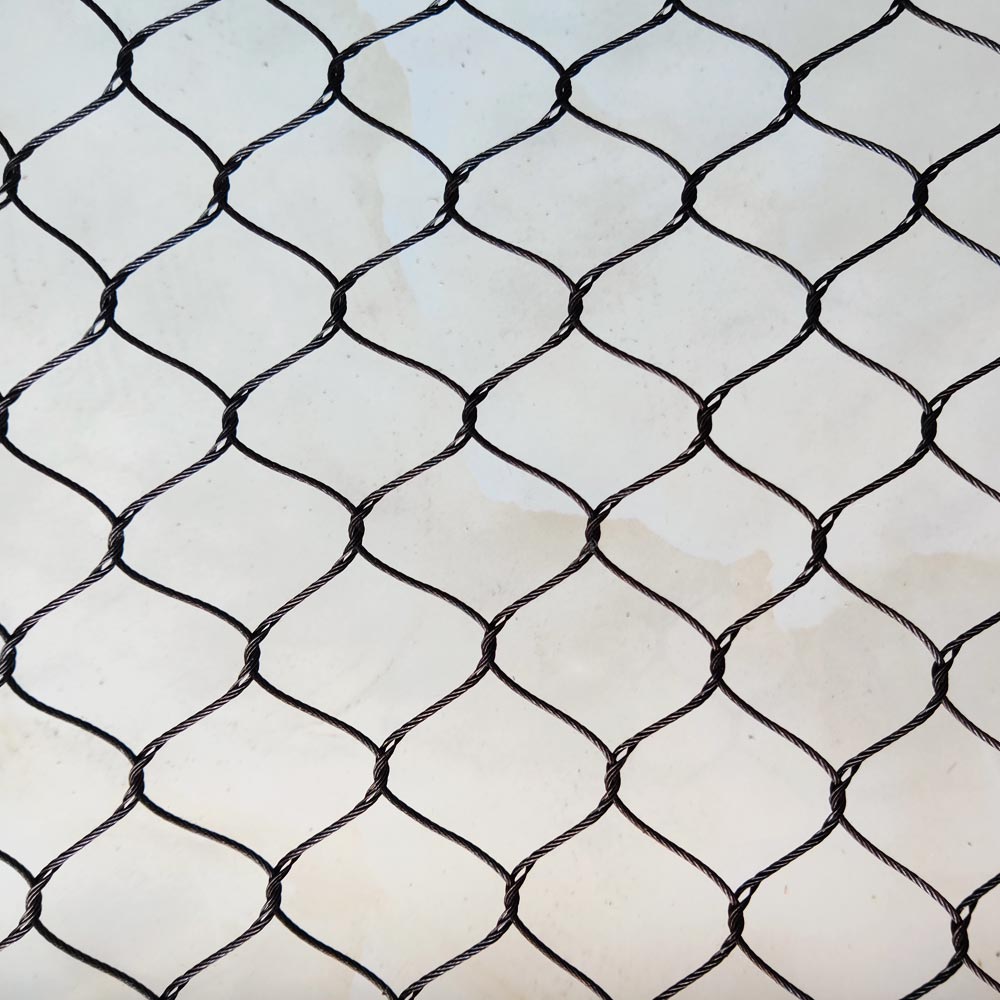
Choosing a stainless mesh looks like a materials question and behaves like a documentation question. Two buyers can order the same “25 mm stainless mesh” and receive two different products, because that phrase names neither the wire diameter, nor the weave, nor the grade, nor the tolerance that decides whether the panel actually fits the frame. Mesh specification and verification is the whole job: write a designation that cannot be misread, then prove on arrival that what was delivered matches it.
Executive Summary
Treat the specification and the inspection as one exercise, because a mesh order fails in the gap between them. The designation has to carry five things at once — the format, the nominal aperture, the wire diameter, the alloy grade and the finish — and each is a separate variable, so a quotation answering only one of them is not comparable with another. Aperture measurement then has to be defined, because a mesh measured across the opening and a mesh measured centre to centre differ by one wire thickness, and the tolerance on that difference is where a dispute is decided. Finally the grade has to be proved, not assumed: a certificate of conformity tied to a heat number is what separates a genuine 304 or 316 from a substituted coil, and it costs nothing to ask for at enquiry stage. The reference specification is the animal fence mesh product page.
<div style=”border:1px solid #d8dee6;border-left:4px solid #1f6feb;border-radius:6px;padding:18px 20px;margin:28px 0;background:#f6f9fc”> <strong>Send us the duty, not a mesh size.</strong> Tell us what the mesh must contain, how big the smallest resident is and where the enclosure stands, and we will return a complete designation — aperture, wire diameter, weave, grade, finish and tolerance — in writing, ready to compare like for like. <a href=”https://hebmetalmesh.com/contact/” style=”display:inline-block;background:#1f6feb;color:#ffffff;padding:10px 20px;border-radius:4px;text-decoration:none;font-weight:600″>Ask for a mesh specification</a> </div>
Quick Answer:
A stainless mesh is fully specified when five fields are fixed: weave and format, nominal aperture, wire diameter, alloy grade, and finish. Determine the aperture from the smallest thing that must not pass through, and the wire diameter from the largest thing that will push against it — they are independent variables, so changing one does not fix the other. Then state the tolerance and the measurement basis, because an aperture quoted as 25 mm means nothing until you know whether it is measured between wire surfaces or between wire centres. Confirm the grade by certificate, and agree the acceptance test before the goods ship.
Key Takeaways
- “Mesh size” is ambiguous — pin it to aperture plus wire diameter, never to one number alone.
- Aperture and wire diameter are independent variables; the tightest opening and the heaviest load rarely come from the same requirement.
- Nominal aperture is what the drawing says; the delivered mesh has an actual aperture inside a stated tolerance.
- A mesh order needs five fields to be comparable: weave, aperture, wire diameter, grade and finish.
- Verify grade by a certificate tied to a heat number, and inspect on arrival against agreed criteria.
Mesh wire and industrial wire cloth are covered by published standards work, and the ASTM International test methods and woven-wire-cloth specifications are the documents a mesh designation and its inspection criteria are normally written against.
Specify the Mesh, Then Verify It
Most bad mesh orders are not buying mistakes, they are writing mistakes. The buyer knows what the enclosure has to do, translates that into a single number — usually “mesh size” — and the supplier fulfils the number rather than the duty. The result is a panel that is technically as ordered and still wrong.
Splitting the work into two halves fixes this. First, produce a designation complete enough that two factories would quote the same product; second, define how you will confirm it. Doing the second half badly is expensive, because a mesh that is delivered, installed and then questioned has already been cut, welded or laced into place.
The format question sits upstream of both. Whether the job wants a rigid woven grid, a welded panel or a hand woven rope mesh decides which fields your specification needs, and the format comparison covers how each one fails.
What a Mesh Designation Actually Contains
Five fields decide whether a mesh is what you think it is. Leave any of them out and the quotation you receive is an opinion rather than an offer.
| Field | What it fixes | Common failure if omitted |
| Weave and format | How the wires cross and how the sheet or panel is built | Supplier substitutes a cheaper construction |
| Nominal aperture | The clear distance the mesh must present | Opening quoted centre to centre reads larger than it is |
| Wire diameter | Load path and stiffness of the mesh | Strength assumed from aperture alone |
| Alloy grade | Corrosion resistance in the actual atmosphere | 304 quoted where chlorides demand 316 |
| Finish | Surface condition and appearance | Bright finish supplied where black oxide was intended |
The reason one number is never enough is that aperture and wire diameter move independently. Two meshes with the same 25 mm opening behave completely differently if one is built from 1.6 mm wire and the other from 3.2 mm wire: the heavier wire carries more load, lasts longer under impact and blocks more light. Our own code system makes that explicit rather than implicit — HM1220 is 1.2 mm wire at 20 mm, HM1625 is 1.6 mm at 25 mm, HM2076 is 2.0 mm at 76 mm, HM3276 is 3.2 mm at 76 mm and HM32102 is 3.2 mm at 102 mm. The code is the specification.
Measure the Aperture, Not the Label
Aperture measurement is where a mesh order is won or lost, and it is surprisingly easy to get two honest answers from the same sample. Measured between the wire surfaces you get the clear opening; measured between wire centres you get the clear opening plus one wire diameter. Both figures are legitimate, they are not interchangeable, and a specification that does not say which one it means is not a specification.
For a woven grid the same caution applies to the count: a count expressed in openings per inch describes how many apertures fall into an inch, while a figure quoted in meshes per inch is sometimes written centre to centre — so a 25 mm mesh can be described as roughly one opening per inch, and a fine cloth is more often quoted as a mesh number. Fine cloth is also routinely sold with the aperture in microns, which is why any inch to micron mesh conversion has to be done with the wire diameter included rather than from the count alone.
Then set a tolerance. The aperture measurement method and the mesh measurement method have to be agreed in one line: the instrument, the number of apertures measured, the direction of measurement relative to the weave, and how the tolerance is expressed. The difference is the whole argument in nominal vs actual aperture: the drawing quotes the nominal aperture, the delivered goods have an actual one, and if the tolerance was never stated the supplier is entitled to argue that a deviation is acceptable.
Rope mesh needs one extra line. A hand woven rope mesh is built from strand rather than single wire, and the aperture is the diamond between crossing strands, so it is measured across the flat of the diamond and not across the cross point where two strands overlap. Each strand is typically a seven-by-seven construction of forty-nine wires, which is why one broken wire costs only about two percent of that strand’s breaking load — and why a rope panel tolerates damage that would retire a welded grid.
Write the Enquiry So It Cannot Be Misread
A mesh specification checklist is short and it is not optional. Convert the five fields into sentences and send them as the enquiry, because a supplier who has to guess will guess in their own favour on price and in the cheapest direction on material.
State the duty first: what the mesh encloses, the smallest resident dimension, the largest impact it must survive, and the atmosphere. Then the five fields, in order. Then the practical attachments — panel or roll format, maximum panel size, edge treatment, the fixings and tensioners, and whether the frame is in your scope or ours. Note that fixings, edge cable, tensioners, the swage ferrule that terminates each edge cable, and anchor plates typically add ten to twenty percent to a mesh-only figure, so deciding who supplies them before the quotation is what makes two prices comparable at all.
A mesh spec sheet that stops at the mesh is not complete. Add the tolerance and the measurement basis, the finish, the grade and its certificate requirement, and the acceptance criteria. Ask for the price on that document, not on your one-line summary, and insist that anything the supplier cannot meet is marked as a departure rather than quietly amended. Where the numbers are still open, the wire selection page works through how load is carried, and the exposure question decides which alloy family survives your site.
Verify the Grade on Arrival
Grade substitution is the quiet failure mode of the stainless trade: 304 supplied where 316 was specified, a lower chromium content, or a non-stainless core under a convincing finish. It is invisible on a price sheet and expensive in service, because the mesh will look identical on installation and corrode two years later.
Defend against it with documents. A certificate of conformity that names the alloy grade and references the heat number of the coil is the minimum, and where the mesh is safety-relevant, ask for a certificate issued on the basis of test results rather than on the mill’s own declaration. Then check that the certificate references the same heat number as the goods. Mesh grade verification is a five-minute exercise at goods-in and a two-year argument at repair.
Physical verification is the backstop. Incoming inspection of the first delivered panel should confirm aperture, wire diameter, weave and finish against the specification, not just count the panels. Where the application justifies it, positive material identification on a sample costs little and settles the alloy question outright. Keep the sample, keep the certificate and keep the panel mark — three artefacts that make any later discussion factual. The grade comparison sets out which alloy suits which atmosphere, so the certificate can be read against the site rather than against habit.
Inspect and Accept: the Criteria That Settle Disputes
Set mesh acceptance criteria before the goods ship, not after they arrive. The purpose is not to catch a supplier out; it is to give both sides one document to work from, so that a panel either conforms or does not, without either party evaluating the mesh against a different set of expectations.
A workable set is small. Aperture within the stated tolerance on an agreed measurement basis. Wire diameter within its own tolerance, sampled rather than assumed. Weave and format as drawn, with the weave closed and even. Finish as specified. Grade confirmed by certificate matching the heat number, and by identification test where the application warrants it. Panel dimensions, edge treatment, open area and panel marks checked against the take off. Handle any departure in writing before installation, and agree whether it is accepted, replaced or credited.
Two numbers are worth holding in view through all of it. The first is the open area, which governs airflow, light and visibility — an aperture and a wire diameter that both pass tolerance can still shift the open area enough to change how an enclosure looks and how it performs. The second is service life, which is set by the alloy and the atmosphere rather than by the inspection. A conforming 304 panel on a chloride-exposed site still fails early, and no acceptance test rescues a specification decision made in the wrong climate. When the mesh is bolted to a frame of a different metal, add one more check to the criteria: galvanic corrosion at that junction is predictable, and isolating it at installation is far cheaper than discovering it at inspection. The animal fence mesh product page lists the apertures, wire diameters, grades and finishes that can be quoted against a specification written this way.
FAQ
It usually means the aperture, but it should never be used alone. Ask for the aperture and the wire diameter together, with the measurement basis and tolerance, or the two quotations you are comparing are not for the same product.
Either between the wire surfaces (the clear opening) or between wire centres (the clear opening plus one wire diameter). Both are used, so the specification must state which one applies and over how many apertures it is checked.
A certificate of conformity naming the alloy grade and referencing the heat number of the coil, matching the heat number on the goods. For safety-relevant enclosures, specify a certificate issued on the basis of test results rather than declaration.
It happens, and it is invisible on visual inspection. Certificate-plus-heat-number verification at goods-in, with identification testing on a sample, is what makes substitution detectable before the mesh is installed rather than two years after.