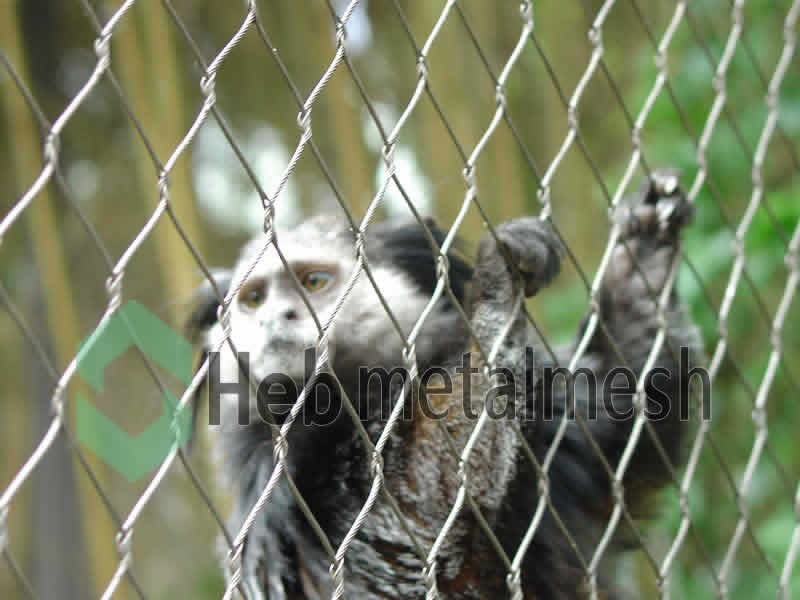
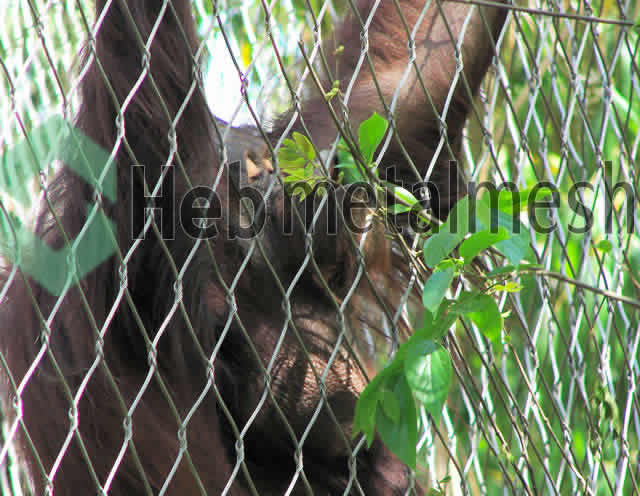
Invisible zoo mesh alternatives, primarily stainless steel rope mesh, offer high-tensile strength with over 90% transparency. Unlike bulky chain-link, these flexible 316-grade stainless steel cables provide professional-grade animal containment and fall protection while remaining virtually invisible against natural backgrounds, making them ideal for high-end residential and architectural projects.
1. The Problem with Traditional Fencing (Why Your View is Dying)
Let’s be brutally honest: most “animal fencing” is an architectural eyesore. Whether you’re trying to keep a Golden Retriever in the yard or keep the local deer population out of your prize-winning hydrangeas, traditional solutions usually force you into a compromise you didn’t ask for.
The “Prison Cell” Aesthetic
Standard chain-link fencing is the ultimate “view killer.” It’s bulky, it’s industrial, and it screams “high-security storage unit” rather than “sanctuary.” Even expensive wooden privacy fences come with a massive downside: they turn your beautiful landscape into a series of wooden boxes. You’ve spent thousands on professional landscaping, only to cut the visual flow of your property with heavy, opaque lines. This is what we call the “Prison Cell” aesthetic—where the barrier becomes the most prominent feature of the yard.
The “Open Horizon”
When you search for invisible zoo mesh alternatives, you’re looking for the Open Horizon. You want a boundary that provides 100% security with 0% visual interference. High-tensile stainless steel rope mesh allows for over 90% open area. From twenty feet away, the mesh effectively “disappears” against the natural background. It doesn’t just enclose a space; it preserves the depth of field, making small yards feel massive and large estates feel infinite. Why build a wall when you can build a window?
2. What is Zoo-Grade Mesh? (And Why You Want It at Home)
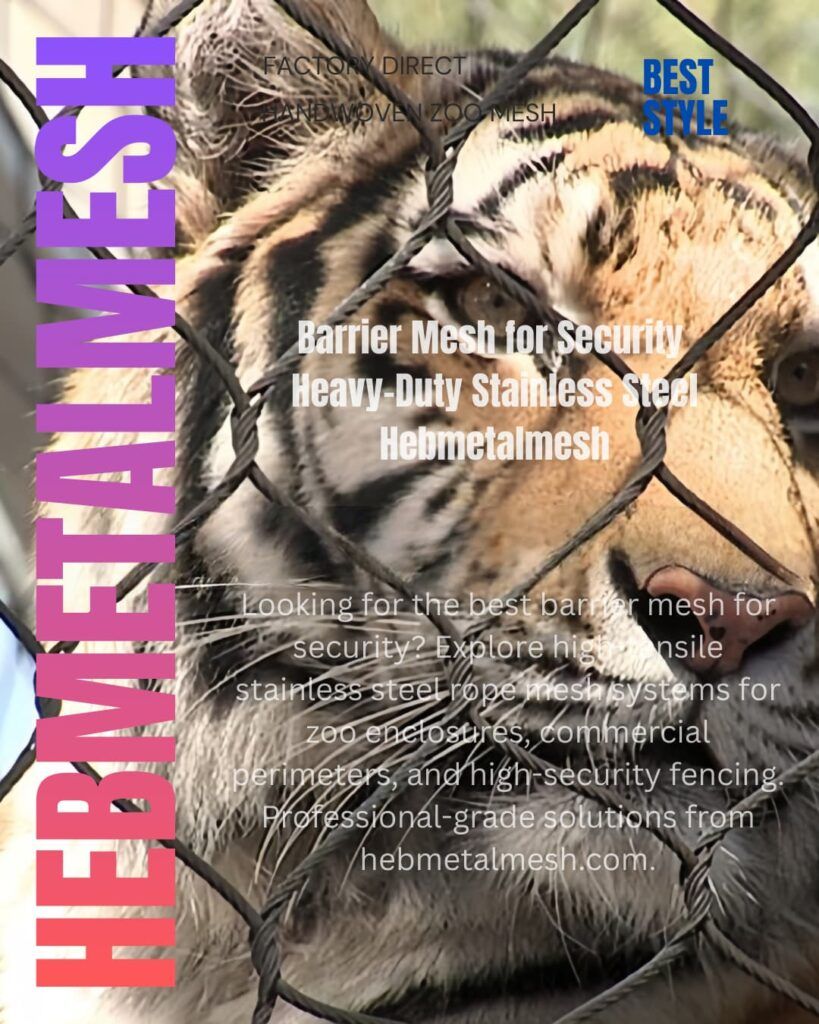
If you’ve ever stood in front of a snow leopard exhibit and wondered why the cat didn’t just leap through the “thin wire,” you’ve seen zoo-grade mesh in action. It’s not magic; it’s high-performance material science. This isn’t the stuff you find in the clearance aisle of a big-box hardware store.
Material Science: The SS304 vs. SS316 Showdown
When we talk about “Invisible Zoo Mesh,” we are talking about 300-series stainless steel. But not all steel is created equal. To get that “Aha!” moment where your project lasts for decades instead of years, you need to understand the chemistry.
- SS304 (The Standard): This is the workhorse of the industry. It’s tough, it’s shiny, and it resists most corrosion. If you live inland and away from heavy industrial pollution, SS304 is a fantastic, cost-effective choice for residential animal fence mesh.
- SS316 (The Marine Grade): This is the “Special Ops” version of stainless steel. It contains Molybdenum, which acts like a shield against chlorides (salt) and harsh environmental pollutants. If you live within 10 miles of the coast or in a city with heavy smog, SS316 is non-negotiable. It won’t tea-stain, it won’t pit, and it will look as pristine in year 20 as it did on day 1.
Why Bring it Home?
In the zoo world, failure isn’t an option. If a mesh fails, an apex predator gets out. When you apply that same product standard to your balcony, garden, or pet enclosure, you’re buying peace of mind. You’re getting a material that can withstand thousands of pounds of impact force, resists UV degradation (unlike plastic netting), and is completely chew-proof. It’s the ultimate “set it and forget it” solution for people who value quality over “cheap-for-now.”
3. Why the “Aha!” Moment Happens at Home
In the zoo world, failure isn’t an option. If a mesh fails, an apex predator gets out. When you apply that same product standard to your balcony, garden, or pet enclosure, you’re buying peace of mind. You’re getting a material that can withstand thousands of pounds of impact force, resists UV degradation (unlike plastic netting), and is completely chew-proof. It’s the ultimate “set it and forget it” solution for people who value quality over “cheap-for-now.”
To see how professional grade applies to a home project, explore our full range of architectural mesh products to see the gauge differences.
4. Top 3 Invisible Zoo Mesh Alternatives for Residential Use
When you move away from the “clunky and chunky” traditional fencing, you enter the world of high-tensile cables and precision weaving. These aren’t just “fences”; they are engineered surfaces. If you’re looking for invisible zoo mesh alternatives, these three options represent the peak of performance and aesthetics.
4.1 Stainless Steel Hand-Woven Rope Mesh (The Gold Standard)
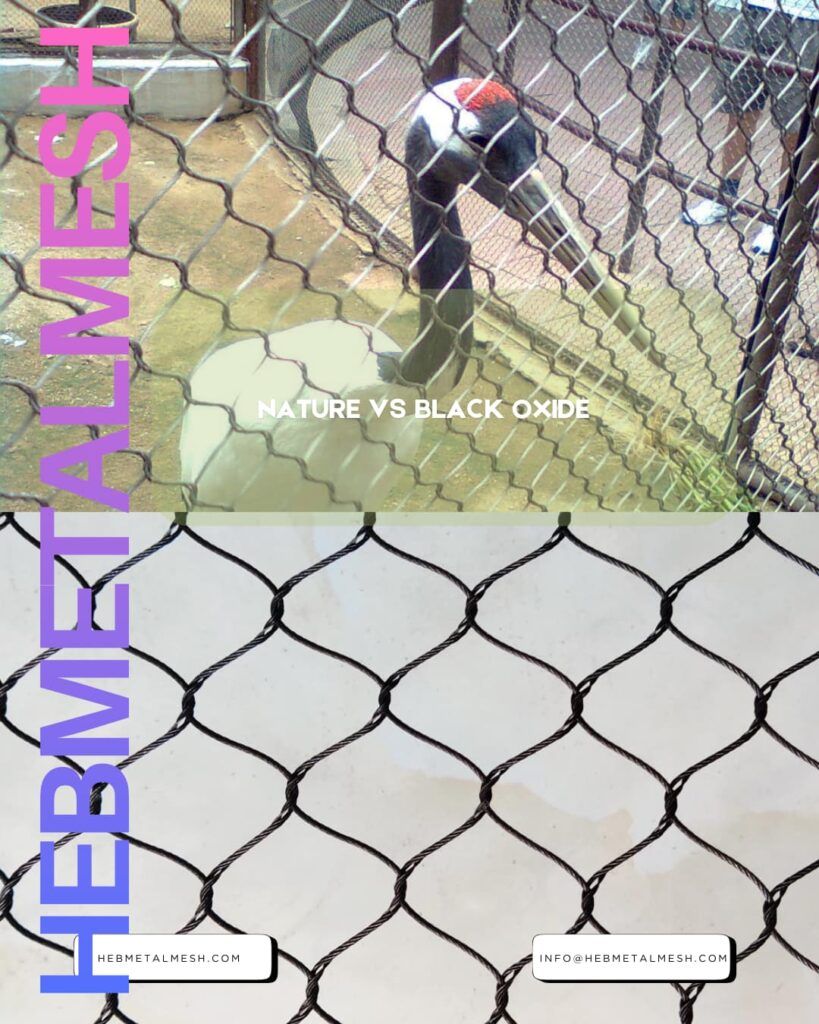
If you want the ultimate “disappearing act,” this is your winner. Hand-woven mesh is created by interlacing stainless steel wire ropes in a diamond pattern. Because there are no bulky junctions or thick welds, the profile remains incredibly slim.
- The “Aha” Moment: From a distance of just 15 to 20 feet, the mesh becomes virtually transparent against a natural background.
- Why it’s the Gold Standard: It offers the highest flexibility of any animal fence mesh on the market. You can wrap it around a circular balcony, drape it over a custom-built aviary, or tension it between irregular stone pillars. It’s the closest thing to a “soft” fabric made of indestructible steel.
- Best For: High-end pet enclosures, “invisible” garden borders, and complex architectural shapes.
4.2 Ferrule Type Cable Mesh (The Architectural Choice)
If the hand-woven mesh is “organic,” the ferrule type is “industrial chic.” This version uses seamless stainless steel sleeves (ferrules) to join the cables together. This creates a more rigid, structural look that many modern architects swear by.
- The Aesthetic: It features a distinct, repetitive diamond pattern that looks incredibly clean and deliberate. It doesn’t just disappear; it adds a layer of “designer flair” to the property.
- The Strength Factor: The ferrules provide extra points of rigidity, making this an excellent choice for safety applications like deck railing infills or green wall trellises where you need the mesh to hold a specific, flat plane without sagging.
- Best For: Modern balcony railings, staircase safety, and heavy-duty containment for larger animals. Explore the technical specs in our product catalog.
4.3 Fine-Gauge High-Tensile Netting
Sometimes, you don’t need to stop a lion; you just need to keep a cat on a balcony or keep hawks away from your koi pond. Fine-gauge netting is the “lightweight” alternative that still utilizes the material science of $SS316$ stainless steel.
- The Transparency: Because the wire diameter is so small (often as thin as 1.2mm or 1.5mm), the “open area” of the mesh is maximized. It provides the highest visibility of all the alternatives.
- The DIY Edge: Being lighter and more flexible, it’s significantly easier for a homeowner to install without specialized heavy-duty tensioning equipment.
- The Catch: While it’s “invisible” and strong, it doesn’t have the same impact resistance as the heavier-duty woven rope mesh. It’s about finesse, not brute force.
- Best For: Catio (cat patio) builds, pond protection, and bird-proof garden netting.
5. Applications Beyond the Cage: Redefining Your Living Space
Most people discover invisible zoo mesh alternatives because they’re trying to keep a curious Labrador from wandering or a mountain lion from eyeing the backyard. But the “aha” moment happens when you realize this material isn’t just a barrier—it’s a high-end design element.
Once you move past the “enclosure” mindset, you start seeing stainless steel rope mesh as a structural fabric that solves problems traditional materials can’t touch.
5.1 Balcony Safety: The “Catio” and Kid-Proof Skyline
If you live in a high-rise or a home with a second-story overlook, you know the “balcony dilemma.” You want the breeze and the view, but the gaps in standard railings are a nightmare for pet owners and parents.
Standard plastic netting looks cheap and degrades in the sun within two years. Glass panels are beautiful until you have to clean bird strikes and finger smudges every daily. Stainless steel rope mesh is the professional alternative. It creates a tensioned, high-strength safety net that is:
- Suicide-proof and fall-proof: Rated for extreme impact.
- Transparent: You keep the sunset; the mesh keeps the cat.
- Ventilated: Unlike glass, it allows 100% airflow.
5.2 Green Wall Trellises: Living Architecture
Sustainability is the biggest trend in 2026, and “living walls” are the centerpiece. However, most wooden or plastic trellises rot or snap under the weight of a maturing wisteria or climbing hydrangea.
Because animal fence mesh is made of 316 stainless steel, it serves as the ultimate “invisible” skeleton for climbing plants.
- Longevity: It will literally outlive the house.
- Strength: It can support hundreds of pounds of wet vegetation without sagging.
- Aesthetics: During the winter when leaves fall, you aren’t left looking at an ugly wooden grid. You see a sleek, metallic diamond pattern that looks like a piece of modern art.
5.3 Deck Railing Infill: The Architect’s Secret
Replacing traditional wooden balusters with stainless steel mesh is the fastest way to increase your property value. It’s a trick used by luxury resorts to make decks feel “limitless.”
When used as a railing infill, the mesh provides a continuous, secure surface that doesn’t break the horizon line. Whether you’re looking out over a forest, a lake, or just a well-manicured lawn, the mesh allows your eyes to travel right through the fence. It’s the ultimate “invisible zoo mesh alternative” for homeowners who hate the feeling of being boxed in.
6. Installation Secrets: How to Get That “Invisible” Look
You’ve found the perfect invisible zoo mesh alternatives, and you’ve picked out the high-grade $SS316$ animal fence mesh that’s going to make your neighbors jealous. But here is the professional secret: the “invisibility” isn’t just in the material—it’s in the tension.
If you hang mesh like a wet towel, it looks like a construction site. If you tension it correctly, it becomes a sleek, architectural plane that the eye naturally ignores.
6.1 The Perimeter Frame: The Foundation of “Invisible”
To make the mesh disappear, you need a rigid frame. This can be a stainless steel tube, a high-tension cable, or even a sturdy wooden beam.
- The Pro Tip: Use a “boundary cable” (a thicker stainless steel wire rope) around the perimeter of your opening. By lacing the flexible mesh onto this taut cable, you create a seamless transition that doesn’t require bulky mounting brackets every six inches.
6.2 The Art of Lacing
Zoo-grade mesh isn’t usually nailed or screwed directly to a surface. Instead, it is “laced.” You use a smaller diameter stainless steel wire to spirally wrap the edge of the mesh to your frame.
- Why it works: Lacing distributes the load evenly across every single diamond in the mesh. This prevents sagging and ensures that if a 100-lb dog (or a stray deer) hits the fence, the force is absorbed by the entire structure, not just one screw.
6.3 Achieving the “Sweet Spot” Tension
The “Aha!” moment happens when the mesh is stretched just right.
- Too Loose: The mesh ripples and catches the light, making it very visible.
- Too Tight: You risk warping your frame or snapping the lacing wire.
- The Goal: You want the mesh to be “drum-tight.” When you flick it with your finger, it should feel firm. This flat profile is what allows the light to pass through the thin wires without reflecting back at the viewer, effectively making it “invisible.”
6.4 Tools of the Trade
You don’t need a degree in structural engineering, but you do need the right gear. To install professional-grade mesh, grab:
- Wire Rope Cutters: Don’t try to use standard pliers; SS316 will laugh at them.
- Turnbuckles: These allow you to fine-tune the tension of your boundary cables over time.
- Safety Gloves: Hand-woven mesh is beautiful, but the ends can be sharp during installation!
7. Cost vs. Longevity: Why Cheap Wire is a False Economy
Let’s talk numbers. When people look for invisible zoo mesh alternatives, they sometimes get sticker shock compared to the $40$ roll of galvanized chicken wire at the local hardware store. But as a seasoned expert, I’m telling you: cheap wire is the most expensive thing you can buy.
The 10-Year Math
- Galvanized/Plastic Mesh: You buy it for $200. It rusts or becomes brittle in 3 years. You spend another $200 plus a full weekend of labor to replace it. By year 9, you’ve spent $600 and your fence looks like a junkyard.
- Stainless Steel Rope Mesh: You invest $800 upfront. It looks brand new in year 10. You’ve spent $0von maintenance and $0 on replacements.
When you factor in the property value increase of having a high-end, architectural-grade product on your balcony or garden, the “expensive” option actually becomes the most profitable one.
8. Conclusion: Reclaiming Your View
You don’t have to live behind bars. Whether you’re protecting a pet, securing a balcony, or designing a world-class landscape, invisible zoo mesh alternatives offer a way to keep what matters safe without sacrificing the beauty of your surroundings.
By choosing the right material—like the SS316 options found at hebmetalmesh.com—and focusing on a high-tension installation, you can finally achieve that “Open Horizon” look.
Ready to stop staring at wires and start staring at the view?
Stop Blocking Your View!
Why settle for “prison-style” fencing when you can have Invisible Zoo-Grade Mesh delivered to your door?
- ✔ Ultra-Durable 316 Stainless Steel
- ✔ Nearly Invisible Against Landscapes
- ✔ Weather-Proof, Chew-Proof, Life-Proof
Frequently Asked Questions About Invisible Zoo Mesh Alternatives
Absolutely. While it’s called “invisible” due to its high transparency (often over 90%), it is made from 316 marine-grade stainless steel cables. A standard 2.0mm cable mesh has a breaking strength that far exceeds traditional chain-link. It’s designed to contain apex predators in professional zoos, so your backyard husky or the local deer population won’t be a problem.
While glass offers great visibility, it reflects light, requires constant cleaning, and blocks all airflow. Stainless steel rope mesh is a superior invisible zoo mesh alternative because it eliminates glare, allows for natural ventilation, and requires zero maintenance. Plus, you’ll never have to worry about a bird (or a baseball) shattering it.
No. This is the “Aha!” moment for coastal homeowners. SS316 contains Molybdenum, an element specifically added to resist chloride corrosion (salt spray). Unlike galvanized wire or 304-grade steel which will “tea-stain” or rust in salty air, our premium animal fence mesh stays pristine for decades.
It is very DIY-friendly for those with basic tool knowledge. Because the mesh is flexible—almost like a steel fabric—it can be easily handled. The key to a professional look is the “lacing” technique. We provide technical specs and guidance at our online store to help you achieve that drum-tight, professional finish.
Not even close. Traditional wooden or metal balusters typically block 25% to 40% of your peripheral vision. Stainless steel rope mesh uses ultra-thin cables 1.5mm to 3.0mm that allow your eyes to focus on the landscape behind the fence. From a short distance, the mesh effectively disappears into the background.