
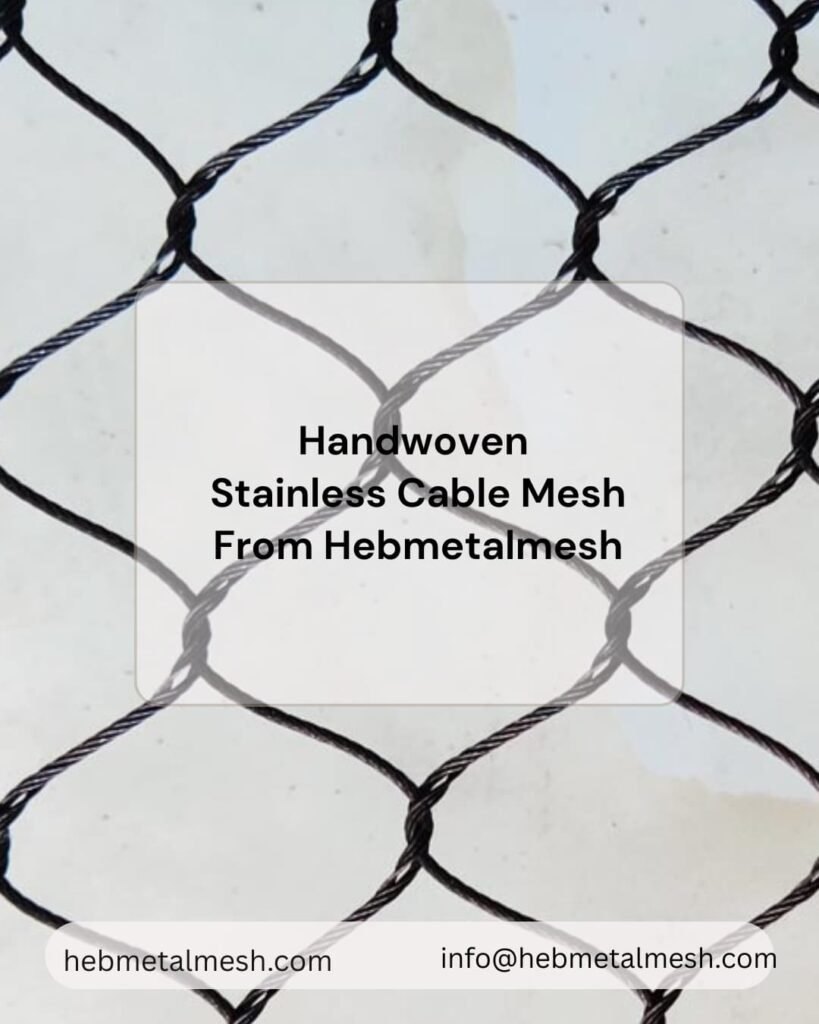
A barrier can be well built and still be cruel. It can hold an animal perfectly and injure it every time the animal touches it. It can pass every structural check and still leave the animal unable to see what is happening beyond its enclosure.
That is the gap the word humane is meant to close, and it is usually left vague. Suppliers use it to mean non-lethal. Designers use it to mean naturalistic. Neither definition helps much when you are standing in front of a panel quote.
Six criteria describe a humane zoo barrier instead. None of them is a matter of taste, and you can check every one before the order goes out rather than after the animal has already met the mesh.
Executive Summary
A humane zoo barrier is one that does not injure on contact, does not trap, lets the animal see out, does not degrade into a hazard, lasts long enough that the animal is not repeatedly disturbed, and leaves no problem behind when it comes down.
Those six criteria are physical, not philosophical. Each one maps to a specification decision: wire rope diameter and tension for impact, mesh aperture and joint detail for trapping, finish and open area for visibility, alloy and coating for degradation, corrosion allowance for service life, and material choice for end of life.
Most welfare arguments about enclosure barriers stall because they stay abstract. You can work through this one as a checklist, and the answer for each criterion is either yes or no.
Quick Answer
A humane zoo barrier is one an animal can touch without being hurt, cannot get caught in, can see through, and cannot be poisoned by as it ages. It should also last long enough that the animal is not moved out every few years for replacement, and be recyclable at the end rather than sent to landfill. Those six properties can all be written into a specification, which makes the word humane a technical claim rather than a marketing one.
Key Takeaways
- Humane is a specification property, not a tone of voice.
- Deflection and tension set impact injury, not raw panel strength.
- Trapping happens at apertures and joints, which is where a humane wildlife barrier usually fails.
- An animal that cannot see out of its enclosure carries a welfare cost that no enrichment budget offsets.
- Degradation turns a safe panel into a hazard slowly, and inspection is what catches it.
- A barrier that lasts thirty years is a welfare decision, because replacement means disturbance.
What “Humane” Requires of a Barrier
Welfare frameworks describe an animal’s state across several domains, and the physical environment is one of them. The five domains model treats housing, surface and temperature as inputs to welfare rather than as background, which is the right way to think about a barrier: it is not scenery, it is an input.
That framing turns a vague claim into a design brief. If the barrier is an input to animal welfare, then its properties matter in the same way feed and enrichment matter.
We build the animal enclosure mesh range to exactly these properties, which is why you can check the criteria below against a data sheet rather than argue about them.
Criterion One: It Does Not Injure on Contact
Every animal in a zoo will touch its barrier. Some will lean on it, some will rub against it, some will hit it at speed.
Animal injury enclosure design therefore starts with what happens at the moment of contact. A rigid surface concentrates the whole impact into whatever part of the animal arrived first. A flexible surface deflects, spreads the load across many wires and returns it gradually.
This is the first thing the welfare specification for an aviary has to settle, and it applies well beyond birds. A heavier wire rope diameter does not automatically make a barrier safer. Too much stiffness, or too much tension, turns a forgiving panel into a hard one.
Criterion Two: It Does Not Trap
Trapping is the failure that gets reported, and it almost never happens in the middle of a panel. It happens at the edges.
Mesh aperture decides what can pass through and what can get partway. A joint decides whether a limb that gets partway can come back out. A badly dressed cut end, a protruding ferrule or a laced seam with a spur inside it will catch a toe, a horn or a beak.
The test is simple. Run a hand along every joint and edge on the inside face. If anything catches, the barrier is not humane yet, whatever the data sheet says.
Criterion Three: The Animal Can See Out
Barrier transparency animal welfare is the criterion most often skipped, because it does not appear on any inspection form.
An animal that cannot see what is approaching lives in a state of repeated startle. Solid barriers and reflective panels both cause it. The animal hears something, cannot identify it, and responds as though to a threat.
Mesh with a sensible open area solves this without giving up containment. The animal sees movement, identifies it and settles. That is a welfare gain that costs nothing beyond choosing a panel that is open enough to see through rather than one chosen purely on strength.
Welfare organizations treat this as a legitimate assessment area rather than a nicety. Wild Welfare, which assesses zoos and aquariums against welfare criteria, works from the position that animals in captivity should be able to thrive rather than merely survive, and the ability to see out of an enclosure sits inside that.
Criterion Four: It Does Not Degrade Into a Hazard
A barrier that starts safe and becomes dangerous is worse than one that fails visibly, because nobody notices the change.
Two mechanisms drive it. Coated mesh can lose coating to rubbing and abrasion, and zoo mesh coating leaching puts polymer fragments into soil and water where animals forage. The PVC coated mesh environmental impact question is worth asking directly, because a coating that is failing is both an ingestion risk and a contamination one.
Stainless steel avoids that failure mode because there is no coating to lose. A stainless steel 304 panel degrades by pitting rather than by shedding, and pitting is visible at inspection long before it becomes a hazard.
The durability record of cage mesh in zoo service is the practical version of this argument.
Criterion Five: It Lasts
Enclosure material service life zoo planning is a welfare subject, not only a budget one. Every replacement means moving animals, disrupting groups and rebuilding territory.
Enclosure replacement disruption animals is real and measurable. A herd moved out for a rebuild comes back to ground that smells wrong, and the social order renegotiates itself. Doing that once in thirty years is manageable. Doing it every eight years because the barrier corroded is a recurring welfare event.
That is why service life belongs in the humane argument. A barrier that lasts is a barrier that leaves the animal alone.
The maintenance burden of zoo fencing is where this shows up first, because a fence that needs constant intervention is one that is already on its way out.
Criterion Six: It Ends Well
The last criterion is what happens when the barrier comes down.
Zoo mesh end of life recycling is straightforward for stainless, because mills remelt it as scrap without loss of quality. That matters for the recyclable stainless steel mesh zoo buyers who must report on waste, and it matters more broadly because a material that cannot be recycled tends to end up in landfill.
Buyers who ask about sustainable zoo enclosure materials usually want one figure they can defend in a report. Recyclability is the honest version of that figure.
A stainless panel goes back into the melt. A bonded composite panel ends up in a dumpster.
Zoo enclosure embodied carbon follows from the same logic. A light stainless panel carries far less material than a glazed or concrete barrier of equivalent height, and it does not need replacing as often, so the impact per decade of service is lower.
A humane barrier is also a low-impact one. The two arguments point the same way.
Where Specification Meets the Criteria
| Criterion | What fails it | What passes it |
| No injury on contact | Rigid panels, over-tensioned mesh | Deflection, controlled tension, matched wire rope diameter |
| No trapping | Sharp cut ends, spurs at joints, wide aperture | Dressed ends, laced joints, aperture set to the smallest animal |
| Can see out | Solid walls, reflective panels | Open area that allows movement to be read |
| No degradation | Coating loss, uncoated carbon steel | Stainless steel 304 or 316, no coating to shed |
| Lasts | Short service life, frequent replacement | Corrosion allowance, ferrule quality, inspection routine |
| Ends well | Mixed materials, bonded coatings | Single-material stainless, recyclable as scrap |
Applying the Criteria to a Panel Order
Work through the criteria before the order, not after. Each one turns into a line on the specification.
- Set the wire rope diameter from the impact load, then confirm the tension range that keeps the panel forgiving.
- Set the mesh aperture from the smallest animal that must not pass a limb, then check every joint detail.
- Confirm the open area is high enough for the animal to read movement outside.
- Specify the alloy for the exposure, and refuse coatings that rub off into the enclosure.
- Ask for a service life figure and the inspection regime that supports it.
- Ask what happens to the panel at end of life, and get an answer in writing.
Custom zoo mesh panels are normal rather than exceptional, and zoo mesh panel customization usually costs less than the design time it saves. The wildlife-friendly netting used on the aviary side follows the same criteria, with one addition: a wild bird must not be able to get in and become trapped.
Zoo mesh finish options matter here too, because finish affects visibility, heat and how easily an inspector can read a joint. Natural and black oxide both work on the stainless steel zoo mesh range. Choose the finish for the animal’s view rather than for the brochure.
One last point on handling. A humane capture and restraint enclosure, meaning the holding pen for veterinary work, answers to the same six criteria as a public exhibit. Welfare is most easily lost there, because the design serves access rather than the animal.
FAQ
Start from the wrist, not the body: the aperture must run tighter than the smallest adult wrist diameter in the group, with margin for a closed fist. For marmosets and tamarins that lands at 25 mm or below, and 40 mm holds macaques. Measure the smallest animal in the group, never the average one.
A humane panel rarely costs more than a standard panel in the same alloy, because the criteria change the specification rather than the material volume. What does move is joint dressing and inspection paperwork. Both are labor, and both stay cheaper than a rebuild after an injury.
You can retrofit an existing barrier only when the frame and posts carry the load the new panel needs. The work usually means adding tensioning and replacing every joint, which is most of the labor of a fresh install. If corrosion has reached the welds, replace the frame.
Keep a one-page record per enclosure listing the six criteria beside the specification value that satisfies each one. Inspectors read a criteria-to-value table far more readily than a narrative. Photograph the joints at handover, then again at every annual inspection.
Custom zoo mesh panels typically run four to six weeks from an approved drawing, with aperture and finish locked before production starts. Panels cut to a fixed module ship faster than one-off shapes. Confirm the drawing sign-off date, because that sets the clock.