
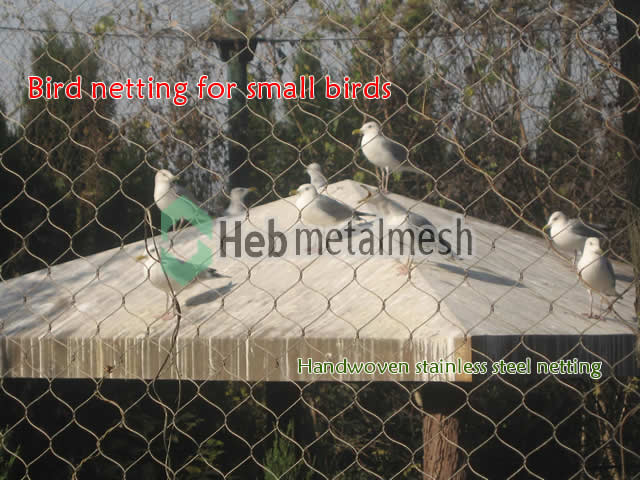
The storm passes at two in the morning and the keeper finds it at first light: a limb through the roof netting, one bay sagging, and a gap where the weave has opened into a ragged slot. The birds are calm. The clock is not.
Every hour after that discovery costs something. A flock under a compromised roof sits exposed to whatever the next gust carries in, and a 200 mm gap widens as the weave works loose. Meanwhile the curator wants a number, the insurer wants photographs, and the fabricator wants a panel ID that nobody recorded at handover.
This is not a maintenance chore. It is a sequence of decisions under time pressure, and the order decides whether the collection stays contained. Get it wrong and a two-day repair becomes a three-week closure.
Executive Summary
Aviary netting damaged in a storm rarely fails evenly. One contact point takes the load, the weave opens there, and the tear runs until it meets a termination or a clamp. That is why the repair decision depends on where the damage sits, not on how large it looks from the ground.
This guide covers the first day, the damage classification that separates a field repair from a replacement order, the reason hand-woven rope mesh cannot be patched like a welded grid, and the documentation an insurer will ask for. It closes on re-tensioning and the checks that stop the same failure repeating in the next storm.
Use it as a checklist while the site is still wet. The decisions hold for lorikeets, eagles or a mixed collection.
Quick Answer
Secure the birds first, then photograph every damaged section before anyone cuts a cable. Classify each bay as a tear at a termination, a mid-panel tear, a deformed but intact panel, or a frame failure. Hand-woven wire rope mesh gets replaced rather than patched, while a welded grid can take a riveted patch if the tear stays small and well away from an edge cable.
Key Takeaways
- Wind pressure rises with the square of wind speed, so a short sharp gust does more than a long steady blow.
- Most storm failures start at a termination or an anchor, then show up as a hole a bay away.
- A tear in hand-woven mesh breaks the load path in two directions, so a patch carries nothing.
- Any opening wider than the specified aperture size is an escape path for the smallest resident.
- Photograph before you cut, and record the panel ID from the handover schedule.
- Plan a second tensioning pass a week after the repair, not on the day.
Where Storm Load Actually Lands
Wind pressure climbs with the square of wind speed. A 100 mph gust pushes four times as hard as one at 50 mph, which is why a panel that shrugged off a long gale fails in a sharper one.
That load does not spread itself evenly. It concentrates at the terminations, where the edge cable meets the frame, and at the frame itself. A post that has lost a base plate anchor shifts under load, the mesh follows, and the first visible damage appears a bay away from the real fault.
That is the pattern behind most cases of wind load failure at the frame not the mesh.
Hail damage on stainless aviary mesh follows a different route. Hail dents welded grid but rarely tears a hand-woven panel, unless the stones strike a single cable between ferrules. That damage looks minor and behaves badly: a flattened cable loses section and carries less load where it took the hit.
Falling debris is the third case. A fallen tree on aviary roof netting loads one point, and the weave pushes that point load outward until something gives — usually a ferrule, occasionally a frame weld. The breakdown of what fails first in a netting field is worth reading before you decide which part of the roof is at fault.
The First 24 Hours: Secure Birds, Then Structure
Order matters more than speed. Crews that start by pulling mesh off a roof spend the afternoon chasing birds.
- Walk the perimeter and count the collection before touching anything.
- Close the gap the smallest resident can reach, then work outward to the largest.
- Photograph every damaged section before a single cable is cut.
- Isolate the compromised bay with rigid mesh or a solid hoarding panel.
- Check the frame and anchors for movement, not just the mesh for holes.
- Log the time, the weather and who made each call.
Temporary containment that survives the next front
Temporary containment after aviary netting failure has to hold through the next weather system, not the next hour. Zip ties and shade cloth let go in wind within minutes, and a flapping edge saws at the mesh beside it.
A better field fix is a rigid panel bolted across the opening, clamped at its edges to the frame rather than tied to torn netting. Keep two or three in the maintenance store. The method in this guide to attaching wire mesh to metal frames keeps a temporary panel put at height.
Classify the Damage Before You Price It
A storm damage assessment for bird enclosures works best as four questions per bay: is the mesh torn, is the frame straight, are the anchors tight, and does the aperture still read true? Answer those and the repair path follows.
| Damage type | What you see on site | Usual path |
| Mid-panel tear, welded grid, under 300 mm | Ragged opening clear of all edges | Riveted patch, same day |
| Mid-panel tear, rope mesh, any size | Weave opened between ferrules | Panel replacement |
| Tear at a termination | Edge cable pulled from a clamp | New termination, re-tension, inspect neighbors |
| Deformed but intact panel | Dents or flattened cables, no opening | Load check, then accept or replace |
| Bent post or frame member | Out-of-plumb frame, cracked weld | Structural repair before mesh |
| Loose anchor or base plate | Movement at the footing | Re-anchor, then re-tension |
Four of those six paths involve no patch, which most buyers underestimate when they budget from a photograph.
Why Rope Mesh Cannot Be Patched Like Welded Grid
Buyers ask can you patch wire rope mesh because the answer feels like it should be yes. On a welded galvanized grid it is: a rectangle of matching mesh, a set of hog rings, twenty minutes.
Hand-woven rope mesh is a different structure. Each cable runs continuous through the weave, held at crossings by ferrules or by the braid, and the panel carries load as one net. Cut into that and you break the load path in two directions at once.
A patch laid over a broken net carries nothing, however neatly it is fixed.
The six hard limits of wire rope mesh explain the same behavior from the design side.
What a field splice can and cannot do
A trained weaver can splice a panel in a workshop, matching cable diameter, aperture size and ferrule type, then pull it back toward rated breaking load. On a roof, in wind, with birds in the bay below, that work does not happen.
Field splicing stays realistic for one narrow case: a small non-structural section where the mesh is decorative. Everywhere else the answer is a new panel, ordered to the original spec.
Repair or Replace: Four Rules
- Replace when the tear crosses a load path — any tear reaching an edge cable, a clamp or a corner.
- Replace when hand-woven rope mesh has an opening wider than one aperture in any direction.
- Patch when the panel is welded grid, the tear stays under 300 mm, and the patch lands at least 100 mm inside the edge.
- Replace when the frame has moved, whatever the mesh looks like, because a new panel on a bent frame fails the same way.
Rule two is the one keepers enforce, because what aperture damage lets birds escape is simply the width of the mesh opening. A tear that starts at 40 mm works open in wind until it is a door.
The netting panel replacement vs repair call gets simpler once you accept that a patch restores appearance, not strength. A patched panel also hides the tear line from the next inspection, which is how small damage becomes a surprise escape.
Replacement panels cut to the original bay size come from the animal fence mesh range, and the measurement should come off the drawing rather than a tape held up a ladder.
When the Frame Took the Hit
A bent frame is a structural problem wearing a netting costume. Straighten it before any new mesh goes up.
Check three things per post:
- Plumb, because a 10 mm lean at the base becomes 60 mm at the eaves.
- Weld condition at every joint, since a cracked weld shows as a rust line before it opens.
- Anchor torque at each base plate, the check most crews skip and the one that predicts failure.
Emergency planning guidance from the Association of Zoos and Aquariums treats post-event structural inspection as its own step rather than part of cleanup. A crew clearing debris is not a crew checking plumb.
Corrosion Starts at the Torn Edge
A tear leaves cut cable ends. Those ends are not sealed, and each wicks water into the strand bundle by capillary action. Corrosion at a damaged mesh edge surfaces months later as rust bleeding from inside the cable, long after the damage was tidied away.
Stainless steel 316 resists that longer than 304, particularly where washdown chemicals or coastal air add chloride. Neither grade tolerates a wet crevice, so seal the end or replace the section. Paint hides the symptom and traps the moisture.
A broken strand on aviary mesh is the same failure at a smaller scale. One wire parts, springs out of the bundle, and starts a crevice that holds water against the rest.
Bird droppings hold water against the cable and against any patch you have added. The effect of fouling on aviary mesh covers cleaning schedules that stop a repaired bay rotting from the outside in.
Documenting the Claim and the Order
Insurance photos for aviary netting damage need scale, position and a date. A wide shot of a hole tells an adjuster nothing about size, and a close shot tells them nothing about position.
- One wide shot per bay, taken from the same standing point at the same height.
- One close shot with a tape or a glove in frame for scale.
- One shot of the frame and anchor, not only the mesh.
- The panel ID copied from the handover drawing.
- The weather record for the event, pulled from a local station.
Panel IDs save a week
Documenting panel IDs for a repair order is the step sites skip and later regret. Without an ID the fabricator measures from photographs, quotes a worst case, and ships a panel that needs trimming.
A schedule made at handover turns a two-week question into a two-day order. Where the schedule is missing, measure the bay, count apertures across the width, and record cable diameter with a caliper.
Specifying the Replacement Panel
A replacement that does not match the original reads as a patch from the visitor path and behaves like one at the frame. Match five things: aperture size, cable diameter, alloy grade, ferrule type, and finish.
Mismatched aperture is the visible error. A 50 mm panel beside a 40 mm panel shows as a band of different texture, and it changes the open area, which alters light and airflow. Mismatched cable diameter is the structural error: the new panel takes a different share of load and the clamps no longer grip to the same torque.
Finish matters more than buyers expect. A bright panel beside a black oxide run photographs as a stripe for the next decade. Order the same treatment even when it adds lead time, and specify against the custom mesh panel sizes on the original order.
Re-Tensioning and the Second Storm
A repaired aviary needs a second tensioning pass after it has carried load for a week. Cables settle, clamps bed in, and the field relaxes a few millimeters.
Re-tensioning aviary netting after a storm is also the moment to confirm the repair did not push load onto a neighbor. Run a straight edge along the panel and compare deflection against the undamaged bay beside it. A panel that deflects twice as far is carrying twice the share.
Partial re-roof instead of full replacement is usually the right scope, if the undamaged bays pass that check. Replacing an entire roof because one bay failed wastes money and adds weeks of exposure.
Then set the inspection interval from what the storm exposed. A site that lost a panel to a branch needs an annual look at tree clearance. A site that lost one to wind needs anchor torque checked every spring, before the season that tests it.
FAQ
No. Move the collection first if the bay cannot be closed by dark, and leave the damaged panel hanging as long as it poses no sharp-edge risk at bird height. Cutting mesh out of a roof with birds still below is the one sequence that turns a repair into an escape.
Most adjusters accept phone images if they carry scale, position and a date, and if a wide and a close shot of the same bay appear together. What they reject is a set of close-ups with no reference point, taken after cleanup has begun.
That depends on species mixing and quarantine status, not on the repair schedule. A holding aviary that already houses birds carries disease risk, so confirm with your veterinarian before a temporary move rather than after.
It depends on whether the panel is a stock size or a custom weave, and on the finish. A custom hand-woven panel in a non-standard aperture takes longer than a standard welded panel, so order against the drawing on day one rather than waiting for the insurance decision.
Usually yes, if no cable has parted and no opening exceeds the aperture. Check for a broken strand on aviary mesh by running a gloved hand along each cable and looking for a wire that has sprung out of the bundle. Any sprung wire gets dressed back or the panel gets replaced.