1. Introduction: Why the Right Animal Enclosure Fencing is Critical
Every professional zoo manager, wildlife park designer, serious farmer, and dedicated aviary specialist shares a critical responsibility: ensuring the welfare and security of their animals. Yet, a common, costly problem persists across the industry—the inevitable cycle of escapes, successful predator attacks, and frequent, expensive fence repairs. Choosing the wrong enclosure material doesn’t just put animals at risk; it severely impacts your long-term operational budget and reputation.
The fact is, the safety of your animals and the longevity of your investment depend entirely on selecting the correct fence type, material composition, and a trustworthy supplier. Standard retail options designed for residential pet containment often fail to meet the rigorous demands of professional environments, whether dealing with a powerful big cat exhibit, a delicate aviary, or a large, active livestock herd.
That’s where HeBmetalmesh steps in. With over 20 years of experience, we operate as a specialized factory, bridging the gap between typical consumer fencing and industrial-grade professional needs. We supply custom handwoven stainless steel mesh to leading facilities worldwide. Our focus is exclusively on providing tailor-made, multi-decade solutions that offer unmatched security, durability, and aesthetic clarity for any animal habitat, from a high-altitude Gibbon enclosure to a sophisticated, predator-proof farm perimeter.
2. Understanding Your Needs: Key Factors Before You Choose
Before you commit to any fencing material, pause and thoroughly evaluate the unique demands of your project. The best fence for an aviary is vastly different from the best fence for a wolf enclosure. Answering the following critical questions will help you specify a fence that guarantees performance and safety.
Factors to Consider:
Animal Species & Behavior:
- Containment Profile: What is the animal’s primary behavior? Are you containing acrobatic climbers (like certain monkey species or residential cats), powerful jumpers, dedicated chewers (like macaws or rodents), or animals that exert high impact force (like deer or large canines)? The mesh you choose must physically resist these specific actions.
- Size and Strength: A fence designed for a small parrot will not contain a large dog or an adult lion. Mesh size (aperture) must be small enough to prevent escape or snaring, while wire rope diameter must be strong enough to absorb impact without failure.
Primary Threat: Containment vs. Exclusion:
- Are you primarily focused on containment (keeping the animal in), exclusion (keeping predators or unauthorized persons out), or both? Professional-grade fences, particularly those used in zoos and wildlife parks, must excel at both to ensure a secure, dual-purpose barrier.
Environment & Longevity:
- Climate Conditions: Will the fence be exposed to highly corrosive environments, such as coastal areas with salty air, or regions with consistently high humidity? If so, standard galvanized or painted wire will quickly fail.
- UV Exposure: Fencing in sunny climates must withstand decades of UV degradation without becoming brittle. The material must be inherently resilient to environmental wear.
Aesthetic & Visibility Requirements:
- For zoos, wildlife parks, and high-end residential applications, the fence must be virtually invisible to maximize visitor viewing enjoyment and maintain the natural feel of the habitat. High visibility also reduces animal stress and potential bird-strike incidents.
Budget & Lifespan (Total Cost of Ownership):
- While some options present a low initial cost, frequent maintenance, repair, and replacement cycles add up quickly. Your total cost of ownership (TCO) is the truest measure of value. Investing in a premium material with a 30-year or greater lifespan often proves far more cost-effective than repeatedly replacing a cheaper product every 5 to 10 years.
3. Comparing Common Types of Animal Fencing Materials
Selecting the right material is the single most important decision. Below, we compare the most common options available, highlighting their suitability for professional, high-security applications.
Material 1: Welded Wire Mesh / Chain Link
This is the most ubiquitous and readily available fencing material, often found at retail suppliers.
- Common Use: Basic residential pet containment, temporary pens, light-duty utility fencing.
- Pros: Low initial cost, very easy to find and install, offers good rigidity.
- Cons:
- Corrosion: Standard galvanized or vinyl-coated options rust quickly, especially in humid or coastal environments.
- Failure Point: The wires are welded or linked, making the welds/links susceptible to snapping under impact or stress. They can be pried apart by strong animals.
- Rigidity: When impacted, it kinks or bends permanently, requiring immediate replacement.
- Climbing Risk: The rigid, rough edges pose a potential injury risk to active climbers.
Material 2: Wooden Fencing
Traditional wood remains a staple in agricultural and residential settings.
- Common Use: Farm perimeters, livestock containment, residential boundaries, and simple visual barriers.
- Pros: Highly aesthetic, excellent for providing a natural look or acting as a windbreak.
- Cons:
- High Maintenance: Requires regular staining, painting, or sealing to prevent rot, warping, and insect damage.
- Vulnerable to Chewing: Animals like horses, goats, and certain rodents can chew through or splinter wood, creating escape routes and posing a hazard.
- Limited Lifespan: Even treated wood rarely lasts more than 15-20 years without significant maintenance.
Material 3: Vinyl/Polymer Fencing
Plastic-based fences are popular in residential and garden settings.
- Common Use: Residential pet containment, pool safety fences, garden barriers, and decorative enclosures.
- Pros: Low maintenance, available in various aesthetic styles (often imitating wood), non-corrosive.
- Cons:
- Brittle: Can become brittle and crack in extreme cold or degrade under intense UV exposure over time.
- Impact Resistance: Lacks the tensile strength to withstand impact from powerful animals. It is primarily a visual barrier, not a high-security containment solution.
- Heat Sag: Vinyl can sag or deform in extreme heat.
Material 4: Handwoven Stainless Steel Wire Rope Mesh (Your Professional Solution)
This material is constructed from marine-grade stainless steel wire ropes (not rigid wires) that are handwoven into a durable, knotless diamond pattern.
- Common Use: Professional zoos, large custom aviaries, high-security predator-proof enclosures, luxury pet habitats (catios), and complex architectural installations.
- Pros:
- Unmatched Strength & Flexibility: The rope construction is designed to be dynamic. It absorbs high impact forces (such as a pouncing feline or a charging primate) by distributing the load across the entire panel, returning to its original shape without permanent deformation. This is superior to rigid welded mesh.
- Extreme Durability: Utilizing high-grade SUS304 or SUS316 stainless steel ensures exceptional resistance to rust, chemical corrosion, and UV rays, guaranteeing a minimal 30-year+ lifespan in any climate.
- Superior Safety: The smooth, knotless, handwoven ferrules and flexible structure eliminate sharp edges, providing the safest possible environment, preventing injury, and being completely non-toxic.
- Full Customization: Unlike off-the-shelf panels, our mesh is truly custom. We manufacture the panel to your exact specifications regarding mesh size, wire rope diameter, and roll dimensions (up to 30’x60′ in a single piece) for seamless installation on unique structures.
- Optimal Visibility: The open, sleek design makes the mesh nearly invisible from a distance, maximizing visitor viewing and enhancing the habitat’s natural aesthetic.
- Cons: Higher initial investment compared to retail materials; professional consultation and installation are often required.
Comparison Table: Key Material Metrics
| Feature | Welded Wire Mesh | Wooden Fencing | Stainless Steel Mesh (HeBmetalmesh) |
|---|---|---|---|
| Durability / Lifespan | 5-10 Years (rust risk) | 10-20 Years (requires maintenance) | 30+ Years (Extreme corrosion resistance) |
| Strength / Impact | Rigid, snaps at welds | Low, vulnerable to chewing | Flexible, absorbs high impact dynamically |
| Corrosion/Weather | Low resistance (rusts easily) | Moderate (rots/warps) | Excellent (SUS304/SUS316 grade) |
| Safety (Animal Injury) | Moderate (sharp edges/breaks) | Moderate (splintering/chemicals) | Excellent (smooth, handwoven, knotless) |
| Aesthetic / Visibility | Fair (highly visible) | Good (natural look) | Excellent (Virtually invisible from distance) |
| Customization | Low (standard panels/rolls) | Medium (site-built) | Full (Custom mesh size, diameter, and dimensions) |
4. Species-Specific Fencing Recommendations
Applying the right material requires species-specific expertise. Here are tailored recommendations linking animal behavior to the optimal stainless steel mesh configuration.
Birds & Aviaries (Parrots, Macaws, Finches)
Aviary fencing must be lightweight enough to allow sunlight and airflow, flexible enough to prevent dangerous bird-strike impacts, and strong enough to resist the powerful beaks of large parrots.
- The Challenge: Anti-bird-strike properties; resistance to powerful chewing; preventing escape of small birds.
- Mesh Solution: Use thinner rope diameters (e.g., 1.2mm or 1.6mm) combined with very tight mesh apertures (e.g., 20mm or 30mm) for small finches and anti-bite security for macaws. The dynamic flexibility of the mesh is key to preventing impact injury.
- Relevant Products: Browse our Aviary Netting and Macaw Netting pages for configurations optimized for flight, chewing, and safety.
Cats (Big & Small: Leopards, Lions, Catios)
Containment for both zoo exhibits and high-security “catios” requires vertical strength and resistance to climbing and pouncing forces.
- The Challenge: Withstanding sharp claws, vertical climbing, and powerful pouncing impacts.
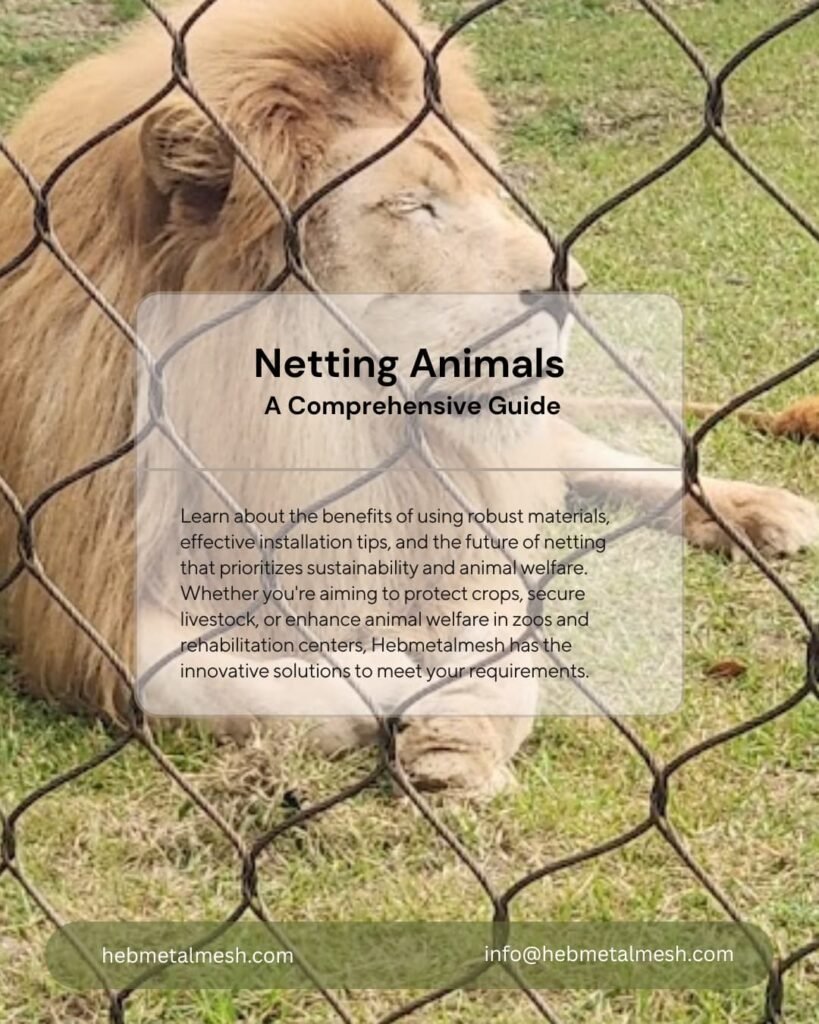
- Mesh Solution: A medium rope diameter (e.g., 2.0mm or 2.4mm) with an aperture around 50mm provides the necessary tensile strength and integrity. The mesh must be installed vertically and tautly to discourage climbing.
- Relevant Products: See our Leopard Enclosure Mesh and Lion Habitat Fencing for configurations proven in major zoo exhibits.
Canines (Dogs to Wolves)
Canine enclosures, especially for working dogs or wolf habitats, demand solutions that address both climbing and chewing behaviors.
- The Challenge: Chew-proof integrity, resistance to digging (requires buried or extended apron), and impact resistance from running animals.
- Mesh Solution: We recommend a robust 2.4mm or 3.2mm rope diameter with a tighter mesh size (40mm-50mm) to prevent biting and climbing leverage. For enhanced aesthetics and low reflectivity in visible areas, consider our specialized black oxide stainless steel finish.
- Focus: Chew-proof mesh walls combined with appropriate foundational design to thwart digging.
Primates & Intelligent Mammals
Primates, in particular, will test the structural integrity of any enclosure. Vandal-proof strength and the ability to conform to complex, irregular shapes are non-negotiable.
- The Challenge: Vandalism (manipulating or breaking components), climbing, swinging, and high dexterity.
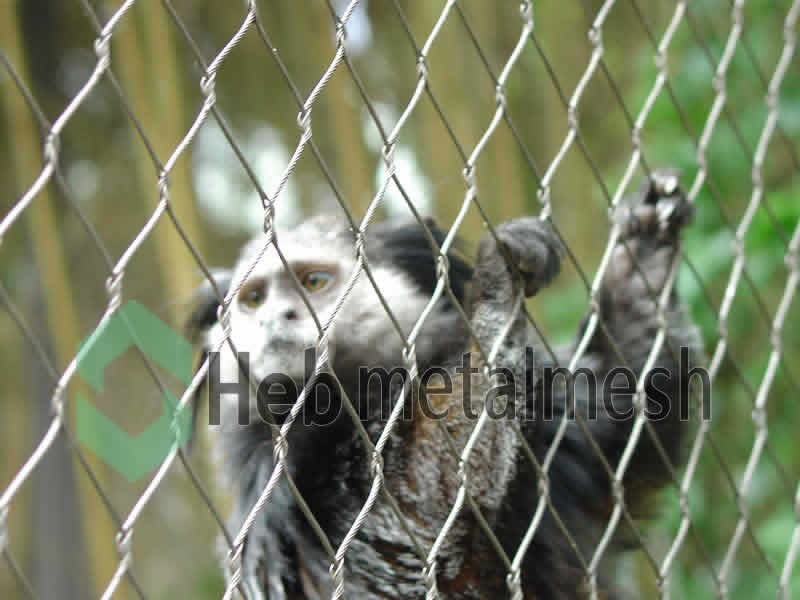
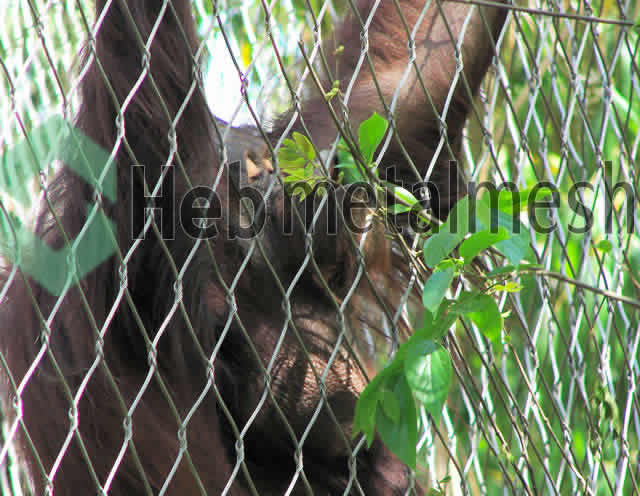
- Mesh Solution: Heavy-duty rope diameters (3.2mm and up) are often required, especially for large species like chimpanzees. Full customization allows us to design complex, weight-bearing dome aviaries or irregular tunnel shapes that cater to natural behavior while maintaining absolute security.
- Relevant Products: Explore our configurations for Monkey and Gibbon enclosures, focusing on complex, custom fabrication examples.
Livestock & Deer
For larger agricultural or park animals, the fencing needs to balance visibility and aesthetic appeal with the strength to manage high pressure from pushing, running, or rutting.
- The Challenge: Managing large animal pressure; high visibility for deer and visitors; extreme weather durability.
- Mesh Solution: Utilize larger rope diameters (e.g., 2.4mm-3.2mm) with wider apertures (e.g., 76mm or 90mm) to balance high strength with cost-effectiveness for large perimeters. The corrosion resistance is vital for long-term farm use.
- Relevant Products: Review our specifications for Deer Fencing and perimeter security applications.
5. Why Customization is Key for Professional Enclosures
The vast majority of retail fencing solutions—whether from Amazon or dedicated pet fence companies—are sold in fixed panels or predetermined roll lengths. While adequate for a simple backyard perimeter, these off-the-shelf products force compromise when dealing with sophisticated zoo architecture or irregular land formations.
True security and optimal fit demand fencing that is built to your exact blueprint. We specialize in providing the highest level of customization in the industry.
- Seamless Integration: We don’t just sell standard rolls; we provide mesh panels cut to the precise millimeter, accommodating complex curves, non-rectangular walls, and unique supporting structures, such as tension cable systems on domes or cliff-face exhibits.
- No Compromise on Security: Off-the-shelf panels necessitate splicing, overlapping, and securing sections with secondary hardware—all of which introduce potential weak points that sophisticated animals can exploit. By providing a single, custom-made panel up to 30 feet by 60 feet, we eliminate these security vulnerabilities and create a cleaner, vandal-proof finish.
- Design Freedom: Your enclosure design shouldn’t be limited by the available fence material sizes. Our ability to manufacture specific mesh sizes and rope diameters ensures the final product perfectly matches the weight load, impact tolerance, and escape-prevention needs of your unique project.
6. FAQ: Your Animal Enclosure Fencing Questions Answered
We address the most common inquiries from our professional clients.
A: Handwoven stainless steel mesh (SUS304 or SUS316) offers the best combination of dynamic impact resistance, anti-climb flexibility, and superior corrosion resistance, guaranteeing a minimal 30-year lifespan even in harsh outdoor and coastal environments.
A: As a dedicated factory, Hebmetalmesh supplies custom-engineered projects directly to zoos, parks, and large-scale private clients across the USA. We handle the custom fabrication and ensure fast shipping from our facilities directly to your site.
A: Yes, it is one of the safest materials available. The handwoven, knotless ferrules create a smooth, continuous surface, eliminating the sharp points and potential snagging risks associated with rigid welded wire, ensuring the health and safety of active animals.
A: This specification is critical and depends entirely on your animal’s size, strength, and dexterity. A small animal requires a smaller aperture to prevent escape. A strong animal requires a thicker rope diameter (e.g., 2.0mm) for high impact. We provide free consultation services to specify the perfect combination for your project.
7. Conclusion & Next Steps
For temporary containment, basic pets, or light-duty garden barriers, retail-grade fencing options exist and serve their purpose. However, when your responsibility includes the long-term safety of valuable animals and the security of a significant institutional or private investment, there is no substitute for professional-grade materials.
For permanent, secure, and professional animal enclosures, custom handwoven stainless steel mesh offers superior long-term value, safety, and aesthetic quality. Don’t compromise your design or your animal’s welfare with off-the-shelf products.
We invite you to utilize our two decades of expertise.
For Instant Ideas: Browse our Mesh Store for standard configurations suitable for quick deployment. For Custom Projects: Contact us directly for a free consultation and quote. Describe your project (animal type, enclosure dimensions, environment, and design goals) to receive a tailored, engineered solution that guarantees performance for decades to come.