Introduction: The Unique Challenge of Housing Flamingos
Few sights in the zoological world are as captivating as a colony of flamingos. With their vibrant plumage, stilted legs, and synchronized social displays, they are the crown jewels of many public gardens and wildlife parks. However, the elegance of these birds belies the significant architectural and engineering challenges involved in their care. Housing flamingos in captivity requires a delicate balance: providing enough space for natural social behavior and flight while ensuring protection from predators and preventing injury to their remarkably delicate anatomies.
Creating a safe, durable, and visually appealing flamingo exhibit requires specialized materials that can withstand both the elements and the unique biological demands of the species. In this landscape, stainless steel aviary netting has emerged as the non-negotiable cornerstone of modern zoo design.
At Hebmetalmesh (a brand under Shijiazhuang Netting Trading Co., Ltd.), we have spent decades perfecting the science of zoo mesh. Having supplied world-class zoos, wild parks, and botanical gardens globally, we understand that an exhibit is more than just a cage—it is a life-support system and a public stage. This guide explores why specific specifications, such as our 2″ x 2″ x 1/16″ stainless steel mesh, are the industry standard for avian welfare and structural longevity.
Part 1: Why Flamingo Exhibits Demand Specialized Netting
1.1 Anatomical Vulnerabilities
Flamingos are defined by their extreme proportions. According to AAZV (American Association of Zoo Veterinarians) and RSPCA guidelines, their long, slender legs and sensitive webbed toes are highly susceptible to “bumblefoot” (pododermatitis) and mechanical trauma. Inappropriate mesh—such as chain-link or plastic netting—poses a severe risk. If a bird becomes startled, it may fly into the enclosure perimeter; inferior materials can trap a wing or snag a leg, leading to catastrophic fractures or dislocations. The smooth, flexible nature of stainless steel woven or ferruled mesh ensures that even upon contact, the risk of entanglement is virtually eliminated.
1.2 Behavioral Traits
Flamingos are highly social birds that engage in complex “marches” and courtship displays. In open-topped or walk-in exhibits, the netting must be high enough to allow for limited flight or wing-stretching without being so restrictive that it causes psychological stress. Furthermore, their foraging behavior involves filtering through shallow water and mud; the containment system must therefore be non-toxic and integrated into the water’s edge without leaching harmful chemicals into the sensitive aquatic environment.
1.3 Environmental Factors: The Corrosive Reality
Flamingo habitats are notoriously “wet” environments. High humidity, constant water spray, and the presence of avian waste create a perfect storm for corrosion. Bird droppings contain high levels of ammonium compounds and uric acid, which act as powerful electrolytes. In such conditions, traditional galvanized steel or aluminum components will oxidize and fail within a few years. Hebmetalmesh provides solutions specifically designed to resist this chemical onslaught, ensuring the enclosure remains structurally sound for decades rather than seasons.
Part 2: The Material Science: Why 304/316 Stainless Steel is the Gold Standard
2.1 Corrosion Resistance is Key
The primary reason professional curators insist on stainless steel is its inherent resistance to rust. While galvanized steel relies on a thin zinc coating that can be scratched or eaten away by acidic bird waste, stainless steel is a homogeneous alloy. Even if the surface is scratched, the “passive layer” of chromium oxide reforms instantly, preventing deep-seated corrosion.
2.2 304 vs. 316 Stainless Steel: Which to Choose?
- Type 304: The robust standard for the vast majority of zoo applications. It offers excellent durability and strength for inland parks.
- Type 316: Often referred to as “Marine Grade,” this alloy contains molybdenum. We strongly recommend Type 316 for exhibits located in coastal regions (within 5 miles of the ocean) or for indoor exhibits with high-salinity water features, as it provides superior resistance to chlorides.
2.3 Strength-to-Weight Ratio
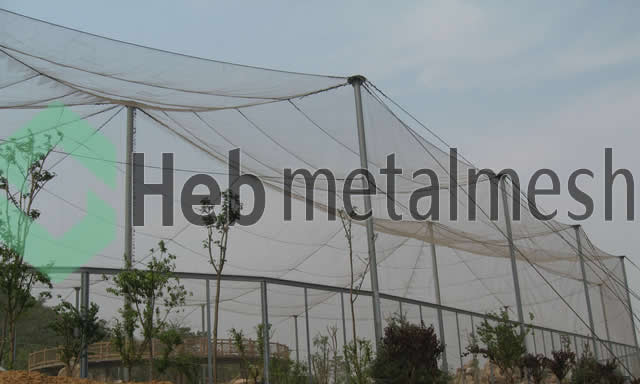
A major design goal in modern zoos is “invisibility.” Architects want to minimize the number of heavy support posts to provide unobstructed views for visitors. The high tensile strength of stainless steel allows for the creation of massive, open spans. Hebmetalmesh specializes in maxi-roll sizes of 30′ x 60′, allowing for seamless roof spans that maintain structural integrity while remaining lightweight enough to be supported by slender cable systems.
Part 3: The Critical Specification: Decoding 2″ x 2″ x 1/16″ Mesh
In our years of supply, one specification has proven most effective for flamingos: the 2″ x 2″ opening with a 1/16″ wire diameter.
3.1 The Safety Dimension (2″ x 2″)
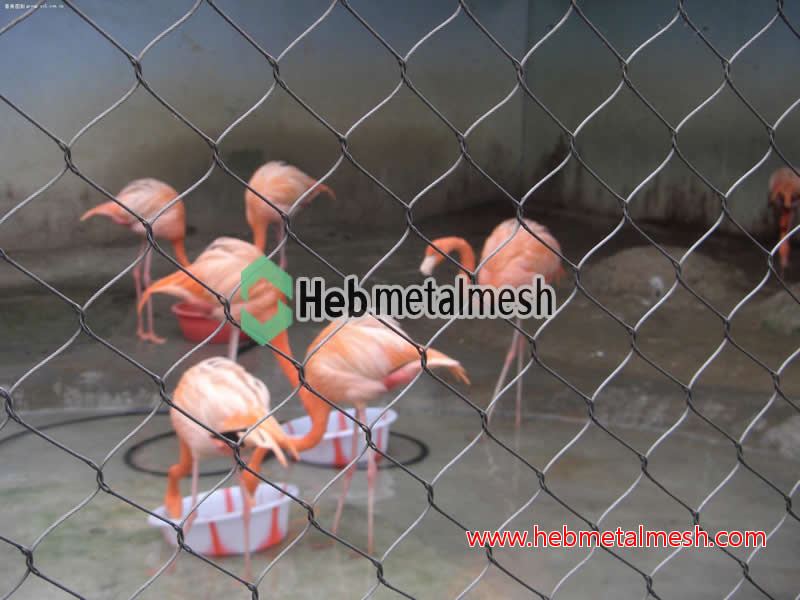
The 2-inch (approx. 50mm) aperture is the “Goldilocks” zone for flamingos. It is small enough to prevent a flamingo from attempting to push its head through the mesh—a common cause of injury in larger mesh sizes. Simultaneously, it is large enough to remain nearly invisible to the human eye from a distance of a few meters, ensuring that the beauty of the birds remains the focal point.
3.2 The Strength Factor (1/16″ Wire Diameter)
The 1/16″ (1.6mm) wire diameter provides the necessary “bite-resistance” and rigidity. While flamingos are not known for chewing on mesh, their enclosures must often keep out uninvited guests, such as raccoons, foxes, or feral cats. A 1/16″ stainless steel wire is incredibly difficult for small predators to chew through or climb without being deterred by the mesh’s stability.
3.3 Case Study Integration
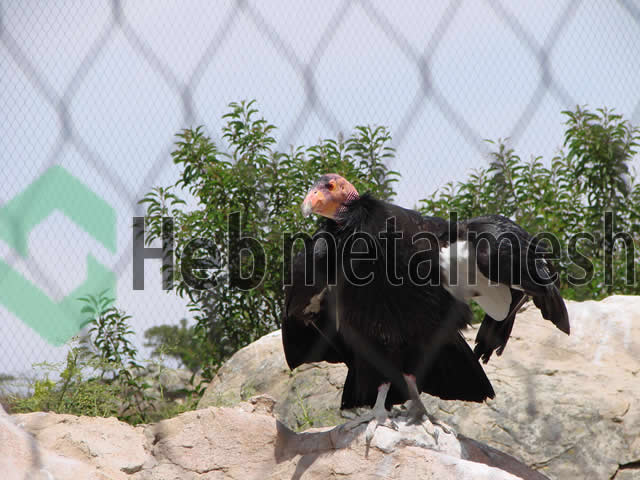
In numerous renovations of legacy aviaries, Hebmetalmesh has replaced heavy, dark chain-link fences with our 2″ x 2″ x 1/16″ woven netting. The result is always the same: a dramatic increase in natural light penetration and a significant reduction in animal “pacing” behaviors near the perimeter, as the birds feel less confined by the more transparent material.
Part 4: Design Integration & Aesthetic Considerations
4.1 Blending with Habitat Design
Modern exhibit design emphasizes “immersion.” The goal is to make the visitor feel as though they are standing in a Caribbean lagoon or an African soda lake. Our stainless steel mesh supports this by allowing lush planting to grow near or even through the mesh without compromising the metal’s integrity.
4.2 The Black Oxide Advantage
For the ultimate in “invisible” containment, Hebmetalmesh offers a Black Oxide finish. Unlike paint, which can chip and be ingested by birds, black oxide is a chemical conversion process that turns the surface of the stainless steel a matte black.
- Reduced Glare: Essential for photography-loving visitors.
- Camouflage: Black mesh disappears against shadows and foliage much more effectively than bright, reflective natural steel.
- UV Resistance: Provides an extra layer of protection against the sun’s rays in tropical climates.
4.3 Custom Fabrication for Complex Designs
No two exhibits are identical. Whether you are building a traditional rectangular aviary or a complex, organic geodesic dome, we provide customized panel and roll supply. Our ability to pre-fabricate panels to specific geometric requirements speeds up on-site installation and reduces waste. For custom quotes and sizing, visit https://hebmetalmesh.com/store/.
Part 5: Installation and Long-Term Maintenance Best Practices
5.1 Proper Tensioning and Framing
The longevity of an enclosure depends as much on the installation as the material. We recommend a perimeter cable system where the mesh is “sewed” to a stainless steel border cable. This allows for even tension distribution, preventing sagging and “pockets” where debris or birds could get caught.
5.2 Joint and Seam Integrity
By utilizing our 30′ x 60′ maxi-rolls, designers can minimize the number of seams. Where seams are necessary, they should be joined using stainless steel clips or lacing wire of the same grade to ensure there are no sharp protrusions that could catch a bird’s feathers.
5.3 Maintenance Simplicity
One of the most significant ROI (Return on Investment) factors for stainless steel is the maintenance schedule—or lack thereof.
- No Painting: Unlike carbon steel, it never needs recoating.
- Easy Cleaning: A simple low-pressure rinse with fresh water is usually sufficient to remove dust and organic buildup.
- Biosecurity: The non-porous surface of stainless steel does not harbor bacteria or fungi as easily as plastic or wood, aiding in the prevention of avian diseases.
Part 6: Beyond Flamingos: A Versatile Solution for Zoos
While this guide focuses on flamingos, the 2″ x 2″ x 1/16″ specification is a versatile “workhorse” for many other species. It is equally suitable for:
- Cranes and Storks: Who share similar leg-vulnerability issues.
- Waterfowl and Pelicans: Requiring high corrosion resistance near ponds.
- Mixed-Species Aviaries: Including small primates or lemurs who require a climb-resistant surface.
Hebmetalmesh continues to be a global leader in providing these high-performance materials, ensuring that zoo exhibits remain safe for animals and breathtaking for visitors.
Conclusion: Investing in Lifelong Flamingo Exhibit Integrity
Choosing the right mesh for a flamingo exhibit is an investment that pays dividends for decades. By selecting high-grade stainless steel in a precise 2″ x 2″ x 1/16″ configuration, you are choosing animal welfare over “making do,” and longevity over recurring maintenance costs.
From the chemical resilience of the alloy to the aesthetic invisibility of the black oxide finish, every detail matters. At Hebmetalmesh, we don’t just supply wire; we supply the peace of mind that your exhibit is built to the highest possible standards of material science and zoological safety.
Ready to Specify the Best for Your Flamingo Habitat? Hebmetalmesh has provided durable, safe, and beautiful stainless steel netting for zoos and aviaries worldwide. Our experts can help you customize the perfect solution for your next exhibit.
👉 Get a Custom Quote & Discuss Your Project Today: Visit https://hebmetalmesh.com/store/
FAQ: Frequently Asked Questions
The industry-recommended and safest mesh size for flamingo exhibits is 2 inches by 2 inches (2″ x 2″). This opening prevents flamingos from inserting their heads or legs into the mesh, while maintaining excellent visibility and airflow. Combined with a 1/16 inch wire diameter, it offers the perfect balance of strength and transparency.
Stainless steel (grades 304 or 316) offers superior corrosion resistance. Flamingo environments are often wet and acidic from droppings, which cause galvanized steel to rust and flake rapidly. Stainless steel is a lifelong material, non-toxic, and requires no protective coatings, ensuring better animal safety and significantly lower lifecycle costs.
Yes. A black oxide finish on stainless steel mesh is an excellent choice for flamingo habitats. Offered by suppliers like Hebmetalmesh, it reduces sun glare, blends seamlessly into natural backdrops, and provides enhanced UV resistance, making the containment nearly invisible to visitors.
For large-scale projects like zoo exhibits, mesh can be supplied in very large rolls, such as 30 feet wide by 60 feet long, to minimize joins. Custom pre-fabricated panels are also available to exact specifications, simplifying the installation of complex or curved enclosure shapes.
Specialist manufacturers like Hebmetalmesh (Shijiazhuang Netting Trading Co., Ltd) supply customized stainless steel netting globally. You can view standard products and request quotes for custom projects via their online store at https://hebmetalmesh.com/store/.
BestSeller: Flamingo Exhibit | Stainless Steel Aviary Netting | Hebmetalmesh
| Feature | Specification | Benefit for Flamingo Exhibits |
|---|---|---|
| Material | Grade 304/316 Stainless Steel | Ultimate corrosion resistance, non-toxic, safe for birds. |
| Mesh Opening | 2″ x 2″ (50.8mm x 50.8mm) | Prevents injury, allows clear views, supports natural light. |
| Wire Diameter | 1/16″ (1.6mm) | Optimal strength for predator resistance and tension. |
| Standard Roll Size | Up to 30′ Wide x 60′ Long | Reduces seams, ideal for large enclosure roofs or walls. |
| Finish Options | Natural (Bright) or Black Oxide | Aesthetic flexibility; black oxide reduces glare. |
| Customization | Panels & Rolls to Order | Perfect fit for any architectural design or renovation. |
| Primary Use | Zoo Mesh, Aviary Netting | Proven in professional wildlife housing applications. |
Ready to Specify the Best for Your Flamingo Habitat?
Designing a world-class animal exhibit requires partners who understand the critical intersection of zoology, engineering, and design. Hebmetalmesh has provided durable, safe, and visually subtle stainless steel netting for zoos and aviaries across the globe. Our expertise is rooted in real-world application and a commitment to customization.