
A keeper walks the night house at locking time and stops at the end window. The glass came out in May for ventilation, and a sheet of mesh went up in its place with six screws and a promise to do it properly later. A red panda could put a paw through the bottom corner of that sheet in ten seconds.
Most animal buildings carry four or five openings like this one. A window in a night house, a vent above a holding pen, a service hatch in a quarantine room, a louver on a reptile wall. None of them look like part of the containment system. All of them are.
A mesh sheet for animal building windows is a cheap line on a purchase order and a large share of the risk inside a building. What follows is the work of measuring the opening, choosing aperture and grade, fixing the sheet so it stays fixed, and checking it before something finds the gap.
Executive Summary
A window or vent in an animal building is a hole in the containment barrier, and a flat mesh sheet is what closes it. The sheet has to suit the smallest animal that can reach the opening, not the largest one in the room.
Aperture follows the animal. Wire diameter and screw spacing follow what the animal does to the sheet. Grade follows the room, with 316 stainless steel where wash-down chemicals and urine sit against the frame and 304 in a dry service area.
Order the sheet cut to the opening with a 25 to 40 mm turn-down on each edge, fix it to a separate subframe instead of straight into a plastered reveal, and inspect the fixings twice a year. Most failures begin at a screw hole, not in the middle of a panel.
Send the Opening Size, Get a Sheet Spec
Tell us the opening dimensions, the species that can reach it and how the room gets cleaned. We return aperture, wire diameter, grade, turn-down detail and a frame layout, with a cut-to-size quote and a lead time.
Request a Sheet SpecQuick Answer
A mesh sheet for animal building windows should be cut to the opening with a 25 to 40 mm turn-down, screwed to a removable subframe at 150 to 200 mm spacing, and specified in an aperture that suits the smallest animal able to reach the window. Grade follows the room rather than the building, so 316 stainless covers wet, washed or urine-exposed spaces while 304 handles dry service areas.
Key Takeaways
- A window belongs to the barrier, so it needs the same aperture discipline as the fence line.
- Fix the sheet to a subframe. A plastered reveal will not hold a screw under load.
- Turn down every cut edge, because bare wire ends invite gnawing and rust.
- Put every opening on the inspection round. A sheet that sits tight in spring can be loose by autumn.
Mesh Sheet vs Tensioned Netting for Openings
Containment planning usually stops at the fence line. Inside a building, the same animal lives behind walls built for weather, and every opening in those walls is a decision somebody made once and then forgot about.
The two systems carry load in different ways. Outdoor netting moves with the wind and passes load into a perimeter cable. A sheet over a window sits rigid and passes load into its screws.
That changes the specification from the first line. There is no cable to tension, so the frame does the work, and a sheet too light for the span will drum at the edges even when the aperture is right. The envelope logic behind how mesh performs across zoo building envelopes applies here at a smaller scale.
How to Cover a Night House Window With Mesh
A night house window is the most common job a mesh sheet for animal building windows ends up doing, and it usually happens in a hurry at the start of a warm week. Order it right and it takes an afternoon. Order it wrong and the sheet comes back twice.
Aperture Size for a Window Over an Animal Pen
Aperture size for a window over an animal pen follows the smallest animal that can reach the sill, and that is often not the species the room was built for. A pen built for a tapir ends up holding a troop of macaques after a reshuffle.
Judge by the head, not the body. If the skull cannot pass, the animal stays. Measure the widest point of the smallest head likely to stand at that window, then take the next size down. Most rooms then resolve to a standard sheet from the stainless steel animal enclosure mesh range.
| Room | Animal that can reach it | Aperture | Wire diameter | Grade |
|---|---|---|---|---|
| Night house window | Small primate, small carnivore | 25 to 40 mm | 1.5 to 2.0 mm | 316 |
| Holding pen vent | Hoofstock, large carnivore | 50 to 76 mm | 2.5 to 3.0 mm | 304 or 316 |
| Reptile room vent | Small lizard, small snake | 6 to 10 mm | 0.8 to 1.2 mm | 316 |
| Aviary shelter window | Passerines, small parrots | 12 to 25 mm | 1.0 to 1.5 mm | 304 |
| Quarantine hatch | Mixed, unknown intake | 25 mm | 1.5 mm | 316 |
The table assumes the animal can stand at the opening, so a window with a 600 mm sill needs less than a floor-level vent in the same room. Grade decides corrosion resistance more than any coating does. Chlorinated foam, urine and salt sit on a frame for years, and 316 stainless steel is the grade that survives them.
Measure the Reveal Before You Order
Half the sheets that come back in this trade were ordered to the glass size. The glass and the opening are never the same number.
Measure the clear opening at three points across the width and three down the height, then use the smallest reading. Buildings move. A reveal that reads 900 mm at the head can read 880 mm at the sill after thirty years.
Then measure the depth of the reveal. A 40 mm subframe plus a turn-down needs 60 mm of clear depth, or the frame has to sit proud of the wall.
Fixing a Mesh Sheet to a Steel Window Frame
Fixing a mesh sheet to a steel window frame is where most of the durability gets decided. The sheet is rarely the weak point. The connection is.
Work in this order:
- Fabricate a subframe from 30 x 30 x 3 mm angle, then drill and paint it before it goes near the wall.
- Offer the frame into the reveal, pack it square, and anchor it at 400 mm centres.
- Lay the sheet over the frame with a 25 to 40 mm turn-down on all four edges.
- Trap the turn-down under a cover strip so no cut end faces the room.
- Check that the sheet sits flat, and do not tension it.
Screw Spacing Around a Window Screen
Screw spacing around a window screen runs 150 to 200 mm on the perimeter and 300 mm on any intermediate bar. Tighter than 150 mm wastes fixings and invites corrosion at holes nobody needed.
Go to 150 mm wherever an animal can hook a finger under the edge. A corner is the first place a sheet lifts, and a corner with one screw in it lifts within a season.
Removable Window Screen Frame for a Holding Room
A removable window screen frame for a holding room earns its cost the first time somebody has to clean behind the mesh. Hinged and lift-out both work. Lift-out suits a small opening, while hinges suit anything a keeper reaches with a hose.
Two captive bolts stop a frame walking off mid-shift. Order the panels as panels made to a fixed opening size so the frame and the sheet arrive matched, with the turn-down already formed.
Mesh for Ventilation Openings in Animal Rooms
Mesh for ventilation openings in animal rooms carries a second job that a window does not. It has to pass air and still stop an animal, and those two demands pull against each other. The wire mesh panels for cages and service openings that go into this work have to satisfy both.
Airflow Through a Mesh Covered Vent
Airflow through a mesh covered vent falls with every reduction in open area. A 25 mm aperture on 1.5 mm wire leaves roughly 70 percent of the face open. A 6 mm aperture on 1.0 mm wire lands nearer 50 percent.
That matters in a warm room. A reptile wall designed for two air changes an hour may deliver one and a half once the sheet goes on, so size the vent larger than the louver it replaces.
Light Loss From Window Mesh
Light loss from window mesh is smaller than most people expect and larger than keepers notice. A coarse sheet reads as shadow at the edges of a room rather than as darkness.
For a species that needs natural light, keep the sheet off the glass so daylight passes through the full reveal. For a nocturnal house, the mesh works as a free dimmer.
Condensation Behind a Mesh Window Screen
Condensation behind a mesh window screen forms on the cold side, which is the mesh itself in winter. Water then runs down the wires and sits on the bottom turn-down, held against the frame.
Powder-coat the subframe, keep the bottom edge 5 mm off the sill, and the problem shrinks to a drip. Guidance from WAZA on animal welfare and enclosure design treats ventilation and humidity as one brief.
Cutting a Mesh Sheet to Fit a Window
Cutting a mesh sheet to fit a window is the last step, not the first. Order oversize by 80 mm on each dimension, fix the frame, measure once more, then cut.
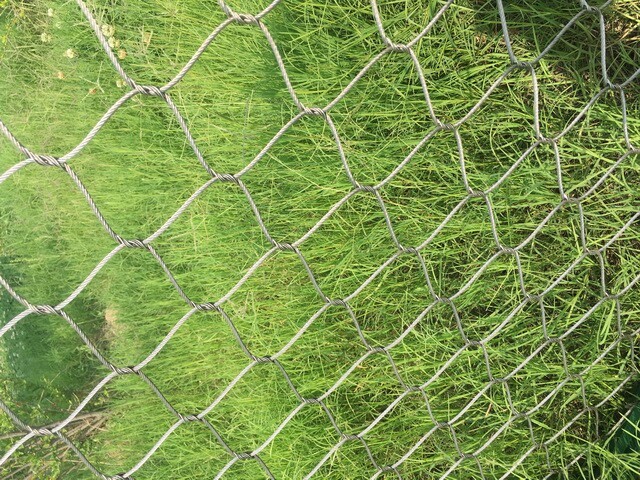
Woven and welded sheet cuts cleanly with a thin disc on an angle grinder. Cable mesh does not. A swaged panel loses its ferrule the moment a strand is cut, so specify that product cut to size.
Standard widths in the animal enclosure mesh range cover most openings, and a standard width beats a custom cut when the opening is close to it.
Edge Protection on a Cut Mesh Sheet
Edge protection on a cut mesh sheet is the difference between a four-year screen and a fifteen-year one. Bare wire ends catch gloves, rust first, and give a rodent something to work on.
Fold a 25 mm turn-down, fit a U-trim, or dip the edge in a coating. Any of the three closes the wire.
Gnawing Damage at a Window Screen Edge
Gnawing damage at a window screen edge starts at the one place nobody finished. Rodents and parrots both work a loose end, and a folded edge removes the purchase they need.
Check the bottom edge first. It collects bedding and moisture, and it sits where a small animal spends its time.
The Escape Route Through an Open Window
An escape route through an open window is rarely planned. It appears the day somebody props a window for air and a primate works out that the sheet only covers half the frame.
The fix is mechanical, not procedural. A sheet that covers the full opening and stays on a hinge cannot be left half open. A note on the wall can.
Window Mesh Inspection Checklist
Run this list twice a year and after any storm:
- Every corner screw, checked with a driver rather than a glance.
- The bottom turn-down, looking for lifted wire.
- Frame fixings into the wall, especially on old blockwork.
- Corrosion at cut edges and around screw heads.
- Anything an animal has pulled into the opening.
Replace a sheet once two or more perimeter fixings have lost bite. A screen re-screwed twice tells you the frame is undersized, and the third repair costs more than the panel. The guide to choosing mesh for an animal enclosure covers grade in more depth.
FAQ
Use 1.5 to 2.0 mm wire for a night house window and 2.5 to 3.0 mm for a holding pen vent. Thickness follows what leans on the sheet, so a window at eye level needs more wire than a vent high on a wall.
Only if the frame is steel and sound enough to take a screw under load. Timber and uPVC frames rarely are, so a subframe spreads the load and lets you replace the mesh without touching the window.
Between 25 and 40 mm, measured against the smallest head that can reach the opening. A young macaque or marmoset is the usual test case, because adults get the specification and juveniles find the gap.
It can, and a coarser aperture is the answer rather than thinner wire. Going from 25 mm to 6 mm roughly halves the open face, so oversize the vent by one step and check the room still hits its air change target.
Twice a year, plus a look after any storm or animal introduction. Windows sit low and collect debris, so they fail faster than the fence line above them.
Close the Openings Before the Next Intake
Send the opening dimensions, the species that can reach them and the cleaning routine. We will return aperture, wire diameter, grade, turn-down detail and a frame layout, then quote the sheets cut to your openings with a lead time.
Talk to a Mesh Engineer