Introduction: The Diverse World of Outdoor Enclosures
The need for protection—whether from weather, pests, or unauthorized access—is universal, and the solution often lies in creating a specialized outdoor enclosure. This term, however, is tremendously diverse. A simple search on Google reveals a confusing array of products, from industrial plastic electrical boxes built to withstand water ingress, to elegant glass sunrooms designed for human comfort, all falling under the same umbrella term: outdoor enclosures.
This semantic breadth creates a challenge, but also an opportunity. While a technician installing an HVAC unit needs a NEMA-rated metal box, and a homeowner desires a screened-in patio, the requirements for professional animal enclosures and animal habitat fencing demand a far higher degree of engineering, safety, and durability.
This definitive guide will demystify the three major types of outdoor enclosures, explore their material requirements, and then focus deeply on the most critical, specialized category: permanent, safe outdoor enclosures for animals in zoos, large aviary enclosures, and private reserves. We will demonstrate why material choice is paramount in this field and introduce Shijiazhuang Netting Trading Co., Ltd. (Hebmetalmesh) as a global expert specializing in the most demanding enclosure solutions using premium handwoven stainless steel zoo mesh. With years of experience serving the industrial netting and manufacturing sectors, we are uniquely positioned to guide you through this critical decision.
Chapter 1: Understanding the Three Main Categories of Outdoor Enclosures
What Are Outdoor Enclosures? Breaking Down the Top 3 Uses
To effectively analyze the market and determine the best solution for your project, it’s necessary to first categorize the broad definition of outdoor enclosures into its three primary functional groups. Each group serves a distinct purpose and, consequently, requires different material specifications and structural integrity.
1. Protective Enclosures for Equipment (The “Boxes”)
This category focuses on shielding sensitive, typically electrical or mechanical, components from the environment. These outdoor enclosures are essentially protective boxes designed to prevent dust, dirt, moisture, and extreme temperatures from damaging internal machinery.
- Key Requirement: Sealing and ingress protection (IP ratings, or NEMA ratings in North America).
- Examples: Enclosures for industrial control panels, outdoor junction boxes, telecommunications equipment, and exterior power supplies.
- Material Focus: Materials must be non-conductive (if housing electrics) or highly corrosion-resistant. Common materials include:
- Plastic (Polycase): Lightweight, cost-effective, and excellent for basic weather resistance (e.g., NEMA 3R).
- Fiberglass: Offers high durability and resistance to chemicals (often used for NEMA 4X).
- Metal (Bud Industries): Heavy-duty, used when physical security or high heat dissipation is required.
These structures are rigid, focused on preventing environmental ingress, and rarely require visibility or flexibility.
2. Living Space Enclosures for Homes (The “Rooms”)
Often referred to as patio enclosures, sunrooms, or screen rooms, this type of structure extends interior living spaces into the outdoors. Their primary function is to provide shelter, bug protection, and comfortable living without sacrificing natural light or views.
- Key Requirement: Aesthetics, weather protection for people, and ventilation.
- Examples: Screened-in porches, four-season sunrooms, motorized retractable vinyl curtains (Enclosure Guy), and pool cages.
- Material Focus: Materials prioritize lightness, clarity, and ease of installation.
- Glass & Vinyl: Used for walls and windows to provide full climate control and insulation.
- Aluminum Framing: The most common structural material, offering lightweight support and rust resistance.
- Screen Mesh: Typically fiberglass or aluminum screen mesh, designed to keep insects out while maximizing airflow.
While these structures utilize certain mesh products, the material demands are driven by human comfort and home aesthetics, not the specialized containment of wildlife.
3. Habitat Enclosures for Animals (The “Habitats”)
We now transition to the most critical and complex type of outdoor structure: the specialized animal enclosure or animal habitat fencing. While the first two types focus on protecting objects or people, this category is about creating safe, ethical, and naturalistic environments for wildlife. This is where the engineering discipline of manufacturing meets the biological imperative of conservation.
- Core Requirement: Security (containment and predator-proofing), animal welfare, extreme durability, and maximum visitor visibility.
- Examples: Public zoo habitats, bird sanctuaries, large outdoor aviaries, primate exhibits, and exotic reptile enclosures.
Unlike an electrical box or a patio, a professional-grade animal enclosure must withstand dynamic stresses: the tensile strength of climbing primates, the corrosive effects of animal waste, the sharp talons of raptors, and decades of environmental exposure (wind, snow, UV radiation). This complexity dictates a core truth: the choice of material is not a budgetary consideration but a critical safety and welfare decision. Only the most sophisticated and robust materials are suitable for professional animal habitat fencing.
Chapter 2: Material Showdown: What’s Best for Animal Habitat Enclosures?
Choosing Materials for Animal Enclosures: Safety, Durability & Cost Compared
For an industrial habitat enclosure builder, the material selection determines the longevity, maintenance cost, and, most importantly, the safety of both the animals and the public. We compare common fencing solutions, demonstrating why only a specialized, premium product can meet professional standards.
Galvanized Steel Wire Mesh
Galvanized steel is often the entry point for large-scale animal enclosures due to its widespread availability and relatively low initial cost.
- Pros: Low initial outlay; widely available.
- Cons (Significant Drawbacks):
- Rust & Degradation: The zinc coating is vulnerable to scratches and environmental breakdown, leading to rust. Once rust begins, the structural integrity of the fence is compromised, requiring prompt replacement.
- Toxicity Risk: The zinc coating, particularly on newer or cheaper wires, can be ingested by some species (especially birds or primates) if they chew or rub against the mesh, potentially leading to zinc toxicity.
- Aesthetics: The stiff, thick, and often dull grey appearance significantly detracts from the naturalistic look required for modern zoo exhibits and visitor enjoyment.
Powder-Coated Mesh
This option involves applying a protective polymer coating to steel mesh, primarily for aesthetic enhancement and slight corrosion resistance.
- Pros: Offers color options (e.g., black or green) for better camouflage, enhancing visitor sightlines into the outdoor aviary.
- Cons (Shortcomings in Professional Use):
- Chipping: The coating is easily chipped, scratched, or peeled by the physical behavior of animals (claws, beaks, rubbing).
- Rust Exposure: Once the coating is compromised, the exposed substrate metal immediately becomes vulnerable to rust and corrosion, accelerating failure compared to standard galvanized mesh.
- Not Permanent: This is an aesthetic enhancement, not a solution for permanent structural integrity in a high-demand environment.
Plastic or PVC Coated Mesh
Often used in small-scale garden outdoor enclosures or for temporary partitioning, plastic-based mesh is entirely unsuitable for high-security, permanent animal habitats.
- Pros: Very soft and lightweight; available in various colors.
- Cons (Safety & Durability Failure Points):
- Vulnerability: Completely unsuitable for strong or large animals, or any species prone to chewing (rodents, primates).
- UV Degradation: Plastic polymers break down rapidly under continuous UV exposure, becoming brittle and cracking, leading to inevitable containment failure.
- Weather Damage: Highly susceptible to tearing in high winds or damage from snow and ice accumulation.
Handwoven Stainless Steel Zoo Mesh (THE HEBMETALMESH SOLUTION)
For professional, high-demand applications—where the safety of animals and visitors is non-negotiable—Hebmetalmesh provides the industry-leading solution: premium handwoven stainless steel zoo mesh. This material is engineered specifically to meet the stringent requirements of modern animal enclosures and outdoor aviaries.
The unique properties of this mesh are derived from two factors: the material (AISI 304 or 316 stainless steel mesh) and the construction method (interlocked, hand-woven ferrule cable).
Pros (Detailed Authority & Technical Superiority):
- Unmatched Durability and Corrosion Resistance: Manufactured from high-grade stainless steel (commonly 304 or marine-grade 316), the mesh is inherently corrosion-resistant. It stands up to decades of continuous exposure to sun, extreme temperatures, rain, snow, salt spray, and the highly corrosive effects of animal waste and cleaning agents. This is a permanent solution.
- Superior Safety and Animal Welfare: The construction features no sharp edges, rigid welds, or toxic coatings. The smooth, flexible, diamond-pattern weave minimizes the risk of injury, such as abrasions or “bumblefoot” in birds, promoting a healthier habitat.
- Animal-Proof Tensile Strength: The handwoven cable construction provides exceptionally high breaking and tensile strength. It acts like a resilient net, absorbing impact and resisting bending or tearing. This makes it highly resistant to chewing, clawing, and pecking, ensuring reliable containment for species ranging from large felines to powerful primates.
- Aesthetic & Functional Transparency: The mesh is lightweight relative to its strength, allowing for extremely thin cables. This provides excellent, virtually unobstructed visibility for visitors, dramatically enhancing the viewing experience. Furthermore, the open weave allows for maximum natural light penetration and crucial airflow, vital for maintaining a healthy and naturalistic habitat.
- Design Flexibility: The flexible, rhomboid pattern can be pulled taut across complex, non-linear forms—such as tensile roofs, 3D rock formations, and curved aviaries—offering architectural freedom impossible with rigid welded panels.
- Low Lifetime Cost (Total Cost of Ownership – TCO): While the initial investment is higher, the TCO is dramatically lower. This mesh requires virtually zero maintenance, no painting, no rust treatment, and no replacement for decades, representing a superior long-term financial decision.
Cons:
- Higher Initial Investment: The specialized manufacturing process and premium-grade stainless steel cable result in a higher upfront cost compared to standard welded or galvanized mesh. However, this is positioned not as a cost, but as an investment in professional integrity, safety, and longevity.
Chapter 3: Key Applications of Professional Stainless Steel Mesh Enclosures
Where Professional Stainless Steel Mesh is the Industry Standard
The superior characteristics of handwoven stainless steel zoo mesh have made it the go-to standard for major zoological institutions, architects, and animal welfare organizations globally. Its application spans the full range of animal habitat design.
Public Zoological Gardens & Safari Parks
In public settings, the mesh serves a dual purpose: ensuring the safety of visitors from large, powerful animals, and ensuring the health and welfare of the creatures contained within.
- Large Predator Enclosures: For species like tigers, lions, or bears, mesh requires maximum tensile strength. The flexibility allows the mesh to absorb the force of an impact rather than breaking.
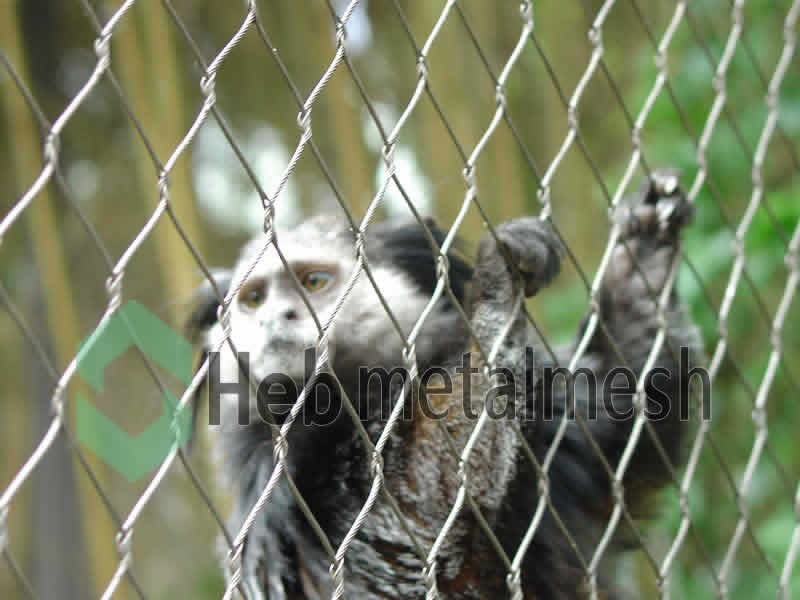
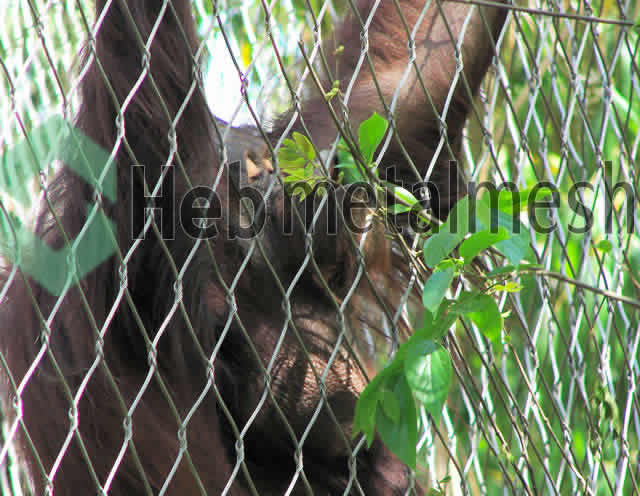
- Primate Habitats: Primates are highly active climbers and manipulative chewers. The smooth texture and anti-chewing strength of the stainless steel are essential for safety and preventing escape.
- Open-Top Aviaries: Used in free-flight outdoor aviaries, the mesh acts as a robust, yet nearly invisible canopy, securing the perimeter and allowing for necessary flight space.
- Security Fencing: Used in perimeter defense, the material offers superior resistance to cutting or breaching compared to chain-link, securing valuable and sensitive areas.
Outdoor Aviaries & Bird Sanctuaries
For outdoor aviary construction, the mesh offers crucial specialized features. The transparency allows for spectacular, unobstructed viewing of birds in flight.
- Containing Specific Species: Mesh is customized based on the bird size. Smaller birds require a finer mesh aperture (e.g., 20mm x 20mm), while larger birds require a thicker cable for strength.
- Preventing Injury: The smooth, flexible cable weave is vital for preventing injuries like “bumblefoot” (a bacterial infection of a bird’s foot) that can occur when birds repeatedly land on rigid, abrasive wire.
- Flight Space Requirements: The lightweight nature of the mesh means it requires minimal structural support compared to heavy fencing, allowing for vast, open, and naturalistic flight enclosures.
Reptile & Amphibian Outdoor Enclosures
While often housed indoors, many exotic reptiles require secure outdoor enclosures for natural sunlight exposure and basking.
- Basking Areas: The mesh provides a secure ceiling and wall material that allows UV light to pass through unobstructed, essential for reptile health.
- Security for Valuable Species: For high-value or venomous species, the mesh provides a non-corroding, non-brittle containment perimeter that guards against escape and protects the animals from wild predators.
Private Animal Reserves & Breeding Centers
Commercial-grade reliability is paramount when securing high-value breeding pairs or critically endangered species.
- Reliable Fencing: These non-public facilities require fencing that is not only robust against internal escape attempts but also completely predator-proof (coyotes, bears, etc.) from the outside. The stainless steel mesh acts as a durable, all-weather barrier.
Interactive Zoo Features (Walkthrough Enclosures)
Modern zoo design emphasizes visitor immersion. Stainless steel mesh is the material of choice for safe animal-visitor interfaces.
- Visitor Tunnels and Canopy Walks: Used to create overhead walkways or close-contact tunnels through an enclosure, the mesh offers the required safety barrier without creating a visual cage, maximizing the visitor experience.
To see our specialized solutions in action, browse our full catalog of zoo mesh products: [Link to https://hebmetalmesh.com/store/]
Chapter 4: 5 Critical Factors to Consider Before Building an Animal Enclosure
The success of any specialized animal enclosure project hinges on meticulous planning. The decision-making process must move beyond simple cost and consider the entire life-cycle of the habitat. Use this 5-step checklist to guide your professional decision-making.
Planning Your Animal Enclosure: A 5-Step Checklist
- Animal Species & Behavior (The Welfare Factor):
- Assessment: What is the animal’s size, maximum climbing/flying ability, and sheer physical strength? Are they chewers, climbers, or impact players?
- Mesh Impact: The material must facilitate natural behavior (e.g., climbing) without risk of injury (abrasion, ingestion). For example, a heavy primate requires a high-diameter cable mesh, while a small bird requires a fine aperture to prevent escape.
- Security Level (The Containment Factor):
- Definition: Is the primary goal containment only (e.g., a non-aggressive bird) or predator-proofing and containment (e.g., a high-value primate or large cat)?
- Material Choice: Only materials with documented high tensile and cut resistance, like handwoven stainless steel mesh, are appropriate for high-security animal habitat fencing.
- Environmental Conditions (The Durability Factor):
- Analysis: What are the maximum wind load, snow load, and typical UV exposure at the site? Is the location near the coast (salt spray corrosion)?
- Longevity: Environments with high corrosion factors or extreme weather necessitate marine-grade (316) stainless steel mesh to avoid premature structural failure, making lower-grade materials non-viable.
- Design & Aesthetics (The Visitor Experience Factor):
- Blending: How well does the outdoor enclosure integrate with the natural landscape? Modern zoo philosophy demands habitats that prioritize naturalism.
- Sightlines: The chosen mesh must maximize visitor sightlines, providing excellent transparency. Rigid, thick-wire fencing creates a visual barrier, detracting from the entire exhibit. The flexible nature of woven steel also allows for complex architectural shapes that blend seamlessly into the environment.
- Budget & Long-Term Maintenance (The TCO Factor):
- Calculation: Do not use initial purchase price alone. Calculate the Total Cost of Ownership (TCO) over a 20-year span. Include the costs of routine rust treatment, structural failure repairs, animal injury care, and necessary replacements.
- Value Proposition: A higher initial investment in a maintenance-free, permanent solution like stainless steel mesh virtually eliminates labor and replacement costs, resulting in a significantly lower TCO and a superior investment return.
Chapter 5: Why Choose HeBmetalmesh for Your Outdoor Animal Enclosure?
Your Trusted Partner for Secure, Durable Animal Habitats
When the integrity of an outdoor enclosure is measured by the safety of public and wildlife, compromise is not an option. Shijiazhuang Netting Trading Co., Ltd. (Hebmetalmesh) has established itself as a global leader in providing customized, high-specification containment solutions for the world’s most demanding zoological projects.
We are not just a supplier; we are a specialized manufacturer. By operating factory direct, we maintain rigorous quality control over the entire production process of our handwoven stainless steel zoo mesh—from sourcing the AISI 304 and 316 stainless steel cable to the final inspection of the hand-woven ferrules. This approach guarantees a superior product while allowing us to pass on significant cost efficiency compared to distributors.
We understand that every habitat is unique. We specialize in customization, tailoring the mesh aperture (hole size) and cable diameter precisely to your animal species, structural blueprint, and specific load requirements. We provide a solution engineered to your project, not just a product off the shelf. Our technical team possesses years of expertise, having served international zoos, respected sanctuaries, and professional builders, ensuring that our mesh meets the highest global standards for animal welfare and public security. Choosing Hebmetalmesh is choosing quality, longevity, and professional peace of mind.
Ready to invest in the most durable and aesthetically superior animal enclosure solution?
- Browse our full catalog of zoo mesh solutions and specifications:
- Need a custom quote for your specialized project or technical advice on aperture size? Contact our enclosure experts today:
- Learn more about our brand, our commitment to quality, and our philosophy of permanent containment:
This guide has provided a comprehensive overview of the diverse landscape of outdoor enclosures, highlighting the critical differences in material needs between standard protective boxes, residential screens, and specialized animal habitat fencing. We have established that for professional zoo applications, handwoven stainless steel zoo mesh stands alone as the definitive, safe, and most cost-effective long-term solution.