The Bottom Line: While plastic netting offers a low entry price, it fails within 2–4 years due to UV degradation and predator breach. Stainless steel rope mesh (304/316 grade) provides a 30-year lifespan, superior transparency, and 100% predator protection. For professional-grade enclosures that disappear into the landscape, metal mesh is the undisputed ROI champion.
1. The “Cheap Is Expensive” Paradox: Why Your $50 Roll of Plastic Netting is a Trap
We’ve all been there. You’re standing in the aisle of a big-box home improvement store, or scrolling through a discount marketplace, and you see it: a massive roll of “heavy-duty” plastic bird netting for fifty bucks. It looks like a bargain. It feels like a win. You tell yourself, “It’s just netting. Why would I pay more?”
But here’s the reality that the big-box retailers won’t tell you: Cheap is the most expensive way to build.
In the SEO world, we call this the “False Economy Trap.” In the world of aviary design and animal enclosures, it’s simply a disaster waiting to happen. Let’s break down the psychological and financial trap of choosing plastic over stainless steel bird netting.
The Psychological Trap of the “Good Enough” Material
When you start a DIY project, your brain is wired to optimize for the immediate “win”—which usually means the lowest upfront cost. Plastic netting appeals to the amateur because it’s light, easy to throw in a trunk, and requires zero specialized tools.
However, “good enough” for today is rarely good enough for next season. Plastic is an organic-based polymer; the moment it hits the sunlight, a countdown timer starts. Within 12 to 24 months, UV radiation begins to snap the molecular bonds of that $50 roll. It becomes brittle. It loses its “stretch.” It starts to look like a tattered spiderweb rather than a professional enclosure.
The Hidden Costs: Beyond the Price Tag
When you buy plastic, you aren’t just buying netting; you’re buying a subscription to future labor and heartbreak. Consider the “Total Cost of Ownership” (TCO):
- The Labor Loop: Think about the hours you spent measuring, stretching, and stapling that plastic. Now, imagine doing it again in two years. And again two years after that. When you factor in the value of your time, that $50 roll suddenly costs hundreds in lost weekends.
- The Maintenance Tax: Plastic sagging is inevitable. You’ll spend every spring tightening zip-ties and patching holes where a hungry squirrel or a curious bird decided to test the limits of the mesh.
- The “Unthinkable” Cost: This is the big one. If you are building a Parrot or Macaw enclosure, you are dealing with animals that have bolt-cutters for faces. A single breach in cheap netting doesn’t just mean a hole in the fence; it means a lost pet, a high-value escape, or a predator entry. One hawk attack on a Peacock enclosure can wipe out years of investment and emotional attachment in seconds.
The “Aha!” Moment: Industrial Grade is Now Personal
Here is the pivot. For decades, the high-tensile, hand-woven stainless steel rope mesh you see in world-class zoos was “gatekept” by industrial suppliers. You had to be a government contractor or a multi-million dollar zoo to even get a quote.
That has changed.
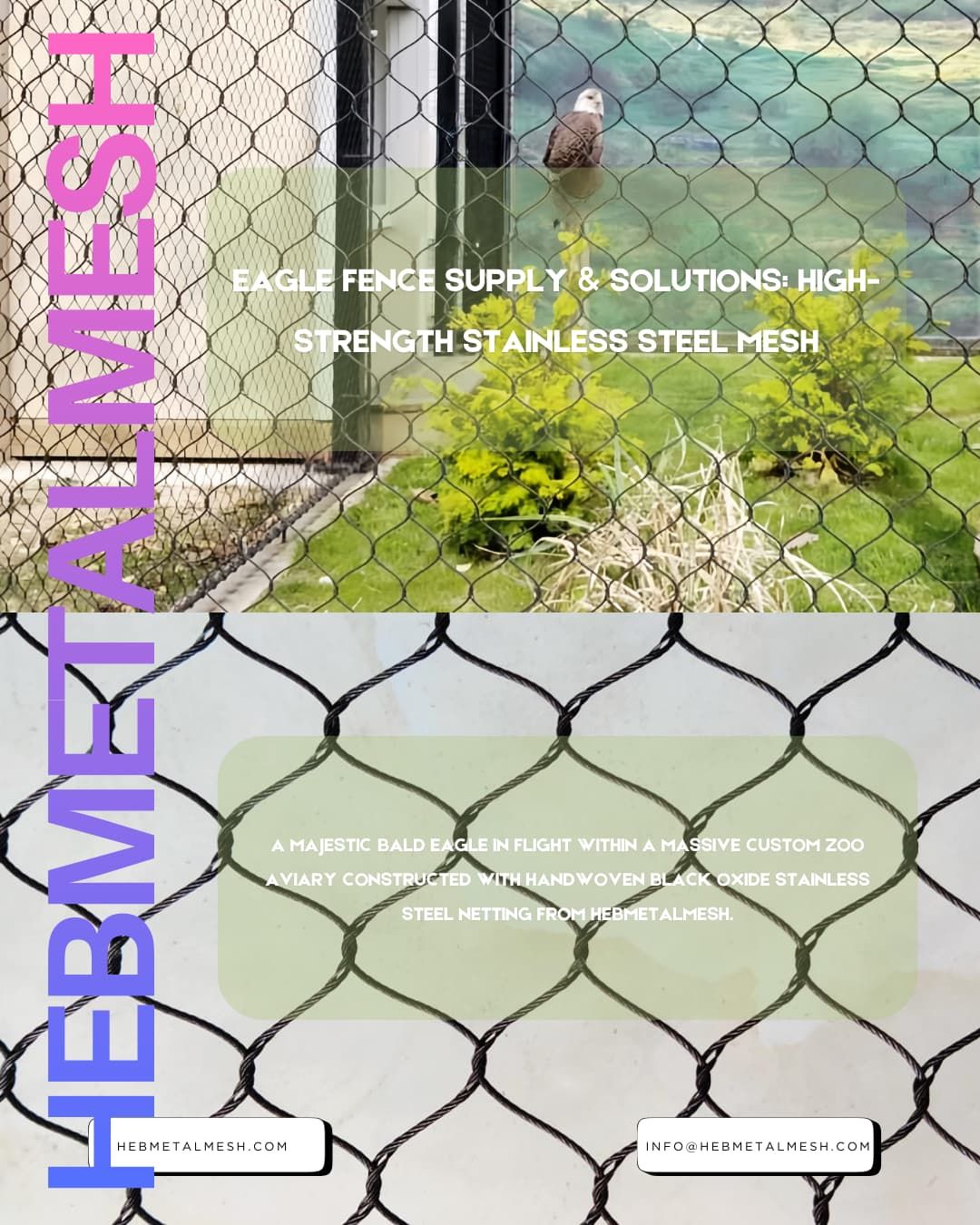
The “Aha!” moment for modern DIYers and private breeders is realizing that the exact same material used for Eagle enclosures—material that is essentially indestructible and carries a 30-year lifespan—is now available for residential projects through hebmetalmesh.
When you compare the cost of buying plastic netting five times over a decade versus buying premium stainless steel once, the “expensive” metal mesh actually becomes the budget-friendly option. You aren’t just buying wire; you’re buying the end of maintenance. You’re buying peace of mind. You’re moving from “renting” your netting to truly owning your infrastructure.
2. Physical Properties: The Science of Survival
If you want to understand why your enclosure is failing, you have to look at the molecular level. This isn’t just about “metal vs. plastic”—it’s about the physics of outdoor exposure. When you choose a material for an aviary netting project, you are essentially picking a fighter for a 24/7 heavyweight bout against the sun, the wind, and physical impact.
UV Resistance: Why Plastic Turns into “Confetti”
The biggest silent killer of any outdoor enclosure isn’t a predator; it’s the sun. Most DIY plastic nettings are made from polypropylene or nylon. While these are often marketed as “UV-stabilized,” that’s a bit of a marketing sleight of hand. It just means they’ll last two years instead of six months.
The science is simple: Ultraviolet (UV) light triggers a process called photodegradation. It breaks the polymer chains, leading to “chalking,” discoloration, and eventually, extreme brittleness. You’ve seen it before—you touch a piece of old plastic netting and it literally disintegrates into tiny flakes in your hand. That “confetti” isn’t just a mess; it’s a massive structural failure.
In contrast, 304 and 316-grade stainless steel is inorganic. It doesn’t “age” in the sun. It doesn’t have molecular chains that UV can snap. Whether it’s 100°F in a desert or a frozen tundra, the chemical integrity of hebmetalmesh products remains identical on day 1 and day 10,000.
Tensile Strength: The Break-Point Reality
Let’s talk raw power. Tensile strength is the maximum load that a material can support without fracture when being stretched.
- Nylon/Plastic: Even “heavy-duty” plastic netting has a relatively low ceiling. Once a bird—like those in a Parrot or Macaw enclosure—starts gnawing or hanging from a single strand, the stress is concentrated. Plastic stretches, thins, and then snaps.
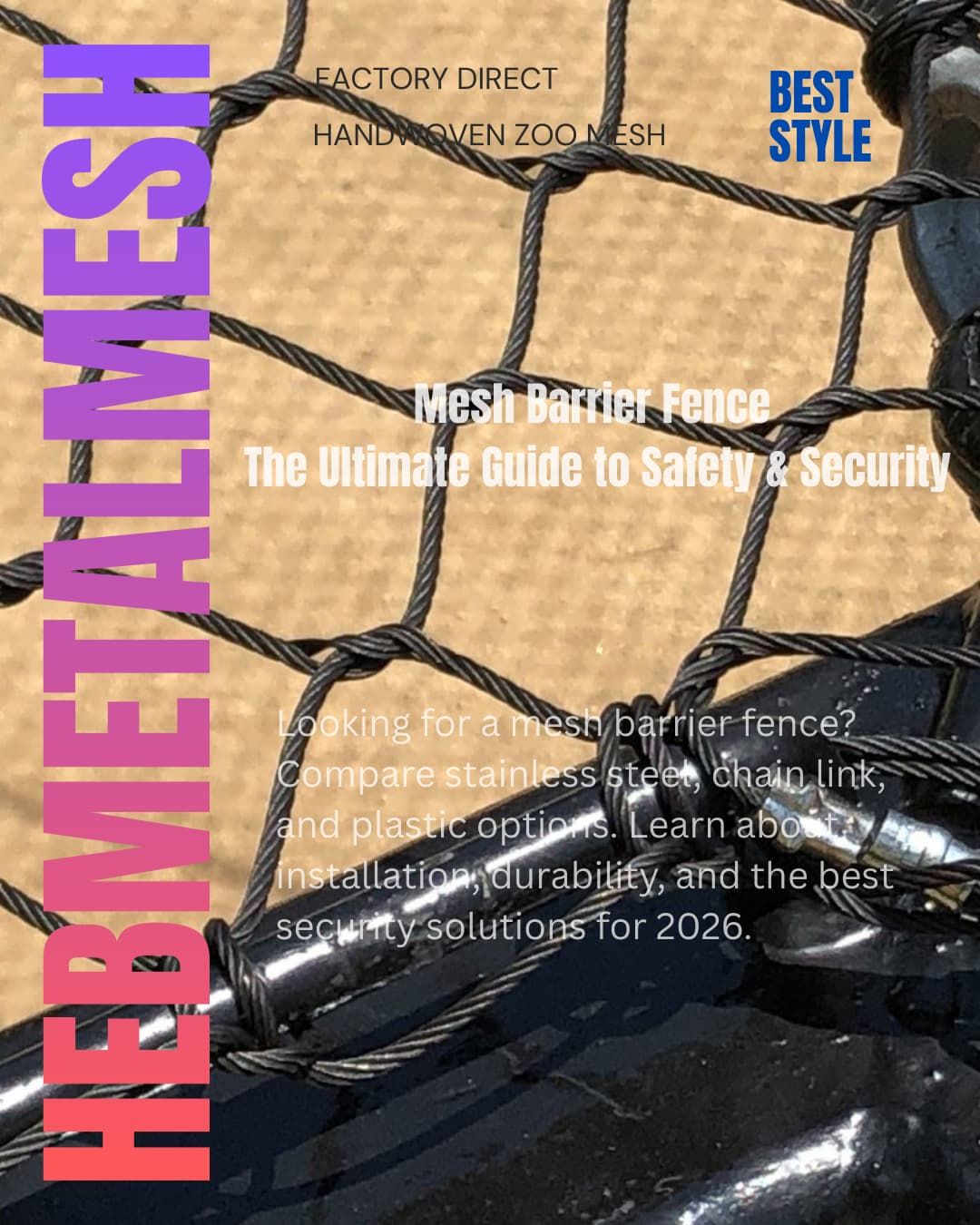
- Stainless Steel Rope Mesh: This material is composed of individual wire ropes (usually a 7×7 or 7×19 construction) woven together. We are talking about thousands of pounds of breaking strength. It can withstand the impact of a panicked large bird or the weight of heavy snow loads that would collapse a plastic roof in seconds.
Flexibility: The “Soft” Touch of Hard Metal
One reason people gravitate toward plastic is that it’s “soft.” They worry that metal mesh will be rigid, like a chain-link fence, which is difficult to install and can injure birds that fly into it.
This is where the “Aha!” moment hits home regarding rope mesh. Because it is a woven product made of flexible cables, it behaves much more like a fabric than a fence. It has a high “yield” or “give.” If a bird hits the mesh, the hand-woven diamond pattern deflects and absorbs the energy, much like a safety net.
Whether you are designing a complex Peacock enclosure with organic curves or a massive Eagle enclosure, the mesh contours to your frame. You get the structural security of steel with the graceful, supple handling of a textile. It’s the best of both worlds—security that doesn’t sacrifice the safety of the inhabitant.
3. The Predator Factor: Security Beyond the Surface
If you’ve ever woken up to a silent, empty aviary and a hole in the netting, you know that “predator-proof” is a term thrown around far too lightly in the industry. For most wildlife, plastic netting isn’t a barrier; it’s a gift-wrapped invitation to dinner. When we talk about bird netting and fence enclosures, the “Predator Factor” is the single most important metric for success.
Can a Raccoon Chew Through It? (The 30-Second Reality Check)
Let’s be blunt: a hungry raccoon, fox, or even a determined squirrel has teeth designed to crack nuts and bone. Plastic—even “heavy-duty” nylon—is essentially the consistency of a gummy bear to them.
- Plastic Netting: A raccoon doesn’t even need to be particularly smart to get through. They can chew a hole large enough to fit their head through in under 30 seconds. Once the head is through, the rest of the body follows. If you’re using poly-mesh, you aren’t protecting your birds; you’re just slowing down the inevitable.
- Stainless Steel Rope Mesh: This is where the game changes. Stainless steel has a Rockwell hardness that no North American or European predator can match. A raccoon can gnaw on hebmetalmesh until its teeth wear down—it will never, ever breach the wire.

Why “Predator-Proof” is a Lie When Using Poly-Materials
Many manufacturers label their plastic products as “predator-resistant.” In SEO terms, that’s a “long-tail lie.” Resistance is not the same as proof.
Plastic netting has two fatal flaws that predators exploit:
- Point Loading: A predator can grab a single strand of plastic and pull. Because plastic is soft, the knot or the weave will slide, creating a gap.
- The “Lure” of the Beak: For those keeping specialized species, the threat isn’t just from the outside. In a Parrot or Macaw enclosure, the birds themselves are the “predators” of their own cage. A Macaw can snap plastic netting like a dry twig.
To be truly “proofed,” a material must be physically impossible to chew, snap, or stretch. Stainless steel is the only material that checks all three boxes while maintaining the transparency you want for a viewing exhibit.
High-Value Protection: The Eagle Standard
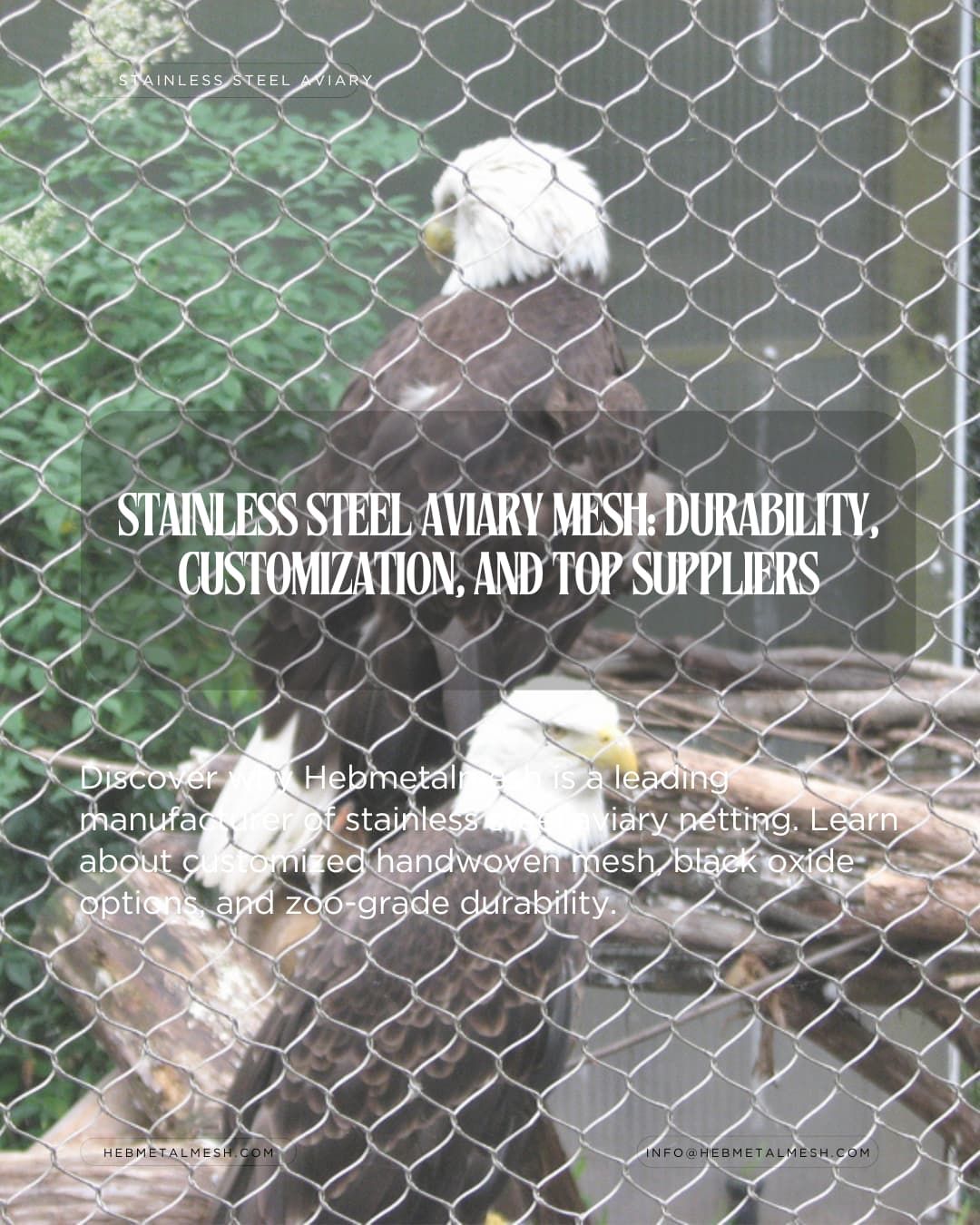
When you are dealing with apex predators or high-value raptors, the stakes shift from “annoying” to “catastrophic.” In an Eagle enclosure, the mesh serves a dual purpose: keeping the eagle in and keeping everything else out.
Eagles have incredible grip strength and sharp talons that can easily snag and tear lightweight netting during a flight or landing. If an eagle snags its talon in plastic, the netting will tear, potentially injuring the bird or allowing an escape. Stainless steel rope mesh provides a smooth, high-tensile surface that supports the bird’s weight without failing.
Furthermore, larger birds like Eagles or those in a Peacock enclosure are often targets for stray dogs or coyotes. By installing a professional-grade steel mesh, you create a structural fortress. It’s the “Aha!” moment where you realize that the mesh isn’t just a fence—it’s an insurance policy for your most valuable assets.
4. Aesthetics: The “Invisible” Enclosure
When you build an enclosure, you aren’t just building a cage; you’re creating a view. This is where the “Aha!” moment usually turns into a “Wow” moment. Most people assume that metal is bulky and “industrial” looking, while plastic is light and “natural.” In reality, the physics of transparency works in the exact opposite way.
The Thickness-to-Strength Ratio: Why Thin Steel Wins
To achieve even a moderate amount of security with plastic, manufacturers have to make the strands thick. Think about those heavy-duty garden nettings—they consist of thick, chunky plastic “wires” that catch the light and create a visual “wall.”
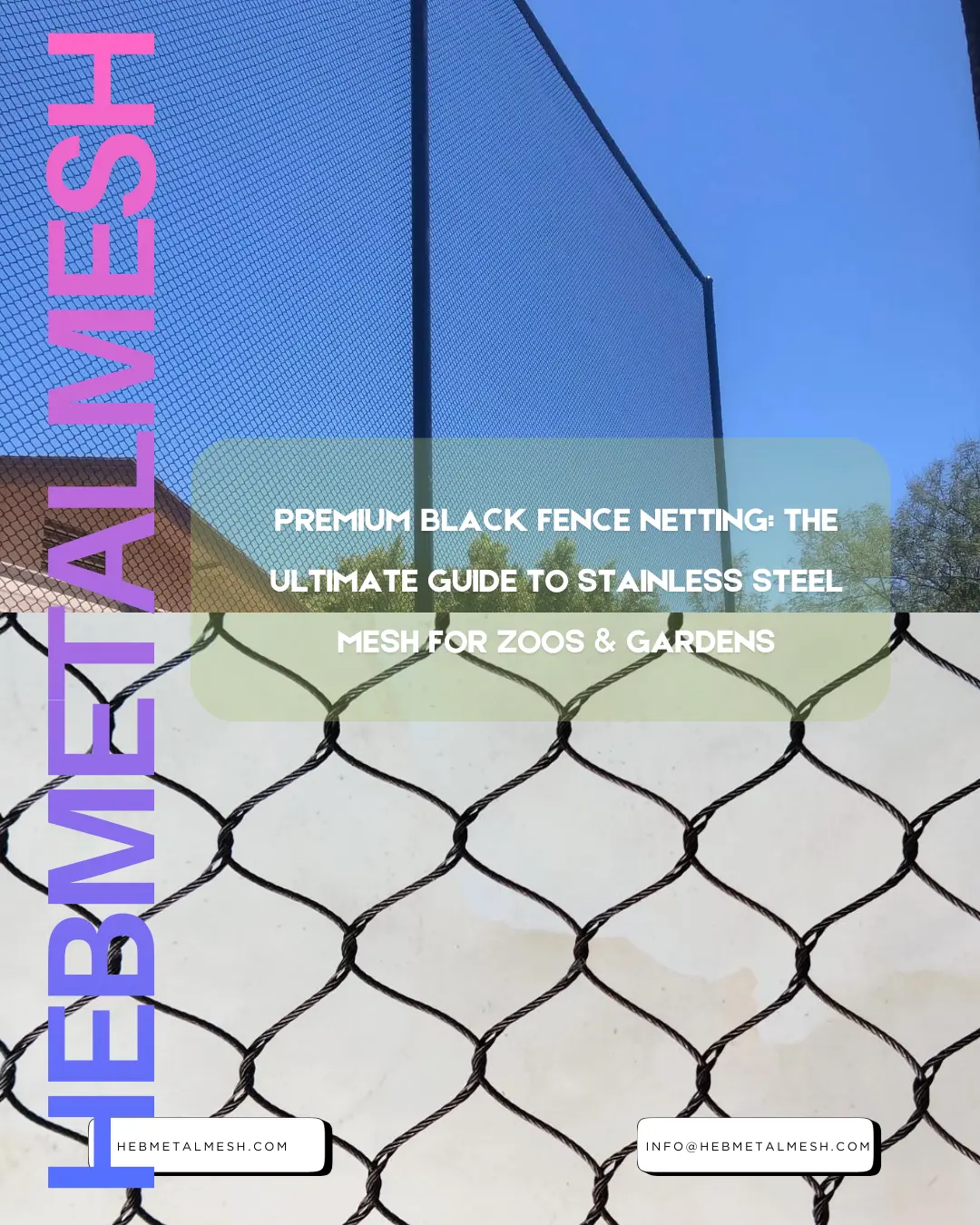
Because stainless steel bird netting has a vastly higher tensile strength, the individual wire ropes can be incredibly thin—often less than 2.0mm—while remaining stronger than plastic strands five times that size.
- Refraction vs. Absorption: Plastic is a solid, often glossy surface that reflects light at multiple angles, making it highly visible to the human eye.
- The “Wire-Thin” Advantage: Stainless steel rope mesh uses a hand-woven diamond pattern with a high “opening rate.” Because the wires are so thin relative to the size of the diamonds, your eyes naturally focus past the mesh rather than on it. It’s the same technology used in high-end Eagle enclosures to ensure spectators can see every feather clearly.
How to Achieve “Zoo-Like” Transparency at Home
Have you ever walked through a world-class zoo and wondered why you can barely see the fence between you and the animals? It’s not magic; it’s high-spec rope mesh.
To achieve this at home, you need to understand the “Aperture Advantage.” By choosing the correct diamond size (aperture) for your specific bird, you maximize the open space. For example, in a Parrot or Macaw enclosure, you can use a wider mesh opening because the birds are larger. This creates a “disappearing” effect where the silver-grey of the stainless steel blends into the horizon and the foliage, unlike the stark black or green of heavy plastic.
Case Study: Peacock Enclosures—Highlighting the Bird, Not the Cage
Peacocks are the ultimate “display” birds. Their beauty lies in the iridescent detail of their plumage and the massive spread of their tails. When you house them in a standard wire or plastic cage, the “grid” of the fence visually cuts through the bird’s colors, ruining the aesthetic.
In our work with professional Peacock enclosure designers, we’ve seen a 100% satisfaction rate when switching to 304/316 rope mesh.
- The Result: The mesh serves as a neutral, nearly invisible backdrop.
- The Benefit: Because the mesh is flexible and doesn’t sag like plastic, the lines of the enclosure stay crisp and professional.
When you look at a peacock through hebmetalmesh, you aren’t looking at a bird in a cage; you’re looking at a bird in a habitat. That is the professional aesthetic that plastic simply cannot replicate.
5. Installation & Longevity: The 30-Year View
Most people view an enclosure as a “weekend project.” But if you use the wrong materials, it becomes a “every second spring” project. Switching to stainless steel bird netting isn’t just a material upgrade; it’s a fundamental shift in how you maintain your property.
Weight Considerations and Structural Requirements
There is a common misconception that metal mesh is heavy and difficult to hang. In reality, because the wire ropes are so thin (often $1.2mm$ to $2.0mm$), the weight-to-strength ratio is incredibly efficient.
- Ease of Handling: Unlike rigid welded wire panels that require heavy frames, flexible rope mesh can be pulled taut across simple cable supports.
- The “Give” Factor: Because it is woven, it handles “live loads” like heavy snow or falling branches much better than plastic. Plastic will stretch and sag permanently under weight; stainless steel has “elastic memory,” returning to its original shape once the load is removed.
The “One-and-Done” Philosophy
This is the holy grail of DIY. When you install hebmetalmesh, you are essentially building a permanent structure.
- Zero Maintenance: You don’t need to spray it for UV protection, you don’t need to patch chew-holes, and you don’t need to worry about rust if you’ve chosen the right grade.
- Property Value: A tattered plastic cage looks like a mess; a sleek, stainless steel aviary looks like a deliberate architectural feature. It adds value to your home or facility rather than detracting from it.
Environmental Impact: Microplastics vs. Recyclable Steel
In 2026, we can’t ignore the footprint of our hobbies. Plastic netting is a major contributor to microplastic pollution. As it breaks down in the sun, those tiny “confetti” flakes we talked about enter the soil and water. When the netting finally fails, it ends up in a landfill where it sits for centuries.
Stainless steel is 100% recyclable. It is a clean, inert material that doesn’t leach chemicals into the ground. Choosing steel is the “green” choice for the environmentally conscious bird keeper.
6. Specialized Use Cases
Not all birds are created equal, and neither are all environments. To get that “Aha!” moment, you need to match the mesh to the specific challenge of your project.
Small Birds vs. Large Psittacines: The Beak-Proof Requirement
If you are housing finches or soft-bills, plastic might seem “fine”—until a squirrel tries to get in. But for Parrot and Macaw enclosures, anything other than steel is a liability.
- The Macaw Challenge: A Macaw’s beak can exert pressures exceeding 300 PSI. They don’t just “chew” netting; they “bolt-cut” it.
- The Solution: Hand-woven rope mesh is designed to withstand “beak-stress.” The interlocking loops mean that even if a bird focuses on one spot, they cannot create a “run” in the material like they would with a knit plastic net.
Coastal Environments: Why 316 Stainless is Non-Negotiable
If you live within 30 miles of the ocean, the salt air is a silent assassin for most metals.
- The Grade Difference: Standard 304 stainless steel is great for inland use, but coastal salt will cause “tea staining” (surface rust).
- The 316 Advantage: For coastal Peacock enclosures or seaside Eagle enclosures, we always recommend Grade 316 Stainless Steel. It contains molybdenum, which provides a massive boost in resistance to chlorides (salt). It’s the difference between a mesh that looks brand new after a decade and one that looks like an old shipwreck.
7. Conclusion: Making the Investment in Forever
Building a sanctuary for your birds shouldn’t feel like a recurring debt. When we move past the “sticker shock” of premium materials, we find the true “aha” moment: Quality is the only real discount. By choosing a professional-grade stainless steel bird netting over a temporary plastic fix, you aren’t just building a cage—you’re installing a permanent architectural feature.
The 10-Year ROI: Plastic vs. Stainless Steel Rope Mesh
Let’s look at the cold, hard numbers. If you’re covering a standard 20′ x 20′ x 10′ outdoor space, here is how the costs stack up over a decade:
| Expense Category | Plastic Netting (Nylon/Poly) | Hebmetalmesh (304/316 Steel) |
|---|---|---|
| Initial Material Cost | $150 – $300 | $1,200 – $1,800 |
| Replacement Frequency | Every 2-3 Years | Zero (30+ year life) |
| Labor Hours (Install/Repair) | 40+ hours (over 10 years) | 8 hours (Once) |
| Predator Loss Risk | High (Chew-through potential) | Absolute Security |
| 10-Year Total Cost | $1,500+ (plus bird loss risk) | Initial Investment Only |
The math is undeniable. While the entry price for hebmetalmesh is higher, it pays for itself in avoided replacements, saved labor, and—most importantly—the safety of your flock. Whether you are securing a high-value Eagle enclosure or a beautiful backyard Peacock enclosure, the peace of mind that comes with steel is priceless.
Final Thoughts: The Transition to Professional Grade
Transitioning from “DIY-amateur” to “Pro-spec” is a mindset shift. It’s about realizing that your time is too valuable to spend patching holes in sun-rotted plastic. It’s about knowing that when a storm hits or a predator prowls, your Parrot or Macaw enclosure isn’t just a suggestion—it’s a fortress.
Stop “renting” your netting from the big-box stores every few seasons. Invest in the material that the world’s leading zoological gardens trust. Your birds deserve the security, and you deserve the view.
Stop Renting Your Netting. Own Your Mesh.
Don’t wait for a predator or a storm to prove your plastic netting was a mistake. Upgrade to the industry standard used by world-class zoos.
*Custom sizes available. Global shipping. Lifetime durability.*
Frequently Asked Questions: Stainless Steel vs. Plastic Netting
Answer: While plastic is lighter, stainless steel rope mesh is surprisingly user-friendly due to its flexibility. It behaves like a high-strength fabric. Unlike rigid welded wire, it can be easily tensioned over simple cable frames. While it requires a bit more planning regarding your support structure, the installation is a “one-and-done” process that eliminates the need for future repairs.
Answer: No. In fact, hand-woven rope mesh is safer than many rigid alternatives. The diamond-pattern weave has an “elastic” quality—it gives and absorbs impact energy much like a safety net. This is why it is the preferred material for professional Eagle enclosures and zoo exhibits worldwide.
Answer: Grade 304 is the standard for most inland, backyard projects. However, if you live within 30 miles of the coast, you should always choose Grade 316. It contains molybdenum, which prevents “tea staining” or surface corrosion caused by salt air, ensuring your enclosure stays “invisible” and bright for decades.
Answer: Absolutely not. Unlike plastic or nylon netting, which a squirrel can breach in seconds, stainless steel is physically impossible for rodents to chew through. If you are looking to predator-proof your enclosure, stainless steel is the only material that offers a 100% guarantee against chew-ins.
Answer: Because the wire rope is so thin and has a high thermal conductivity, it does not retain heat like thick plastic or solid metal plates. It remains safe to the touch for birds and animals, even in direct sunlight, and does not off-gas or degrade like synthetic polymers.