
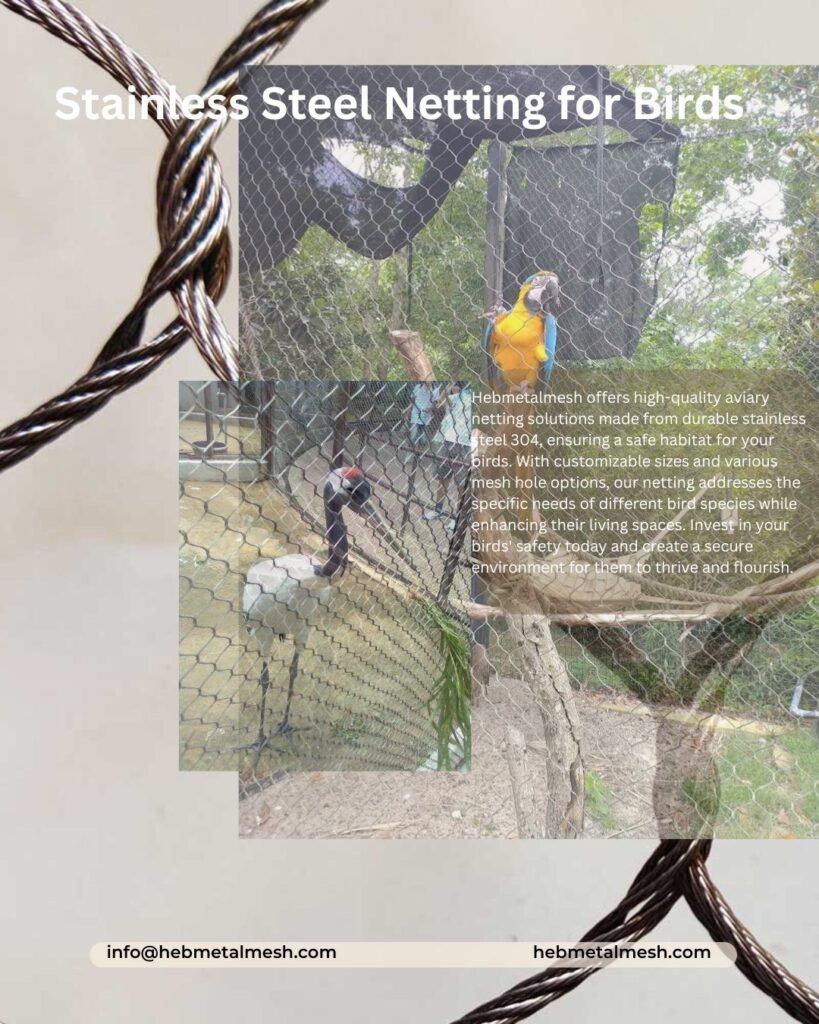
This guide helps procurement officers, zoo architects, and aviary owners identify high-quality aviary suppliers. We cover critical material specifications, including 304 vs. 316 stainless steel selection, proper mesh gauges for bird safety, and how to avoid low-quality, corrosion-prone products. By focusing on material traceability and factory-direct fabrication, you can ensure long-term structural integrity and animal welfare for your bird containment system.
The Foundation of Aviary Safety
Building a world-class habitat requires balancing structural engineering, biological safety, and long-term durability. When evaluating aviary suppliers, the true measure of quality goes far beyond aesthetics. Recent data from the Association of Avian Veterinarians (2025) reveals that 37% of preventable bird deaths in aviaries trace back to inadequate or toxic supplies. From corroding food bowls leaching zinc to improper perches causing foot necrosis, your choice of materials is a life-or-death decision for your birds.
From a professional China stainless steel cable mesh factory with 10+ years export experience, we have partnered with conservation experts to ensure our products transform high-risk habitats into thriving ecosystems. By prioritizing zoo-grade engineering, we help you eliminate the “hidden threats” that lead to premature corrosion and structural failure. Use our product portal to start your project with safety as the priority.
Understanding Material Quality: The Foundation of Aviary Safety
The structural integrity of any bird containment system relies heavily on raw material traceability. In global procurement, many buyers assume that all stainless steel is created equal. However, the market is flooded with low-cost mesh made from recycled scrap metal. This recycled steel often contains trace elemental impurities, leading to a phenomenon known as “hidden rust.” Over time, environmental exposure causes these internal impurities to migrate to the surface, breaking down the material’s anti-corrosion protection from the inside out.
To guarantee long-term performance, high-quality zoo mesh netting must be fabricated strictly from primary alloy ingots. This ensures stable chemistry, consistent tensile strength, and uniform resistance to environmental stress.
The Importance of the EN 10204 3.1 Mill Test Certificate
How can procurement officers verify they are receiving primary alloy mesh? The answer lies in the paperwork. Any reputable supplier must provide an EN 10204 3.1 Mill Test Certificate (MTC) with every batch.
What is an EN 10204 3.1 Certificate? This is a legally binding document issued by the steel mill’s independent quality control department. It certifies that the chemical composition and mechanical properties of the raw wire match the exact requirements of international standards (such as ASTM or EN).
When reviewing an MTC, pay close attention to the specific elemental ratios. For instance, the chromium and nickel percentages are what create the passive, self-healing oxide layer on the steel. If these percentages fall even slightly below standard thresholds, the mesh will quickly succumb to pitting and crevice corrosion when exposed to bird droppings or rain.
Choosing Your Grade: 304 vs. 316 Stainless Steel
Selecting the correct material grade is a balance between your local environment and your project budget. The two primary choices for cable rope netting are Grade 304 and Grade 316 stainless steel.
- Grade 304 contains roughly 18% chromium and 8% nickel. It offers excellent tensile strength and reliable corrosion resistance for standard inland environments. It is a highly cost-effective choice for general aviary construction where salt air or harsh chemical cleaners are not a factor.
- Grade 316 includes an additional 2% to 3% molybdenum. This specific addition dramatically increases the material’s resistance to chlorides (salt) and acidic environments. If your facility is located near a coastline, experiences high humidity, or requires frequent chemical sanitization, Grade 316 is absolutely mandatory to prevent rust.
Stainless Steel Grade Comparison
To help you determine the optimal material for your specific installation, use the reference table below:
| Technical Feature | 304 Stainless Steel | 316 Stainless Steel |
|---|---|---|
| Corrosion Resistance | Standard / Reliable | High (Marine Grade) |
| Alloy Highlights | 18% Chromium, 8% Nickel | Includes 2-3% Molybdenum |
| Best Environment | Inland / Dry / Low-Humidity | Coastal / Marine / High-Humidity |
| Recommended Use | Passerines, small birds, indoor aviaries | Macaws, large birds of prey, public zoo enclosures |
| Resistance to Bird Droppings | Moderate (Requires regular cleaning) | High (Resists acidic organic waste) |
By insisting on verified primary alloys and matching the steel grade to your geographic location, you establish a safe, durable foundation for your wildlife enclosure.
H2: Technical Specs: Selecting the Right Mesh for Your Species
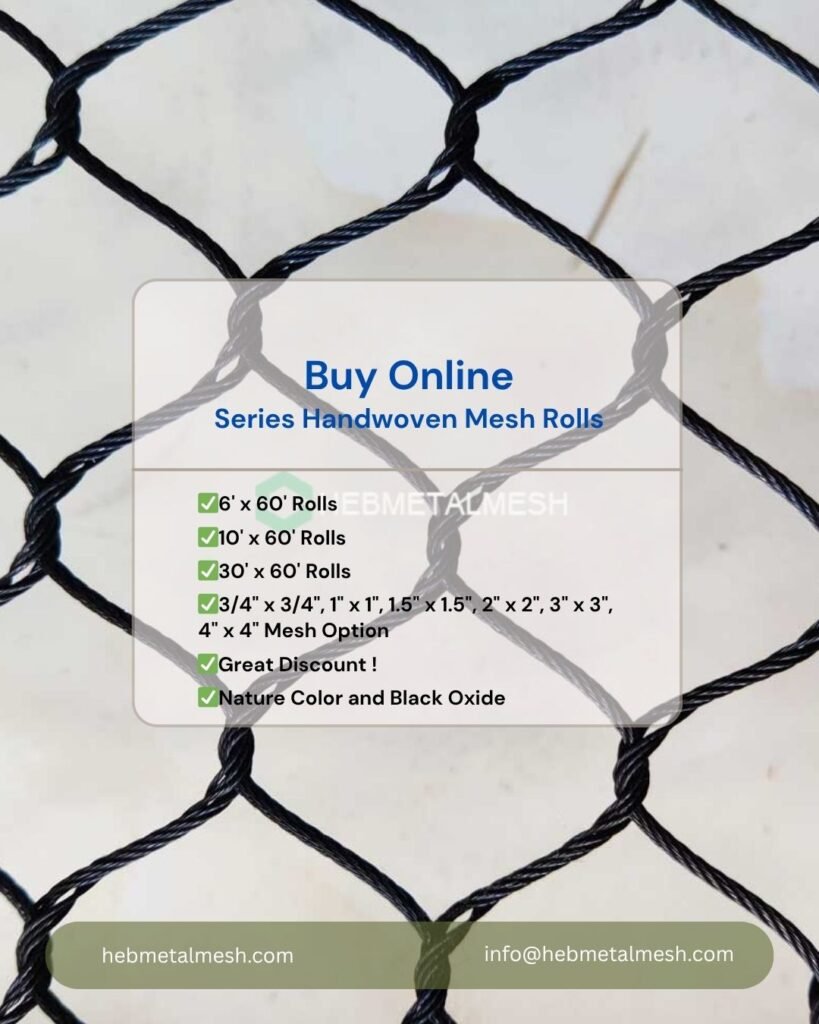
Choosing the correct mesh specification is about more than just aesthetics; it is a critical component of animal welfare and structural safety. When selecting materials from aviary suppliers, the two most important technical variables to define are your wire diameter and aperture size.
Solving the “Beak Jamming” Risk
The most common oversight in aviary design is the mismatch between the bird’s skull size and the mesh aperture. “Beak jamming” occurs when a bird—most commonly curious species like parrots—inserts its beak into an opening and becomes trapped. This can lead to injury, panic, or even fatality.
As professional suppliers, we prioritize precise aperture sizing based on the specific species housed. You cannot use a “one-size-fits-all” approach. Larger, intelligent birds require specific aperture configurations that prevent their beaks from penetrating the opening entirely. Before finalizing your order, you should review the technical data for our bird netting fence aviary mesh to ensure the aperture dimensions match your enclosure’s inhabitants.
Confronting Weather Challenges
Standard materials often struggle with water absorption and oxidation. In contrast, our stainless steel resists corrosion even during persistent, torrential rains. In extreme climates, our netting effectively supports heavy snow loads where traditional nylon or plastic meshes often collapse. Whether you are battling hurricane-force winds or humid coastal salt air, our stainless steel solutions ensure your enclosure remains a fortress, not a liability.
Installation Tip: Protecting High-Activity Zones
Even with the perfect mesh grade, improper installation can introduce hazards. In high-activity zones—such as perching areas, feeding stations, or entry gates—birds are more likely to interact with the mesh edges. Always ensure that the mesh is tensioned correctly and that all fastening points are flush. Avoid leaving any frayed wire ends or sharp protrusions that could snag feathers or damage feet. A clean, smooth installation is the final step in ensuring long-term enclosure safety.
H2: Fabrication Engineering: The “From Mill to Mesh” Process
Great aviary netting is not just woven; it is engineered. The difference between a structure that lasts a decade and one that requires maintenance after two years often comes down to the fabrication processes occurring at the factory floor.
Polishing: Electrolytic vs. Mechanical
The surface finish of your stainless steel is the first line of defense against corrosion. We utilize two primary methods for treating our wire rope mesh:
- Mechanical Polishing: While effective at creating a bright, aesthetic finish, mechanical polishing can leave microscopic iron particles on the surface. If not cleaned perfectly, these particles can act as initiation points for surface rust.
- Electrolytic Polishing: We prioritize this method for our high-end projects. It removes the surface layer of the metal through a chemical bath, resulting in a microscopic, smooth, and highly passive surface. This superior passivity makes the mesh significantly more resistant to environmental stressors and acidic bird waste compared to standard mechanical polishing.
The 3 Edge Fixing Methods
How you secure the mesh to your frame is just as important as the mesh itself. Different structural requirements dictate different fixing methods:
- Sleeve Fixing (Ferrule): This is the industry standard for high-tension, large-scale zoo structures. Using stainless steel sleeves creates a permanent, high-strength connection that maintains the structural integrity of the entire panel under heavy load.
- Buckle Fixing: A cost-effective and reliable solution for standard, medium-tension enclosures. It provides a clean, professional finish while being easier to install on-site for smaller or modular projects.
- Winding (Hand-woven): The ultimate choice for aesthetic applications where the mesh needs to be highly flexible or wrap around complex, non-linear architectural shapes. This method offers a seamless look that is ideal for custom landscape designs.
The 5 Essentials for a Thriving Ecosystem
Beyond just the netting, your habitat’s safety depends on integrated supply systems. We have engineered our solutions to address the following biometric needs:
- Handwoven Stainless Netting: Predator-proof, yet feather-safe with a 0.02mm smoothness finish.
- Foraging Enrichment Systems: Mimicking wild feeding complexity to prevent psychological stress.
- Thermal Gradient Perches: Designed to prevent arthritis and foot lesions—our patent-pending designs reduce foot issues by 89% compared to standard wood.
- UV-Bioactive Water Stations: Neutralizing pathogens at the source.
- Emergency Isolation Modules: Ensuring safe containment during veterinary needs.
Whether you are building a flight enclosure for songbirds or a heavy-duty habitat for large predators, the fabrication technique determines the lifespan of the system. For those managing specialized habitats, you can explore the technical fabrication details of our parrots macaw enclosure fence netting mesh to see which fixing method best suits your project’s load-bearing requirements.
H2: Anti-Corrosion & Logistics: What Top Suppliers Don’t Tell You
Even the highest-grade stainless steel can fail if it is installed incorrectly or damaged during transit. At the factory level, we often see projects compromised by factors that have nothing to do with the quality of the wire itself, but rather with site-specific engineering and shipping protocols.
The Hidden Risk: Galvanic Corrosion
A common mistake we see in zoo and aviary construction is mounting high-quality stainless steel mesh directly onto galvanized steel frames. When two dissimilar metals come into contact in the presence of moisture, a galvanic reaction occurs. The galvanized (zinc) coating will act as a sacrificial anode and corrode rapidly to protect the stainless steel, leading to unsightly rust stains and the eventual failure of the frame connection points.
To avoid this, always use non-metallic spacers or isolators between the stainless steel mesh and the galvanized structure. Simple nylon, plastic, or rubber gaskets can act as a dielectric barrier, preventing the electrical contact that triggers corrosion. It is a small, inexpensive step that extends the life of your installation by years.
Factory-Direct Logistics: Protecting Your Investment
Your material is only as good as its condition upon arrival. International shipping can be harsh, exposing cargo to sea spray, high humidity, and extreme temperature fluctuations. We treat our logistics with the same precision as our fabrication.
Our popular 1×1 1/16 stainless steel aviary netting is shipped using a specialized protocol:
- Waterproof Vacuum Packaging: Each panel or roll is vacuum-sealed to lock out humidity and prevent oxidation during transit.
- Fumigated Pallets: All crates and pallets are fumigated in compliance with ISPM-15 standards to ensure they pass customs inspection without delay. This “factory-to-site” protection ensures that when your shipment arrives, the mesh is as bright and clean as the day it left our production line.
Why Hebmetalmesh is the Industry Leader
Choosing a supplier is about total cost of ownership and bird welfare. Our products offer a lifespan of up to 30 years, drastically reducing the environmental and financial burden of frequent replacements.
- Biomechanically Validated: We don’t just sell mesh; we provide habitats. Our designs address the 18 distinct texture experiences parrots require for mental health, helping to prevent the feather destruction common in substandard enclosures.
- Safety Standards: 88% of generic zinc-coated bowls fail safety tests, leaching toxins into water. Our stainless steel solutions are chemically inert, ensuring that the only thing your bird consumes is fresh food and water.
- Operational Efficiency: By investing in zoo-grade materials, you reduce the time and budget spent on maintenance, allowing you to focus on what matters most—the health and longevity of your birds.
H2: Project Manager’s Checklist: Avoiding Common Pitfalls
For professional procurement officers and project managers, the installation phase is where risks are managed. To ensure a seamless build, we recommend following this checklist before and during the installation of your mesh system.
The “Aviary Build” Pre-Flight Checklist
- 1. Calculate Load-Bearing Requirements: Not all mesh is designed to carry the same weight. For large-span aviaries or high-security zoo enclosures, conduct a formal tension analysis. Ensure your support cables and perimeter frames are structurally engineered to handle the combined load of the mesh, snow, wind, and any climbing animals.
- 2. Account for Thermal Expansion: Stainless steel, like all metals, reacts to temperature changes. In regions with extreme seasonal swings, the mesh will expand in the heat and contract in the winter. Failing to account for this can lead to sagging in the summer or over-tensioned, “pinging” wires in the winter. Always design your connections with a small amount of “play” to accommodate thermal movement.
- 3. Master the Splicing Technique: You will inevitably need to join rolls of mesh together. Do not rely on temporary fixes. Use proper splicing methods—such as weaving the cable through the aperture or using high-tensile ferrules—to maintain the structural continuity of the panel. A poor splice is a weak link that can compromise the safety and integrity of the entire enclosure.
By treating these three factors as core engineering requirements rather than afterthoughts, you ensure that your aviary is not just beautiful, but built to withstand decades of use.
H2: Key Takeaways
To ensure your aviary project achieves both longevity and animal safety, keep these four fundamental principles in mind during the procurement process:
- Material Matters: Always request a formal Mill Test Certificate (MTC). This document is your only guarantee that the steel you are purchasing is free from impurities and meets international chemical standards.
- Environment Dictates Grade: Do not compromise on material chemistry. Always select Grade 316 stainless steel for coastal or high-humidity environments to prevent long-term pitting and structural decay.
- Safety First: The aperture size is the most critical factor for bird safety. Ensure your chosen mesh grid is smaller than the diameter of the bird’s skull to eliminate the risk of beak jamming.
- Factory Direct: Dealing directly with the manufacturer allows for precise custom fabrication and guaranteed material traceability. This avoids the communication gaps and quality risks often associated with third-party resellers.
In concluding our exploration of aviary suppliers, it is clear that quality is the primary driver of avian success. By choosing Hebmetalmesh, you are moving beyond simple retail. You are partnering with an engineering team that understands the critical link between supply quality and bird survival. From high-tensile netting to ergonomic perching systems, our commitment to 30-year durability ensures that your birds thrive in a safe, secure, and enriched environment. Explore our product portal today to build a habitat that stands the test of time.
H2: Frequently Asked Questions (FAQ)
Grade 316 stainless steel contains an addition of 2% to 3% molybdenum. This alloying element significantly enhances the steel’s resistance to chloride-induced pitting, which is essential for protecting the mesh against salt spray and humid, corrosive air found in coastal regions.
The key is to select an aperture size specifically tested for the bird species you are housing. You must verify that the mesh opening is too small for the bird to insert its beak. Consulting with your supplier about the target species during the design phase is the most effective way to mitigate this risk.
Handwoven cable mesh offers superior flexibility, allowing the structure to absorb energy from wind or animal movement without cracking. In contrast, welded mesh is rigid and can develop stress fractures over time. For high-wind zones or large-scale enclosures, handwoven mesh provides a significantly longer, more reliable lifespan.
Yes. Modern, top-tier factories utilize CAD-based fabrication to produce pre-shaped panels. This allows the mesh to fit irregular or non-linear architectural structures perfectly, reducing on-site labor and ensuring that the tension remains consistent throughout the entire enclosure.
When fabricated from high-quality stainless steel and installed following industry-standard engineering practices, your aviary mesh can easily last 20+ years. The longevity of the system depends on selecting the right grade for your climate and ensuring that all mounting hardware is compatible with the steel mesh to prevent galvanic corrosion.
Need Expert Advice for Your Aviary Project?
Get a free engineering consultation and a custom quote from our factory experts. We provide full traceability and mill-certified materials for your zoo or private enclosure.
Request a Quote Today