Executive Summary: The Future of Animal Enclosure Design
In the modern landscape of zoological and agricultural design, the transition from rigid, high-maintenance fencing to flexible, high-tensile stainless steel netting represents a shift toward animal welfare, visitor immersion, and long-term cost efficiency.
Hebmetalmesh serves as a global leader in this evolution, manufacturing handwoven 304 and 316-grade stainless steel wire rope mesh specifically engineered for the most demanding enclosure for animals. Unlike traditional galvanized options, our handwoven netting offers:
- Unmatched Durability: A 30+ year lifespan with zero risk of rust or toxic zinc-scale.
- Invisible Barriers: Specialized Black Oxide finishes that eliminate glare, creating an “invisible” boundary for aviaries and exhibits.
- Industry-Leading Customization: We eliminate the “customization tax” by providing bespoke roll sizes and massive seamless panels (up to 30′ x 60′) at no additional cost.
- Safety First: A knotless, hand-interwoven design that protects sensitive animal features (feathers, paws, and skin) while maintaining the breaking load required for large carnivores.
Whether you are designing a high-security primate exhibit, a sprawling walk-in aviary, or a predator-proof farm perimeter, Hebmetalmesh provides the professional-grade infrastructure needed to balance safety with aesthetic beauty.
1. The Modern Standards for a Professional Enclosure for Animals
When designing a modern enclosure for animals, the criteria for success have evolved far beyond simple containment. Today, world-class zoos, wildlife parks, and private sanctuaries prioritize three non-negotiable pillars: absolute safety, immersive aesthetics, and multi-decadal longevity. An enclosure is no longer just a fence; it is a critical component of animal welfare and the visitor experience.
The Failure of Traditional Barriers
For years, the industry relied on heavy chain-link fencing or rigid galvanized wire. However, these materials often fall short in professional environments. Traditional galvanized steel is prone to corrosion and zinc-scale, which can be toxic to certain bird species and aesthetically unappealing as it rusts. Furthermore, thick, rigid bars create a “caged” feel that obstructs the view for visitors and creates a psychological barrier for the animals. These older materials lack the flexibility to adapt to the complex, organic shapes required for naturalistic habitat design.
The Superior Solution: Handwoven Stainless Steel Mesh
The revolution in exhibit design lies in handwoven stainless steel wire rope mesh. Unlike rigid alternatives, this material acts like a “metallic fabric”—strong enough to contain a Siberian tiger, yet flexible enough to wrap around the contours of a lush aviary. It offers unparalleled transparency, allowing the mesh to virtually disappear into the landscape, especially when treated with a black oxide finish.
As a leading global manufacturer, Hebmetalmesh has pioneered the production of high-performance zoo netting. Our products are currently trusted in premier zoos, wild parks, and bird sanctuaries worldwide, providing a seamless blend of high-tensile security and architectural elegance.
2. Key Takeaways: Selecting the Right Enclosure for Animals
To help you make an informed decision for your next project, here are the essential facts regarding professional-grade stainless steel netting:
- Premium Materials: Our enclosures utilize AISI 304 and 316 grade stainless steel, ensuring they are 100% rust-proof and maintenance-free for over 30 years.
- Ultimate Customization: We provide customized roll sizes and large fence panels (up to 30′ x 60′) at no additional cost, significantly reducing installation labor and material waste.
- Invisibility & Aesthetics: Choose between a Natural Silver finish or a Black Oxide treatment. Black oxide is the preferred choice for aviaries as it eliminates glare and provides the best visibility for spectators.
- Species-Specific Versatility:
- Large Carnivores: High-strength wire rope for lions, tigers, and leopards.
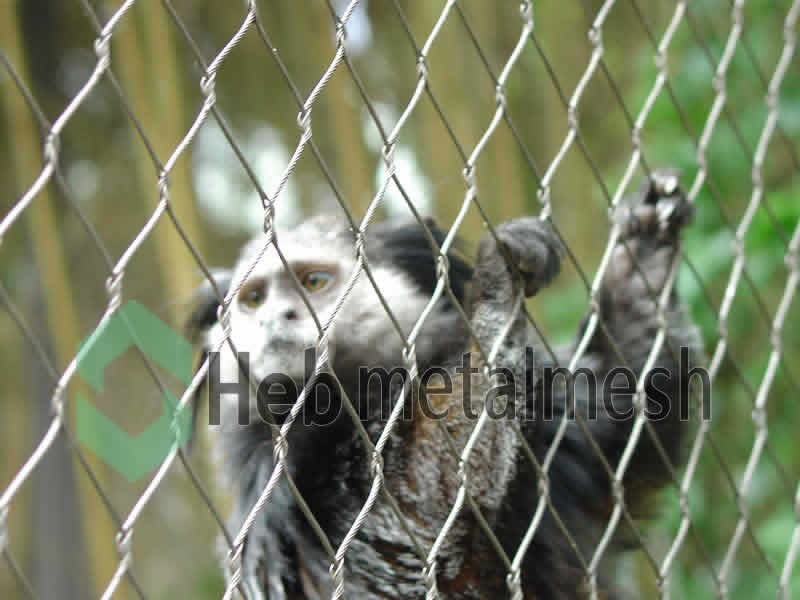
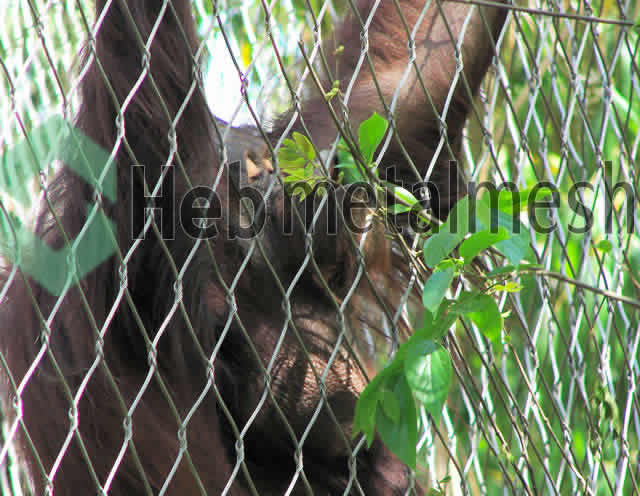
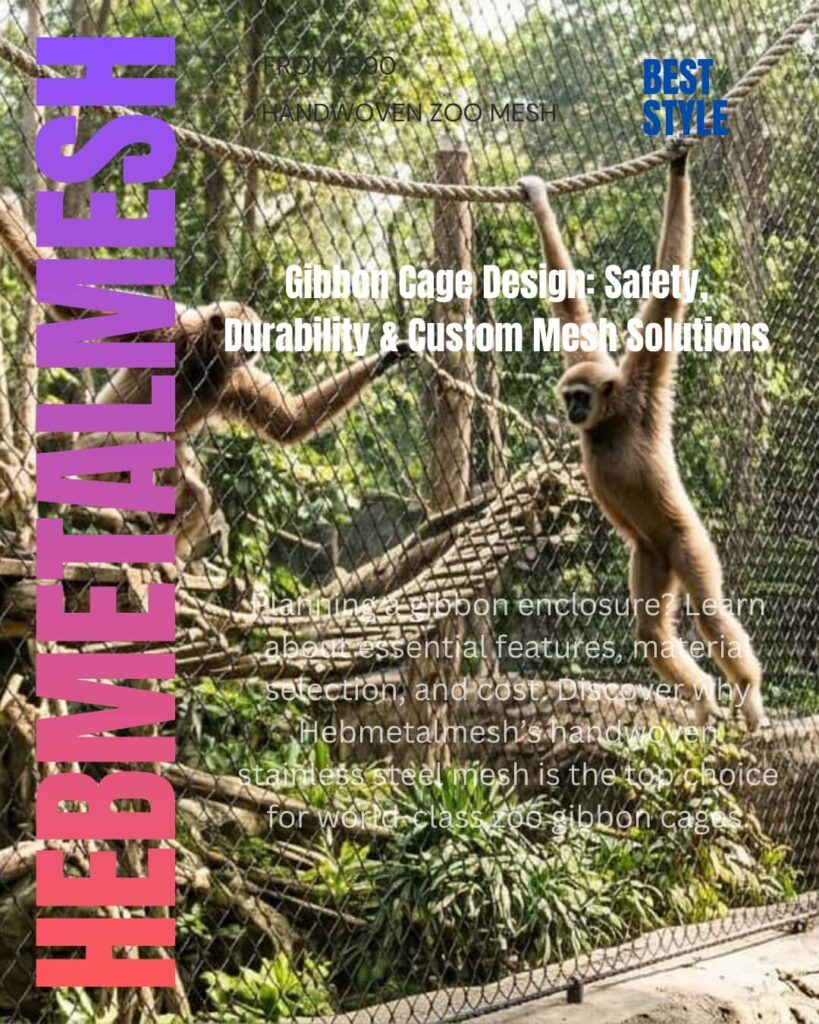
- Primates: Flexible, snag-free weaving that protects sensitive hands and feet.
- Aviaries: Lightweight, fine-mesh netting that is soft on feathers but resistant to predators.
- Eco-Friendly & Safe: Our handwoven process involves no toxic coatings, making it the safest option for organic farming, gardens, and sensitive wildlife.
3. Critical Factors in Designing a Professional Enclosure for Animals
When engineering a modern enclosure for animals, the design must balance the raw physical strength of the barrier with the biological needs of the species. A “one-size-fits-all” approach often leads to containment failure or animal injury. At Hebmetalmesh, we emphasize three critical factors:
The Balance of Security and Visibility
The primary goal of any enclosure is containment, but for zoos and aviaries, visual transparency is equally vital. Standard fencing uses thick wires that create a “visual cage.” By utilizing high-tensile stainless steel wire rope, we can achieve a thinner wire diameter without sacrificing breaking load. This allows the mesh to “disappear” into the background, providing visitors with an unobstructed view of the habitat while maintaining a 100% secure perimeter.
Species-Specific Tensile Strength
Different animals exert different types of pressure on an enclosure.
- Impact Force: Large mammals like tigers or deer may impact the mesh at high speeds. The handwoven structure of our netting acts as a shock absorber, distributing the force across the entire panel rather than a single point.
- Chewing and Gnawing: Primates and rodents have powerful bite forces. Stainless steel 316 grade is virtually impervious to gnawing, preventing escape and ingestion of metal fragments.
- Climbing and Agility: For agile species, the mesh must be flexible enough to prevent snagging but rigid enough to maintain its shape under tension.
Environmental Longevity and Sustainability
An enclosure for animals is a long-term investment. Galvanized or plastic-coated wires often degrade within 5 to 10 years due to UV exposure and oxidation. Our stainless steel handwoven netting is engineered for a 30-year lifecycle. It is non-toxic, 100% recyclable, and requires zero chemical maintenance, making it the most sustainable choice for eco-conscious farms and modern zoo designs.
4. Why Stainless Steel Handwoven Netting is the Global Gold Standard
What sets Hebmetalmesh apart in the global market is the meticulous construction of our wire rope mesh. It is not merely a fence; it is a sophisticated architectural material.
The Material Science of 304/316 Grades
We exclusively use high-grade stainless steel. While Type 304 is excellent for most inland garden and farm applications, Type 316 offers superior resistance to chlorides and salt spray, making it the essential choice for enclosures near coastal regions or in high-humidity tropical exhibits.
The “Handwoven” Advantage
Unlike welded wire mesh, which can snap at the joints under stress, our netting is hand-knotted and interwoven. This construction method provides:
- Multi-Directional Flexibility: It can follow complex 3D curves, perfect for dome-shaped aviaries or wrap-around garden fences.
- Structural Integrity: Even if a single wire is somehow cut, the rest of the mesh remains intact and will not unravel.
Aesthetic Options: Natural vs. Black Oxide
- Natural Stainless Steel: Provides a bright, clean, and high-tech aesthetic. It is often used in modern architectural projects and garden design.
- Black Oxide Treatment: This is a chemical conversion coating that turns the steel a deep, matte black. In the context of an enclosure for animals, black oxide is a game-changer. It absorbs light rather than reflecting it, making the mesh nearly invisible against shadows and foliage.
Internal Link: For a closer look at our specialized finishes, explore ourBlack Oxide Stainless Steel Meshto see how it enhances exhibit visibility.
5. Customization: The Hebmetalmesh Difference in Enclosure Design
In the world of professional animal habitats, standard sizes rarely fit. Most manufacturers charge a premium for custom dimensions, but at Hebmetalmesh, we have redefined the supply chain to prioritize the architect’s vision.
Precision Without the Premium: No-Cost Custom Sizing
The most significant barrier to building a high-quality enclosure for animals is often the “waste factor”—buying oversized rolls and cutting them down on-site. We eliminate this inefficiency. We provide customized roll sizes and panel dimensions with no additional cost. Whether you need a narrow 2-foot strip for a garden border or a massive 60-foot panel for a zoo exhibit, you pay only for the material you need.
Engineering Large-Scale Solutions: Up to 30′ x 60′
One of our standout capabilities is the production of massive, seamless panels. We can manufacture single handwoven panels as large as 30 feet by 60 feet.
- Reduced Seams: Fewer joins between panels mean a stronger overall structure and a much cleaner visual profile.
- Structural Integrity: Large-scale panels are essential for free-flight aviaries and high-impact large mammal enclosures where seam failure is not an option.
Ease of Installation
Because our mesh is customized to your specific frame dimensions, the installation process is significantly streamlined. Our netting arrives ready to be tensioned, reducing labor hours and ensuring a professional, drum-tight finish every time.
6. Application Spotlights: Where to Use Our Enclosures
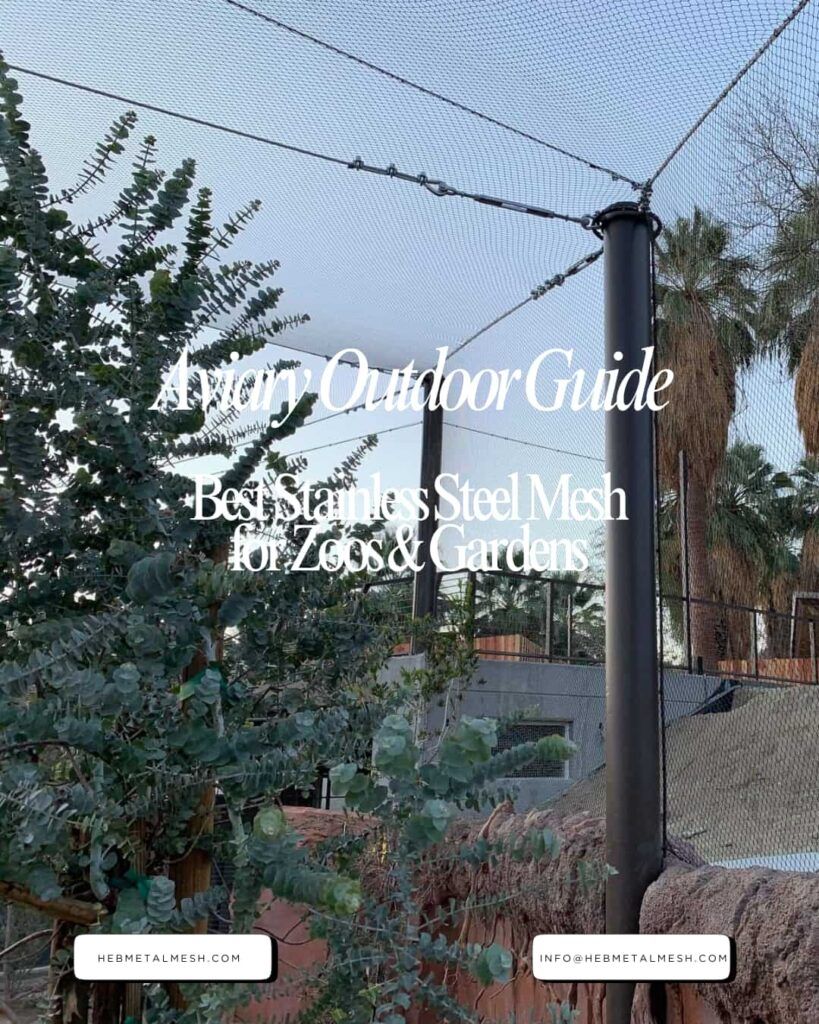
Our handwoven stainless steel netting is a versatile tool used across various sectors. Here is how it performs in different environments:
Zoo Enclosures & Wildlife Parks
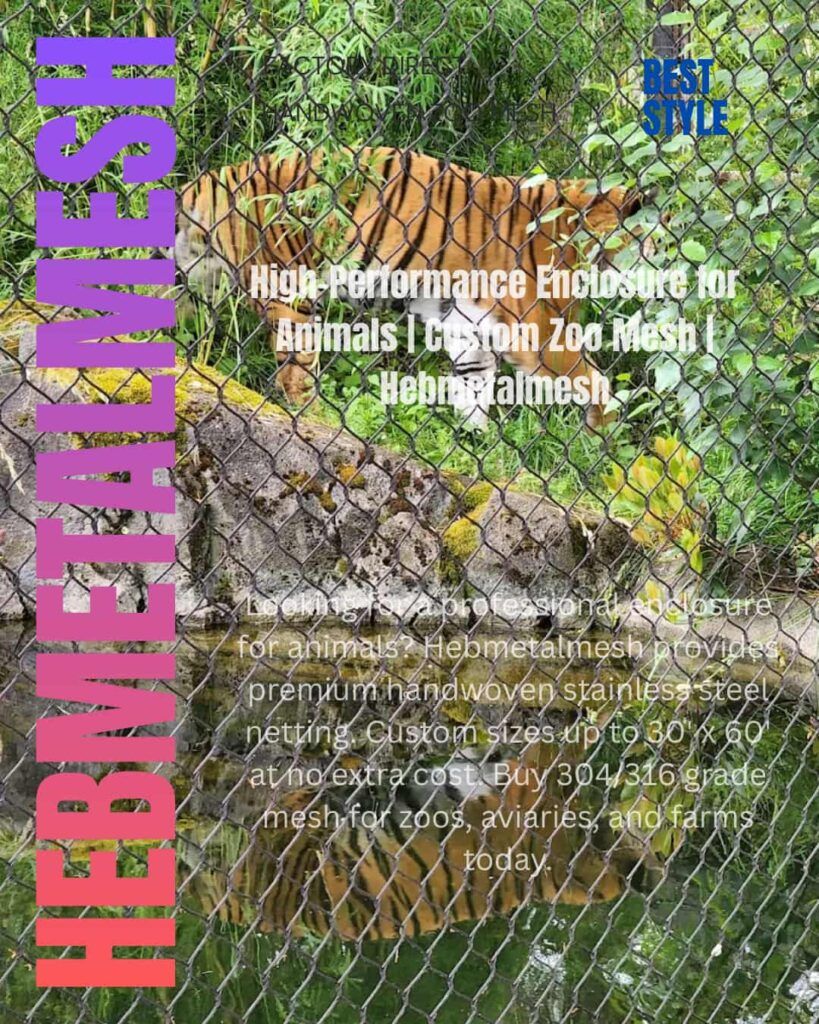
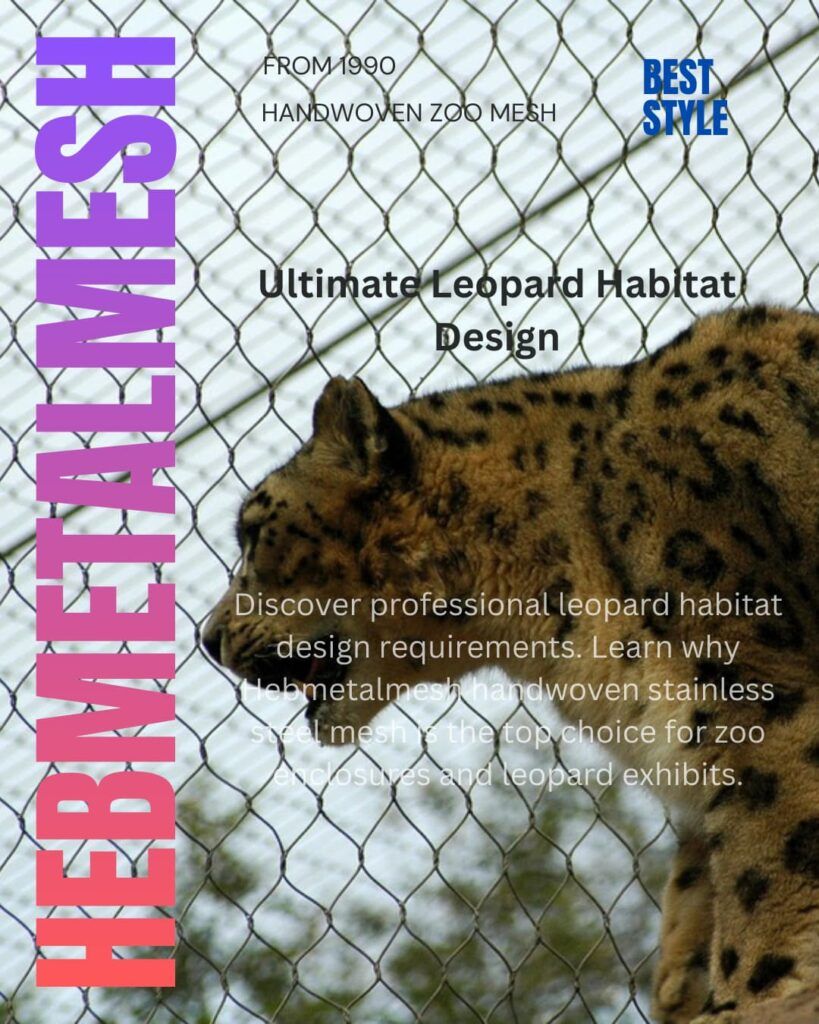
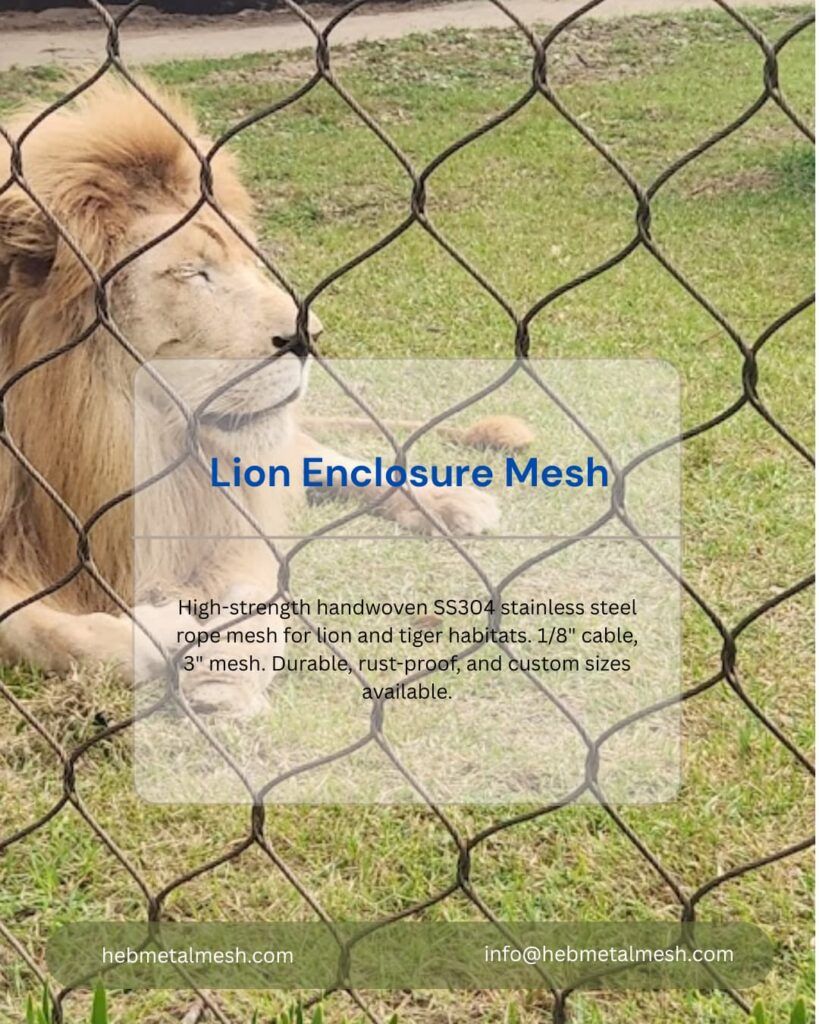
For apex predators like lions, tigers, and leopards, security is the absolute priority. Our heavy-duty wire rope mesh (typically 2.0mm to 3.2mm wire diameter) provides the necessary breaking load to withstand high-impact strikes. The flexibility of the mesh also allows for “enrichment” features—like climbing structures and hanging platforms—to be integrated directly into the enclosure walls.
Professional & Walk-in Aviaries
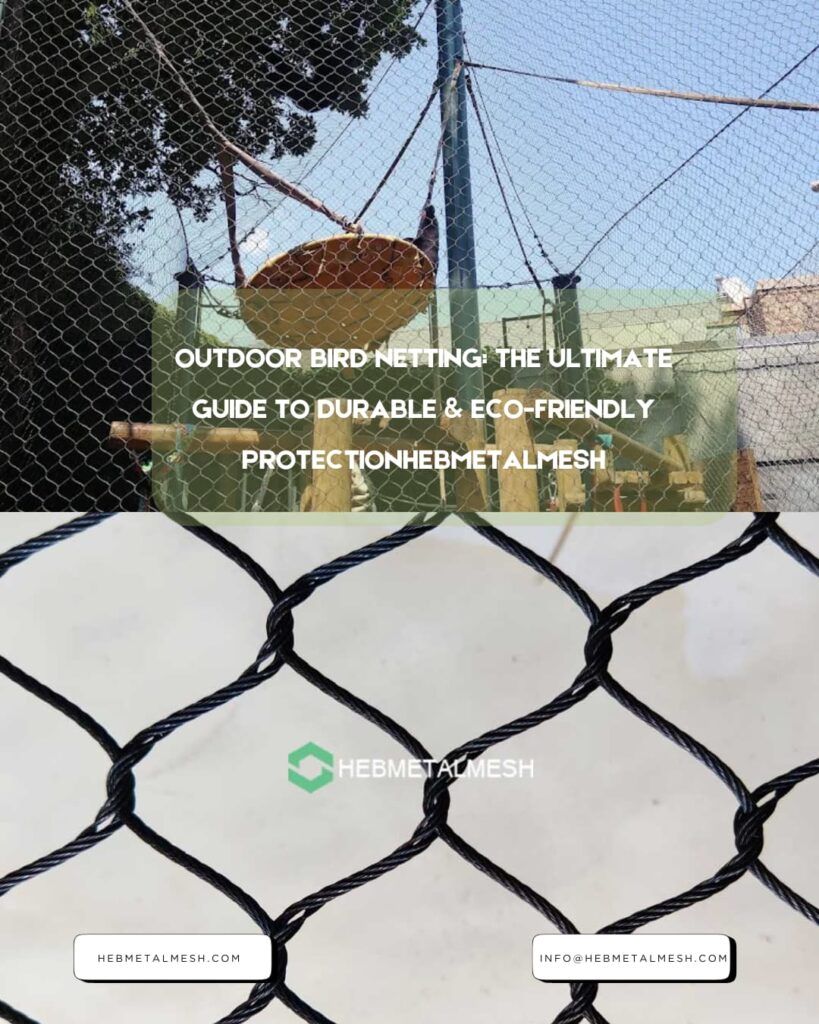
An enclosure for animals involving birds requires a delicate touch. Our lightweight mesh (1.0mm to 1.6mm) is soft on wings and feathers but strong enough to keep out local predators like hawks, raccoons, and foxes. The high transparency of our black oxide finish makes it the gold standard for public “walk-in” bird parks.
Sustainable Garden & Farm Solutions
Beyond the zoo, Hebmetalmesh is a favorite for high-end residential and agricultural projects:
- Deer Fencing: An invisible barrier that protects your landscape without ruining the view.
- Chicken & Poultry Runs: Superior protection against digging predators.
- Trellis Systems: Our stainless steel mesh serves as a permanent, rust-proof support for climbing plants and vertical gardens.
Internal Link: Ready to start your project? Visit the Hebmetalmesh Store to see our available specifications or to request a quote for your custom dimensions.
7. Installation Best Practices for an Enclosure for Animals
The longevity of your enclosure for animals depends not only on the quality of the material but also on the precision of the installation. Because handwoven stainless steel mesh is flexible, it requires a specific tensioning approach to achieve that professional “drum-tight” look seen in world-class zoos.
The Framework Preparation
Before unrolling your Hebmetalmesh, ensure your support structure (steel posts, frames, or cables) is rigid and capable of withstanding the tension. For large-scale aviaries, we recommend using high-tension perimeter cables to distribute the weight of the mesh evenly.
Seaming and Attachment
- Ferrule Connections: Use stainless steel ferrules or specialized lacing wires to join panels together. This creates a seamless appearance over large areas.
- Edge Reinforcement: Our customized panels come with clean, finished edges, making it easy to lace the mesh directly to a frame or a boundary rope.
- Tensioning Tools: Use come-alongs or turnbuckles to apply gradual tension. This ensures the mesh diamonds open fully, providing maximum strength and the best visual transparency.
8. Comparative Analysis: Why Choose Hebmetalmesh?
To help you decide on the best material for your enclosure for animals, we have compared our handwoven stainless steel netting against traditional fencing options.
Mesh Comparison Table
| Key Feature | Hebmetalmesh (SS Handwoven) | Chain Link Fencing | Welded Wire Mesh | Plastic/Nylon Netting |
|---|---|---|---|---|
| Lifespan | 30+ Years | 5–10 Years | 5–15 Years | 1–3 Years |
| Visibility | Excellent (Optically Transparent) | Poor (Bulky Bars) | Moderate | Moderate |
| Maintenance | Zero (Self-Cleaning/Rust-proof) | High (Rust/Painting Required) | Moderate (Joint Repairs) | High (UV Damage/Tears) |
| Animal Safety | High (Hand-knotted/No burrs) | Low (Sharp edges/cuts) | Moderate | Low (Entanglement Risk) |
| Customization | Any size up to 30’x60′ (No Cost) | Standard Rolls Only | Fixed Panel Sizes | Standard Sizes |
| Eco-Friendly | 100% Recyclable / Non-Toxic | Low | Low | Non-recyclable (Microplastics) |
9. Case Studies: Hebmetalmesh in Action
Our products are the backbone of diverse habitats across the globe. From the humid environments of tropical bird parks to the high-security requirements of wild animal sanctuaries, the results speak for themselves.
- The “Invisible” Aviary: By using our 1.2mm wire diameter mesh with a Black Oxide finish, a major bird park was able to create a 40-foot tall walk-in exhibit where visitors often forget there is a barrier between them and the exotic species.
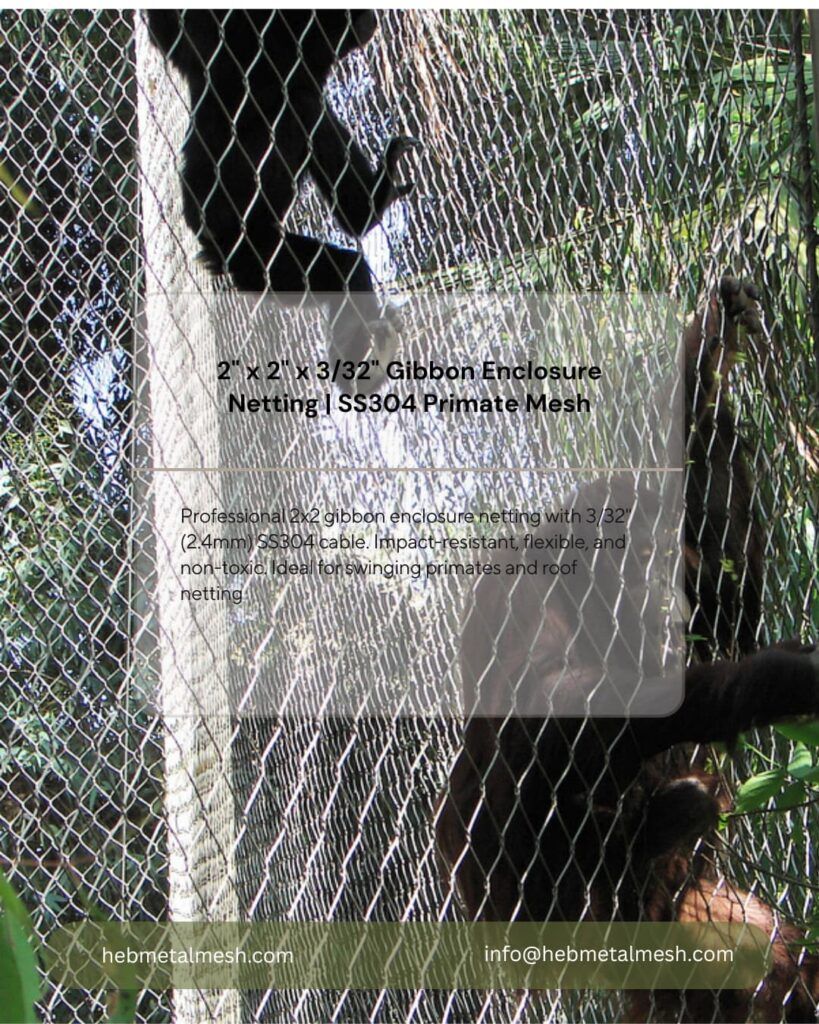
- High-Impact Primate Exhibits: A rescue farm utilized our 2.0mm 304 stainless steel mesh for a chimpanzee enclosure. The flexible nature of the handwoven knots allows the primates to climb safely without the mesh deforming or snapping under their weight.
10. FAQ: Everything You Need to Know About Animal Enclosures
Stainless steel 316 grade is the industry gold standard due to its high tensile strength and complete resistance to rust and environmental corrosion.
Yes. Hebmetalmesh specializes in customized sizing. You provide the dimensions, and we manufacture the panel to fit, with no extra customization fees.
Absolutely. Our black oxide process is a chemical conversion that does not flake or peel like paint, making it non-toxic and safe for sensitive avian species.
Handwoven mesh is flexible and impact-resistant. Unlike welded wire, it will not snap at the joints under pressure and has no sharp edges that could injure an animal.
We can produce seamless panels up to 30 feet by 60 feet (9m x 18m), which is ideal for large-scale zoo exhibits
Basic tools like wire cutters, pliers, and tensioners are usually sufficient. For large projects, we recommend using stainless steel lacing wire to secure the mesh to the frame.
Yes. The high-tensile strength of the stainless steel rope is an excellent deterrent for foxes, coyotes, and even bears.
No. Specifically, our thin-diameter wire and black oxide finish are designed to be “optically transparent,” providing the best viewing experience for visitors.
As a direct manufacturer, we optimize our production line to ensure fast turnaround times for custom-sized orders. Please contact us for a specific timeline based on your project scale.
You can purchase directly from our Online Store or contact us via our website for large-scale custom project quotes.
Final Call to Action
Building a world-class enclosure for animals starts with the right materials. Don’t settle for “standard” when you can have a customized, professional-grade solution that lasts a lifetime.
Ready to Build a World-Class Enclosure?
Don’t pay extra for custom sizes. Hebmetalmesh provides handwoven stainless steel netting panels up to 30′ x 60′ tailored exactly to your project specs—at no additional customization cost.
- Premium 304/316 Grade Stainless Steel
- Professional Black Oxide “Invisible” Finish Available
- Direct Manufacturer Pricing & Fast Global Shipping