
Key Takeaways
- Durability: Stainless steel rope mesh systems offer a 30+ year lifespan, far exceeding plastic or galvanized alternatives.
- Mechanism: Spring-tensioned wire creates an unstable landing surface that discourages pigeons and larger birds without causing injury.
- Material Selection: Always choose Grade 316 stainless steel for coastal or chemical-heavy industrial environments to prevent corrosion.
- Versatility: Solutions range from simple ledge protection to complex, non-drill grid installations for historic buildings.
- Economic Value: While labor is the primary cost, high-quality materials significantly reduce long-term maintenance and replacement frequency.
Executive Summary
Bird wire fencing is a sophisticated, low-profile pest exclusion technology designed to prevent birds from perching on commercial ledges, parapets, and rooftop assets. Unlike traditional spikes or netting, a properly engineered stainless steel rope mesh system provides a humane, long-lasting, and aesthetically discreet barrier. By leveraging spring-tensioned mechanics, these systems create an unstable landing zone, effectively deterring pest birds without harming them. This guide explores the engineering, installation, and procurement best practices to ensure your building remains bird-free for decades.
1. What Is Bird Wire Fencing and How Does It Work?
Bird wire fencing is a professional-grade mechanical deterrent system, serving as the gold standard for perimeter pest exclusion. It prevents the accumulation of hazardous guano and mitigates structural decay, making it the preferred choice for facility managers prioritizing long-term aesthetics and performance over temporary solutions.
1.1 Core Components of a Bird Wire System
Standard systems rely on several critical elements working in unison:
- Stainless Steel Posts: These low-profile structural backbones feature multiple eyelets to accommodate various wire heights.
- Thin Spring-Tensioned Wire: Composed of high-tensile stainless steel, this thin, nearly invisible deterrent remains effective at distances over 20 feet.
- Stainless Steel Crimp Connections: These ensure the wire remains locked and properly tensioned, preventing slack over time.
- Springs: Acting as the system’s engine, these provide the necessary “give” to create an unstable landing surface.
1.2 How Spring-Tensioned Wires Deter Birds
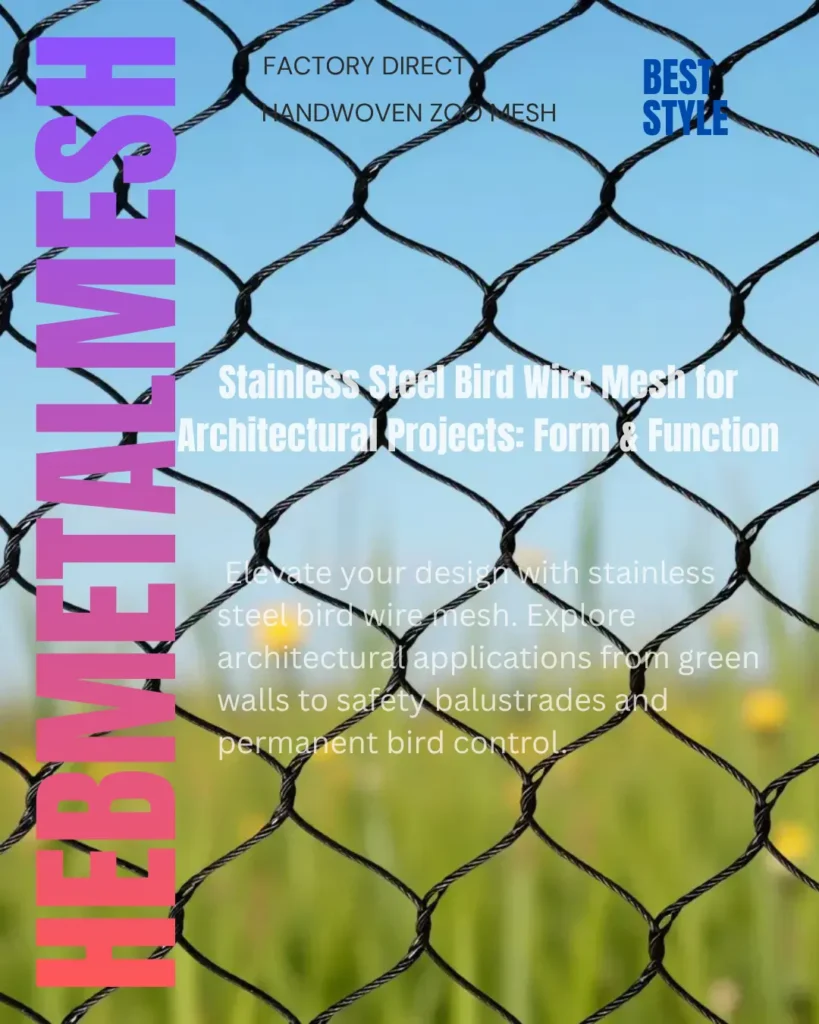
Bird wire leverages basic physics to deter pests. When a pigeon or seagull attempts to land on a protected ledge, the spring-tensioned wire causes the surface to shift, preventing stable footing and forcing the bird to find an alternate landing site. This humane method exploits natural avian avoidance instincts. For larger areas, facility managers often integrate stainless steel rope mesh to achieve comprehensive exclusion.
2. Why Choose Stainless Steel Rope Mesh Over Other Bird Deterrents?
Building owners often weigh longevity against initial costs when selecting exclusion systems. Unlike plastic netting or galvanized spikes, which frequently succumb to UV degradation and rust within three years, stainless steel systems offer superior long-term value.
2.1 Durability Comparison: Stainless Steel vs. Galvanized Wire vs. Plastic Netting
- Stainless Steel: Immune to the UV-induced brittleness and oxidation cycles that degrade plastic and galvanized materials, stainless steel systems are engineered for a 30+ year lifespan.
- Galvanized Wire: Typically fails within 2–5 years as the protective zinc coating wears away, resulting in oxidation and required replacement.
- Plastic Netting: Susceptible to UV degradation, leading to brittleness and failure in outdoor environments.
2.2 Aesthetics and Discreet Design
Bird wire is nearly invisible from ground level, preserving the architectural integrity of modern office buildings, boutique hotels, and upscale retail centers. This discreet design effectively replaces the aggressive, unsightly appearance typical of traditional bird spikes.
2.3 Material Choices – 304 vs. 316 Stainless Steel
Selecting the correct grade is essential for environmental performance:
- Grade 304 (Standard): A cost-effective workhorse that provides excellent atmospheric corrosion resistance for inland, low-pollution, and dry environments.
- Grade 316 (Marine/Industrial): Known as “marine grade,” this alloy incorporates 2-3% molybdenum to increase resistance to chlorides and acidic pollutants. It is the required choice for coastal areas within 5 miles of the shore or locations near heavy industrial chemical exhaust to ensure a 30-year rust-free lifecycle.
3. Key Applications for Bird Wire Fencing
Effective pest management in commercial environments requires targeted deployment of bird exclusion systems.
- Commercial and Industrial Buildings: Protecting parapets, rooflines, and solar arrays with professional-grade bird mesh prevents acidic guano accumulation that causes structural decay and solar array electrical failures.
- Airports and Aviation Facilities: Stainless steel bird wire secures hangar ledges and perimeter structures, mitigating bird strike hazards without interfering with sensitive aviation technology.
- Agricultural and Livestock Areas: Tensioned wire systems act as an effective exclusion barrier for grain storage and free-range poultry facilities, preventing disease transmission and feed contamination.
- Architectural and Heritage Structures: Low-profile, non-invasive bird wire systems preserve the aesthetic integrity of historic landmarks where drilling is restricted, providing long-term protection for iconic facades.
4. Installation Guide for Bird Wire Fencing
Precision installation and substrate-appropriate techniques are critical for the longevity of bird wire systems.
4.1 Tools and Materials Required
Required equipment includes a professional-grade hammer drill, a 6.5mm masonry (or carbide-tipped) bit, stainless steel or high-strength nylon anchor rivets, a spring-tensioning tool, and stainless steel crimps.
4.2 Step-by-Step Installation for Ledges and Parapets
- Marking: Identify post placement intervals of 3 to 5 feet.
- Drilling: Drill holes to the required depth, ensuring all dust is cleared to prevent premature anchor failure.
- Mounting: Utilize alternating post heights (3.5″ and 5″) to create an unstable landing angle for target species.
- Tensioning: Thread wire through post eyelets, attach springs, and apply tension until the wire is taut but stable against wind loads.
- Crimping: Use professional-grade crimping tools to secure wire loops.
4.3 No-Drill Installation for Sensitive Surfaces
When drilling is prohibited, mount glue-on bases using structural-grade adhesive. Surfaces must be clean, dry, and free of debris, with the adhesive fully cured prior to applying wire tension.
4.4 Grid Installations for Large Open Areas
For expansive open spaces, install a crossed grid pattern. Wire spacing is determined by the species, typically requiring 2-inch intervals for sparrows and up to 4 inches for pigeons.
Stainless steel rope mesh installation follows similar principles across species, but monkey enclosures demand higher tension, thicker cable, and primate-specific hardware. See our specialized monkey mesh installation guide for detailed instructions on installing 304 and 316-grade mesh for macaques, gibbons, and great apes.
5. Cost and Lifecycle Value of Stainless Steel Bird Wire
While stainless steel materials command a premium, labor typically accounts for ≥75% of total project expenditure.
5.1 Material Costs vs. Labour Inputs
Prioritizing inexpensive, short-lived components—often requiring replacement within three years—constitutes a false economy. Investing in high-grade stainless steel upfront amortizes installation labor over decades, providing significantly higher long-term ROI than frequently replaced alternatives.
5.2 Customization Services
Leading manufacturers offer bespoke sizing and post configurations to accommodate unique architectural demands. Requesting custom-engineered brackets for curved or non-standard surfaces minimizes field modifications and ensures a streamlined, professional installation.
6. Maintenance and Best Practices
6.1 Annual Inspection Checklist
- Tension: Verify wire tautness, as sagging renders the system ineffective.
- Spring Integrity: Inspect springs for signs of stretching beyond their elastic limit.
- Post Adhesion: Confirm all mounts remain securely anchored to the building substrate.
- Debris: Clear accumulated twigs or nesting materials that could bridge the wire and facilitate bird landings.
6.2 Avoiding Common Failure Points
- Coastal Zones: Utilize marine-grade 316 stainless steel to prevent pitting corrosion caused by chloride exposure.
- Crimping: Ensure precise matching of crimp size to wire diameter to prevent slippage.
- Spring Tension: Adhere strictly to manufacturer specifications for spring loads; over-tensioning risks bending posts, while under-tensioning fails to deter target species.
7. Frequently Asked Questions (FAQ)
No; the spring-tensioned wire creates an unstable landing surface rather than harming the birds. They naturally avoid the precarious area without injury or entrapment.
Posts are typically spaced every 3 to 5 feet, with springs placed at 10-foot intervals. Grid spacing for large areas varies based on the target bird species.
Yes; the flexibility of stainless steel rope mesh, combined with glue-down bases or custom-angled brackets, allows the system to conform to complex architectural features.
The non-porous surface is easy to clean; routine maintenance requires only a soft brush and mild detergent.
Bird wire relies on mechanical instability, while electric systems use low-voltage shocks. Spring-tensioned wire is generally preferred for commercial use due to superior safety, reliability, and lower maintenance requirements.
Conclusion
Investing in high-quality bird wire fencing is a strategic decision for facility managers. Prioritizing durable materials like Grade 316 stainless steel ensures long-term protection of infrastructure from the destructive impact of avian pests. Whether utilizing a simple ledge deterrent or a complex exclusion grid, stainless steel rope mesh provides a reliable, humane, and cost-effective solution for permanent bird control.
Need Professional Bird Control Solutions?
Protect your facility from avian damage with high-quality, durable stainless steel solutions. From custom-sized mesh to expert installation guidance, our team is here to help.
Explore Our Bird Mesh Range