Introduction: The New Era of Habitat Engineering
In the landscape of modern wildlife conservation, the term zoo enclosure has undergone a radical transformation. No longer defined by the cold iron bars and concrete pits of the 19th century, today’s habitats are masterpieces of multi-disciplinary engineering, behavioral biology, and landscape architecture. The goal of the modern zoo is twofold: to provide animals with a sanctuary that mimics their natural biome for optimal welfare, and to offer visitors an immersive, “barrier-free” educational experience that inspires conservation action.
Whether you are a curator at a major metropolitan zoo, a designer for a private wildlife park, or a manager of a botanical garden, the safety, longevity, and aesthetics of your animal containment system are the foundation of your facility’s success. At Shijiazhuang Netting Trading Co., Ltd, under our world-renowned brand Hebmetalmesh, we specialize in the manufacturing of high-grade stainless steel wire rope mesh—the industry-recognized gold standard for the modern zoo enclosure.
Key Takeaways: Why Professionals Choose Hebmetalmesh
Before diving into the technical details, here are the essential facts every project manager should know about modern zoo enclosure materials:
- Unmatched Visibility: Hand-woven stainless steel mesh offers up to 90% open area, creating a near-invisible barrier that enhances the visitor experience and photography.
- Superior Durability: Using SUS304 or SUS316 grade stainless steel ensures a lifespan of 30-50 years, even in corrosive coastal or high-humidity environments.
- Species-Specific Safety: The flexible, spring-like nature of wire rope mesh absorbs impact energy, protecting both the animal and the structural integrity of the habitat.
- Cost-Effective Customization: Hebmetalmesh provides custom roll sizes at no additional cost, reducing installation time and eliminating weak seams.
- Animal Welfare First: Non-toxic, smooth surfaces prevent common injuries like “snout rubbing,” providing a safer environment for primates, carnivores, and birds alike.
- Aesthetic Excellence: Black oxide finishes eliminate glare and light reflection, making the mesh disappear into natural backdrops.
Section 1: The Evolution of Zoo Enclosure Design
From Containment to Conservation
The history of animal exhibition has moved through distinct phases. The first phase was “Menagerie Style,” where animals were kept in small, barred cages purely for public curiosity. The second was “Taxonomic Displays,” where related species were grouped together in sterile, easy-to-clean environments. We are currently in the “Landscape Immersion” phase.
Designers now ask: How can we keep a 400-pound Siberian Tiger secure while making the fence invisible to the human eye? The answer lies in the shift from rigid materials to flexible, high-tensile netting.
The Physics of the “Invisible” Barrier
The human eye and brain have a unique way of processing visual data. When we look at a bright, reflective surface (like galvanized steel or white-painted bars), our focus stops at the barrier. However, when we look at a dark, thin, and non-reflective material, the eye naturally “focuses through” the gaps to the subject behind it.
By utilizing high-tensile stainless steel cables woven into a diamond pattern, we create a mesh that is incredibly strong but possesses a transparency rate of up to 90%. Our Hebmetalmesh products are engineered to exploit this optical phenomenon, ensuring that visitors see the majesty of the animal, not the constraints of the cage.
Section 2: Why Stainless Steel Mesh is the Foundation of Modern Habitats
When procurement officers and zoo architects evaluate “zoo enclosure” materials, they often weigh the pros and cons of chain-link, glass, welded wire, and hand-woven stainless steel mesh. While initial costs for stainless steel might be higher than traditional fencing, the long-term Return on Investment (ROI) is unrivaled in the industry.
1. The Elasticity Advantage: Strength-to-Weight Ratio
Stainless steel rope mesh is uniquely flexible. Unlike rigid welded wire, which can snap or fatigue under sudden impact (such as a large mammal charging the perimeter), hand-woven mesh acts like a high-tension spring.
When a 200kg primate or a big cat strikes the mesh, the kinetic energy is not absorbed by a single weld point; instead, it is distributed across the entire interwoven panel. This structural elasticity allows designers to use thinner wire diameters to hold significantly larger loads, which reduces the need for massive, sight-blocking support pillars and heavy steel frames.
2. Corrosion Resistance: Built for the 50-Year Habitat
Zoos are chemically demanding environments. Containment systems are subjected to animal waste (which can be highly acidic), constant high-pressure cleaning with sanitizing agents, and 24/7 exposure to UV radiation and moisture.
- SUS304: This is the standard grade for inland zoos with moderate humidity. It provides excellent resistance to the elements.
- SUS316: Often called “Marine Grade” stainless steel, this is non-negotiable for zoos located in coastal areas or for exhibits involving saltwater, such as penguin pools, sea lion habitats, or tropical bird houses. SUS316 contains molybdenum, which protects against pitting and crevice corrosion caused by salt spray and industrial pollutants.
3. Animal Health and Welfare: A Holistic Approach
- Non-Toxic Material: Many animals, particularly primates and parrots, explore their environment with their mouths and tongues. Traditional PVC-coated wire can peel over time, leading to ingestion of plastic and lead-based coatings. Stainless steel is biologically inert, ensuring no heavy metals or toxins enter the animal’s system.
- Smooth Surface Finish: A common issue in zoo management is “snout rubbing.” When animals pace along a rough or abrasive fence (like chain link), they can develop chronic abrasions. The smooth, hand-polished finish of Hebmetalmesh prevents these injuries, promoting better dermatological health for the inhabitants.

Section 3: The Hebmetalmesh Advantage: Factory Customization
At our Shijiazhuang factory, we have moved beyond the “one-size-fits-all” model of fencing. We recognize that modern habitats feature organic, irregular shapes—domes, tunnels, and sprawling hillsides.
No-Cost Custom Roll Sizes
Most retail fencing suppliers provide fixed-width rolls (e.g., 1.2m or 2.0m). In a large-scale zoo enclosure, using these standard sizes results in numerous “seams” where panels must be laced together. These seams are not only unsightly but represent potential points of mechanical failure.
Hebmetalmesh provides customized roll sizes at no additional cost. If your design calls for a single, continuous panel that is 20 meters wide and 50 meters long, we weave it as a single unit in our factory. This simplifies the installation process and creates a seamless, structurally superior enclosure.
The Black Oxide Revolution
As mentioned in Section 1, visibility is key to the visitor experience. We offer two primary finishes:
- Nature (Silver): A clean, architectural look that reflects the sky. It is often used for modern art installations and high-end garden trellises.
- Black Oxide: Our most popular choice for professional zoo enclosures. Through a specialized chemical process, we darken the surface of the stainless steel. This isn’t a paint or a coating—it is a permanent change to the steel’s surface that will not peel, chip, or fade under UV light. It creates a matte finish that virtually disappears against a natural background.
Section 4: Species-Specific Safety and Mesh Selection
A “one size fits all” approach to zoo mesh is a recipe for disaster. Different species possess different types of strength, intelligence, and dexterity.
Primate Habitats: The Intelligence Factor
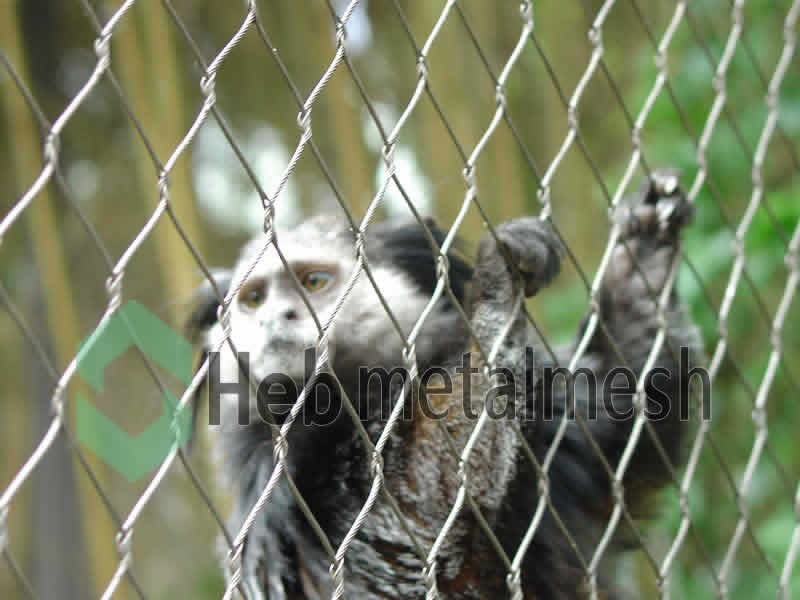
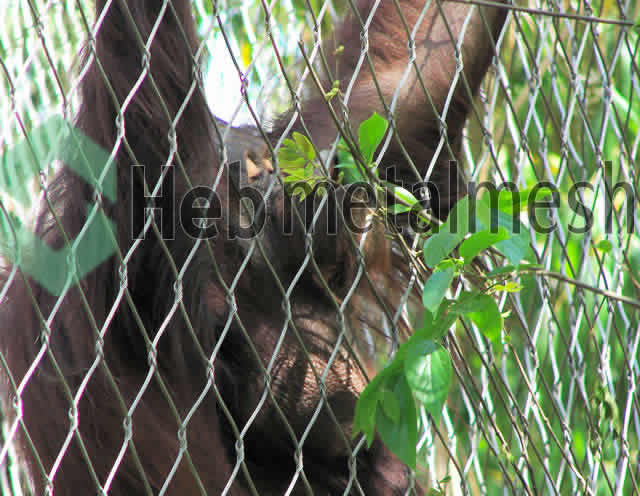
Primates like Chimpanzees, Gorillas, and Orangutans are not just strong; they are dexterous. They will pick at welds and try to unravel fencing. Our hand-woven mesh is knotted in a way that is “tamper-proof.” Even if a primate manages to damage one wire, the surrounding structure remains locked in place.
- Recommended Specs: 2.4mm to 3.2mm wire diameter; 50mm to 100mm mesh aperture.
Big Cats: The Impact Factor
Lions, Tigers, and Leopards require barriers that can withstand horizontal impact. Because cats are also excellent climbers, the mesh must extend over the top of the enclosure (the “ceiling”) or feature a significant “overhang” designed with the same high-tensile mesh.
- Recommended Specs: 3.2mm wire diameter; 50mm to 76mm mesh aperture.
Product Spotlight: Featured Leopard Zoo Enclosure Mesh
For high-security feline habitats, we recommend our specialized 3-inch hand-woven mesh. This product is engineered to balance visibility with the immense physical power of big cats.
- Product Name: Leopard Zoo Enclosure | Stainless Steel Zoo Mesh | 3″ x 1/8″ | 30ft x 60ft Rolls
- Material: Premium Stainless Steel 304
- Mesh Size: 3″ x 3″ (Diamond Pattern)
- Mesh Thickness: 1/8″ (Approx. 3.2mm)
- Roll Size: Large-format 30′ x 60′ rolls
- Price: USD 4,100.00
- Color Options: Nature (Silver) or Black Oxide
- Customization: Fully available for unique project dimensions
- Brand: Hebmetalmesh
Aviaries: The Transparency Factor
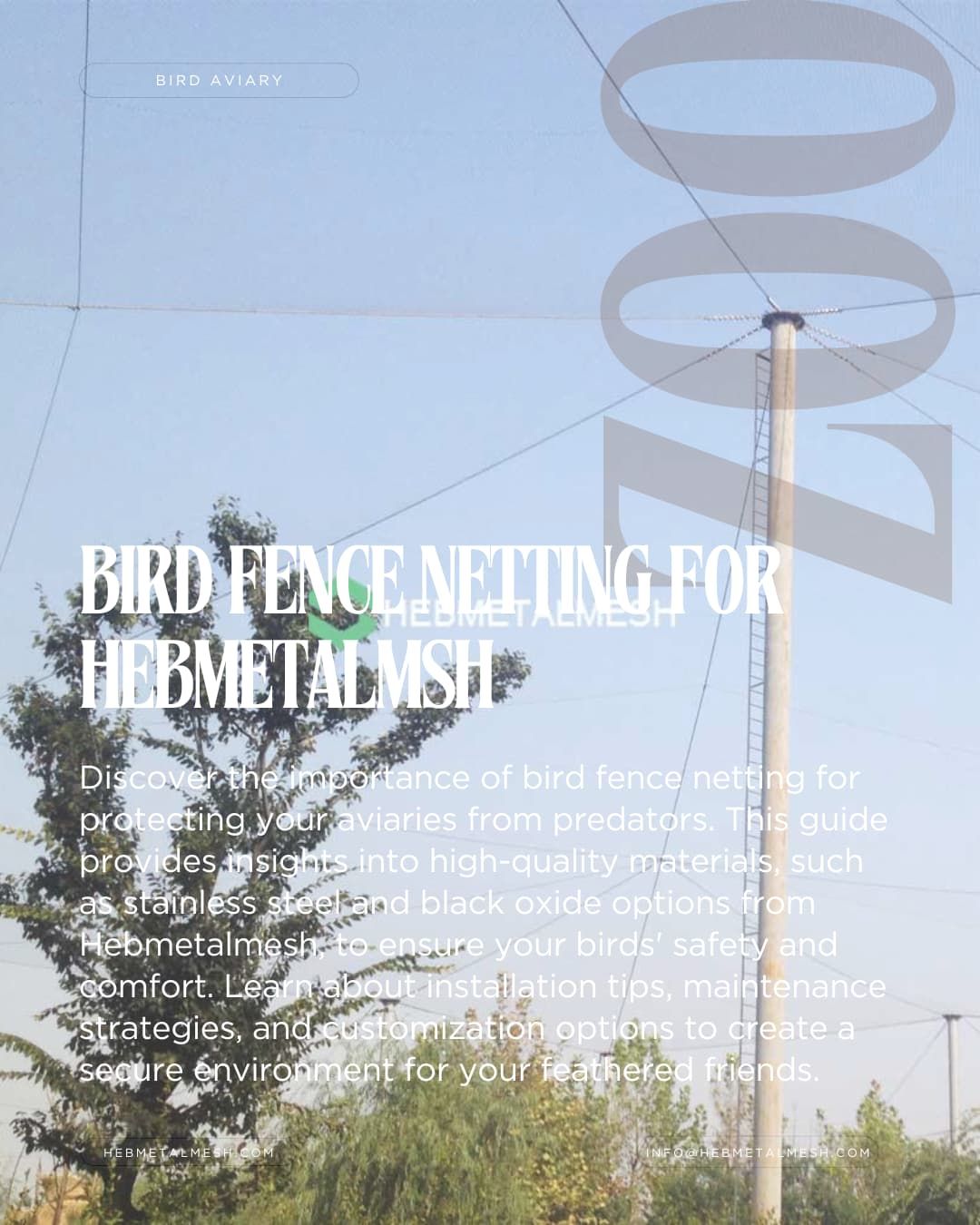
For bird flight cages, the mesh must be light enough to be supported by a cable-stayed structure rather than heavy beams. It must also be fine enough to keep small birds (like finches) in, while keeping local predators (like rats, snakes, or hawks) out.
- Recommended Specs: 1.2mm to 1.6mm wire diameter; 25mm to 38mm mesh aperture.
Section 5: Engineering, Installation, and Maintenance
Designing a zoo enclosure is 50% material choice and 50% installation technique. A poorly installed mesh can sag, creating “pockets” where animals can get trapped, or it can vibrate in the wind, causing noise stress.
The Perimeter Cable Method
The industry-standard way to install stainless steel netting is the cable-stayed method.
- Primary Structure: Steel poles or natural rock formations are used as anchor points.
- Perimeter Cables: High-tension stainless steel wire ropes (typically 8mm to 12mm) are run along the edges of the enclosure.
- Lacing: The Hebmetalmesh panels are “stitched” to these perimeter cables using stainless steel tie wire or specialized spiral binders. This method ensures that the tension is even across the entire surface of the enclosure.
Maintenance and Cleaning
One of the greatest benefits of our stainless steel mesh is that it is virtually maintenance-free.
- Self-Cleaning: In most climates, rainwater is enough to keep the mesh clean.
- Pressure Washing: For indoor exhibits, the mesh can be hit with high-pressure water and mild detergents without risk of rusting.
- Visual Inspections: We recommend a bi-annual visual inspection of the lacing points to ensure that the settling of the ground hasn’t put undue stress on the perimeter cables.
Section 6: Sustainability and the “Green Zoo” Initiative
Modern zoos are leaders in the global sustainability movement. The materials used in their construction should reflect this commitment to the earth.
- Life Cycle Assessment (LCA): Traditional galvanized steel or plastic-coated mesh often needs replacing every 7 to 10 years. Our stainless steel mesh is designed to last 40+ years. This reduces the carbon footprint associated with repeated manufacturing and trans-oceanic shipping.
- 100% Recyclability: At the end of its exceptionally long life, stainless steel is fully recyclable without any degradation in its mechanical properties.
- Minimal Environmental Footprint: Our Shijiazhuang factory utilizes efficient weaving processes that produce minimal waste. Because we provide custom roll sizes, we further reduce the amount of scrap material generated at the construction site.
Section 7: How to Procure Zoo Enclosures: A Buyer’s Guide
Navigating the international market for “zoo enclosure” solutions can be complex. Here is how to ensure you are getting the highest quality for your facility.
Step 1: Material Verification
Always request a material test report (MTR). This document proves that the steel is genuine SUS304 or SUS316. Many low-cost suppliers use inferior alloys that will show rust within months of installation.
Step 2: Sample Testing
Before placing a large order, request a sample of the specific wire gauge and mesh size you intend to use. Test its flexibility and inspect the quality of the hand-weaving.
Step 3: Compare Factory Direct vs. Distributors
Local distributors in the US, Europe, or Australia often source their mesh from China and add a 30% to 50% markup. By working directly with Shijiazhuang Netting Trading Co., Ltd, you are dealing with the manufacturer, ensuring better pricing and direct technical support.
Step 4: Check the Online Store for Small Projects
If you are building a smaller aviary or a backyard “catio,” you can purchase standard sizes directly from our online store. For major zoo projects, we recommend contacting our engineering team for a custom quote.
Section 8: FAQ – Frequently Asked Questions
While the upfront cost is higher, the “cost per year” is significantly lower because you won’t have to replace it for decades. It is an investment in the facility’s future.
Yes. Because of its open area (90%), wind passes right through it. For snow, the flexibility of the mesh allows it to shed heavy loads more effectively than rigid panels.
No, it is a chemical conversion coating. It is much more durable than paint and will not flake off into the animal’s environment.
Measure the total surface area of your enclosure and add a 5% “buffer” for lacing and overlaps. Our team can help you with these calculations based on your architectural drawings.
Section 9: International Case Studies
The European Primate Sanctuary
A leading primate rescue center in the UK replaced their old iron bars with our 2.4mm Black Oxide mesh. They noted that the animals became more active and social, as the “invisible” mesh reduced the feeling of confinement.
The Asian Tropical Aviary
A major botanical garden used our 1.2mm SUS316 mesh to create a massive walk-through jungle. Even in the high humidity and heat of the tropics, the mesh has remained rust-free for over 15 years.
Conclusion: Partnering with Hebmetalmesh
A zoo enclosure is not just a fence; it is a life-support system for the animals and a window into the natural world for the public. At Shijiazhuang Netting Trading Co., Ltd, we take this responsibility seriously. Our brand, Hebmetalmesh, stands for quality, customization, and a deep understanding of animal welfare.
We invite you to join the hundreds of zoos and parks worldwide that have chosen our stainless steel netting. Visit our main website at hebmetalmesh.com to view our full technical library, or head to our online store to see our available stock.
Company Information:
- Factory Name: Shijiazhuang Netting Trading Co., Ltd
- Brand: Hebmetalmesh
- Website: https://hebmetalmesh.com
- Online Shop: https://hebmetalmesh.com/store/