
How to Choose Mesh for Zoo Animals: A Professional Procurement Guide (2026)

Close-up view of black oxide coated stainless steel mesh showing reduced glare for enhanced visitor viewing of zoo animals.

Choosing the right mesh for zoo animals requires a precise balance between animal safety, enclosure aesthetics, and long-term durability. To ensure project success, specify AISI 316 stainless steel for coastal or humid environments to prevent corrosion. Focus on wire rope construction (7×19 strands for superior flexibility and strength) and select the correct aperture size to prevent escape while maintaining guest visibility. Always prioritize certified, factory-direct materials to avoid structural failure and ensure compliance with AZA/GFAS regulatory standards.

Ready to specify your habitat project?

Get factory-direct, AZA-compliant stainless steel solutions tailored to your unique enclosure design. Consult with our engineers for a free technical assessment.

Consult with Our Engineering Team

1. Introduction: Why Material Choice Defines Zoo Safety

With AZA, EAZA, and GFAS regulations tightening globally, choosing the correct barrier is no longer a simple procurement decision—it is a critical animal welfare and facility liability issue. Architects and facility managers must prioritize materials that provide high structural integrity while maintaining the visual transparency required for modern, immersive guest experiences.

This guide provides the essential technical framework for selecting the optimal mesh for zoo animals. Whether you are designing a high-tensile habitat for large predators or a specialized aviary, the material properties of your stainless steel barrier dictate the safety of your collection and the efficiency of your maintenance budget. By following these industry-standard procurement steps, you move beyond basic material acquisition to ensure the long-term security of your facility and the peace of mind of your curatorial team. From a professional China stainless steel cable mesh factory with 10+ years of export experience, we have documented how the right material choice serves as the backbone of every successful zoo enclosure project.

When designing habitats for larger animals, it is essential to prioritize high-quality containment solutions like durable zoo netting to ensure long-term safety and security.

High-tensile stainless steel cable netting forming a large, transparent enclosure canopy at a modern zoo.

2. Understanding Material Grades: 304 vs. 316

Selecting the correct stainless steel alloy is the most fundamental step in preventing long-term corrosion and structural fatigue. While both grades are high-quality, their chemical compositions serve different environmental needs.

AISI 304: The Inland Standard

AISI 304 stainless steel is the workhorse of the industry. It contains approximately 18% chromium and 8% nickel, providing excellent general corrosion resistance. It is a cost-effective, high-performance solution for:

  • Inland zoo habitats with moderate humidity levels.
  • Indoor enclosures where exposure to corrosive elements is strictly controlled.
  • Large-scale projects where budgets require a balance of high performance and material volume.

AISI 316 (Marine Grade): The Coastal and High-Risk Solution

For facilities located in coastal regions or habitats subject to extreme chemical exposure, AISI 316 is the mandatory choice. By incorporating 2–3% molybdenum into the alloy, 316 stainless steel gains superior resistance to pitting and crevice corrosion caused by:

  • Chlorides: High salinity in coastal air, which can rapidly degrade lower-grade steel.
  • Animal Waste: Regular contact with urine and feces, which creates aggressive, localized chemical environments that can trigger premature rusting.
  • Cleaning Agents: Harsh disinfectants used in daily habitat maintenance.

Factory Insight: From a professional China stainless steel cable mesh factory with 10+ years of export experience, we consistently advise 316 for any climate with high salinity or high humidity. While the initial investment for 316 is slightly higher, it is an essential insurance policy to guarantee a 30+ year lifespan and avoid the massive labor costs associated with replacing rusted mesh in an active animal exhibit.

Architectural blueprint layout showing framing and mesh panels for a custom backyard bird aviary.

3. Technical Specs: Wire Rope and Aperture Selection

Selecting the correct mesh configuration is the primary defense against animal escape and structural failure. Procurement professionals should focus on two critical metrics: wire rope construction and aperture size.

Construction Standards: Why 7×19 Reigns Supreme

At our factory, we prioritize the 7×19 wire rope construction for large predator habitats. This specification consists of seven bundles of nineteen wires each, providing a level of flexibility and fatigue resistance that 1×19 or 7×7 constructions cannot match.

  • Flexibility: Allows the mesh to absorb kinetic energy when an animal strikes the barrier, reducing the stress on the frame.
  • Safety: In the event of a single wire strand break, the multi-strand construction prevents immediate, catastrophic propagation, providing a critical buffer for facility maintenance.

Strategic Aperture Selection

The aperture (mesh opening) must be engineered to match the physiology and behavior of the species. An opening that is too large risks animal entrapment, while one that is too small may unnecessarily obstruct visitor views and increase material costs.

Table: Recommended Mesh Specs by Animal Class

Animal ClassRecommended ApertureSuggested Cable Diameter
Small Birds20mm – 25mm1.2mm – 1.6mm
Primates50mm – 762.0mm – 2.4mm
Big Cats76mm – 100mm2.4mm – 3.2mm

Note: For specialized projects, see our full technical product specifications here to ensure your mesh selection meets the specific requirements of your enclosure’s containment rating.

A close-up view of a tiger behind a secure, non-abrasive high-tensile wire mesh fence, demonstrating the type of barrier needed to prevent self-harm and soft-tissue injury in animal rehabilitation contexts.

4. Fabrication Quality: Polishing, Finishing, and Durability

The longevity of a zoo enclosure is determined as much by the manufacturing process as by the raw material grade. High-quality fabrication prevents the microscopic imperfections that serve as starting points for rust.

Electrolytic Polishing: The Gold Standard

We distinguish our products through electrolytic polishing. Unlike traditional mechanical polishing, which can leave surface debris or grind impurities into the metal, electrolytic polishing uses an electrochemical bath to remove a microscopic layer of the steel surface. This leaves a smooth, passivated surface that is significantly more resistant to oxidation and environmental pollutants.

Black Oxide Coating for “Invisible” Enclosures

Visitor experience often depends on the “disappearing” effect of the mesh. A standard stainless steel finish creates unwanted glare, which is distracting for guests and can be confusing for animals. We apply a specialized black oxide coating to our mesh, which:

  • Absorbs Light: Drastically reduces glare, making the mesh nearly transparent to the human eye.
  • Enhances Corrosion Resistance: Acts as an additional protective barrier against environmental elements.
  • Improves Animal Comfort: Reduces visual stress by minimizing reflection, allowing the animals to focus on their natural environment rather than the barrier.

From a professional China stainless steel cable mesh factory with 10+ years of export experience, we recommend black oxide for all premium, high-visibility viewing areas. Explore our custom black oxide zoo mesh ordering options to see how this finish can elevate the design of your next habitat.

316 stainless steel primate cage material

5. Risk Mitigation: Avoiding Common Failures

In high-stakes environments like zoological parks, the structural integrity of an enclosure is non-negotiable. Procurement teams often focus on price, but the most common failures—escape, entrapment, and premature corrosion—are the results of poor manufacturing standards.

Escape & Entrapment Prevention

We utilize seamless, high-precision manufacturing to prevent the mechanical failures commonly found in low-quality welded mesh panels. Welded joints are prone to stress fractures under the constant movement and weight of large animals. Our ferrule-style, hand-woven rope mesh creates a flexible, monolithic structure that distributes tension across the entire panel. This eliminates the risk of snapping points and ensures that the mesh remains secure even if one segment experiences abnormal localized pressure.

Edge Termination Protocols

The edges of a mesh panel are the most frequent points of injury for animals. Improper cutting or finishing can leave sharp, abrasive wire ends exposed. Our fabrication process includes rigorous edge-folding and ferrule-clamping protocols to ensure all termination points are smooth and rounded. By eliminating these protrusions, we protect the animals from skin abrasions and prevent snagging during their natural climbing or rubbing behaviors.

From a professional China stainless steel cable mesh factory with 10+ years of export experience, we emphasize that quality is built into the connection, not just the wire. View our complete animal fence mesh solutions to see how our engineering prevents these common safety failures.

Close up of 1.6mm stainless steel cable mesh for cockatiel aviary showing safe 25mm aperture.

6. Installation Mastery and Accreditation

Even the highest-quality stainless steel mesh will fail if it is improperly installed. Proper tensioning is the difference between a long-lasting habitat and a maintenance headache.

Achieving Proper Tension

Proper cable tensioning is required to prevent long-term sagging, which not only looks unprofessional but can also compromise the structural geometry of the exhibit. We recommend utilizing professional turnbuckles and ratchet tensioners to ensure that the mesh is taut across the entire frame. This is critical for meeting AZA and EAZA audit requirements, which mandate that all barriers remain fully taut to prevent animals from gaining leverage or footholds.

Documentation and Safety Inspections

Safety is an ongoing process. To assist your facility in passing mandatory regulatory inspections, we provide full, certified material test reports with every shipment. This includes:

  • 720-hour Salt Spray Test Results: Documenting the material’s resistance to corrosion in simulated high-humidity environments.
  • Tensile Strength Certification: Validating that the mesh meets the required load-bearing capacity for the specific species housed.
  • Traceability: Full documentation on raw material sourcing to ensure compliance with international safety standards.

By maintaining these records, you provide your facility’s safety officers with the data necessary to verify that your enclosures are built for longevity. Learn more about our aviary and large-habitat netting standards to ensure your next installation project is fully compliant.

Frequently Asked Questions (FAQ)

What is the strongest mesh for large carnivores?

High-tensile 316 marine-grade stainless steel with 7×19 wire rope construction offers the highest impact resistance. This configuration absorbs kinetic energy effectively, preventing deformation during predator activity.

How long does stainless steel zoo mesh last?

With the correct grade (316) selection and professional installation, our stainless steel mesh offers a 30+ year lifespan. Because it is naturally corrosion-resistant, it requires zero painting or surface treatments.

Does stainless steel mesh rust in saltwater or coastal areas?

Standard 304 grade may show surface oxidation in coastal environments. However, our 316 marine-grade contains the molybdenum required to resist chlorides and salt-air corrosion, making it the industry standard for coastal facilities.

Can I install zoo mesh myself?

While simple enclosures may be manageable, professional installation is strongly recommended for high-risk species. Proper tensioning and edge termination are critical to preventing sagging and ensuring compliance with safety audits.

What size mesh is safe for birds?

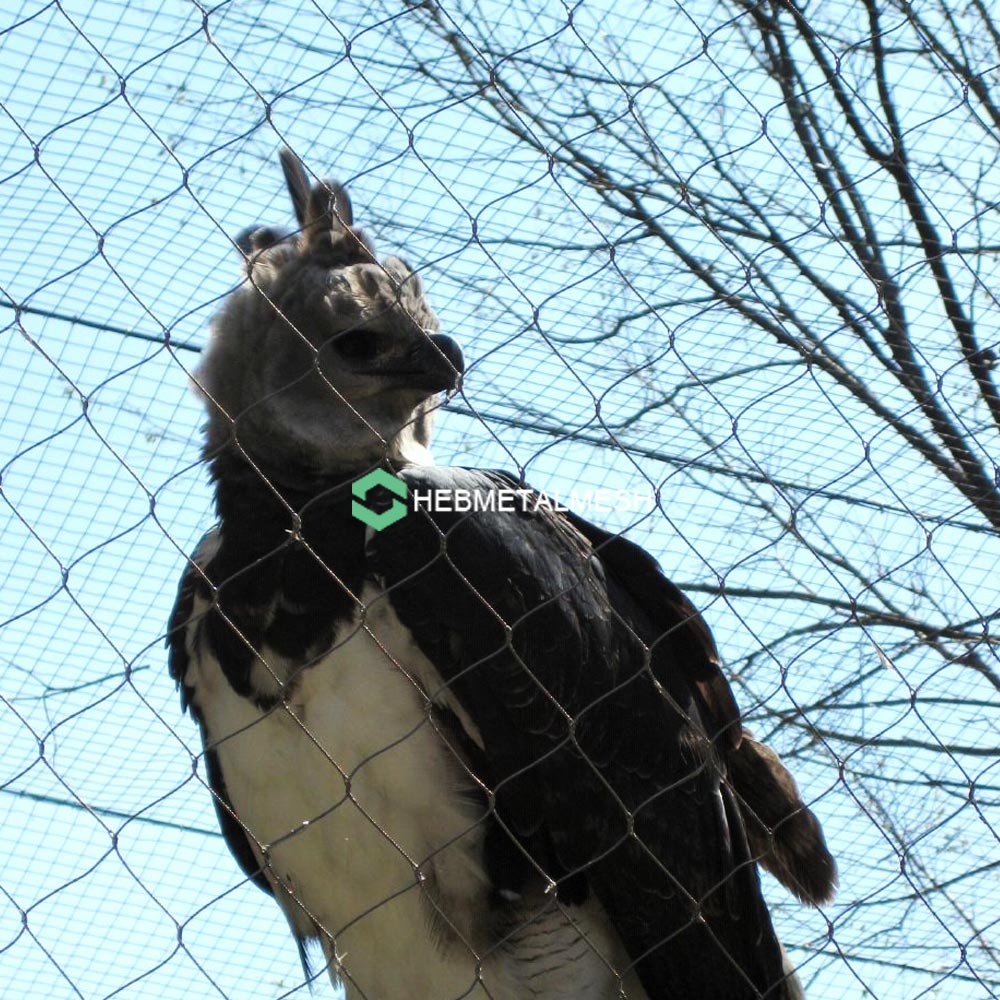
Small bird aviaries require 20mm to 30mm apertures to prevent head entrapment. For larger raptors, we recommend wire diameters of 3.5mm or higher to resist beak damage.

Key Takeaways

  • Grade Matters: Specify AISI 316 for any environment near water or with high humidity to ensure a 30-year service life.
  • Visibility is Performance: Use black oxide finish to reduce glare, creating an immersive experience for visitors and a calm environment for animals.
  • Quality is Traceable: Always request mill test reports and salt spray test certifications to meet AZA/EAZA regulatory requirements.
  • Engineering First: Select 7×19 wire rope for predator enclosures to maximize flexibility, impact absorption, and animal safety.

Ready to specify your habitat project?

Get factory-direct, AZA-compliant stainless steel solutions tailored to your unique enclosure design. Consult with our engineers for a free technical assessment.

Choose From Online Shop

print
Shopping Cart
Home
Shop
Message
Cart