
A panel that arrives damaged was never a 30-year panel, and the damage rarely announces itself. A zoo mesh system is bought as a specification and judged on a lifespan, but between those two points sits a journey most buyers never see: netting crating, a stacked container, a sea crossing, an offloading crew and a storage yard. Mesh export packing is the clause that decides what the panel is at the end of that journey. This guide follows a finished panel from the loom to the exhibit frame and sets out what you can write into the order before anything ships.
Executive Summary
The panel that leaves the factory is not the panel that gets installed, and the gap is created before the goods ever move. Three consequences follow. First, stainless rope does not corrode the way a service-life specification assumes — it corrodes in transit, because a container that crosses the dew point wets the weave for weeks and starts crevice corrosion at the cross points while the panel is still inside its crate. Second, wire rope has no useful fatigue limit once it has been bent: a single kink from a lifted bundle or a dropped export crate is a permanent stress raiser. Third, packing is not a courtesy but a priced line with a method attached, so the specification that names the packing method, the moisture control and the handling limit is the one that keeps its durability claim intact. Write those three as one clause and mesh transit damage stops being a matter of luck. The reference specification is the animal fence mesh product page.
Shipping a run of panels into a project that is not framed yet? Send us the panel sizes, the aperture and the destination port. We will return a packing method, a handling limit and a moisture control sized to the voyage.
Quick Answer: What Is Netting Export Packing?
Netting export packing is the method and the materials used to protect a finished panel between the factory and the exhibit, and it has four parts. The export crate or bundle holds the panel rigid so it cannot bend past its safe radius. The moisture control — vci packaging, desiccant packing or a moisture barrier packing layer — keeps the air inside the pack below the dew point so condensation never forms on the rope. The handling limit states where a sling may not go and how far a panel may be flexed. The storage rule keeps the consignment off the ground and ventilated until the frame is ready. Specify those four and you have specified the journey rather than hoped for it.
Key Takeaways
- A long lifespan is a claim about rope in service; the journey is the only stage that can shorten it before installation begins.
- Container sweat, not sea air, is the real corrosion risk — a sealed container that crosses the dew point wets the panel from the inside for weeks.
- One kink is permanent: rope taken past its safe bend radius work hardens at the bend and fails there, not at the design load.
- Packing is a costed line, and a supplier that cannot describe its panel crating method cannot be compared with one that can.
- A delivery condition report protects both sides, because freight damage claim windows close faster than most sites can open a crate.

The Journey Is the Stage the Specification Forgot
Most zoo mesh system guides cover three stages: selection, installation and maintenance. The fourth is delivery, and it can undo the other three. The panel is most vulnerable precisely when nobody is watching it: woven to size, packed, trucked to a port, consolidated into a container, sailed for four to nine weeks, cleared, trucked again, offloaded onto a site that may not have a finished frame, and stored outdoors. Every stage has a failure mode and none appears on a drawing. Over long haul shipping the factory controls perhaps half the sequence; the other half belongs to whoever writes the port-to-site instructions, which on most projects is nobody. That gap is why the order handoff review deserves the same attention as the drawing set.
Why the Rope Leaves the Factory Stronger Than It Arrives
A finished panel is not a passive object. It has been drawn, stranded, woven and tensioned, so it carries residual stress in every strand, and the factory ships it clean, dry and passivated. Wire rope has no fatigue limit worth relying on: once a strand is bent past its safe radius, work hardening takes hold at the bend, the wire there becomes harder and less ductile, and every later load cycle concentrates at that point. The weave has the same problem. Where two ropes cross they touch, and where they touch they trap water by capillary action; that trapped film, held for weeks inside a container, is exactly the geometry crevice corrosion needs. A coil on a reel is at low risk because nothing is bent and nothing is trapped. A finished panel in a crate is at high risk, because the weave is also the surface that holds moisture longest.
Packing a Panel: Crate, Bundle or Coil
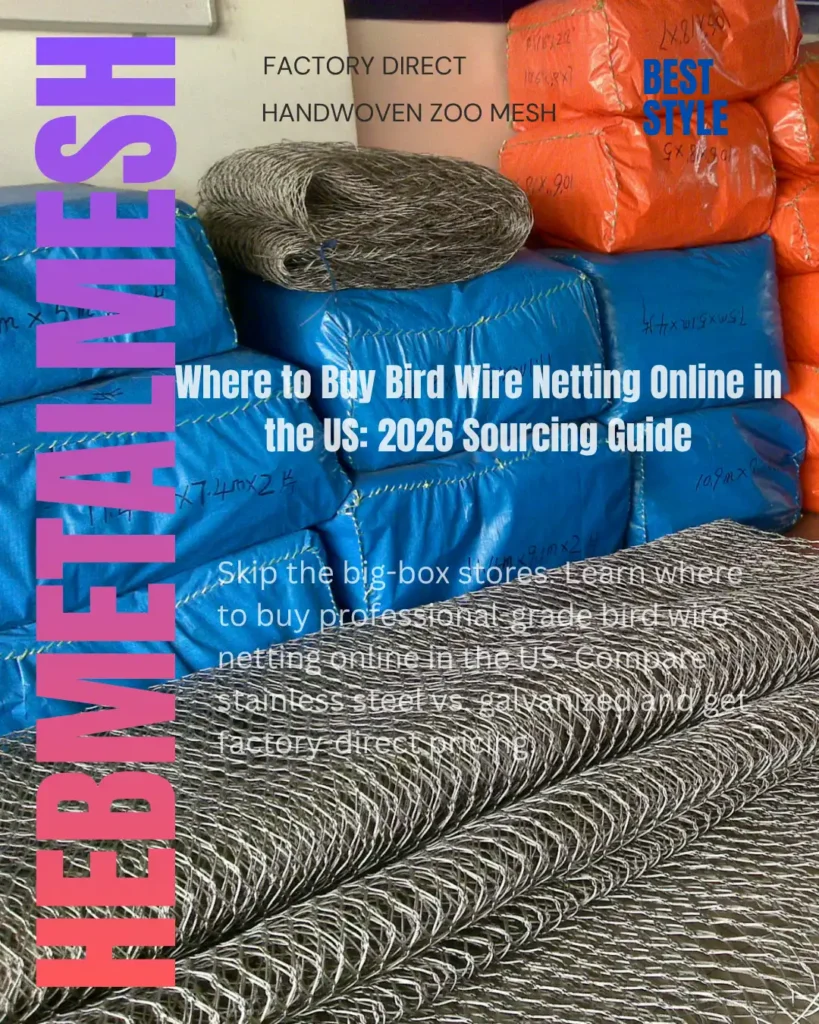
Three packing formats are sold, and each is chosen by what the panel must survive. The simplest is the coil of woven rope on a reel, used when the mesh is woven to a width that can be tensioned on site and the frame is a simple rectangle: compact, cheap to move and almost immune to bend damage. Next is the flat bundle, where panels are stacked face to face, separated by an edge protector along every cut edge and held by stretch wrap or strapping; it is the usual answer for a medium run, provided the bundle stays rigid. Last is the export crate, a plywood case built around a panel too large to bend safely, because a maxi panel of nine meters by eighteen meters cannot be coiled at all. Which format you need is partly decided upstream, since the netting cut plan fixes the panel sizes that have to travel. Panel crating that lets a bundle sag is not a cheaper method; it spends the panel’s fatigue life to save a cubic meter of freight.
Container Sweat: The Corrosion That Happens Before Installation
The inside of a sealed container is a small climate, and it cycles. Warm humid air sits over cool steel at night, container condensation forms on the coldest surface in the box — the panel — and by morning the weave is wet. This is container sweat, and it is why a stainless panel can arrive with a rust bloom despite never having seen rain. Two numbers govern it: the dew point of the air inside the pack, and the number of days it stays above it. The crossing is four to nine weeks, so the panel is wetted and dried dozens of times, and each wetting deposits whatever was dissolved in the film. Near a coastline that film carries chloride, the one species that reliably defeats a 304 alloy at a cross point. The remedy is a three-part moisture control: a moisture barrier packing film to seal the bundle, desiccant packing sized by pack volume and voyage length rather than by habit, and vci packaging where the crate is opened on site rather than at the factory, since the vapor it releases keeps bare steel passivated while the panel waits. Put a humidity indicator inside the pack and the control becomes verifiable: the card, not the supplier’s word, tells you whether the dew point held. Customs is a separate matter, and a consignment held at a port is a consignment sitting in a container; the import and clearance process covers that half.
Handling Limits: What a Panel Will Not Survive
Most transit damage is done in the last hundred meters, by people using the mesh as a lifting aid. A woven rope panel is strong in tension and weak in bending, so the rule is short: lift the crate or the bundle, never the mesh. A sling passed through the weave concentrates the whole bundle weight on a few cross points, bends them past their radius and leaves a permanent injury that no inspection finds until wire starts breaking years later. Panel handling is therefore a matter of damage control rather than crew comfort, and manual handling mesh advice belongs in the site instructions, not a toolbox talk. A maxi bundle should move on a pallet or a spreader beam; if it must be carried, it stays flat and rigid and it is carried on shoulders rather than dragged. Two habits belong in the site instructions. Do not open a sealed pack until the frame is ready, because a pack left open is no longer doing its job. And do not leave a bundle where it can be stepped on.
Storage on Site Before the Frame Is Ready
Site storage is where a well-packed consignment is most often lost, because the crate has arrived and the sense of risk has gone with it. Keep the pack horizontal on dunnage so air moves underneath and no water pools against the film. Keep it clear of cement dust, acid wash and any chlorinated cleaning agent, all of which will sit on stainless and start the same local attack the container was sealed against. Keep it out of the sun if the film is a stretch wrap, because ultraviolet light degrades the wrap and the bundle then sags. And keep the opening date under the control of the installer, not the delivery driver, so the humidity indicator is read once, at the right moment, rather than torn open to count panels.
What the Specification Should Say
Five lines turn packing from an assumption into a requirement. State the packing format — coil, flat bundle or export crate — and the maximum bundle size. State the bend radius the panel must not go below. State the moisture control as a method with a scope: barrier film plus desiccant sized to volume and voyage, and a humidity indicator in the pack. State the handling limit, including the instruction not to lift by the mesh. State the storage requirement as part of the delivery scope. Moisture control in a pack is a documented discipline rather than a supplier preference, and BSI publishes the packaging methods a buyer can name in an order. Then attach a delivery condition report to the order: photograph the crate before it is opened, record the humidity indicator reading, note any crate or film damage in writing on the carrier’s document, and inspect the panel for kinks rather than rust, because the kink is the defect that decides the lifespan. That record is what a freight damage claim is built on, and claim windows are short. The checks that catch a wrong consignment are set out in our mesh buying checks.
FAQ
It can, and usually at the cross points rather than the open weave. A sealed container that cycles through the dew point wets the panel repeatedly, and the film carries whatever was dissolved in the air, including chlorides near a port. Held against the weave at a rope contact, a 304 alloy can pit without ever being rained on. Moisture control in the pack is what prevents it.
There is no single best format, only the format that survives your panel size. A coil is safest for small widths, a rigid flat bundle suits a medium run, and a plywood export crate is the only safe option for a maxi panel. What matters more than the format is rigidity: a sagging bundle spends the panel’s fatigue life in transit.
Size it from the pack volume, the voyage length and the humidity of the loading port, not from a rule of thumb. Desiccant packing that is generous for a four-week coastal crossing can be inadequate for a nine-week crossing in the tropics, and the failure is silent: the desiccant is consumed, the dew point rises and the panel wets. A humidity indicator inside the pack is the cheap way to know whether the calculation held.
Before the crate is opened, photograph it, check the film for tears and read the humidity indicator. When the panel comes out, look along every rope for kinks and flat spots first, because a kink is permanent and a rust bloom usually is not. Note any damage on the carrier’s paperwork on the day, and keep the delivery condition report with the order file.
Want the journey written into the order? Send us the panel schedule and the delivery address. We will return the packing method, the desiccant scope, the handling limit and a delivery condition template you can use on site.
The life of a zoo mesh system is decided at the drawing board and again in a container, and only one of those usually gets written down. Our animal fence mesh ships with a packing method, a moisture control and a handling limit attached to the quotation, so the panel that arrives is the panel that was specified.