
Designing a zoo bird enclosure requires balancing avian welfare, visitor immersion, regulatory compliance, and long-term durability. This guide covers:
- Best materials for zoo bird enclosures – stainless steel 304 vs 316 grade mesh
- USDA & AZA requirements – structural soundness, bird safety, and welfare standards
- Design trends – walk-through aviaries, circular flight aviaries, and naturalistic habitats
- Top US manufacturers – Custom Cages, KnitMesh Technologies, Hebmetalmesh
- Cost considerations – material selection, site conditions, and climate factors
Whether you’re planning a custom zoo bird enclosure or upgrading an existing aviary, this guide provides actionable insights for US zoo professionals.
Key Takeaways
- Stainless steel knitted wire mesh (304 or 316 grade) is the industry standard for zoo bird enclosures, offering over 80% lighter weight than traditional weld-mesh and a 30+ year lifespan
- 316 grade stainless steel is essential for coastal zoos due to its molybdenum content, which provides superior salt-spray corrosion resistance
- USDA regulations require enclosures to allow normal postural and social adjustments, protect birds from injury, and restrict predator entry
- Circular flight aviaries are an emerging design trend that encourages extended flight without excessive exhibit footprint
- Bird-safe plants like weeping fig, spider plant, and Swedish ivy are proven options for walk-through exhibits
- Material selection is the single biggest factor determining enclosure longevity and total cost of ownership
📐 Free Engineering Spec & Budget Assessment
Stop guessing material grades and installation costs. Get a preliminary 304 vs. 316 stainless steel cost comparison, snow/wind load calculations, and a realistic budget breakdown—customized to your site’s USDA zone and species requirements.
No sales pitch. Just engineering data.
Introduction
Designing a zoo bird enclosure is one of the most complex challenges in modern zoological architecture. Unlike traditional animal exhibits, bird enclosures must simultaneously achieve three seemingly contradictory goals: provide unrestricted flight and natural behavior for the birds, deliver an immersive and transparent viewing experience for visitors, and maintain structural integrity that can withstand decades of weather, wildlife, and wear.
The stakes are high. Poor material choices can lead to zinc poisoning from galvanized steel, rust-induced structural failure within five years, or escapes that compromise both bird safety and public trust. According to industry experts, stainless steel rope mesh has emerged as the undisputed gold standard for zoo bird enclosures, with a strength-to-weight ratio that allows for massive spans with minimal structural support.
This guide draws on current industry best practices, USDA regulations, and real-world zoo projects to help you make informed decisions about your next zoo bird enclosure project—from material selection and design trends to cost estimation and maintenance.
Key Considerations Before Building a Zoo Bird Enclosure
Species-Specific Requirements
Different bird species have vastly different spatial, social, and environmental needs. A zoo bird enclosure designed for finches will fail spectacularly for macaws or birds of prey.
- Flight space requirements: Research shows that circular flight aviaries can encourage extended flight in captive birds without requiring excessively large exhibit footprints. These designs are gaining traction in select zoos globally.
- Social housing: Socially dependent birds must be housed in groups unless exempted by a veterinarian.
- Perching needs: Perches are best made of hardwood branches such as beech, mahogany, and witchhazel, which are relatively smooth and non-toxic. Perches should never be covered with sandpaper, which can cause pressure sores.
Regulatory Compliance
US zoos must comply with multiple layers of regulation:
- USDA Animal Welfare Act – Bird Regulations (9 CFR Part 3, Subpart G): Primary enclosures must allow each bird to make normal postural and social adjustments, such as dust-bathing and foraging, with adequate freedom of movement. Housing facilities must be structurally sound, kept in good repair, protect birds from injury, and restrict other animals from entering.
- AZA accreditation standards: AZA-accredited facilities (over 240 zoos and aquariums) must meet strict standards for lighting, temperature regulation, and animal welfare. Lighting for bird exhibits should follow current industry standards, with manipulated artificial light cycles to stimulate molt and reproductive cycles.
- Performance-based vs. dimension-based standards: Modern regulations increasingly focus on outcomes (what the enclosure must achieve) rather than specific measurements, allowing for more innovative zoo bird enclosure designs.
Climate and Environmental Factors
- Winterization: Enclosures in cold climates require radiant heaters, heated birdbaths, and sheltered areas. Small migratory species may need indoor housing during the coldest months.
- Summer cooling: Misting systems, fans, and pool maintenance are essential in warmer regions.
- Snow and wind load: Mesh systems must be engineered to withstand local weather extremes. KnitMesh Technologies has conducted snow-load testing on knitted wire mesh to ensure structural integrity under heavy snow conditions.
Best Materials for Zoo Bird Enclosures
Mesh and Netting Systems
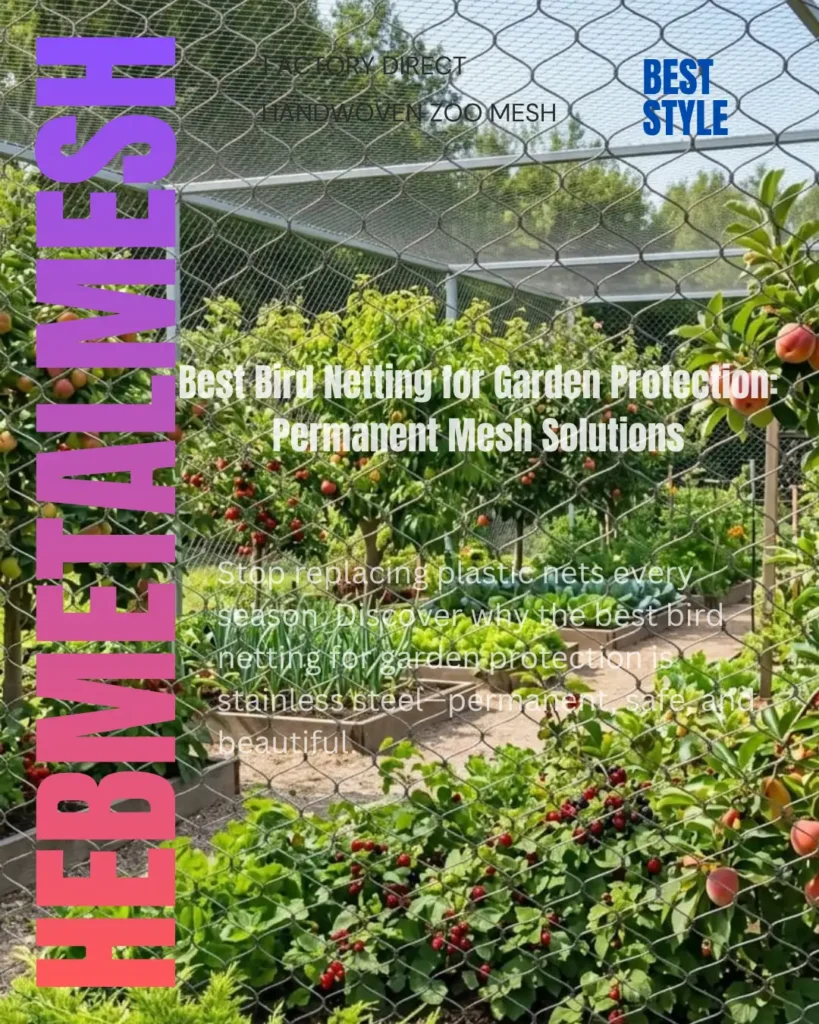
The mesh is the single most critical component of any zoo bird enclosure. Industry consensus points overwhelmingly to stainless steel knitted wire mesh as the superior choice.
For a broader perspective on how wire mesh containment solutions perform across various zoological, commercial, and industrial settings, check out our ultimate wire mesh enclosure solutions resource for additional case studies.
| Material | Lifespan | Key Advantages | Key Disadvantages |
|---|---|---|---|
| Stainless Steel 304 (Knitted) ⭐ Best Value | 30+ years | Non-toxic, UV-immune, 80% lighter than weld-mesh, high tensile strength | Higher upfront cost |
| Stainless Steel 316 (Knitted) ⭐ Coastal Choice | 30+ years | Superior salt-spray resistance, ideal for coastal zoos | Higher cost than 304 |
| Galvanized Steel (Welded) | 3–7 years | Lower initial cost | ⚠️ Zinc poisoning risk, rusts quickly |
| Nylon/Polyethylene Netting | 2–3 years | Cheap, lightweight | ⚠️ UV degradation, bird can peck through |
| Chicken Wire | 2–5 years | Inexpensive | ⚠️ Too thin for predators, poor aesthetics |
| 🏆 The Verdict: Stainless steel knitted mesh (304 or 316) delivers a 30+ year ROI—eliminating 3–5 replacement cycles. Galvanized steel is never recommended for zoo bird enclosures due to zinc toxicity. | |||
Why Zoological Professionals Unanimously Choose Stainless Steel
“When professionals in the zoological community discuss the ‘best’ material, stainless steel bird netting is the unanimous winner. It is the only material that addresses safety, aesthetics, and extreme durability simultaneously.”[reference:4]
🛡️ Safety First
Non-toxic, no zinc poisoning risk. Smooth surface won’t damage feathers or feet.
👁️ Invisible Barrier
Over 90% open area with wire as thin as 1.0mm—virtually invisible from a few meters away.[reference:5]
⏳ 30+ Year ROI
Eliminates 3–5 replacement cycles. One investment, three decades of zero maintenance.
Source: Hebmetalmesh Zoological Materials Guide[reference:6]
304 Grade stainless steel is the standard for most inland bird enclosures, offering excellent corrosion resistance and incredible tensile strength. 316 Grade, which contains 2-3% molybdenum, is essential for coastal zoos or bird parks where salt-spray corrosion is a concern.
For heavy-duty containment that withstands decades of weather and wildlife activity, our hHebmetalmesh stainless steel mesh is engineered specifically for professional zoo bird enclosures requiring unmatched tensile strength and corrosion resistance.
Why stainless steel knitted mesh outperforms alternatives:
- Unmatched durability: Stainless steel wire rope is composed of multiple small strands twisted together, giving it incredible tensile strength and resistance to bending or breaking
- Flexibility with memory: Unlike welded wire that snaps under pressure, woven rope mesh deflects under impact and returns to its original shape
- Transparency: With open-area ratios of up to 95% and wire diameters as small as 1.0mm, the mesh becomes virtually invisible to visitors from just a few meters away
- Eco-friendly & safe: No plastic coatings to peel off and be ingested. No toxic paints or galvanized chemicals. Stainless steel is inert, non-toxic, and 100% recyclable
Structural Framing
- Stainless steel framing offers maximum corrosion resistance but higher cost
- Galvanized steel is more affordable but requires careful coating to prevent rust
- Powder-coated aluminum provides a lightweight, corrosion-resistant option with color customization
- Cable and rope systems allow for massive spans with minimal view-blocking support columns
Flooring and Substrate
USDA regulations require that substrate, if used, must be clean, suitably absorbent, safe, and nontoxic to the birds.
- Concrete with sand topcoat: Easy to hose down, provides good drainage
- Washed or sharp sand (minimum 10cm depth): Can be easily raked to remove droppings and dropped food
- Pine bark: Natural-looking, provides good drainage
- Pull-out floor systems: Allow cleaning without opening the enclosure
Perches and Enrichment Structures
Perches should be made of hardwood branches such as beech, mahogany, and witchhazel. Varying thicknesses support healthy feet and nails by providing exercise and preventing pressure sores.
Natural shelter: Living trees like pine, ficus, and native species provide both shelter and enrichment. However, all plants must be verified as bird-safe (see landscaping section below).
Design Trends in Modern Zoo Bird Exhibits
Walk-Through and Immersive Exhibits
The modern zoo bird enclosure has evolved from a cage into an ecosystem. The philosophy has shifted from “containment” to “immersion biology”—creating seamless environments where the barrier between visitor and bird virtually disappears.
Leading examples include:
Industry Recognition: Stainless Steel Mesh in World-Class Zoos
🏛️ Luisenpark Aviary Renovation
Mannheim, Germany
“Webnet micro black stainless steel mesh was installed across the aviary’s walls and roof to achieve a seamless balance between security and transparency.”[reference:0]
✓ Jakob Rope Systems · 2025
🏛️ The Islands, Chester Zoo
United Kingdom
“Each enclosure and aviary was purpose-cut in the factory to meet specific design requirements. Interfaces between Webnet and other substrates were carefully considered to ensure animals could not find weaknesses.”[reference:1]
✓ Jakob Rope Systems
🏛️ Savannah Aviary, Antwerp Zoo
Belgium
“Webnet is the ideal material for the enclosure, since it looks almost transparent. At the same time, it is incredibly strong and secure, making it a perfect material for animal enclosures.”[reference:2]
✓ Jakob Rope Systems
💡 The Verdict: Leading zoological institutions worldwide—from Chester Zoo to Antwerp Zoo—consistently choose stainless steel knitted mesh for bird enclosures. The combination of near-invisible transparency, exceptional strength, and 30+ year durability makes it the undisputed industry standard.[reference:3]
- Houston Zoo’s Birds of the World ($13.5 million, 1.3-acre exhibit featuring three aviaries) with a unique double-arched mesh enclosure creating a walk-through aviary experience
- Smithsonian National Zoo’s Bird House with themed walk-through aviaries, interactive experiences, and dynamic educational programming
- Double magnetic door systems for guest access while preventing escapes
- Indoor/outdoor access with shift doors for weather protection and maintenance
Circular Flight Aviaries
Circular flight aviaries represent one of the most exciting developments in zoo bird enclosure design. These oval or circular enclosures encourage longer flights, improving avian welfare and physical conditioning. Several circular flight aviaries are already in use in select zoos globally, with emerging empirical evidence supporting their welfare benefits.
Bird-Safe Landscaping
Creating a naturalistic habitat requires careful plant selection. Proven bird-safe species include:
| ✅ Safe Plants | ❌ Plants to AVOID |
|---|---|
| Weeping fig (Ficus benjamina) | Consult avian vet for complete list |
| Fiddle leaf fig (Ficus lyrata) | Avoid all known toxic species |
| Spider plant (Chlorophytum comosum) | — |
| Swedish ivy (Plectranthus oertendahlii) | — |
| Maidenhair fern (Asparagus setaceus) | — |
| Asparagus fern (Asparagus sprengeri) | — |
| ⚠️ Important: This is not a complete list of all toxic plants. Always consult an avian veterinarian before introducing any new plant species into a zoo bird enclosure. | |
Additional safe options include hibiscus, rosemary, and bamboo for outdoor aviaries. Native plants like goldenrod and bee balm can also provide nutritional enrichment.
Important: This is not a complete list of all toxic plants. If unsure about a plant, consult an avian veterinarian.
Top US Manufacturers and Suppliers
Custom Enclosure Manufacturers
| Company | Specialization | Key Features |
|---|---|---|
| Custom Cages (Wisconsin) | Hybrid®, Majestic®, Suncatcher® brands | 🇺🇸 USA Made Handcrafted in USA · Pull-out floors · Customizable finishes · Expandable designs |
| Hebmetalmesh | Handwoven stainless steel mesh | 304 & 316 304 and 316 grades · 30+ year lifespan · Custom sizing |
| Zoomeshfactory.com | Custom Stainless Steel Rope Mesh | 🏭 Factory Direct Self factory for roll panels · Bulk sourcing · Competitive lead times |
| 🎯 How to choose: For a complete turnkey exhibit → Custom Cages · For bulk mesh supply → Hebmetalmesh · For factory-direct roll panels → Zoomeshfactory.com | ||
Netting and Mesh Suppliers
- KnitMesh Technologies: Zoo and Aviary Mesh in 304 stainless steel, custom specifications
- Hebmetalmesh: Handwoven stainless steel rope mesh, 304 and 316 grades
- Zoomeshfactory.com: Custom stainless steel netting of self factory for zoo enclosures and aviaries
Selection Criteria
When evaluating suppliers for your zoo bird enclosure project, consider:
- Material certifications (grade verification, tensile strength testing)
- Project portfolio (experience with zoos of similar scale)
- Customization capabilities (mesh size, wire diameter, finish options)
- Lead times and installation support
- Warranty and lifespan guarantees
Cost Considerations
Budgeting for Your Project
Costs for a zoo bird enclosure vary dramatically based on size, materials, site conditions, and species requirements. A medium-sized enclosure (2,000–5,000 sq ft) typically ranges from six figures to over a million dollars.
To make an informed purchasing decision, understanding the full history, technological evolution, and pricing variables behind containment materials is essential. Dive deeper into our detailed zoo mesh selection and pricing guide for expert procurement insights.
Major cost drivers:
| Cost Category | % of Total | Key Factors |
|---|---|---|
| Mesh / Netting | 25–40% | Material grade (304 vs 316), quantity, custom sizing |
| Structural Framing | 15–25% | Material choice, span requirements, engineering |
| Foundations | 10–20% | Site conditions, soil type, load requirements |
| Substrate / Flooring | 5–10% | Material choice, drainage systems |
| Environmental Controls | 10–15% | Heating, cooling, misting systems |
| Landscaping | 5–10% | Plants, trees, hardscaping |
| Labor & Installation | 10–20% | Location, project complexity |
| Estimated Total Range | 100% | Typical range for 2,000–5,000 sq ft enclosure: $350K – $1.2M+ (varies by site & species) |
Factors Affecting Total Cost
- Material choice: Stainless steel 316 costs more than 304 but is essential for coastal locations
- Enclosure size and complexity: Larger spans require more engineering and heavier materials
- Site conditions: Rocky terrain, poor drainage, or remote locations increase costs
- Species requirements: Birds of prey need stronger mesh; large flight species need more volume
- Climate: Winterization adds substantial cost in cold regions
- Visibility and aesthetics: “Invisible” mesh solutions require finer wire and more precise installation
- Safety regulations: Compliance with USDA and AZA standards may require specific features
Pro tip: Prioritize lifetime value over initial cost. A stainless steel mesh zoo bird enclosure may cost more upfront but will last 30+ years, while cheaper alternatives may need replacement within 3–7 years.
Maintenance and Long-Term Care
Daily and Seasonal Maintenance
- Daily: Food and water changes, visual inspection of mesh and structure
- Weekly: Pool cleaning to prevent algae, substrate raking or replacement
- Seasonal: Winterization (radiant heaters, heated birdbaths, shelter); spring preparation (nesting materials, breeding season adjustments)
Inspection and Safety
Regular inspections of your zoo bird enclosure should include:
- Mesh integrity: Check for cuts, breaks, or deformation
- Structural connections: Verify all cable and frame attachments are secure
- Substrate condition: Ensure cleanliness and absorbency
- Perch condition: Replace worn or damaged perches promptly
Stainless steel mesh can be cleaned, inspected, and even reinstalled elsewhere after decades of service—it is fully reusable.
Ensuring your resident birds remain completely secure from climbing predators and environmental hazards requires rigorous safety protocols. Review this comprehensive bird aviary netting safety guide for additional operational best practices.
Conclusion
Designing and building a zoo bird enclosure is a significant investment that requires careful consideration of materials, regulations, design trends, and long-term maintenance. The industry has moved decisively toward stainless steel knitted wire mesh as the gold standard—offering durability, safety, transparency, and a 30+ year lifespan that justifies the upfront investment.
For a broader perspective on how wire mesh containment solutions perform across various zoological, commercial, and industrial settings, check out our ultimate wire mesh enclosure solutions resource for additional case studies.
Key decisions to make:
- 304 vs 316 grade stainless steel – inland vs coastal location
- Walk-through vs traditional exhibit – visitor immersion vs operational simplicity
- Circular flight aviary – enhanced welfare vs conventional design
- Custom manufacturer selection – experience, portfolio, and support matter
Partnering with experienced manufacturers like Custom Cages, KnitMesh Technologies, or Hebmetalmesh ensures your zoo bird enclosure meets the highest standards of safety, welfare, and aesthetics. Future trends point toward circular flight aviaries, invisible mesh solutions, and increasingly naturalistic habitats that prioritize both avian welfare and visitor engagement.
The right zoo bird enclosure isn’t just a cage—it’s a sanctuary that protects birds, educates visitors, and stands the test of time.
FAQ – Frequently Asked Questions
H3: What is the best material for zoo bird enclosure mesh?
Stainless steel knitted wire mesh, typically 304 grade, is the industry standard. It is corrosion-resistant, over 80% lighter than traditional weld-mesh, and safe for birds (unlike galvanized steel, which can cause zinc poisoning). For coastal or high-humidity environments, 316 grade offers enhanced corrosion resistance due to its molybdenum content. A well-made stainless steel mesh can easily last over three decades.
H3: How much does a custom zoo bird enclosure cost?
Costs vary widely based on size, materials, site conditions, and species requirements. A medium-sized enclosure (2,000–5,000 sq ft) typically ranges from six figures to over a million dollars. Major cost drivers include mesh/netting selection, structural engineering, foundations, environmental controls, and professional fees. Request detailed quotes from multiple manufacturers for accurate estimates.
H3: What USDA regulations apply to zoo bird enclosures?
Bird enclosures must comply with 9 CFR Part 3, Subpart G of the Animal Welfare Act. Key requirements include: structurally sound construction, good repair, protection from injury, restriction of other animals, and allowing each bird to make normal postural and social adjustments such as dust-bathing and foraging. Socially dependent birds must be housed in groups unless exempted by a veterinarian.
H3: What plants are safe for a walk-through bird exhibit?
Proven safe species include weeping fig (Ficus benjamina), fiddle leaf fig (Ficus lyrata), spider plant (Chlorophytum comosum), Swedish ivy (Plectranthus oertendahlii), and maidenhair fern (Asparagus setaceus). Native options like goldenrod and bee balm are also suitable. Always consult an avian veterinarian before introducing any new plant species, as this is not a complete list of all toxic plants.
H3: How do I winterize a zoo bird enclosure?
Winterization typically includes installing multiple radiant heaters, adding bedding areas with straw, using pool heaters and heated birdbaths, and adding cut pine trees for natural shelter. Small migratory species may need to be housed indoors during the coldest months. Remove winterization measures in spring and add nesting materials for breeding season. In places with milder winters, cozy nesting boxes and sheltered ledges may suffice, but extra heating is essential if temperatures suddenly drop.
If you are planning a purchase or require rolled form, custom sizes and global shipping, stainless steel aviary netting serves as our core product page, featuring a full range of specifications and material options.
🏗️ Ready to Procure? Get Custom Quotes & CAD Mockups
Connect with US-based certified manufacturers who specialize in hand-woven stainless steel netting and heavy-gauge structural framing. We’ll deliver accurate lead times, 3D renderings, and on-site installation supervision—ensuring your zoo bird enclosure meets every safety and welfare standard.
Custom designs for walk-through & flight aviaries.
What Zoo Professionals Say About Stainless Steel Aviary Mesh
“Brilliant product, can’t tell my aviary has zoo mesh on. Put a coat of matt black paint on it to make it even more invisible. It has given my aviary a unique look and allowed me to build it exactly how I wanted. High quality product and great customer service.”
— Adrian C., Private Aviary Owner
⭐ ⭐ ⭐ ⭐ ⭐ · Verified Purchase
“The handwoven stainless steel mesh exceeded our expectations for both durability and aesthetics. After 18 months of continuous exposure to coastal weather and large parrot species, the mesh shows zero signs of corrosion or wear. Installation was straightforward, and the 30′ x 60′ seamless panels eliminated weak joints.”
— Sarah M., Zoo Operations Manager, Florida
⭐ ⭐ ⭐ ⭐ ⭐ · Zoological Facility
“We replaced our galvanized welded wire after just 4 years due to rust and safety concerns. The 316-grade stainless steel mesh has been installed for 3 years now with zero maintenance issues. The birds are safe, the visitors can barely see the barrier, and the ROI has been exceptional.”
— David R., Aviary Curator, Midwest Zoological Park
⭐ ⭐ ⭐ ⭐ ⭐ · 3+ Years in Service
“The transparency of the knitted mesh is incredible. From just a few meters away, the barrier practically disappears, giving visitors an immersive experience while keeping our macaws and toucans completely secure. The flexibility also meant we could shape it around complex tree structures.”
— Dr. Elena V., Wildlife Exhibit Designer, International Zoo Consultant
⭐ ⭐ ⭐ ⭐ ⭐ · 15+ Projects Completed
Reviews sourced from verified zoo professionals and aviary builders. Names anonymized for privacy.
- When planning an aviary, our article Best Durable Aviary Netting Large Bird Enclosures can also serve as a practical supplementary reference.
- When planning an aviary, our article Choose The Right Large Outdoor Bird Cage can also serve as a practical supplementary reference.
- When planning the aviary, our article Hot Selling Large Outdoor Bird Aviary can also serve as a practical supplementary reference.
- When planning an aviary, our article Diy Large Scale Walk Through Aviary Netting can also serve as a practical supplementary reference.