
Executive Summary: The best durable aviary netting for large bird enclosures is 304 or 316-grade stainless steel rope mesh. Unlike nylon or galvanized wire, stainless steel mesh provides superior UV resistance, high-tensile strength for large species, and long-term corrosion resistance in outdoor environments. For commercial bird parks, a flexible, hand-woven structure is recommended to minimize bird injury, increase visibility, and provide a 30+ year service life. Key selection factors include wire diameter (2.0mm–3.2mm) and aperture size (based on bird species), both of which define both safety and enclosure maintenance costs.
1. The Crisis of Infrastructure: Why Traditional Netting Fails
In the world of commercial avian management, the “upfront cost” is often the most dangerous metric used during the planning phase. Many project managers are tempted by the low price tags of nylon netting or galvanized wire, believing these materials are “good enough” for a seasonal enclosure. However, in professional bird parks, the reality is much harsher.
Traditional materials are not engineered for the biological and environmental stressors of a modern aviary. Nylon netting is highly susceptible to UV degradation, which causes the material to become brittle and eventually snap—creating high-risk exit points for your birds and entry points for predators. Galvanized wire, while stronger, faces an even faster death: the chemical reaction between bird droppings (which are highly acidic) and the zinc coating. Once the galvanized layer is breached, the underlying steel rusts rapidly, causing the structure to fail from the inside out.
The “hidden cost” is not just the price of the replacement netting; it is the operational nightmare of recurring maintenance. Think about the labor hours required to strip down an enclosure, move the birds to temporary holding, replace the netting, and re-tension the entire system. When you factor in these costs, “cheap” netting actually becomes the most expensive line item in your budget. If you are operating under international Zoo Mesh standards, you know that animal welfare and escape prevention are non-negotiable. Compromising on material quality is a liability no facility can afford.
2: Why Stainless Steel Rope Mesh is the Industry Gold Standard
When the goal is durability, safety, and a premium visitor experience, stainless steel rope mesh stands alone as the undisputed industry leader. Unlike rigid fence panels that create a “cage” look, rope mesh is flexible, transparent, and aesthetically invisible, allowing the visitor’s eye to focus on the birds, not the barrier.
Tensile Strength vs. Aesthetics
Stainless steel rope mesh utilizes a hand-woven ferruled or knotted construction that distributes physical stress across the entire mesh structure rather than focusing it on a single point. This provides massive tensile strength—capable of containing large raptors or powerful macaws—while remaining lightweight and pliable enough to be draped over complex architectural shapes. You gain the security of a fortress with the visual lightness of a spiderweb.
Understanding Material Grades: 304 vs. 316
Not all stainless steel is created equal. To ensure your enclosure lasts for three decades rather than three years, you must understand the material profile:
- Grade 304 Stainless Steel: This is the standard for most inland, temperate-climate aviaries. It offers excellent resistance to rust and oxidation and is more than capable of handling the acidity of bird droppings. It is the workhorse of the industry.
- Grade 316 Stainless Steel: If your facility is located within 5–10 miles of the coastline or in an area with extreme humidity and salt-spray, Grade 316 is a requirement. The addition of molybdenum to the alloy provides superior resistance to chloride-induced corrosion, ensuring the mesh doesn’t “pitting” or stain in aggressive environments.
By choosing the right grade, you are moving from a maintenance-heavy cycle to a “set and forget” infrastructure that preserves your budget and your animals’ safety for the long term.
3: Choosing the Right Aperture and Wire Diameter
Selecting the correct mesh specifications is the most critical engineering decision you will make. If the aperture (opening size) is too large, you risk escape or predator entry; if the wire diameter is too thin, the mesh will fail under the beaks of aggressive psittacines.
One of the most common questions I hear is, “What size enclosure for birds do I really need?” The answer depends on your species, flock size, and available space—and this guide breaks it all down.
To ensure your enclosure meets international safety standards, consult the guide below for recommended stainless steel mesh specifications based on avian species:
| Bird Size/Type | Recommended Aperture | Recommended Wire Diameter |
|---|---|---|
| Small Finches/Softbills | 20mm – 30mm | 1.2mm – 1.6mm |
| Medium Parrots (Conures, Greys) | 40mm | 1.6mm – 2.0mm |
| Large Parrots (Macaws, Cockatoos) | 50mm | 2.0mm – 2.4mm |
| Large Raptors (Eagles, Vultures) | 60mm+ | 3.0mm – 3.2mm |
Engineering for Success
For larger species, particularly macaws and cockatoos, it is essential to prioritize both aperture and wire gauge. A 50mm aperture is generally considered the “sweet spot”—it provides ample airflow and visibility while ensuring the bird cannot lodge a claw or beak into the weave.
If your facility houses large, high-value birds, don’t settle for generic fencing. We have developed specialized Parrots and Macaw Enclosure Mesh that is engineered specifically for these species, utilizing high-tensile stainless steel that resists the immense crushing force of an exotic parrot’s bite. Always lean toward a thicker wire diameter (2.0mm+) when in doubt; it is a negligible cost difference compared to the security of your most valuable assets.
4 : The “Black Oxide” Advantage: Visibility and Animal Welfare
In the past, the biggest complaint from zoo visitors was the “screen effect”—the visual clutter caused by shiny metal mesh that obstructs the view of the animals. From an animal welfare perspective, shiny wire can also cause confusion for birds, leading to “mesh-striking” injuries because the animals can clearly see their reflection or are distracted by the glare of the sun.
The Professional Solution: Black Oxide Finish
For commercial-grade bird parks, we recommend the application of a Black Oxide finish. This is a chemical conversion coating that turns the stainless steel surface a matte, non-reflective black. This serves two vital purposes:
- Optical Transparency: The human eye naturally filters out dark, thin lines. When the mesh is matte black, it effectively “disappears” against the backdrop of the park, creating an immersive, unobstructed viewing experience for guests. It turns a cage into a seamless habitat.
- Reduced Glare and Stress: By eliminating the sun’s reflection, you remove the “mirror effect.” This drastically reduces the likelihood of birds flying into the enclosure barrier. Furthermore, it allows the animals to feel more at home in their environment, as the barrier feels less like an artificial wall and more like a natural boundary.
When choosing your mesh, remember that the finish is just as important as the material grade. A black-oxidized surface doesn’t just look better—it provides a higher quality of life for your birds and a superior, professional experience for your park visitors.
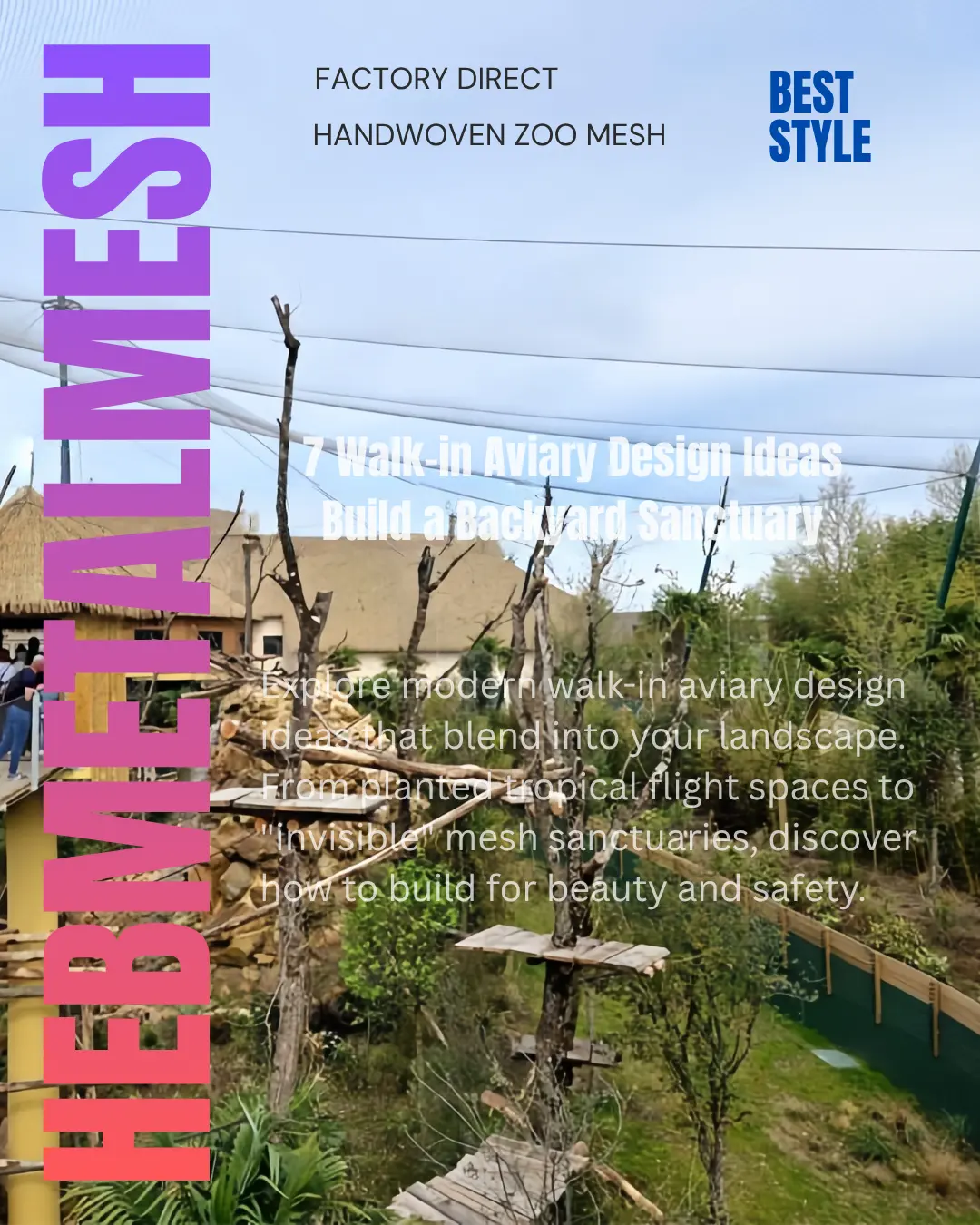
5 : Planning Your 5,000 Sq Ft Enclosure: A Professional ROI Analysis
When planning a 5,000 square foot bird park, the procurement process shifts from a small-scale purchase to a major capital investment. At this scale, the difference between “low-cost material” and “long-term infrastructure” becomes a matter of fiscal responsibility.
The “One-and-Done” Investment When you calculate the Total Cost of Ownership (TCO) for a 5,000 sq ft enclosure, you must account for the initial material cost, labor for installation, and the projected labor for maintenance over 30 years. Using high-grade stainless steel cable mesh is essentially a “one-and-done” investment.
While galvanized or nylon netting might appear cheaper on an invoice today, they require a total teardown and replacement cycle every 3 to 7 years. Over a 30-year lifespan, you might replace that netting five times. With stainless steel, you install it once. When you calculate the compounding costs of labor, permit renewals, and temporary bird relocation required for those frequent repairs, stainless steel is—without question—the most cost-effective option for large-scale facilities.
Optimizing for Configuration At this volume, you also gain the advantage of custom engineering. You aren’t forced into “off-the-shelf” sizes; you can specify the exact roll length and panel dimensions to minimize material waste during installation. Whether you require specific tensile strengths for different sections of the flight cage or want to explore various configuration options, our team works with you to optimize the layout for structural efficiency, ensuring that not a single square foot of material is wasted.
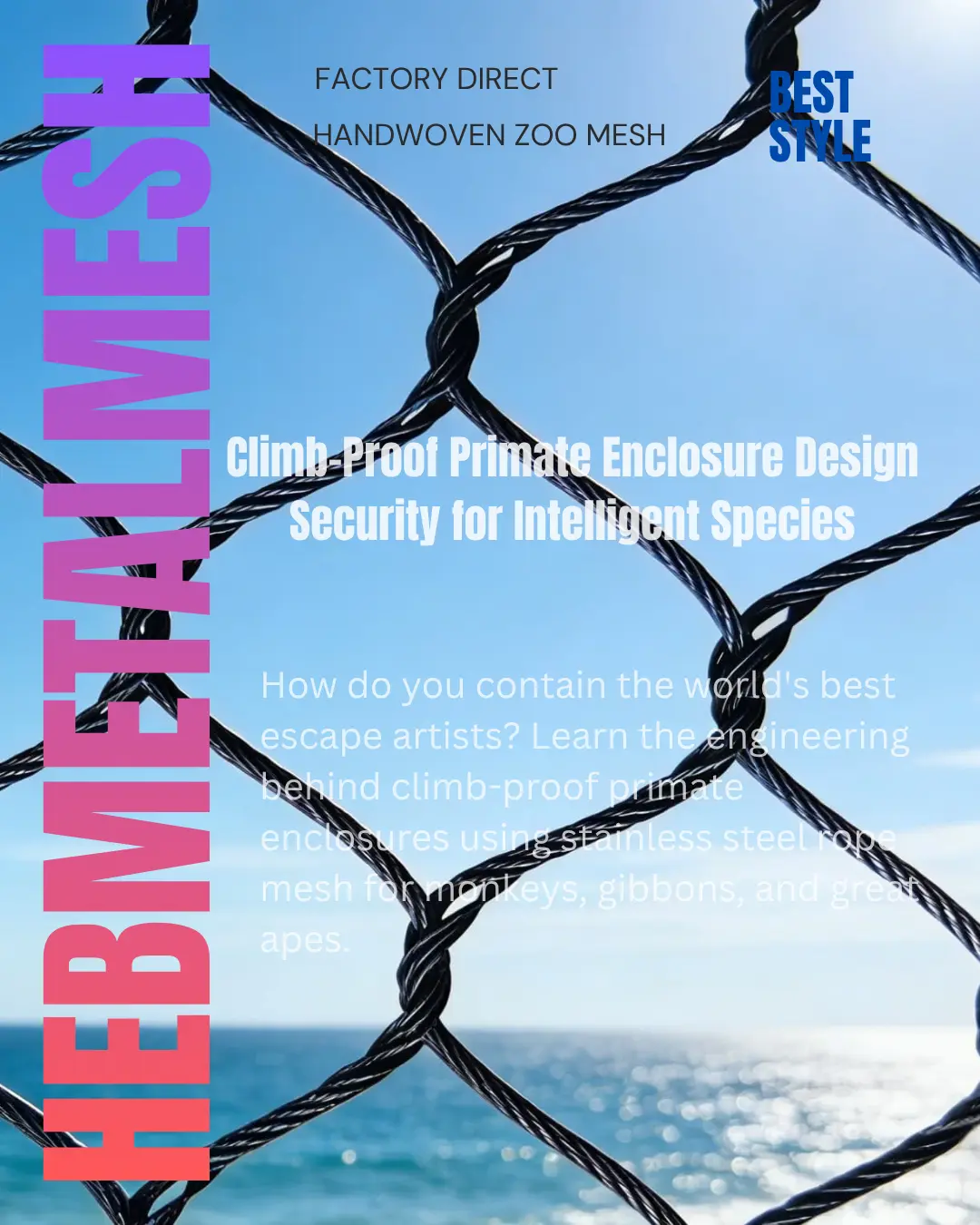
6: Installation Best Practices for Long-Term Structural Integrity
Installing stainless steel rope mesh is a precise process. Because this material is designed to be flexible and “drape” to the shape of your structure, proper tensioning is the secret to both longevity and bird safety.
1. Precision Tensioning Never overtighten the mesh to the point of creating rigid stress zones. Stainless steel rope mesh is designed to distribute the load across the entire surface area. Use high-quality tensioning hardware at perimeter attachment points to allow for minor thermal expansion and contraction. This ensures that the mesh remains taut over time without causing fatigue at the connections.
2. Perimeter Reinforcement The weak point of any enclosure is the connection between the mesh and the support frame. We recommend using a heavy-duty stainless steel border cable or a rigid perimeter frame with stainless steel eye bolts. This distributes the tension evenly along the entire edge, preventing “puckering” or sagging at the connection points, which are prime targets for bird-chewing or predator-tearing.
3. Predator-Proofing the Base For outdoor enclosures, the “ground-to-mesh” transition is critical. Simply attaching the mesh to the ground is not enough. The industry standard is to bury the mesh at least 12 to 18 inches below the soil line, or to attach it to a concrete footer using a heavy-duty steel base plate. This prevents digging predators (like foxes, raccoons, or domestic pets) from tunneling underneath the enclosure wall.
By following these installation protocols, you aren’t just putting up a fence; you are engineering a permanent, high-security habitat that protects your birds and satisfies the most rigorous safety inspections.
Frequently Asked Questions (FAQ)
A: For a project of this scale, 316-grade stainless steel rope mesh is the gold standard. It provides the highest ROI by offering a 30-plus year lifespan, eliminating the recurring costs of replacement, labor, and repairs associated with galvanized or nylon alternatives.
A: Yes, but material grade matters. For coastal areas within 10 miles of the ocean, we exclusively recommend 316-grade stainless steel. It contains molybdenum, which offers superior resistance to chloride-induced corrosion and salt-spray, preventing the pitting and staining that can occur with lower-grade materials.
A: Large psittacines require high-tensile strength to resist beak damage. You should specify a wire diameter of at least 2.0mm–2.4mm with a 50mm aperture. This “beak-proof” configuration ensures the bird cannot chew through the material or get its claws caught in the weave.
A: The black oxide finish serves two primary purposes: it minimizes light reflection to provide a clear, unobstructed view for park visitors, and it reduces glare for the birds themselves, which significantly lowers the risk of flight-striking injuries. It essentially makes the barrier “invisible.”
A: Purchasing directly from HEB Metal Mesh allows you to bypass third-party reseller markups, ensures you receive certified 304/316-grade materials with full traceability, and gives you access to custom roll dimensions that minimize waste during installation, providing significant savings on large-scale projects.
Conclusion: Build for the Future
The success of your bird park or sanctuary rests on the integrity of its barriers. By choosing high-tensile stainless steel rope mesh, you are prioritizing the safety of your animals and the long-term profitability of your facility. Don’t settle for temporary solutions that require constant maintenance. Invest in infrastructure that stands the test of time, weather, and the unique challenges of avian life.
If you are planning to make a purchase or require rolled forms, custom sizes and global shipping, stainless steel aviary netting serves as our core product page featuring all specifications and material options.
Ready to Build a Permanent Enclosure?
Don’t compromise on safety. Get the high-tensile, long-lasting stainless steel mesh trusted by zoos and wildlife sanctuaries nationwide.
Shop Professional Aviary Mesh RollsNeed a custom quote for a large project? Contact our engineering team here.
- When planning an aviary, our article Best Durable Aviary Netting Large Bird Enclosures can also serve as a practical supplementary reference.
- When planning an aviary, our article Choose The Right Large Outdoor Bird Cage can also serve as a practical supplementary reference.
- When planning the aviary, our article Hot Selling Large Outdoor Bird Aviary can also serve as a practical supplementary reference.
- When planning an aviary, our article Diy Large Scale Walk Through Aviary Netting can also serve as a practical supplementary reference.