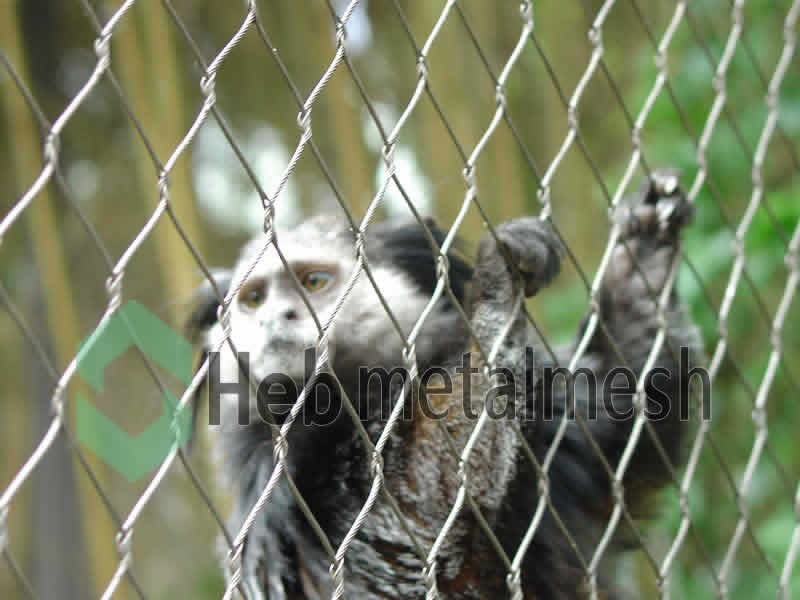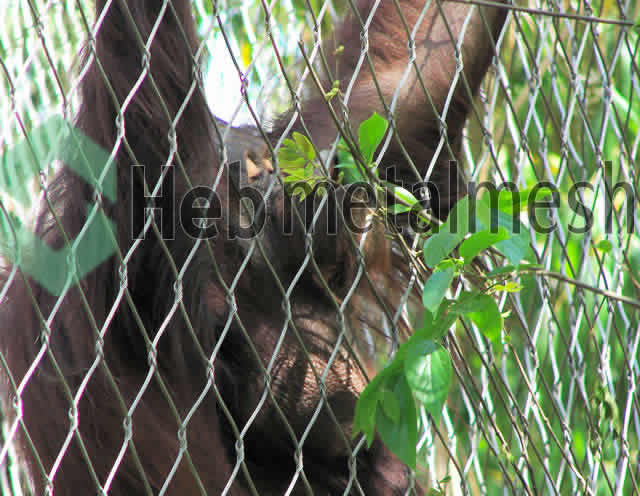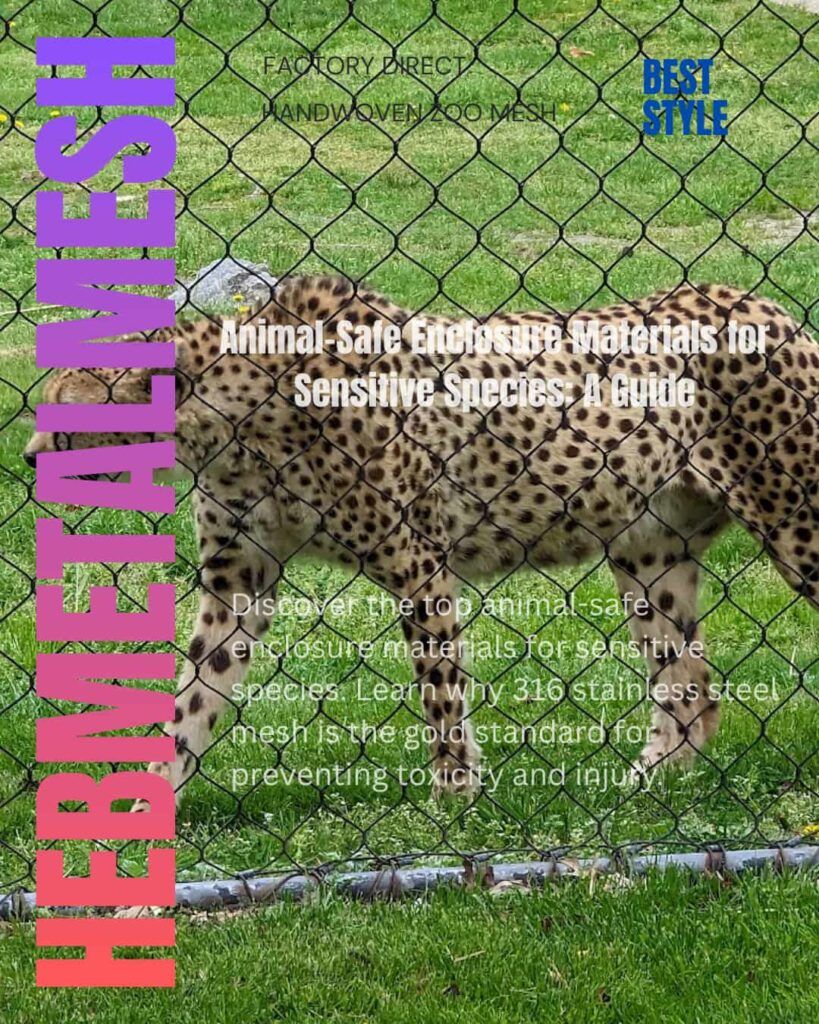
Selecting animal-safe enclosure materials for sensitive species requires prioritizing non-toxic, non-abrasive, and structurally integral components. Traditional galvanized wires often contain zinc and lead, posing a high risk of “New Cage Syndrome” or heavy metal toxicity in psittacines and primates. 316 Marine-Grade Stainless Steel rope mesh is the premier choice, offering a chemically inert environment that is rust-proof and flexible. Unlike rigid welded wire, this hand-woven mesh prevents “entrapment injuries” and “feather wear,” making it the safest material for endangered birds, primates, and small mammals in professional zoological settings.
1. Introduction: The High Stakes of Habitat Design
It is the nightmare of every curator, breeder, and dedicated pet owner: providing a beautiful home for a creature, only to realize that the very walls surrounding them are the source of a mysterious, declining health. This is the tragic reality of “New Cage Syndrome,” where a “standard” enclosure material—often chosen for its price rather than its chemical properties—slowly poisons the inhabitant through ingestion or skin contact. In the world of high-stakes animal husbandry, the choice of animal-safe enclosure materials for sensitive species isn’t just a design preference; it is a life-or-death decision.
Defining the “Sensitive” Species
When we talk about “sensitive species,” we aren’t just referring to animals that are fragile. We are talking about species with specific biological vulnerabilities. This includes hook-billed exotic birds (parrots and macaws) that use their beaks to climb and are prone to heavy metal toxicity; primates with high intelligence and dexterous fingers that can get caught in rigid welds; and reptiles or amphibians with permeable or delicate skin that can be easily lacerated by zinc-plated burrs. For these animals, the environment must be as biologically “silent” as it is physically secure.
The Thesis for Safety
To truly protect these inhabitants, animal-safe enclosure materials for sensitive species must meet three non-negotiable criteria: they must be chemically inert, structurally durable, and physically forgiving.
Traditional galvanized hardware cloth or standard welded wire might keep an animal “in,” but they rarely keep an animal “safe.” In this guide, we will explore why moving beyond the hardware store aisle and toward professional-grade 316 stainless steel rope mesh is the only way to ensure a non-toxic, injury-free sanctuary. Whether you are managing a world-class zoological exhibit or a private backyard aviary, the goal remains the same: the enclosure should be a shield, never a hazard.
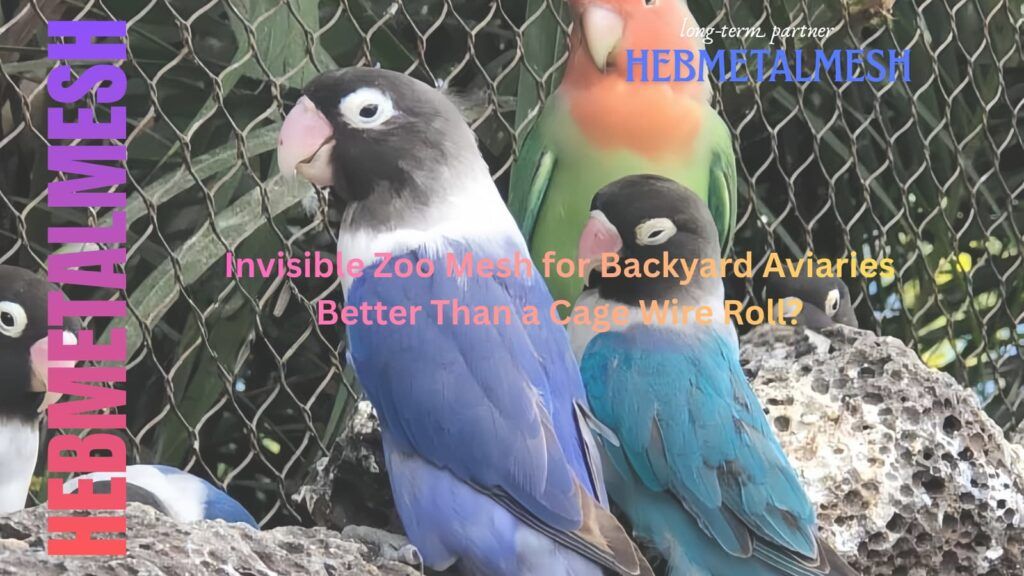
Safety doesn’t have to mean sacrificing your view. Once you’ve secured the right non-toxic materials, you can use the unique flexibility of this mesh to create stunning, organic shapes. Check out our guide on designing with invisible zoo mesh for backyard aviaries to see how to turn a safe habitat into a backyard sanctuary.
2. The Toxicity Crisis: Zinc, Lead, and Galvanization
In the world of animal husbandry, “Standard” is often a synonym for “Dangerous.” When searching for animal-safe enclosure materials for sensitive species, most owners naturally gravitate toward the galvanized wire found at local hardware stores. It looks clean, it feels sturdy, and it’s affordable. However, beneath that shiny silver coating lies a chemical ticking time bomb that has claimed the lives of countless avian and mammalian residents.
The Reality of “New Cage Syndrome”
“New Cage Syndrome” is the clinical term for acute heavy metal toxicosis. It occurs when an animal—most commonly a hook-billed bird or a curious primate—ingests small particles of the enclosure’s coating. Symptoms are devastating: lethargy, tremors, kidney failure, and eventually death. For a sensitive species like a Hyacinth Macaw or a Golden Lion Tamarin, even microscopic amounts of zinc or lead can be fatal. This isn’t just a “risk”; it is a statistical certainty when using sub-par materials that oxidize over time.
The Galvanization Lie: Why Zinc-Plating Fails
The biggest misconception in the industry is that “galvanized” means “safe.” Galvanization is simply the process of dipping carbon steel into a bath of molten zinc. This coating is brittle. As the wire is bent, cut, or chewed, the zinc “flips” or flakes off. For animals that use their mouths as a third hand to climb the walls of their habitat, these flakes are easily ingested. Furthermore, many cheap cage wire rolls contain lead impurities within the zinc bath. Even “galvanized after weld” (GAW) products eventually white-rust, creating a powdery zinc carbonate that is easily licked off by inquisitive tongues.
The Chemical Advantage of 316 Stainless Steel
This is where animal-safe enclosure materials for sensitive species separate the amateurs from the professionals. 316 Marine-Grade Stainless Steel is not a coated metal; it is a homogenous alloy. It contains no zinc, no lead, and no toxic heavy metals that can flake off. It is essentially “food-grade” infrastructure.
Because it is chemically inert, it does not react with animal waste, cleaning chemicals, or salt spray. When a sensitive bird climbs a 316 stainless steel rope mesh wall from hebmetalmesh, they are interacting with a surface that is as safe as a surgical instrument. You aren’t just building a fence; you are eliminating the chemical variables that lead to heartbreak and expensive veterinary bills.
3. Physical Safety: Beyond the Chemical
Chemical safety is the foundation, but physical architecture is where the daily well-being of your animals is won or lost. When evaluating animal-safe enclosure materials for sensitive species, you must look past the “wall” and focus on the microscopic touchpoints where the animal interacts with the mesh. Standard welded wire and expanded metals are notorious for “burrs”—tiny, razor-sharp metallic nubs left behind by the welding process or the galvanization drip.
Smoothness vs. Lacerations
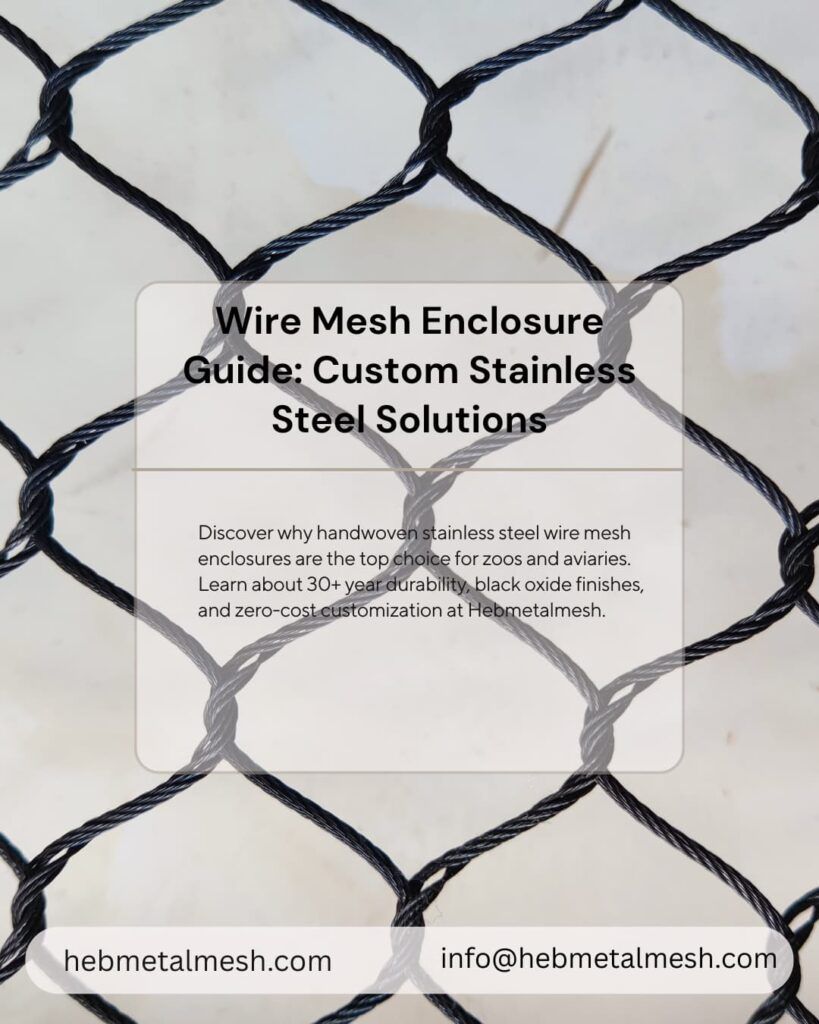
Compare a traditional welded cage wire roll to a hand-woven stainless steel rope mesh. In a welded grid, every intersection is a potential point of failure and a source of abrasions. As birds climb or primates swing, these sharp points can cause bumblefoot (pododermatitis) or deep lacerations. Conversely, hebmetalmesh utilizes a seamless, hand-woven ferrule system. The cables are smooth to the touch, and the connection points are rounded, ensuring that even the most frantic wing-beat or high-velocity climb results in zero skin or scale damage.
The “Entrapment” Factor
Aperture design is a critical component of animal-safe enclosure materials for sensitive species. Rigid, square grids are unforgiving. If a bird’s beak or a small mammal’s limb becomes wedged in a fixed 1-inch square, the animal’s instinct is to pull back with force, often leading to fractures or dislocations. The diamond-patterned rope mesh offers a degree of “give.” Because the mesh is flexible, the aperture can slightly deform under pressure, allowing an entangled limb to be withdrawn safely rather than snapping under tension.
Protecting Feather and Skin Integrity
For high-flight species or active climbers, impact trauma is a constant concern. A rigid wire wall is a “hard stop.” When a bird miscalculates a landing against a stiff cage wire roll, the impact can break blood feathers or cause chest bruising. Flexible stainless steel mesh acts like a safety net. It absorbs the kinetic energy of the animal, flexing with the impact before returning to its shape. This “soft-catch” characteristic is why professional zoos prioritize rope mesh for sensitive raptors and delicate primates—it preserves the physical integrity of the animal, from the tips of their feathers to the surface of their skin.
4. Technical Comparison: Material Science for Curators
For zoological curators and professional habitat designers, selecting animal-safe enclosure materials for sensitive species is a calculation of risk versus structural physics. You aren’t just looking for “strong” wire; you are looking for a material that maintains its integrity under the specific mechanical stresses of an animal’s daily life. Whether it is the crushing bite force of a Hyacinth Macaw or the constant salt-spray of a coastal sanctuary, the material science must be bulletproof.
The Engineering of a Safe Enclosure
To determine if a material is truly “animal-safe,” we use a safety factor calculation that accounts for more than just static weight. It must factor in the dynamic energy of an animal in motion and its specific destructive capabilities:
A standard cage wire roll often fails this test because its “welding points” are the weakest link. In contrast, hand-woven rope mesh has no welds to pop. The force is distributed across the entire woven structure, providing a safety margin that rigid wire simply cannot match.
Corrosion Resistance in Extreme Climates
In humid, tropical, or coastal environments, “standard” galvanized wire is a liability. Once the zinc coating oxidizes, the rough surface becomes a breeding ground for bacteria and fungi. 316 Marine-Grade Stainless Steel is mandatory in these settings. The addition of Molybdenum in the 316 alloy provides superior resistance to “pitting” and chloride corrosion. This ensures the mesh remains smooth and non-porous, preventing the microscopic “cracks” where pathogens usually hide.
Thermal and Chemical Stability
Finally, we must consider thermal conductivity and off-gassing. Unlike plastic-coated wires, which can release toxic fumes (VOCs) under high heat or UV exposure, stainless steel is thermally stable and chemically inert. Furthermore, unlike wood—which is porous and harbors avian diseases or parasites—the metal mesh from hebmetalmesh can be steam-cleaned or disinfected without degrading. It provides a sterile, safe, and permanent solution for the most sensitive inhabitants on earth.
5. Species-Specific Recommendations
When selecting animal-safe enclosure materials for sensitive species, a “one size fits all” approach is a recipe for disaster. Different biological families interact with their environment in fundamentally different ways. To build a truly successful sanctuary, the mesh must be tailored to the specific behavioral and physical profile of the inhabitant.
The Avian Profile: Zinc-Free Sovereignty
For parrots, macaws, and raptors, the primary threat is oral. Psittacines use their beaks as a mechanical tool for climbing and exploring. This “mouthing” behavior makes them the highest-risk group for heavy metal poisoning. A standard cage wire roll with galvanized coating is an immediate disqualifier. The only acceptable animal-safe enclosure materials for sensitive species in the avian category are 304 or 316 stainless steel. For raptors, the focus shifts to “feather-friendly” flexibility; a soft-tempered rope mesh prevents the feather breakage that often occurs when a bird bails into a rigid welded wire wall.
The Primate Profile: Dexterity and Grip
Primates present a mechanical challenge. Their immense grip strength and restless curiosity mean they will find—and exploit—any weak weld or sharp edge. Enclosures for smaller primates like Marmosets or Capuchins require a “finger-safe” aperture that prevents entrapment while offering a smooth, rounded surface for constant swinging and climbing. Hebmetalmesh provides a hand-woven structure that lacks the “snag points” of traditional wire, protecting delicate finger pads and joints from long-term repetitive strain.
The Reptile and Amphibian Profile: Airflow and Skin Integrity
For reptiles, especially larger lizards like Iguanas or Monitors, “rostral rubbing” is a common injury where the animal chafes its nose against the enclosure walls. Traditional cage wire rolls act like a cheese grater on delicate reptilian skin. A flexible, “rub-free” stainless steel mesh provides the necessary airflow for thermoregulation without the abrasive texture. For amphibians, the non-porous nature of 316 stainless steel is vital; it doesn’t harbor the bioactive bacteria or fungi that can be absorbed through their highly permeable skin.
6. The Verdict: Investing in Life-Span
When you are responsible for the well-being of a living creature, the word “budget” takes on a different meaning. In the world of animal-safe enclosure materials for sensitive species, the cheapest option is almost always the most expensive in the long run. Between the devastating costs of specialized avian veterinary care for zinc toxicity and the labor required to replace a rusted-out cage wire roll every few years, the “bargain” disappears quickly.
Choosing hebmetalmesh is a commitment to a “One and Done” philosophy. By installing $316$ Marine-Grade Stainless Steel rope mesh, you are investing in a permanent, biologically inert, and physically forgiving infrastructure. You are removing the variables of heavy metal poisoning, feather breakage, and entrapment injuries from the equation entirely.
Ultimately, a sanctuary is only as good as the peace of mind it provides—both for the animal and the keeper. When you walk away from your enclosure at night, you should know that the materials surrounding your sensitive species are working for their health, not against it. With the right engineering and a focus on material science, you aren’t just building a cage; you are building a legacy of care.
🛒 Prioritize Their Safety Today
Is Your Enclosure Truly Safe?
Don’t gamble with animal-safe enclosure materials for sensitive species. Our 316 Stainless Steel mesh is the industry standard for toxicity prevention and physical safety.
Eliminate the risk of heavy metal poisoning.
Protects delicate feathers, fur, and skin.
Trusted by Zoos and Conservation Centers Globally.
📘 Glossary of Terms: Animal Safety & Mesh Engineering
| Term | Definition & Safety Impact |
|---|---|
| 316 Stainless Steel | A marine-grade alloy containing molybdenum for superior resistance to “pitting” and corrosion. It is the gold standard for animal-safe enclosure materials in humid or coastal environments. |
| Aperture | The clear opening or “hole” size within the mesh. Correct aperture selection is vital to prevent limb entrapment or beak injuries in birds and primates. |
| Cage Wire Roll | A common industrial product made of galvanized or welded carbon steel. While widely available, it often contains toxic zinc coatings and lacks the flexibility required for sensitive species. |
| Chemically Inert | A material that does not react with its environment or biological waste. Inert materials like 316 stainless steel do not off-gas or leach toxins into an animal’s habitat. |
| Ferrule | The small, rounded stainless steel sleeve used to join cables in a hand-woven mesh. In professional zoo mesh, these are smooth to prevent skin abrasions. |
| Galvanization | The process of coating steel with zinc to prevent rust. This coating is brittle and poses a severe risk of “New Cage Syndrome” if ingested by hook-billed birds. |
| New Cage Syndrome | A clinical condition of heavy metal toxicosis caused by animals chewing on or licking sub-par enclosure materials like standard galvanized wire. |
| Rostral Rubbing | A common injury in reptiles where the animal chafes its nose against a rigid enclosure wall, often caused by the abrasive texture of a standard cage wire roll. |
| Tensile Strength | The maximum load a material can support without breaking while being stretched. Rope mesh offers high tensile strength with a fraction of the weight of welded wire. |
| Zinc Toxicosis | A medical emergency in exotic animals caused by the ingestion of zinc. It is the primary reason experts recommend avoiding galvanized cage wire rolls for sensitive species. |
🙋♂️ FAQ: Safety and Material Science for Sensitive Species
New Cage Syndrome, or acute zinc/lead toxicosis, typically manifests as sudden lethargy, depression, regurgitation, and neurological signs like tremors or loss of balance. Because animal-safe enclosure materials for sensitive species are inert, switching to stainless steel rope mesh eliminates the source of these heavy metals, which are often found in the flaking coatings of a standard cage wire roll.
While PVC-coated wire avoids direct contact with zinc, it is not considered “animal-safe” for hook-billed birds or rodents. These species can easily chew through the plastic coating, exposing the wire underneath and potentially ingesting toxic plastic fragments or lead-based stabilizers used in the PVC. For true long-term safety, non-coated 316 stainless steel is the only fail-safe option.
Because 316 stainless steel is highly corrosion-resistant, you can use high-pressure steam or bird-safe, F10-grade disinfectants without worrying about the metal reacting or off-gassing. Unlike a galvanized cage wire roll, which can trap bacteria in its rough, oxidizing surface, the smooth cables of hebmetalmesh are non-porous and easy to sanitize.
In “high-flight” species like raptors or nervous parrots, a rigid wire wall acts like a solid floor upon impact, often causing broken blood feathers or keel bone fractures. Flexible rope mesh acts as a shock absorber. This “soft-catch” design is a hallmark of animal-safe enclosure materials for sensitive species, as it dissipates kinetic energy and prevents impact-related trauma.
Actually, stainless steel has lower thermal conductivity than many plastics or darker-coated metals. It does not “heat up” like a solid plate. Because the mesh is 90% open space, it allows for constant airflow, which is the most effective way to prevent heat stroke in sensitive reptiles and mammals. It provides a secure barrier without creating a “heat trap” effect.