

Executive Summary
A professional-grade animal outdoor enclosure is a specialized structural system designed to provide a secure, species-appropriate habitat that prioritizes animal welfare while ensuring long-term containment safety. Unlike temporary fencing, these enclosures utilize high-tensile, flexible materials engineered to withstand environmental stressors and animal interaction over decades.
The primary problem with traditional containment solutions, such as galvanized wire netting, is their inevitable degradation. Galvanized coatings are prone to oxidation, especially in humid or coastal environments, leading to rust, weakened structural integrity, and high recurring maintenance costs. For modern wildlife management, these short-term solutions create significant safety liabilities and operational downtime.
The superior solution is stainless steel handwoven rope mesh (specifically grades 304, 316, and 316L). This material has become the industry gold standard for its exceptional strength-to-weight ratio, non-corrosive properties, and ability to remain virtually invisible to visitors. It offers a 30+ year lifespan, ensuring that enclosures remain both safe and visually stunning with minimal intervention.
At Hebmetalmesh, our core value proposition is built on technical transparency. We provide factory-direct, certified materials with full traceability, including mill test reports, specifically tailored for zoos, wildlife parks, and private sanctuaries that require uncompromising quality.
1. Introduction
Designing a successful animal outdoor enclosure is one of the most complex challenges in modern architectural engineering. It requires a delicate balance: the habitat must be secure enough to contain powerful wildlife, safe enough to prevent injury to the animals, and structurally sound enough to withstand the elements for years, all while remaining as unobtrusive as possible for the visitor experience.
When you invest in an enclosure, you are not just buying wire; you are investing in a critical piece of infrastructure that defines the daily lives of the animals within and the safety of the public beyond. The difference between a structure that lasts a decade and one that remains pristine for thirty years lies entirely in material science and engineering precision. In the world of modern zoo architecture, the shift has moved decisively toward high-grade, corrosion-resistant stainless steel.
By choosing the right specifications from the start, facility managers can eliminate the cycle of frequent repairs and costly replacements. Whether you are building an expansive aviary or a robust perimeter for large predators, understanding the nuances of cable construction and material durability is essential. If you are ready to explore the foundation of a secure, long-lasting habitat, we invite you to explore our high-quality mesh products here.
As we delve into the technical requirements of these enclosures, it becomes clear that precision, traceability, and material integrity are the non-negotiables that separate professional-grade habitats from standard fencing.
2. Why Material Matters: Stainless Steel vs. Galvanized
When planning an animal outdoor enclosure, the choice of material is the single most important factor in the project’s long-term success. While galvanized wire mesh may seem attractive due to its lower initial price tag, it is a classic example of “cheap becoming expensive.”
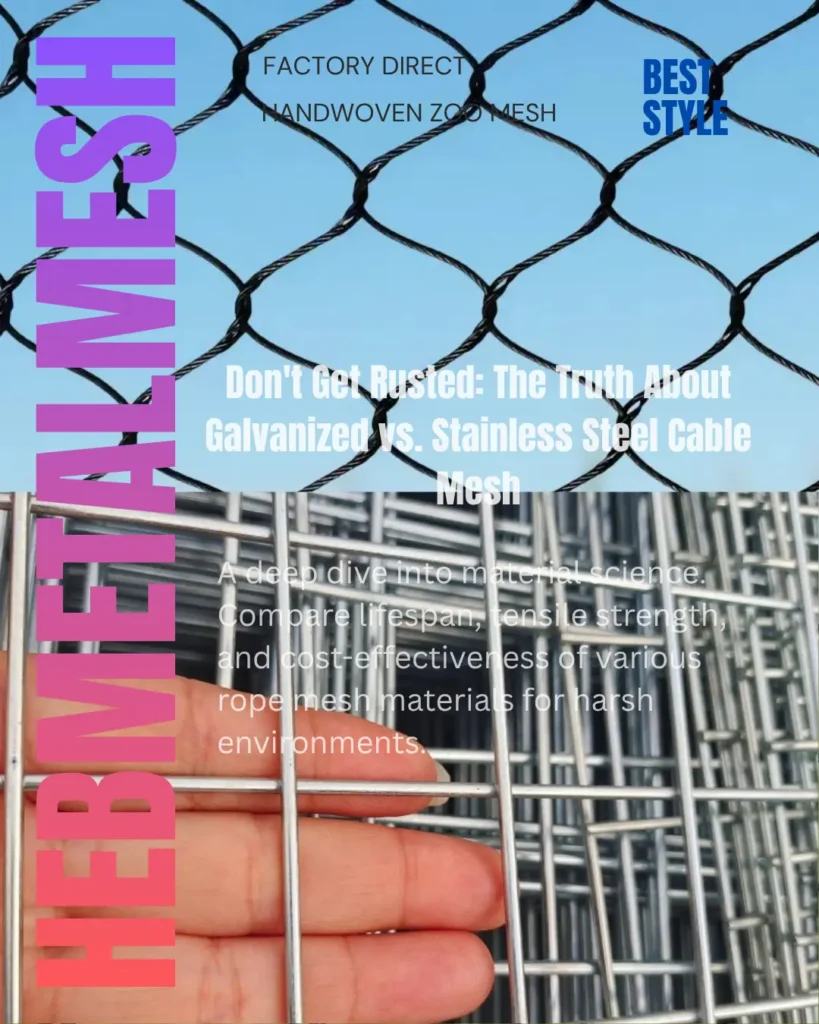
Galvanized steel is essentially carbon steel coated with a thin layer of zinc. While this coating provides temporary protection, it is susceptible to “white rust” and eventual flaking when exposed to the elements. Once that zinc layer is compromised—either through environmental acidity or the physical wear of an animal rubbing against the mesh—the underlying carbon steel is exposed to oxygen and moisture. This leads to rapid corrosion, which is not only an aesthetic eyesore but a significant safety hazard. A rusted wire loses its tensile strength, making it vulnerable to snapping under pressure or animal manipulation.
In contrast, high-quality stainless steel—such as 304 or 316 grade—is alloyed with chromium and nickel to create a passive, self-healing oxide layer that prevents rust from the inside out. For a professional-grade facility, the upfront investment in stainless steel is offset by a lifespan that can exceed 30 years with little to no maintenance. While you might pay more at the start, you avoid the recurring costs of patching, painting, or entirely replacing the mesh, which often requires relocating animals and closing exhibits to the public. To ensure your project meets the necessary safety and longevity requirements, it is essential to learn more about animal fence mesh standards.
3. Factory Technical Insights: The Anatomy of High-Quality Zoo Mesh
Engineering a secure habitat requires more than just picking a “metal net.” It requires an understanding of metallurgy, chemistry, and mechanical construction. At the factory level, we focus on several technical pillars that define the performance of our mesh.
Material Grade Transparency: 304 vs. 316 vs. 316L
Understanding material grades is non-negotiable for institutional procurement.
- 304 Stainless Steel: This is the industry standard for general-purpose applications. It offers excellent corrosion resistance in inland environments where moisture and salt levels are moderate.
- 316 Stainless Steel: Often called “marine grade,” 316 includes molybdenum, which provides significantly higher resistance to pitting and crevice corrosion.
- 316L Stainless Steel: The “L” stands for “low carbon.” This grade is essential for coastal zones or high-humidity environments. Its lower carbon content prevents the precipitation of chromium carbides during welding or high-stress applications, ensuring that even under extreme environmental pressure, the mesh remains structurally sound.
Corrosion Engineering: Passivation and ASTM B117
We do not simply manufacture the mesh; we treat it. Our manufacturing protocol includes a passivation process—a chemical treatment with a mild oxidant that removes free iron from the surface and enhances the protective chromium oxide layer.
To verify our results, we conduct rigorous ASTM B117 salt spray testing. In this process, samples are placed in a closed chamber and subjected to a continuous fog of saltwater. This simulation pushes the material to its limits, allowing us to guarantee that our enclosures can withstand the harsh realities of outdoor, year-round exposure without degradation.
Construction Methods: Handwoven vs. Machine-Made
The structural integrity of an animal outdoor enclosure is determined by its construction. Handwoven stainless steel rope mesh is superior to machine-manufactured alternatives for several reasons:
- Flexibility: Handwoven mesh can conform to complex, 3D architectural shapes without losing tension or integrity.
- Energy Absorption: The nature of the hand-interlocking weave allows the mesh to dissipate the impact energy of an animal leaning against it, whereas rigid machine-welded meshes can crack at the joints.
- Visual Clarity: Because the weave is thinner and more refined, it creates a “see-through” effect that improves the visitor experience and reduces animal stress.
Ferrule Integrity: Preventing Galvanic Corrosion
A common failure point in inferior mesh products is the ferrule (the sleeve that secures the wire ropes). If the ferrule material is not metallurgically matched to the wire rope, it creates galvanic corrosion—a process where the two different metals react in the presence of moisture, effectively “eating” the connection. At our factory, we ensure that ferrule material composition is perfectly matched to the 304/316 grade of the wire rope. This precision prevents the microscopic breakdown of the crimp, ensuring the entire net maintains its rated tensile strength for its entire intended service life.
4. Customization and Aesthetics: Beyond the Standard Roll
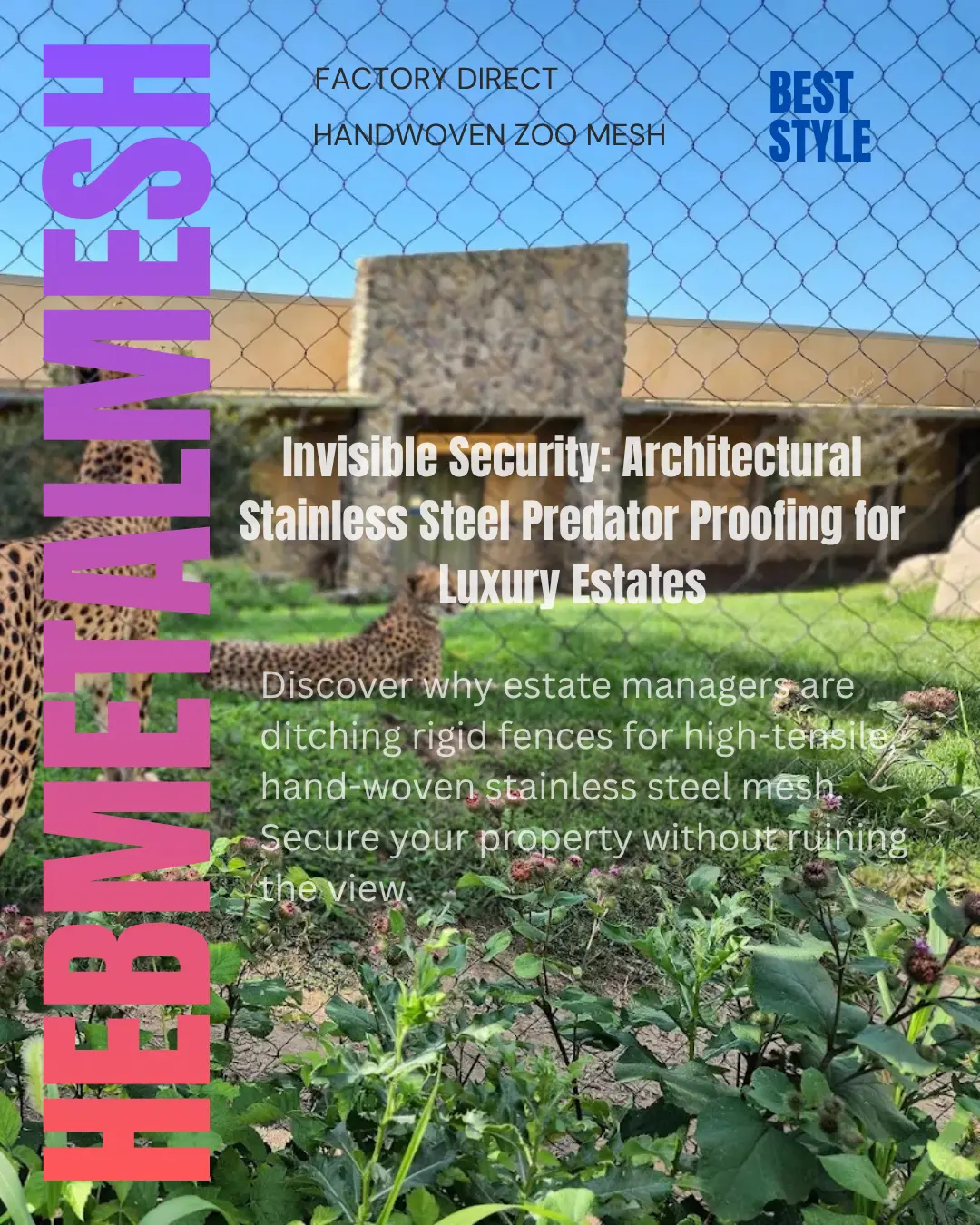
Modern zoo architecture is no longer just about containment; it is about immersion. The goal is to make the barrier disappear, allowing visitors to connect with the animals while ensuring the animals feel secure in an environment that mimics their natural habitat. This is where customization becomes a critical design tool.
Black Oxide Finish: The “Invisible” Barrier
One of the most requested features for premium enclosures is the black oxide finish. Unlike standard stainless steel, which can catch the sun and create a distracting glare, black-finished mesh absorbs light. This serves two major purposes:
- Enhanced Visibility: By reducing light reflection, the mesh becomes visually “transparent,” allowing visitors to see the animals clearly without the distraction of shiny wire.
- Natural Integration: Black mesh blends seamlessly into the background, particularly in shaded or forested areas, creating a more immersive and aesthetically pleasing view for the public.
Custom Size Service: Precision Engineering
Standard rolls often lead to excessive waste, complex on-site cutting, and compromised seams. Our factory-direct service focuses on custom fabrication, where we manufacture the mesh to the exact dimensions of your project drawings. This approach eliminates the need for field modifications, reduces labor costs during installation, and ensures that the tensioning is consistent across the entire panel. If you are looking for specific configurations, you can browse black oxide zoo mesh panels to see how precision manufacturing can streamline your site work.
5. How to Choose the Right Animal Outdoor Enclosure
Selecting the correct specification for your animal outdoor enclosure is a balance of biology and physics. A “one-size-fits-all” approach to mesh is rarely successful; instead, you must evaluate the project based on the specific needs of the inhabitants and the environment.
Matching Mesh Aperture to Species
The aperture (the size of the diamond opening) is the primary specification for safety and containment.
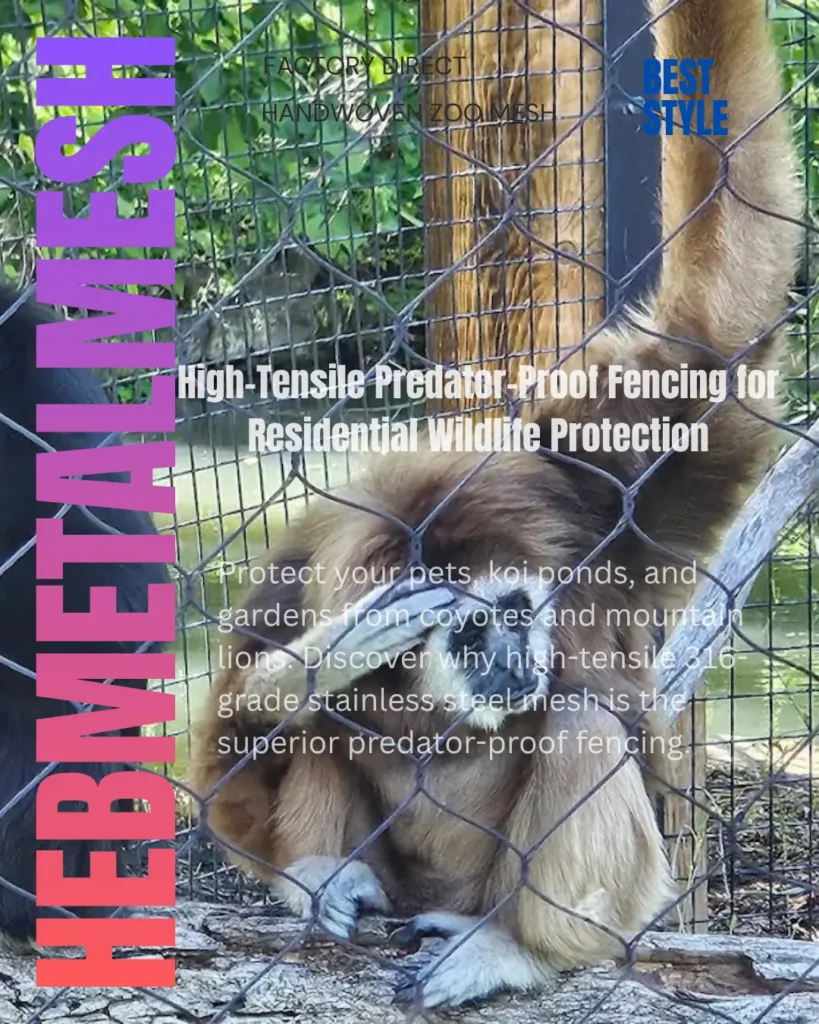
- Primate Safety: Primates are dexterous and inquisitive. For these species, you require a smaller aperture to prevent fingers or toes from getting stuck, as well as to minimize the ability of the animal to climb or manipulate the mesh.
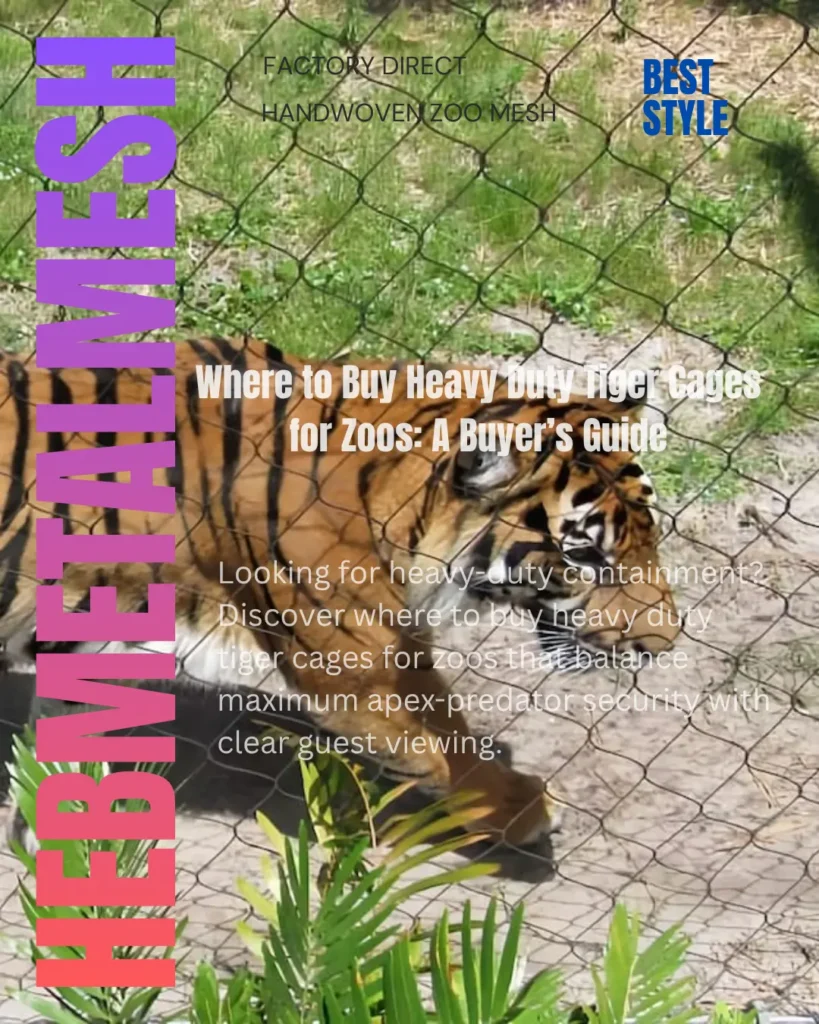
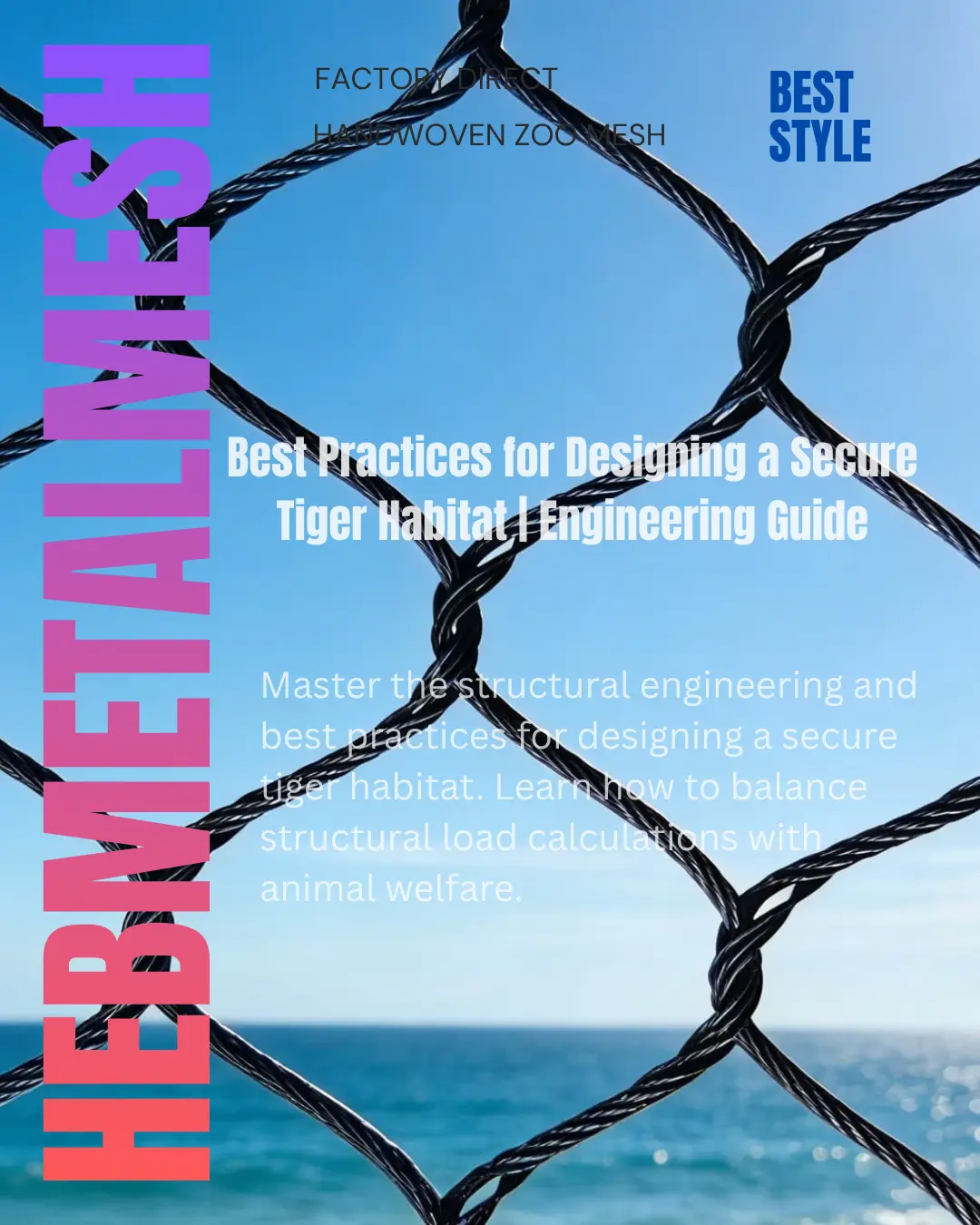
- Large Predators: For big cats or bears, the focus shifts from small apertures to extreme structural strength. These animals do not just push against the fence; they jump, scratch, and exert sudden, high-intensity force. Larger apertures may be permissible, but they must be paired with larger diameter wire ropes to ensure they cannot be bent or parted by powerful paws.
Tensile Strength Requirements
Beyond the aperture, the wire rope diameter dictates the total tensile strength of the wall. We always recommend performing a load-bearing calculation based on the species’ size and jumping capabilities. An animal outdoor enclosure for an agile, lightweight animal requires a different rope diameter than one designed to withstand the sheer mass of a large ungulate or predator. We provide the technical data on tensile strength for all our mesh types, ensuring that your structural engineer can verify the safety factors required for your specific design.
Addressing Local Climate Impacts
Climate is the silent factor that determines the longevity of your installation.
- Coastal or Marine Environments: If your facility is located near the ocean, the salt-laden air is highly corrosive. In these regions, 316 or 316L grade stainless steel is not just a preference; it is a necessity to prevent premature degradation.
- Extreme Temperature Fluctuations: In areas with heavy snow or high heat, the mesh must be installed with consideration for thermal expansion and contraction. We provide detailed installation guides that factor in how these temperature shifts affect cable tension, ensuring that the net doesn’t become too slack in the summer or over-stressed in the winter.
By analyzing these three variables—species behavior, required tensile strength, and climate—you can move from a general idea to a high-performance specification that serves your facility for decades.
6. Installation Best Practices and Avoiding Failure
The longevity of your animal outdoor enclosure is only as good as its installation. Even the highest-grade 316L stainless steel will fail prematurely if the structure is compromised during the setup process. Based on two decades of factory experience, we have identified the most common errors that lead to structural failure.
The Top 10 Installation Pitfalls
- Ignoring Frame Deflection: The perimeter frame must be rigid enough to handle the tension of the mesh. If the frame bows or flexes under load, it creates “dead zones” where the mesh loses its structural resistance.
- Improper Tensioning: Over-tensioning can cause the wire to fatigue, while under-tensioning leads to sagging and potential escape routes. Always use professional dynamometers to meet the specific tension requirements of your mesh type.
- Seam Overlap Mistakes: When connecting panels, failing to maintain the correct diamond pattern at the seams creates weak points. Ensure overlap aligns precisely with the mesh weave to maintain uniform load distribution.
- Hardware Incompatibility: Using non-stainless steel hardware in a stainless system will lead to immediate galvanic corrosion.
- Lack of Edge Support: The termination points—where the mesh meets the posts—are where most stress concentrates. Always use industrial-grade perimeter cables and shackles.
- Neglecting Thermal Expansion: Metal expands in the heat and contracts in the cold. Without proper compensation, the mesh can become dangerously slack or buckle under tension.
- Improper Cutting Techniques: Using grinding wheels that have been contaminated by carbon steel can embed particles into your stainless steel, leading to surface rust. Always use dedicated stainless-grade tools.
- Shipping & Handling Damage: Kinking the wire rope during unloading can permanently weaken the steel. Always handle rolls with proper spreaders.
- Site Survey Oversight: Failing to account for uneven terrain or slope changes during the pre-fabrication phase leads to forced, uneven stretching of the panels.
- Unauthorized Repairs: Using improvised patches that don’t match the original ferrule and rope specifications.
Thermal Expansion Compensation
To combat temperature-driven stress, we recommend designing your cable tensioning system with adjustable turnbuckles at critical junctions. This allows your maintenance team to adjust the tension seasonally, ensuring the mesh remains taut in the winter and properly relaxed during peak summer heat. For those looking for a granular look at how we manage these engineering challenges, we invite you to read our deep dive into zoo mesh behind-the-scenes engineering.
7. Long-Term Maintenance and Repair
Maintaining an animal outdoor enclosure should be a proactive process, not a reactive one. Because stainless steel rope mesh is highly durable, it rarely requires heavy maintenance, but regular checks are vital for the safety of your animals and the public.
Routine Inspection Protocols
We recommend a quarterly inspection schedule, with more frequent checks after extreme weather events. During these inspections, focus on:
- Connection Points: Inspect all shackles, turnbuckles, and perimeter cables for signs of looseness or wear.
- Ferrule Integrity: Visually check the crimps. If you see signs of “bird-caging” (wire strands separating) or significant corrosion around a ferrule, it is a sign that the component needs attention.
- Animal Interaction Zones: Areas where animals frequently congregate—such as climbing posts or food stations—should be checked for signs of excessive friction or wear on the mesh surface.
Handling Minor Repairs
The modular nature of our handwoven mesh makes it uniquely “repair-friendly.” Because the mesh is a system of individual rope segments, you do not need to replace an entire panel if a small section is damaged.
- Small Tears: Can often be “stitched” using matching wire rope and specialized hand-crimping tools, maintaining the original tensile strength of the area.
- Damaged Sections: If a specific portion of the mesh has been compromised, our team can fabricate a replacement patch that weaves directly into the existing structure, ensuring the repair is virtually invisible and structurally sound.
By performing these minor, targeted repairs, you avoid the need for large-scale reconstruction, effectively extending the lifespan of your enclosure to 30 years or more. Keep a small supply of factory-matched wire rope and spare ferrules on hand to address minor damage immediately, preventing small issues from becoming larger, more expensive problems.
8. Key Takeaways
Investing in the right animal outdoor enclosure is a long-term commitment to safety, welfare, and operational efficiency. By prioritizing high-grade materials and professional engineering, you eliminate the cycle of costly, recurring maintenance.
- Certified Material Grades: Always ensure your supplier provides material traceability. Using 304, 316, or 316L stainless steel with documented mill test reports is critical for regulatory compliance and safety.
- 30+ Year Lifespan: High-quality, passivated stainless steel rope mesh is designed to survive decades of environmental exposure, far outperforming galvanized alternatives that often fail within 5–10 years.
- Factory-Direct Advantage: Sourcing directly from the manufacturer ensures wholesale pricing, precision custom fabrication, and direct access to technical engineering support, eliminating middleman markups.
- Customization for Impact: Options like black oxide finishes and custom-sized panels provide both aesthetic integration with natural habitats and practical benefits like reduced glare and lower on-site labor costs.
- Proactive Maintenance: A well-designed enclosure, properly tensioned at installation and inspected quarterly, requires minimal intervention and keeps your animals secure for the long haul.
9. Frequently Asked Questions (FAQ)
The industry gold standard is handwoven stainless steel rope mesh. Unlike rigid or galvanized materials, stainless steel offers a perfect balance of high tensile strength, extreme corrosion resistance, and flexibility, allowing it to absorb impact energy while remaining visually unobtrusive.
Pricing for an animal outdoor enclosure depends on the wire rope diameter, the mesh aperture (opening size), and the grade of stainless steel (304 vs. 316/316L). Because we offer factory-direct procurement, we can provide competitive wholesale pricing based on your project’s specific dimensions. Contact us for a custom quote based on your requirements.
Grade 304 is ideal for standard inland environments. Grade 316, however, contains molybdenum, which significantly enhances its resistance to pitting and corrosion. For coastal, marine, or highly humid climates, 316 or the low-carbon 316L grade is essential to prevent long-term environmental degradation.
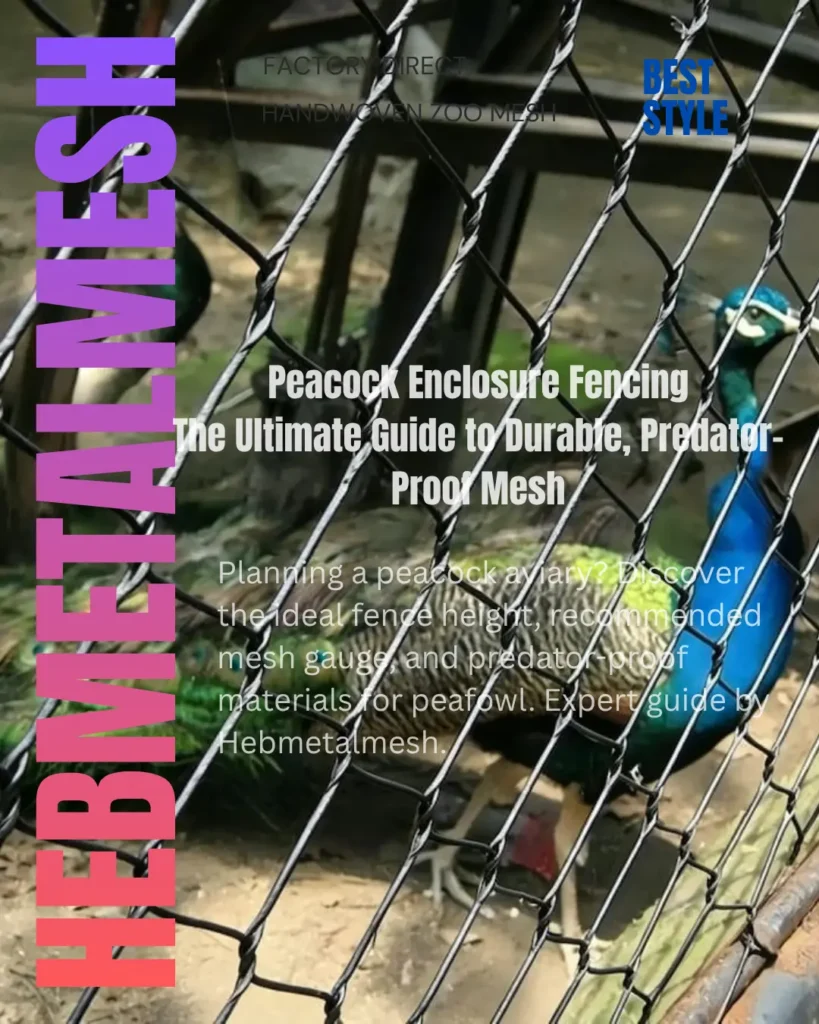
Predator-proofing requires a combination of high-tensile mesh and proper edge termination. Ensure the mesh is buried or securely anchored to a concrete footing to prevent digging, and use an aperture size small enough to prevent claws from gaining a foothold. Always use professional-grade ferrules to ensure that even if the mesh is impacted by a large animal, the connections remain solid.
Yes. Black oxide creates a matte surface that absorbs light, significantly reducing the sun glare associated with raw, shiny stainless steel. This makes the mesh appear almost invisible to the human eye, providing a clearer view of the animals and allowing the enclosure to blend more naturally into its surroundings.
Ready to Build a Lasting Habitat?
Get factory-direct pricing, mill certificates, and expert engineering support for your next project.
Request a Quote & Material SamplesBrowse our full catalog at hebmetalmesh.com/store/