
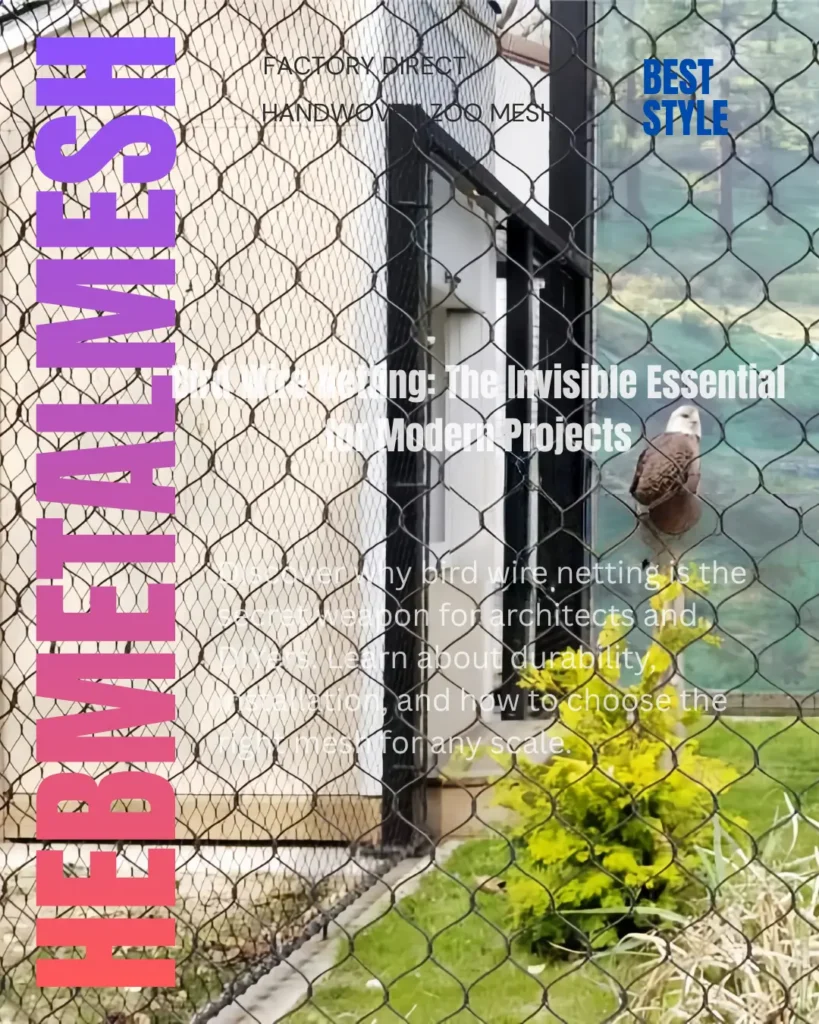
Bird wire netting is a specialized, high-tensile barrier system—most commonly manufactured from hand-woven stainless steel rope—designed to facilitate the permanent containment or exclusion of avian species. Unlike rigid hardware cloth, professional-grade bird wire netting utilizes a flexible diamond-pattern mesh that provides extreme structural integrity while maintaining over 90% transparency.
In modern industrial, zoological, and architectural sectors, stainless steel wire netting has effectively replaced traditional galvanized steel and plastic netting. This shift is driven by three critical factors:
- Durability: Stainless steel (typically Grade 304 or 316) is immune to UV degradation and corrosion, offering a 30+ year lifespan.
- Animal Safety: The flexible “soft-mesh” design prevents bird impact injuries, a common fatality associated with rigid galvanized wire.
- Security: It is virtually “predator-proof,” resisting the chewing and clawing of rodents and larger carnivores that easily breach nylon alternatives.
Today, bird wire netting is the gold standard for large-scale aviaries, architectural bird proofing, and high-end garden protection, serving as a permanent infrastructure investment rather than a seasonal fix.
Introduction: The Aesthetics of Protection
Let’s be honest: most bird control looks like a DIY disaster. You’ve seen it—the tangled “black hair” of nylon netting draped over a beautiful balcony, or the rusted, jagged edges of chicken wire wrapped around a garden bed. It makes even the most expensive property look like a temporary construction site. For years, the trade-off was simple but painful: you could have protection, or you could have a view. You couldn’t have both.
But what if the barrier wasn’t an eyesore? What if the very thing keeping the pigeons out or the macaws in was actually the most sophisticated element of your design?
The “Aha!” Moment: Invisible Architecture
This is where we introduce a concept that is currently revolutionizing high-end design: Invisible Architecture.
The “Aha!” moment happens when you realize that the most effective bird wire netting shouldn’t be seen at all. When you switch from bulky, rigid materials to high-tensile, hand-woven stainless steel, the physics change. Because the wire is so strong, it can be incredibly thin. When viewed from just a few meters away, the mesh seemingly dissolves into the background, leaving your view unobstructed while providing a fortress of security.
Bridging the Gap
This is precisely where Hebmetalmesh operates. We don’t believe that “industrial strength” has to mean “industrial ugly.” By focusing on the precision of hand-woven rope mesh, we bridge the gap between heavy-duty containment and design-led aesthetics.
Whether you are an architect trying to protect a historic facade without ruining its profile, or a homeowner who wants a garden that looks like a botanical exhibit, the secret isn’t in the bird—it’s in the mesh. Our stainless steel bird netting fence and aviary mesh is designed to be a “forever” solution that enhances the value of your space rather than cluttering it.
Welcome to the era where protection is permanent, professional, and—most importantly—practically invisible.
Material Science: Why Stainless Steel Wins
When you are looking for bird wire netting, you aren’t just buying a fence; you are buying a chemical insurance policy for your project. The market is flooded with “solutions” that look great on Day 1 but turn into a maintenance nightmare by Day 365. To achieve that “Aha!” moment of permanent protection, you need to understand the metallurgy.
304 vs. 316 Grade: Know Your Environment
Not all stainless steel is created equal. At Hebmetalmesh, we primarily utilize two “flavors” of steel, and picking the wrong one is a classic rookie mistake:
- Grade 304 (The All-Rounder): This is the workhorse of the industry. It offers excellent corrosion resistance and is perfect for inland projects, garden protection, and standard residential aviaries. If you aren’t smelling salt air, 304 is your best friend.
- Grade 316 (The Marine Specialist): If your project is within 5 miles of the coast or in a high-pollution urban center, you need the “Molybdenum” boost. Grade 316 contains this extra element to fight off chlorides (salt) and pitting. Using 316-grade stainless steel bird netting in coastal environments is the difference between a lifetime of shine and a rusty mess in three years.
The Longevity Argument: Total Cost of Ownership (TCO)
Let’s talk money. A roll of plastic bird netting might cost you $50 at a big-box store. A premium stainless steel panel might cost $250. On paper, the plastic looks like a win.
The Reality Check:
- Plastic/Nylon: Lasts 2–3 years before UV rays make it brittle. Total 10-year cost? 4 replacements + labor + the frustration of a breached barrier.
- Stainless Steel: Lasts 30+ years. Total 10-year cost? Just the initial purchase.
When you calculate the Total Cost of Ownership (TCO), stainless steel is actually 5x cheaper over a decade. You pay for it once, and then you forget it exists. That is true value.
Sustainability: The Eco-Friendly Barrier
In 2026, we have to talk about microplastics. Traditional nylon nets shed tiny plastic fibers into the soil and waterways as they degrade. Stainless steel is 100% recyclable and inert. It doesn’t leach chemicals, it doesn’t shed, and it doesn’t trap and kill wildlife like “invisible” plastic tangles do. It is the only choice for the environmentally conscious builder.
Deciding between a timber frame or a metal support system significantly impacts the lifespan of your enclosure, a topic covered thoroughly in our breakdown of professional aviary framing methods.
Anatomy of the Mesh—Knotted, Ferruled, and Woven
If you think all wire mesh looks like a screen door, prepare to have your mind blown. The way the wire is put together dictates how it reacts to light, wind, and geometry.
Technical Breakdown: Knotted vs. Ferruled vs. Woven
Understanding the “architecture” of your mesh is key to the “Invisible Architecture” look:
- Hand-Woven (Interwoven) Mesh: This is the pinnacle of the Hebmetalmesh product range. The wires are literally woven over and under each other. This results in a “sleeveless” look that is the most transparent. From a distance, it is virtually invisible.
- Ferruled Mesh: This type uses small stainless steel sleeves (ferrules) to join the wire ropes. It’s incredibly strong and has a more industrial, “high-tech” aesthetic. It’s often favored for architectural facades and safety balustrades.
- Knotted Mesh: This utilizes a mechanical knot. While strong, it is bulkier and more visible than woven options.
The Flexible Advantage: Conforming to Your Imagination
The real magic of aviary netting and bird mesh lies in its flexibility. Unlike rigid welded wire panels that only work on flat surfaces, our rope mesh acts like a fabric.
- Domes and Spheres: It can be stretched over organic, curved zoo exhibits.
- Tunnels: Perfect for creating “skyways” for birds or small primates.
- Wrap-Around Gardens: It can easily contour around irregular tree lines or architectural eaves.
Because the mesh is hand-woven, we can manufacture custom shapes that fit your specific project like a glove. If you can dream the shape, this mesh can cover it.
Application Deep-Dive (Beyond the Cage)
The true versatility of bird wire netting lies in its ability to solve problems that traditional materials simply can’t touch. When you stop seeing it as a “cage” and start seeing it as a “translucent skin,” the applications become limitless.
Residential: High-End “Catios” and Orchard Aesthetics
For the modern homeowner, “good enough” isn’t good enough. If you’re building a “Catio” (a patio for cats) or protecting a prized berry patch, you don’t want your backyard looking like a high-security prison.
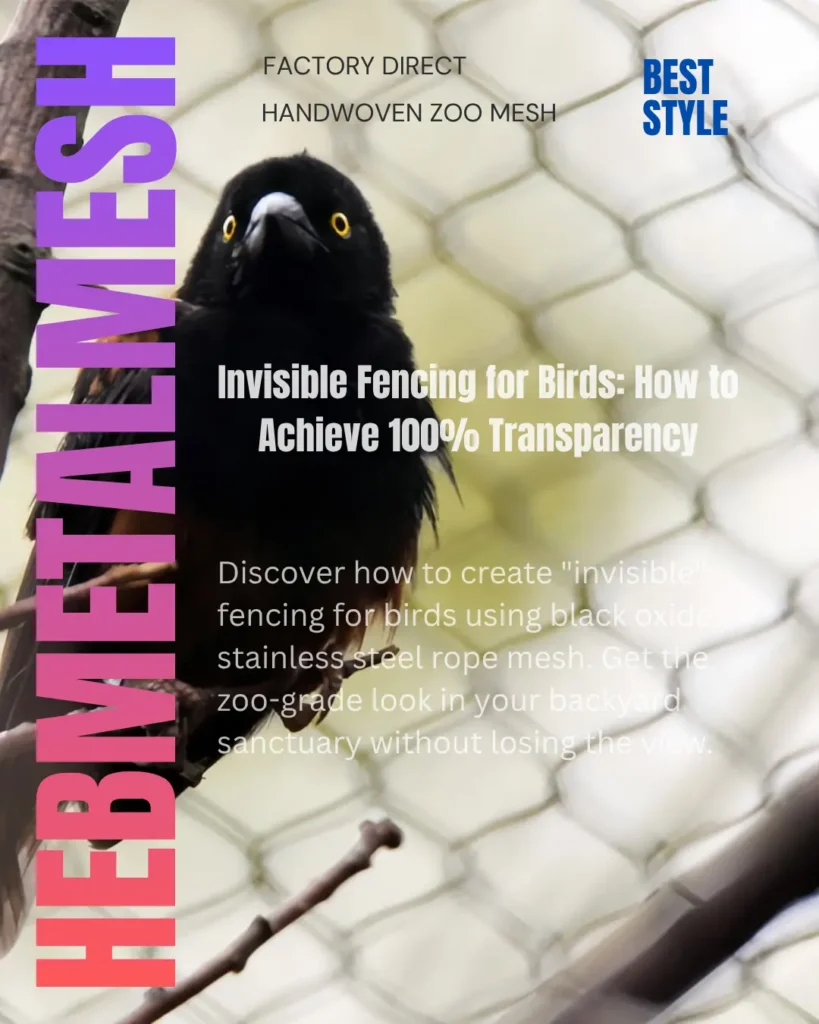
- The View: Using a black oxide finished stainless steel mesh allows you to look through the enclosure as if it isn’t there.
- The Protection: Unlike plastic, a cat’s claws or a squirrel’s teeth won’t make a dent in 304-grade steel. It’s the ultimate way to provide safety for pets and fruit trees without sacrificing your landscape’s “Aha!” factor.
Commercial: Facades and HVAC Security
Business owners are tired of “bird spikes.” Not only are they ugly, but clever pigeons often find ways to nest right on top of them.
- The Architectural Skin: Leading designers are now draped entire building facades in bird wire netting. It creates a physical barrier that keeps birds away from delicate stonework and HVAC intakes while allowing the building to “breathe.”
- The Discretion: From the street, the mesh is invisible. Up close, it looks like a premium design element. It’s the professional way to handle urban bird pressure without the “spike and glue” mess.
Zoological: The Naturalistic Experience
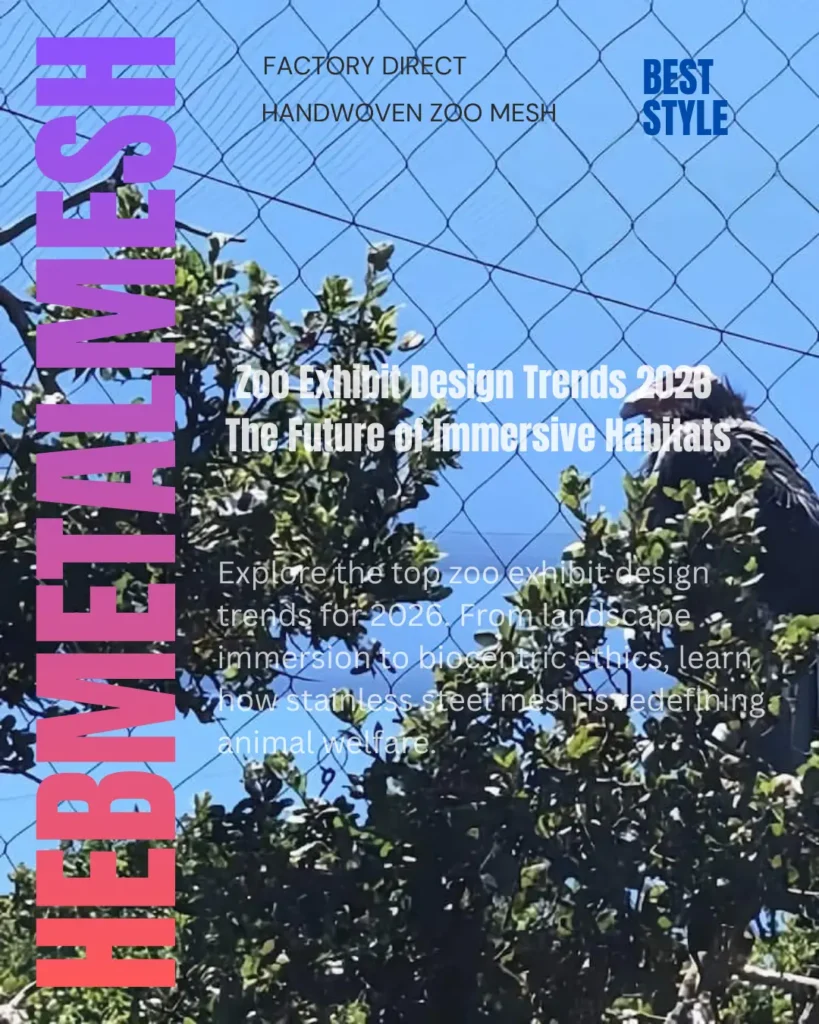
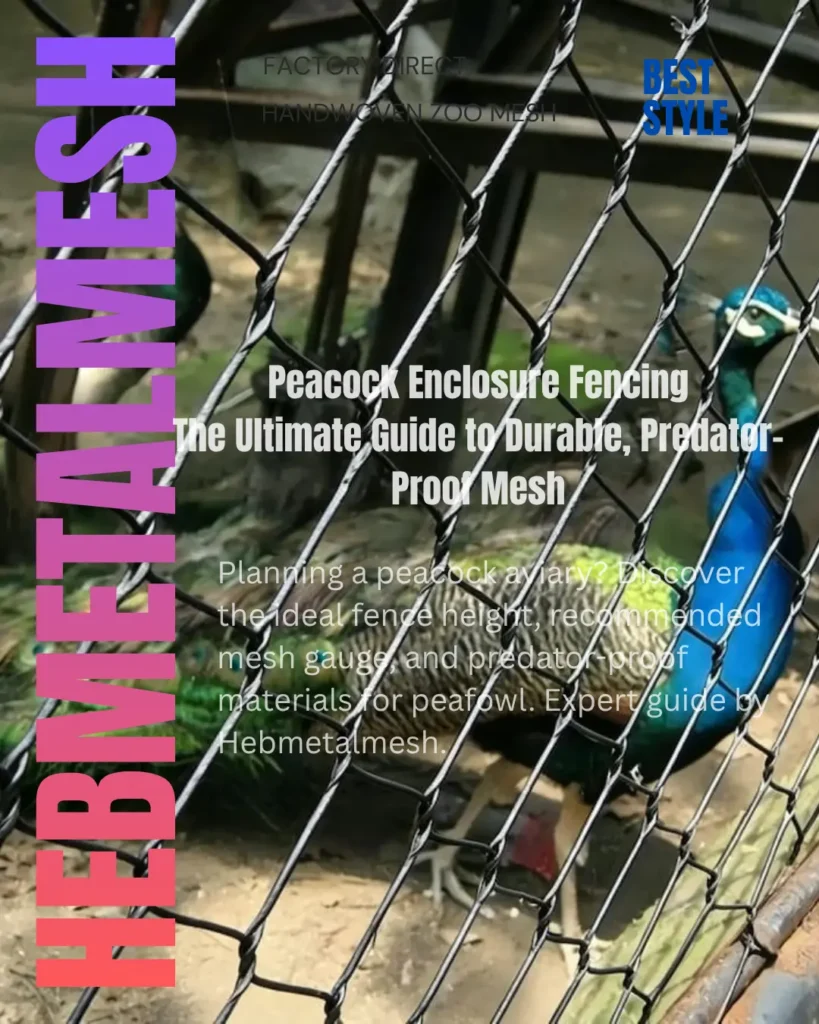
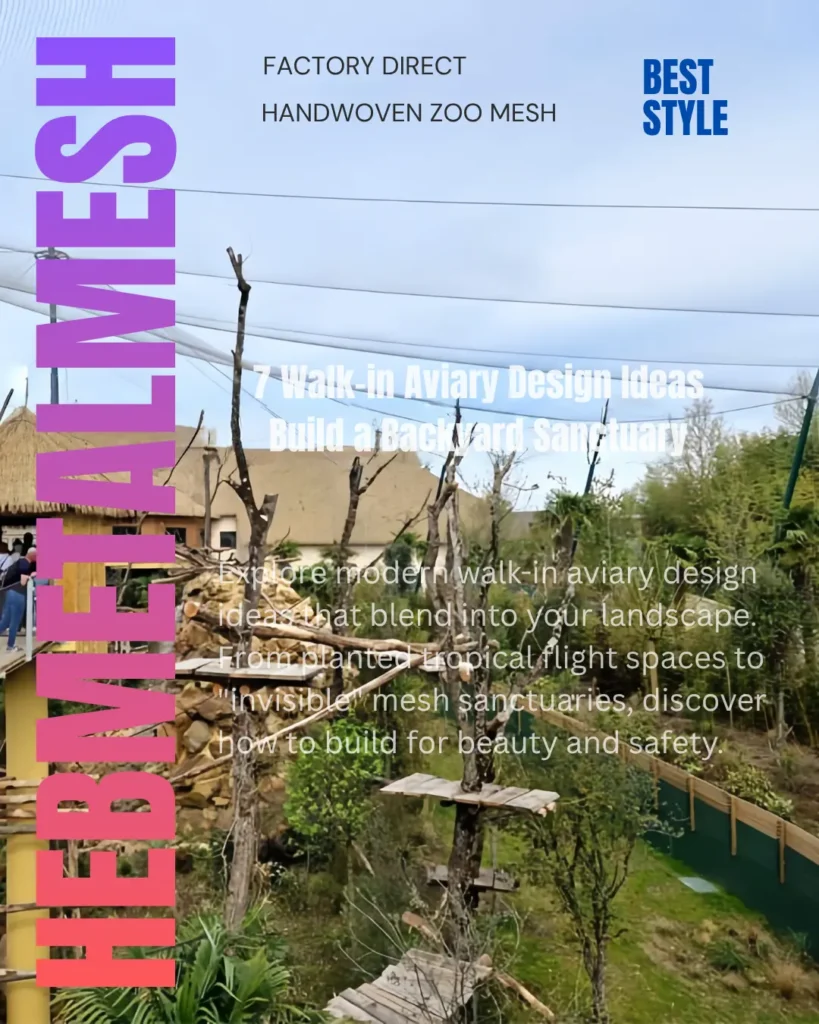
In the world of modern zoo design, the “cage” is dead. The goal is immersion. By using large-span aviary netting, zoos can create massive, walk-through habitats. Because the hand-woven mesh is so thin yet so strong, the visitor’s eye doesn’t focus on the barrier—it focuses on the birds. This creates a naturalistic experience where the mesh “disappears,” providing a seamless connection between the public and wildlife.
Installation 101—Thinking Like a Pro
You can buy the best material in the world, but if you install it like a amateur, it will look like a disaster. To get that sleek, “invisible” look, you have to think about tension.
Tensioning Systems: The Secret of the Perimeter Cable
Professional bird wire netting doesn’t just hang from hooks. It is tensioned across a high-strength perimeter cable.
- The Framework: Think of the cable as the “skeleton” and the mesh as the “skin.”
- The Result: By tightening the perimeter cables with turnbuckles, the mesh is pulled taut. This removes wrinkles and sags, which is the key to making the mesh disappear from view.
Hardware Requirements: Ferrules and Clips
To join the mesh to your framework or to connect multiple panels, you need the right jewelry.
- Stainless Steel Ferrules: These are used to crimp the mesh to the perimeter cable.
- Lacing Wire: Sometimes, a simple stainless steel wire is “sewn” through the edge of the mesh and around the frame for a clean, continuous connection.
- Hebmetalmesh Solutions: When you source from our online store, you aren’t just getting the netting; you’re getting a system designed to work with professional-grade hardware.
Common Mistakes: The Danger of “The Sag”
The #1 mistake in bird wire netting installation is leaving the mesh loose.
- Bird Safety: A loose, flapping net is a death trap. Birds can become entangled in the folds. A taut mesh is a “soft-impact” barrier—birds bounce off it safely.
- Structural Failure: Loose netting catches the wind like a sail. This creates massive “point loads” that can snap your fasteners.
- Aesthetics: Loose mesh looks cheap. Taut mesh looks like high-end architecture.
- For curators managing professional facilities, see our specific guide on Installation Mastery for Large-Scale Aviaries
- Architects looking to integrate this ‘steel fabric’ into building facades should explore Stainless Steel Mesh in Modern Architecture
The Pro Tip: If you can see the mesh clearly, it probably isn’t tight enough. Properly tensioned 1.2mm wire should be a ghost to the naked eye.
To learn more about the long-term lifecycle value and correct installation steps for stainless steel rope mesh systems, visit our in-depth resource on professional bird deterrent techniques.
Global Sourcing & The US Market
In the past, sourcing high-grade bird wire netting in the United States meant dealing with local distributors who often tacked on massive markups or forced you to choose from limited, “off-the-shelf” inventory. Today, the “Aha!” moment for US contractors and homeowners is realizing they can source factory-direct, custom-engineered mesh with a few clicks.
Homeowners tired of replacing plastic nets every season can find the math on Permanent Garden & Orchard Protection
Online Procurement: Navigating the Catalog
When you browse the Hebmetalmesh product catalog, you aren’t just looking at a list of fences; you’re looking at a specification engine. To get the perfect result, you need to focus on two primary variables:
- Wire Diameter: For maximum invisibility in residential gardens, a 1.2mm or 1.6mm wire is often ideal. For heavy-duty zoo enclosures or industrial protection, you might scale up to 2.4mm or 3.2mm.
- Aperture Size: This is the “opening” of the diamond. Small birds (like sparrows) require a 1″ or 1.5″ aperture. For larger birds or architectural safety, 2″, 3″, or even 4″ apertures provide better transparency.
By navigating our specialized product categories, you can match the mesh density precisely to your species and structural needs.
Shipping & Logistics: From Factory to Project Site
One common concern when ordering stainless steel bird netting online is: “How does a 50-foot metal panel get to my door?” Because our mesh is hand-woven and flexible, it behaves more like a heavy fabric than a rigid sheet. We roll the finished panels tightly to minimize shipping volume, ensuring they are protected during transit. For US-based projects, this means receiving a manageable roll that can be unfurled and tensioned directly onto your framework without the need for heavy machinery or specialized transport.
Maintenance & Care
The beauty of a Hebmetalmesh installation is that it is designed to be “set and forget.” However, even the most durable stainless steel requires a tiny bit of love to maintain its “invisible” aesthetic and structural perfection.
Cleaning Protocols: Maintaining Invisibility
Over time, dust, pollen, or environmental pollutants can settle on the wire. While this won’t compromise the steel’s integrity, it can make the mesh more visible to the eye.
- The Solution: A simple low-pressure rinse with clean water is usually all that’s required.
- For Coastal Projects: If you are using Grade 316 steel near the ocean, a biannual wash helps remove salt deposits, keeping the mesh looking brand new for decades. Avoid harsh chemical cleaners; the natural resistance of the steel does the work for you.
Inspection Checklists: The Seasonal “Walk-Around”
To ensure your bird wire netting remains a permanent asset, we recommend a quick 5-minute check once or twice a year:
- Tension Check: Ensure the perimeter cables are still taut. If you notice any “sag,” a quick turn of a turnbuckle will restore that crisp, professional look.
- Hardware Integrity: Check that all ferrules, clips, and lacing wires are secure and haven’t been tampered with.
- Debris Removal: Clear any fallen branches or trapped leaves from the mesh surface to prevent unnecessary weight loading.
The “Aha!” Final Thought
When you invest in quality, maintenance becomes a choice rather than a chore. By following these simple steps, your bird wire netting won’t just protect your space—it will remain a stunning, invisible design feature for thirty years or more.
Key Takeaways
If you’re just scanning for the “too long; didn’t read” version, here is the breakdown of why bird wire netting is the undisputed champion of modern exclusion and containment:
- Permanent Infrastructure: Unlike plastic or nylon, stainless steel mesh is a one-time investment with a 30+ year lifespan.
- Invisible Aesthetics: High-tensile strength allows for thinner wire diameters, creating a “near-invisible” barrier that preserves architectural beauty and scenic views.
- Material Mastery: Grade 304 is the standard for inland projects, while Grade 316 provides essential corrosion resistance for coastal environments.
- Safety First: The flexible, hand-woven diamond structure provides a “soft-catch” surface that prevents bird impact injuries and is 100% non-toxic.
- Structural Flexibility: The mesh acts like a fabric, easily conforming to complex geometries like domes, tunnels, and irregular garden perimeters.
- Sustainable Choice: 100% recyclable material that eliminates the environmental hazard of microplastic shedding from degrading synthetic nets.
Upgrade to the Gold Standard of Bird Protection
Stop the cycle of replacing cheap nets. Secure your project with hand-woven stainless steel mesh designed for visibility, durability, and total security.
Worldwide Shipping | Custom Fabrication | Factory Direct Pricing
FAQs
When using high-quality Grade 304 or 316 stainless steel, you can expect a functional lifespan of 30 to 50 years. Unlike plastic or nylon netting, which degrades under UV exposure within 3–5 years, stainless steel is immune to sun damage, extreme temperature fluctuations, and the corrosive effects of bird droppings.
No. One of the primary reasons zoos and sanctuaries prefer hand-woven bird wire netting is its “soft-impact” nature. Because the mesh is flexible and tensioned correctly, it acts like a trampoline rather than a brick wall. If a bird strikes the mesh, the diamond structure deflects and absorbs the kinetic energy, significantly reducing the risk of injury compared to rigid welded wire or galvanized hardware cloth.
While no physical barrier is 100% invisible, stainless steel rope mesh is as close as it gets. Because the material is exceptionally strong, we can use a very fine wire diameter (such as 1.2mm). When viewed from a distance of 3–5 meters, especially with a black oxide finish, the human eye tends to focus on the objects behind the mesh, making the barrier seem to disappear.
Many residential projects, such as garden protection or small “catios,” are perfectly suitable for DIY installation. The mesh handles like a heavy fabric and can be secured with basic stainless steel clips and lacing wire. However, for large-span commercial aviaries or architectural facades, we recommend professional installers who have experience with high-tension perimeter cable systems to ensure the flattest, most “invisible” finish.
The rule of thumb is to choose an aperture based on the smallest bird you need to contain or exclude.
1″ to 1.5″ (25mm – 38mm): Ideal for small songbirds, finches, and garden protection.
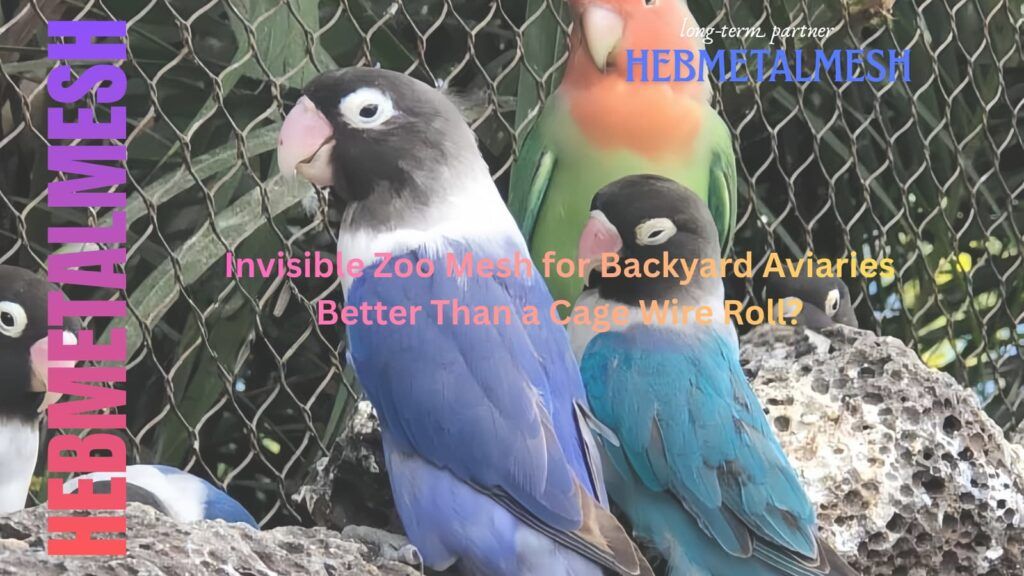
2″ (50mm): The standard for medium birds like pigeons, ducks, and parrots.
3″ to 4″ (75mm – 100mm): Best for large raptors, cranes, or architectural safety where maximum visibility is the priority.