
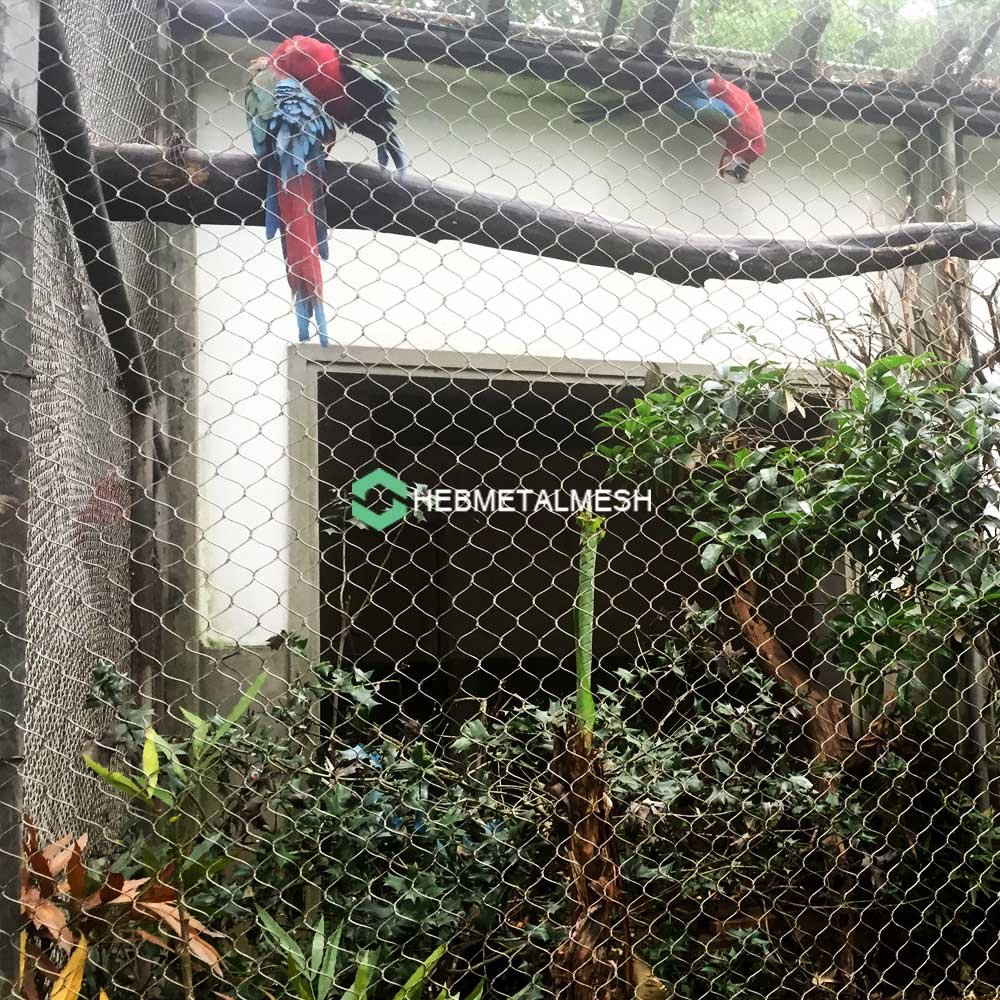
Protect Your Property with Premium Bird Netting Mesh
Get a custom quote for your commercial, agricultural, or residential bird control project.
Request a QuoteKey Takeaways
- Bird netting mesh is a humane, permanent physical barrier that excludes birds without harming them—unlike chemical repellents or sonic devices that lose effectiveness over time.
- Mesh aperture size is the most critical specification: 1″ (25mm) is the new industry-standard minimum size, effectively excluding sparrows, starlings, blackbirds, and bats, while 2″ (50mm) works best for pigeons and larger birds.
- Material selection is vital—UV-stabilized HDPE offers 5–10 years of outdoor life, while stainless steel (Grade 304/316) delivers 30+ years of rust-proof, chew-proof, and UV-proof performance.
- Knotted construction provides superior tear resistance; knotless is gentler on delicate crops and easier to handle during installation.
- Professional installation with proper tensioning and gap-free fastening ensures the netting performs as intended and prevents any risk of bird entanglement.
Pest birds—from aggressive pigeons and damaging starlings to persistent sparrows and large gulls—can cause significant and costly damage to commercial buildings, agricultural crops, and residential properties. The damage goes far beyond aesthetics; corrosive bird droppings degrade structural steel, block drainage systems, contaminate food products, and create serious health and safety liabilities for facility managers and property owners. If you are struggling with recurring damage, persistent mess, and unwelcome bird populations, you need a solution that is effective, reliable, and above all, humane. The definitive answer to these problems is bird netting mesh.
For official regulations and best practices regarding wildlife management and the humane treatment of birds in commercial and agricultural settings, refer to the U.S. Fish & Wildlife Service , which provides guidelines on migratory bird protection and humane exclusion methods.
Bird netting mesh is a physical barrier system designed to deny pest birds access to protected areas. It works by preventing birds from landing, roosting, nesting, or feeding in specific structures or zones—rather than attempting to frighten or harm them. Whether you are protecting a sprawling warehouse rooftop, a high-value orchard, a commercial building facade, or a residential garden, selecting the right mesh size, material, and construction determines the longevity and effectiveness of your investment. This guide walks procurement professionals, facility managers, growers, and property owners through every consideration—from understanding mesh specifications and installation best practices to long-term maintenance.
Our zoo mesh manufacturer provides ready-to-ship standard rolls plus fully customized solutions, minimizing waste and reducing installation costs for any habitat design.
Understanding Bird Netting Mesh: Core Specifications
What Is Bird Netting Mesh Made Of?
Bird netting mesh is manufactured from a range of materials, each offering distinct advantages tailored to different environments and budgets.
Before diving into material selection, it’s worth understanding the fundamentals — our guide on what is bird netting explains the core principles of physical exclusion and how modern netting systems work.
Polyethylene (HDPE) is the most common material for general-purpose bird netting. High-density, UV-stabilized polyethylene is lightweight yet remarkably strong, offering an exceptional strength-to-weight ratio. The material is chemically treated to resist UV breakdown, ensuring it remains strong and taut for many years—often lasting a decade or more even in harsh climates. HDPE netting is impervious to moisture, most chemicals, and extreme temperature fluctuations, making it a low-maintenance solution for diverse environmental conditions.
Nylon offers greater inherent strength and resilience than polyethylene, making it particularly useful in commercial and industrial applications such as warehouses, rooftops, and high-wind coastal areas. Nylon bird netting rolls are available in different thicknesses, providing options based on the specific level of wear-and-tear protection desired.
Stainless steel—particularly grades 304 and 316—is widely recognized as the superior choice for demanding bird netting applications. Unlike plastic or nylon, stainless steel does not deteriorate under extreme weather conditions or UV exposure. Grade 304 offers excellent resistance to ordinary rust and corrosion, while grade 316 is specifically designed for more challenging environments, such as coastal areas where salty air can accelerate degradation. Stainless steel provides outstanding tensile strength, allowing the mesh to withstand impacts and structural stresses without compromising its integrity. This is particularly important in industrial settings where birds or debris may impact the netting with significant force.
The hand-woven manufacturing process for bird netting mesh represents a blend of traditional craftsmanship and modern engineering. Unlike mass-produced machine-knitted options, hand-woven bird netting allows for meticulous attention to detail at every junction. Skilled artisans meticulously weave each strand, ensuring a tight, uniform, and secure formation that cannot be replicated by standard looms. This labor-intensive method contributes to unmatched resilience, tear resistance, and overall durability.
Mesh Size: Matching Aperture to Target Species
Mesh aperture is the single most critical specification when selecting bird netting. Historically, ½” and ¾” meshes were standard, but modern industrial best practice now recognizes 1″ (25mm) as the versatile minimum size for most applications. A 1″ aperture effectively excludes the vast majority of nuisance bird species while reducing wind loading, improving light transmission, and lowering material costs compared to unnecessarily fine meshes.
Selecting the largest possible mesh that still excludes your target species optimizes airflow, visibility, and cost-efficiency. The table below provides a clear reference for matching mesh aperture to specific pest birds:
| Mesh Aperture | Metric Equivalent | Target Species | Best Application |
|---|---|---|---|
| 1″ (25mm) | 25mm | Sparrows, starlings, swallows, blackbirds, grackles, bats | Gardens, commercial buildings, orchards (new standard minimum) |
| 1.5″ (38mm) | 38mm | Parrots, macaws, toucans, large corvids | Walk-in aviaries, large enclosures |
| 2″ (50–51mm) | 50–51mm | Pigeons, seagulls, owls, hawks, crows | Rooftops, loading docks, warehouses, airport hangars |
| Pro tip: When excluding multiple bird species, always choose the smallest mesh aperture required for the smallest target bird in your area. | |||
Note: For extremely tiny songbirds such as finches or canaries, a specialty ½” mesh is available upon request, but for 95% of commercial and agricultural bird control needs, 1″ (25mm) is the recommended baseline.
When proofing against multiple species, always select the smallest mesh size required for the smallest target bird in your area. For mixed urban environments where both sparrows and pigeons are problematic, the 1″ mesh provides a perfect compromise—blocking the small birds while effectively excluding larger ones as well.
Knotted vs. Knotless Construction
The construction method of bird netting mesh significantly impacts its performance, handling, and longevity.
Knotted netting features twine junctions that are mechanically pulled tight under significant load and heat-set to prevent slippage. This construction delivers superior tear resistance and structural stability, making it ideal for high-abuse areas around trellises, structures, and commercial installations where the netting will be subject to repeated stress from wind, debris, or bird impact.
Knotless netting is smoother, quieter during installation, and less likely to snag on soft fruit or delicate plant material. It is the preferred choice for vineyards and premium orchards where crop damage from installation friction is a concern. However, it offers slightly lower tear strength compared to its knotted counterpart.
Handwoven stainless steel netting offers a third option that combines the best of both worlds. The hand-knotted diamond structure provides excellent grip for birds to move naturally around their environment without damaging their talons, while remaining smooth enough to protect delicate wing feathers from abrasion—a critical feature for wildlife rehabilitation and zoo enclosures.
How to Choose the Right Bird Netting Mesh for Your Application
For Agricultural and Horticultural Use
Crop protection demands netting that balances bird exclusion with pollinator access. A standard 1″ (25mm) mesh aperture is now widely adopted across the agricultural sector because it allows bees, butterflies, and other beneficial pollinators to pass through freely while effectively blocking sparrows, starlings, and blackbirds. Farmers across the US use bird netting mesh to safeguard blueberries, cherries, grapes, and other high-value fruits from being pecked or consumed. By covering crops with netting, growers can significantly increase yield and harvest quality, protecting their bottom line.
For homeowners and hobbyists, a well-designed peacock enclosure fencing guide can offer practical insights into creating safe and spacious habitats.
For fruit trees and vineyards, lightweight HDPE netting can be draped directly over canopies or supported on permanent frame structures. Premium woven netting rated at 20 g/m² or higher resists tearing from squirrel claws and holds up well under hailstorms. Garden bird netting made from lightweight polyethylene is easy to install and maintain—simply drape it over plants and secure it with stakes or clips, while allowing sunlight and rainwater to reach your crops.
For Commercial and Industrial Buildings
Warehouses, loading docks, airplane hangars, rooftops, and commercial building facades require heavy-duty netting that withstands UV exposure, temperature extremes, and continuous wind loading. Premium netting with UV stabilization, rot-proof properties, and—for specific applications—flame resistance is specified for these demanding environments.
For large-scale aviaries and commercial bird parks, heavy duty aviary netting serves as the essential component ensuring both containment and predator protection.
Key considerations for commercial installations:
- Flame retardancy – HDPE melts at 130°C and can propagate fire; flame-retardant netting is essential for indoor use or areas with combustible materials.
- UV resistance – Look for explicit UV stabilization claims; quality netting resists degradation in direct sunlight for 5–10 years (stainless steel lasts indefinitely).
- ISO certification – Mesh tested to ISO 1806 and 9001 protocols verifies burst strength and manufacturing quality.
- Corrosion resistance – In coastal or chemical-industrial environments, stainless steel Grade 316 offers superior protection against salt and chemical corrosion.
- Visual transparency – Professional-grade bird wire netting maintains over 90% transparency, preserving architectural views and natural light while providing a fortress of security.
Stainless steel cable netting is engineered for extreme durability and resilience, capable of withstanding harsh environmental conditions. The unique combination of strength and flexibility allows for the creation of a robust mesh structure that effectively deters birds without compromising the building’s aesthetics.
For Residential and Garden Applications
For smaller garden projects, exploring bird netting options at Menards can help you find an affordable and readily available solution.
Light-duty polypropylene netting or UV-stabilized HDPE netting with a 1″ mesh offers an economical and highly effective solution for gardens, patios, and seasonal exclusion. Homeowners use garden bird netting to create a physical barrier between their plants and birds, preventing pecking damage to tomatoes, berries, and leafy greens. It is easy to install—simply drape the netting over your plants and secure it in place with stakes or clips.
For zoos and wildlife parks, stainless steel cable mesh for zoo enclosures provides the durability and safety required for high-traffic animal exhibits.
For homeowners looking for a more permanent, aesthetically pleasing solution, handwoven stainless steel netting in a Black Oxide finish becomes virtually invisible against dark backgrounds, providing an unobstructed view of your garden while keeping birds out for decades.
Bird Netting Mesh Installation: A Step-by-Step Guide
Pre-Installation Planning
Assess the area – Survey the site, noting exact dimensions, attachment points (beams, posts, roof edges, parapets), and any obstacles such as pipes, signage, or equipment. Identify the specific bird species causing problems to confirm you have selected the correct mesh size.
Measure accurately – Add at least 10-15% extra material for fastening, overlaps, and contours. Standard roll sizes typically range from 20′ x 60′ to 25′ x 60′, with custom sizes available for larger commercial projects.
Gather materials – Perimeter wire, corrosion-resistant hooks or eye bolts, turnbuckles for tensioning, UV-resistant cable ties or stainless steel hog rings, and basic installation tools (drill, pliers, ladder, and safety harness for roof work).
Choose the right day – Install on a calm, dry day to avoid wind complications and slips; always use harnesses and proper fall-protection equipment for elevated work.
Installation Steps
Step 1: Install perimeter supports – Fix hooks or eye bolts around the perimeter of the area at intervals appropriate to the mesh size. For 1″ (25mm) mesh and larger, spacing supports every 1 to 1.5 meters is sufficient. Run and tighten a strong galvanized or stainless steel perimeter wire using turnbuckles to create a rigid support framework.
Step 2: Position the net – Unfold the netting carefully on a clean surface and identify the edges and corners. Attach one corner to the wire first using a robust fixing. For large nets, two or more people are strongly recommended to manage the material and prevent twisting.
Step 3: Secure the netting – Using cable ties or hog rings, attach the mesh to the perimeter wire every 30–50cm (12–18 inches). Pull the net tight and square as you progress. Do not overstretch the mesh—excessive tension can cause premature failure at the junction points.
Step 4: Check for gaps – Inspect corners, seams, and edges meticulously. Overlap joins by at least 6 inches and ensure all edges are snug and flush against the underlying structure. Even a tiny gap will be found and exploited by determined birds.
Step 5: Test the installation – Push the center of the net with moderate force—it should feel firm and resist deflection. Confirm that doors, equipment, and maintenance access points can still operate freely without snagging the mesh.
Common Installation Mistakes to Avoid
- Using the wrong mesh size – Too large and birds pass straight through; too small and wind loading increases unnecessarily, raising costs.
- Insufficient tension – Sagging netting allows birds to land, push underneath, or become entangled.
- Ignoring UV degradation – Non-UV-stabilized netting becomes brittle and shatters within a single season.
- Inadequate fastening – Spaced or weak fixings allow birds to push through gaps at the perimeter.
- Failing to inspect for tears – Even small shipping damages can expand into large entry points.
Durability, Maintenance, and Cost Considerations
How Long Does Bird Netting Mesh Last?
Lifespan depends entirely on material quality and environmental exposure conditions:
| Material | Expected Lifespan | Key Characteristics |
|---|---|---|
| Standard polypropylene | 1–3 years outdoor | Economical, very limited UV resistance |
| UV-stabilized HDPE | 5–10 years | UV-treated for enhanced longevity, suitable for most climates |
| Premium HDPE with 10-year warranty | 10+ years | Explicit UV stabilization claims and rigorous testing |
| Nylon | 5–10 years | High strength and flexibility, good weather resistance |
| Stainless Steel 304/316 | 30+ years | Immune to UV degradation, rust, and corrosion; lifetime solution |
| Bottom line: For permanent, zero-maintenance bird exclusion, stainless steel offers the lowest total cost of ownership over its 30+ year lifespan. For budget-conscious projects with 5–10 year horizons, UV-stabilized HDPE delivers excellent value. | ||
The corrosion-resistant quality of stainless steel ensures that the netting maintains its structural integrity indefinitely, minimizing the need for frequent replacements and repairs. With stainless steel, users can trust in the longevity of their investment with virtually zero maintenance.
For walk‑through exhibits that prioritize both safety and aesthetics, our walk‑in aviary mesh delivers superior strength while maintaining an open, airy feel for an immersive guest experience.
Cost Factors
Pricing varies by mesh size, material, and custom cutting requirements:
- Larger mesh apertures (e.g., 2″) generally cost less per square foot due to lower material density
- Custom-cut netting incurs a premium over off-the-shelf stock sizes
- Commercial-grade netting with ISO certification and flame retardancy commands higher prices but delivers significantly longer service life
- Stainless steel represents a higher upfront investment but offers the lowest total cost of ownership over its 30+ year lifespan
Maintenance Best Practices
- Inspect netting at least annually for tears, UV degradation, and loose fixings
- Remove heavy debris (leaves, snow, ice) that can add excessive weight and stress the mesh
- Check the netting periodically to ensure it is still securely tensioned and in good condition
- Replace damaged sections or individual panels promptly to maintain exclusion integrity
- For seasonal garden use, remove netting after harvest to prevent unnecessary weathering
Summary
Bird netting mesh remains the gold standard for humane, permanent bird exclusion across commercial, industrial, and agricultural settings. Unlike chemical repellents, sonic devices, or visual deterrents—methods whose effectiveness often diminishes as birds become habituated—netting creates an absolute, undeniable physical barrier. The netting is securely fastened around the entire perimeter of the area needing protection, forming a continuous, three-dimensional enclosure that leaves no room for compromise.
When selecting bird netting mesh, focus on three critical factors: material (HDPE for value, nylon for commercial use, stainless steel for ultimate long-term durability), mesh aperture (1″ minimum for most applications, 2″ for pigeons), and construction (knotted for maximum tear resistance, knotless for delicate crop protection). Proper installation with correct tensioning and gap-free fastening ensures the netting works as intended and prevents any risk of bird entrapment.
Investing in high-quality bird netting mesh is not merely about protection—it is a proactive, cost-effective approach towards safeguarding your property, crops, and infrastructure while maintaining a humane and environmentally responsible stance toward bird management for decades to come.
Safari parks and rehabilitation centers trust our stainless steel bird netting for its ability to withstand harsh weather, UV exposure, and constant bird activity without losing integrity.
Need Bird Netting Mesh for Your Project?
Get expert guidance on material selection, custom sizing, and installation best practices.
Contact Our Team Today Free consultation • Custom quotes • Fast shipping across the USFrequently Asked Questions (FAQ)
Q1: What size bird netting mesh do I need for pigeons and sparrows?
For pigeons and similar medium-to-large birds, a 2″ (50mm) mesh is typically sufficient. For sparrows, starlings, and blackbirds, a 1″ (25mm) mesh is the new industry-standard recommendation. In mixed environments where both pigeons and sparrows are present, using 1″ mesh will effectively exclude all of them while maintaining better airflow and light penetration than finer alternatives.
Q2: How do I install bird netting mesh on a roof without damaging the building?
Install perimeter supports using hooks or eye bolts fixed securely into mortar joints, parapet clamps, or structural steel members—never penetrate roofing membranes directly. Run a sturdy perimeter support wire and attach the net using UV-resistant cable ties or stainless steel hog rings. For flat roofs, ensure the netting is tensioned adequately to prevent sagging, water pooling, and snow loading. Always use flame-retardant netting for indoor or enclosed applications.
Q3: Will bird netting mesh harm or trap birds?
Quality bird netting is engineered as a humane physical barrier, not a trapping device. Modern netting is specifically designed to be non-entangling and highly visible to birds, ensuring they simply bump into it and fly away, redirecting their path without entrapment or injury. When installed correctly with appropriate tension and zero gaps, birds cannot become entangled. Wildlife entrapment is both a legal and ethical concern, so always prioritize a high-quality mesh that prevents entanglement and follow best-practice installation guidelines.
Q4: What is the difference between bird netting and deer netting?
Bird netting typically features smaller mesh apertures—with 1″ being the standard minimum—designed to exclude birds while allowing pollinators to pass through. Deer netting has much larger mesh (often 2″ to 4″ or more) and is constructed from heavier-gauge material to withstand impact from large, heavy animals. While some lightweight products are cross-marketed, using bird-specific netting for deer is generally ineffective—deer will push straight through or tear the lighter material.
Q5: How long does bird netting mesh last in direct sunlight?
Lifespan in direct sunlight depends entirely on UV stabilization. Standard polypropylene netting without UV inhibitors can degrade and fail within a single season. UV-stabilized HDPE netting typically lasts 5–10 years, with premium products offering 10-year UV warranties. For maximum longevity with zero UV degradation, stainless steel netting offers 30+ years of service with no maintenance. For typical outdoor conditions across the US, quality UV-stabilized netting reliably resists degradation for over a decade.