
Executive Summary
Aviary panels are the backbone of any secure bird enclosure, whether you’re building a backyard sanctuary for finches or a commercial-grade aviary for macaws and cockatoos. The wrong choice leads to rust, predator breaches, and costly replacements within five years. The right choice—particularly stainless steel aviary panels—delivers 30+ years of maintenance-free service. This guide walks procurement professionals, aviary owners, and facility managers through every critical decision: material science, mesh sizing, installation best practices, and total cost of ownership. By the end, you’ll know exactly how to choose aviary panels that balance security, durability, and budget for your specific application.
Key Takeaways
- ✅ Material matters most: Stainless steel (304/316) outperforms galvanized in corrosion resistance, safety, and lifespan—30+ years vs. 5–10
- ✅ Mesh size is species-specific: Smaller birds need tighter mesh (½”–1”); larger parrots can use 2” openings
- ✅ Predator-proofing requires comprehensive coverage: Roof, sides, and ground barriers are all essential
- ✅ Custom sizing reduces waste: Leading manufacturers offer bespoke dimensions at no extra cost
- ✅ Total cost of ownership favors premium materials: Higher upfront cost delivers lower cost-per-year over decades
Need Aviary Panels That Last Decades?
Get factory-direct pricing on handwoven stainless steel aviary panels — custom sizes, no minimums.
Request a Free Quote →Whether you’re a zoo curator designing a world-class bird exhibit, a sanctuary manager expanding your avian housing, or a hobbyist building a backyard aviary, the panels you choose determine everything—from bird safety to maintenance costs to the visual experience of your enclosure.
For a comprehensive overview on this topic, we recommend referring to our guide Aviary Mesh For Sale In Bird Enclosure, which systematically covers the key points regarding aviary mesh products and procurement.
Aviary panels are pre-fabricated structural units—typically metal or wood frames covered with mesh—that serve as the building blocks of bird enclosures. They offer a secure, modular solution that allows for custom configurations while ensuring ventilation, visibility, and predator protection.
But not all aviary panels are created equal. This guide breaks down every factor you need to evaluate before making a purchase.
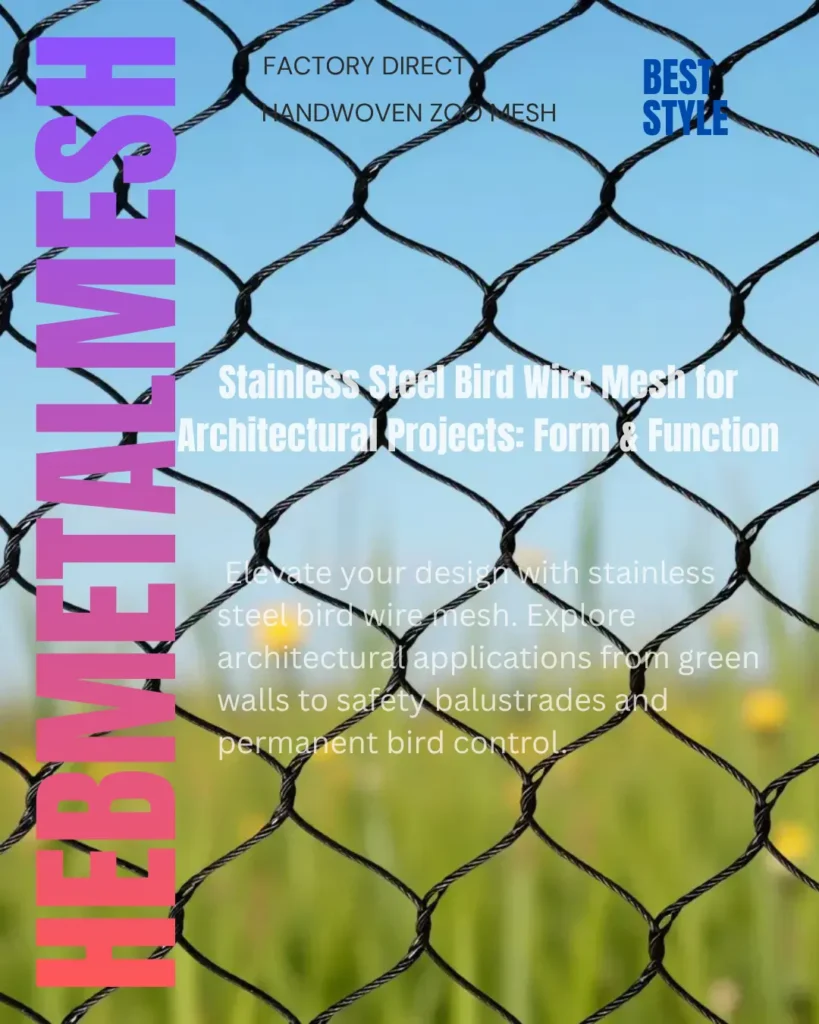
For zoos and wildlife parks housing exotic birds, our aviary netting provides a safe, rust‑proof barrier that keeps winged residents secure without obstructing visitor views.
What Are Aviary Panels and Why Do You Need Them?
Definition and Basic Construction
At their simplest, aviary panels are framed sections of mesh designed to be connected into a complete enclosure. Traditional options include timber-framed panels with galvanized wire mesh, commonly available in standard sizes like 6′ x 3′. More advanced solutions—particularly for professional and large-scale applications—use stainless steel wire rope mesh in seamless panels up to 30′ x 60′.
The panel approach offers distinct advantages over building from raw materials: pre-drilled connection points, consistent quality control, and significantly faster assembly.
Whether you’re building a macaw outdoor aviary or a finch sanctuary, the panel system gives you flexibility that traditional cages simply can’t match.
Benefits Over Traditional Bird Cages
While traditional bird cages work for single birds or small species, aviary panels enable the creation of spacious, naturalistic habitats that promote bird welfare. Key benefits include:
- Superior spatial freedom: Birds can fly, socialize, and exhibit natural behaviors
- Enhanced visibility: Mesh panels provide clear sightlines for both birds and observers
- Predator protection: Robust construction deters raccoons, foxes, birds of prey, and other threats
- Modular flexibility: Panels can be reconfigured, expanded, or relocated as needs change
Key Factors to Consider When Choosing Aviary Panels
Material Selection: Stainless Steel vs. Galvanized vs. Aluminum
The material you choose is the single most consequential decision in your aviary panel purchase. Here’s how the options compare:
🤖 Tips: This table compares five common aviary panel materials across six critical criteria. Stainless Steel 316 offers the longest lifespan (30+ years) and excellent corrosion resistance with minimal maintenance, but at a higher upfront cost. Hot‑Dip Galvanized is a mid‑range option but carries a zinc toxicity risk for birds. PVC‑coated panels have the shortest lifespan and highest maintenance needs. For professional aviaries, stainless steel (especially 316) delivers the best long‑term value and safety.
| Material | Lifespan | Corrosion Resistance | Bird Safety | Upfront Cost | Maintenance |
|---|---|---|---|---|---|
| Stainless Steel 316 | 30+ years | Excellent | Non-toxic | High | Minimal |
| Stainless Steel 304 | 25+ years | Very Good | Non-toxic | High | Minimal |
| Hot-Dip Galvanized | 5–10 years | Moderate | Zinc toxicity risk | Moderate | Moderate |
| Aluminum | 10–15 years | Good | Safe | Moderate | Low |
| PVC-Coated | 3–7 years | Fair (coating degrades) | Variable | Low | High |
* Data based on industry standards and manufacturer specifications. Always verify with your supplier.
Stainless steel—particularly AISI 316 grade—is the gold standard for professional aviaries. It resists rust, corrosion, and UV damage indefinitely, making it ideal for outdoor installations exposed to rain, humidity, and coastal salt air. Hebmetalmesh’s handwoven stainless steel netting offers a 30-year useful life with zero rust or corrosion.
Galvanized steel is a common budget option. However, it’s worth understanding its limitations. The zinc coating that protects galvanized mesh eventually degrades, leading to “rust-snap” within 5–10 years. More critically, birds—especially hook-billed species like parrots and macaws—can ingest zinc when they chew or climb on the mesh, leading to potentially fatal heavy metal poisoning.
Aluminum offers good corrosion resistance at a moderate price point but lacks the tensile strength of steel, making it unsuitable for large birds or high-security applications.
The professional verdict: For serious aviary projects, stainless steel aviary panels are the safest, most durable, and most cost-effective choice over the long term.
For a deeper dive into the molecular differences between 304 and 316 stainless steel—and why that matters for your birds’ safety—check out our detailed guide on stainless steel aviary mesh vs galvanized alternatives
Mesh Size and Wire Gauge Explained
Mesh size and wire gauge directly impact bird safety, visibility, and predator deterrence.
Mesh opening size should be selected based on your bird species:
- ½”–1” openings: Ideal for finches, budgerigars, canaries, and other small birds
- 1”–2” openings: Suitable for medium parrots, cockatiels, and conures
- 2” openings: Works for large parrots like macaws and African greys
Wire gauge determines strength:
- 19 gauge (1.0mm): Light-duty, suitable for small birds only
- 16 gauge (1.6mm): Heavy-duty, fox/dog-proof, cat-safe
- 12 gauge (2.5mm): Maximum security, commercial-grade
For predator-proof enclosures, professionals recommend 16 gauge minimum, with 12 gauge preferred for high-risk areas.
Selecting the correct aperture is critical—our aviary mesh size guide for small and large birds breaks down exactly what works for finches versus macaws.
Panel Dimensions and Customization Options
Standard aviary panels typically measure 6′ x 3′ (approximately 1.83m x 0.91m). However, custom sizing is increasingly available from manufacturers who understand that every aviary project has unique spatial requirements.
Hebmetalmesh, for example, offers custom roll and panel sizes at no additional cost, with seamless panels available up to 30′ x 60′. Custom sizing reduces on-site cutting, minimizes waste, and eliminates weak joints created by拼接 standard panels.
Environmental Durability and Weather Resistance
Outdoor aviary panels face constant exposure to rain, UV radiation, temperature swings, and—critically—the acidic nature of bird droppings, which accelerate corrosion.
Stainless steel is naturally impervious to these stressors. Galvanized steel, in contrast, relies on a sacrificial zinc coating that eventually fails. PVC-coated options degrade under UV exposure, becoming brittle and prone to cracking.
For coastal installations or high-humidity environments, 316 stainless steel offers the strongest corrosion resistance.
Upgrade your breeding facilities with our stainless steel bird netting – it never rusts, flakes, or degrades, ensuring decades of reliable avian containment.
How to Install Aviary Panels for Maximum Security
Foundation and Site Preparation
Proper installation begins before the first panel is placed. Choose a level, well-drained location with adequate sunlight and ventilation. For permanent installations, consider a concrete slab or compacted gravel foundation to prevent digging predators from breaching the enclosure.
Planning a large-scale project? Our guide on zoo mesh aviary installation for large enclosures covers everything from foundation work to predator-proofing commercial exhibits.
Joining and Securing Panels
Most aviary panels feature pre-drilled frames for easy connection. Use coach bolts and washers to join panels, but avoid fully tightening all connections until the structure is fully assembled—this allows for minor alignment adjustments.
For maximum structural integrity:
- Use corner brackets at all joints
- Secure panels to the ground with anchors or stakes
- Ensure all gaps between panels are eliminated to prevent escapes
Roofing and Predator-Proofing Considerations
Aviary panels must cover the roof as well as the walls. Predators—both aerial (hawks, owls) and terrestrial (raccoons, foxes)—will exploit any uncovered area.
Key predator-proofing measures include:
- Mesh “skirt”: Extend mesh 12–18 inches outward from the base to prevent digging
- Overlapping seams: Ensure no gaps at panel junctions
- Secure latching: Use predator-proof locks on all doors
- Double-door entry: Create a safety vestibule to prevent escape during access
If you need a comprehensive overview of this topic, we recommend referring to our aviary mesh products guide, which systematically covers the key points regarding Aviary Mesh products and procurement.
Maintenance and Longevity of Your Aviary Panels
Routine Cleaning Protocols
Regular cleaning is essential for bird health and panel longevity. Remove waste and debris daily using a rake or shovel. For mesh panels, a simple wash with mild detergent and water removes accumulated grime.
Rust Prevention and Corrosion Management
For stainless steel aviary panels, rust is not a concern—the material is inherently corrosion-resistant. For galvanized panels, however, rust management is an ongoing battle. Inspect regularly for coating damage, and apply cold galvanizing compound to any scratches or wear points.
When to Repair vs. Replace
Stainless steel panels typically require no repairs within their 30+ year lifespan. Galvanized panels may need replacement within 5–10 years as the zinc coating fails. Wood-framed panels require periodic inspection for rot and insect damage.
Cost Considerations and ROI Analysis
Upfront Investment vs. Long-Term Value
The cost of aviary panels varies dramatically based on material and specifications:
- Basic galvanized timber-framed panels: ~$15–$25 per 6′ x 3′ panel
- Premium stainless steel mesh panels: Higher upfront cost, lower long-term cost-per-year
While stainless steel carries a higher initial price tag, the total cost of ownership tells a different story. A galvanized panel that needs replacement every 7 years costs more over three decades than a stainless steel panel purchased once.
Factors Affecting Total Project Cost
- Material choice: Stainless steel > galvanized > aluminum > PVC-coated
- Panel size and quantity: Custom sizes may reduce total panel count
- Delivery and shipping: Panels are large and heavy; factor in freight costs
- Installation labor: DIY assembly saves money but requires skill
- Foundation work: Concrete or gravel foundations add cost but improve security
Frequently Asked Questions (FAQ)
What size mesh is best for my bird species?
Mesh size should match your bird’s size and behavior. Finches and budgerigars need ½”–1” mesh. Medium parrots can use 1”–1½”. Large macaws and cockatoos are safe with 2” mesh. Always prioritize safety over visibility—a bird that can fit its head through the mesh is at risk of injury or escape.
How long do stainless steel aviary panels last?
High-quality stainless steel aviary panels—particularly 304 and 316 grades—last 30+ years with zero rust or corrosion. This makes them the most durable option available for bird enclosures.
Can aviary panels be customized to non-standard sizes?
Yes. Leading manufacturers like Hebmetalmesh offer custom roll and panel sizes at no additional cost. Custom sizing eliminates on-site cutting, reduces waste, and ensures a perfect fit for your specific space.
Are galvanized aviary panels safe for birds?
This is a critical question. Galvanized panels pose a toxicity risk to birds that chew or climb on the mesh. The zinc coating can be ingested, leading to heavy metal poisoning—particularly dangerous for parrots, macaws, and other hook-billed species. Stainless steel is the non-toxic alternative.
How do I predator-proof my aviary panels?
Comprehensive predator-proofing requires: (1) mesh small enough to exclude pests (≤25mm recommended), (2) heavy-gauge wire (16 gauge minimum) that resists bending and breaking, (3) full roof coverage, (4) a mesh skirt or buried foundation to prevent digging, and (5) secure, lockable doors with no gaps.
Summary
Selecting the right aviary panels is one of the most important decisions you’ll make for your birds’ safety and your facility’s long-term viability. Stainless steel panels outperform galvanized alternatives in every meaningful metric: lifespan (30+ years vs. 5–10), safety (non-toxic vs. zinc poisoning risk), and total cost of ownership.
Whether you’re building a backyard sanctuary or a professional zoo exhibit, prioritize material quality, appropriate mesh sizing, and predator-proof installation. How to choose aviary panels ultimately comes down to understanding your birds’ needs, your environmental conditions, and your long-term budget. Invest in aviary panels that will protect your birds for decades—not just for a few seasons.
With over 20 years of export experience, our stainless steel mesh factory serves zoos, wildlife parks, and sanctuaries across 40+ countries worldwide.
If you plan to place an order or require rolled stock, custom sizes and worldwide delivery, stainless steel aviary netting serves as our core product page featuring all specifications and material options.