
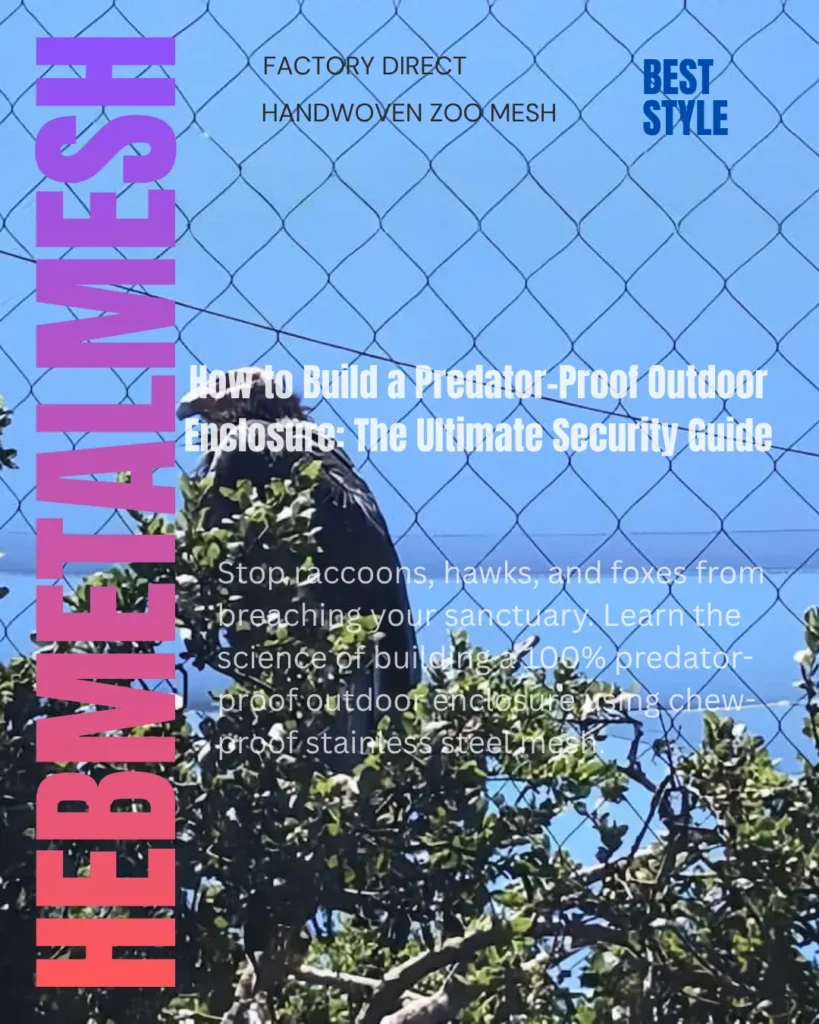
The Secret to True Security: A truly predator-proof outdoor enclosure requires a three-point defense strategy: a chew-proof perimeter, an anti-digging foundation, and a tension-secure roof. While traditional chicken wire and plastic netting fail against the jaw pressure of raccoons and foxes, 304/316 stainless steel rope mesh provides an impenetrable barrier that cannot be chewed, torn, or climbed through. For high-value birds and pets, the transition from “resistant” materials to “proofed” metal mesh is the only way to ensure 24/7 safety.
1. The “Safety Illusion”: Why Most Enclosures Fail
In the world of animal husbandry, there is a dangerous gap between feeling safe and actually being safe. Most DIY builders fall into the “Safety Illusion”—the belief that because there is a physical barrier present, the job is done. But if you’re building a predator-proof outdoor enclosure with plastic netting or thin chicken wire, you haven’t built a fortress; you’ve built a lunch box.
“Predator Resistant” vs. “Predator Proof”
The industry loves the word “resistant.” It’s a legal cushion. Plastic netting and wooden lattice are predator-resistant; they might stop a confused sparrow or a lazy housecat. However, a hungry raccoon or a fox is an entirely different beast.
- Resistant: Stretches, sags, and can be breached with enough persistence.
- Proof: Physically impossible to chew, snap, or tear using biological force.
The “Aha!” Moment: It’s Not the Climb, It’s the Chew
The biggest revelation for most enclosure owners comes too late: Predators rarely climb over your fence; they chew through it. A raccoon’s hands are essentially organic bolt-cutters. They don’t want to scale a 10-foot wall if they can create a hole at eye level in thirty seconds. When you switch to hebmetalmesh, you aren’t just adding a taller fence; you’re changing the material science of the perimeter. You’re moving from a “soft” barrier that relies on a predator’s lack of effort to a “hard” barrier that relies on the laws of physics.
Identifying the “Big Four” Threats
To build a truly predator-proof outdoor enclosure, you must understand your enemy:
- Raccoons: High intelligence, dexterous hands, and the ability to unzip plastic netting.
- Foxes: Master diggers who will test the bottom 12 inches of your mesh for any weakness.
- Hawks/Owls: Aerial assassins that require a high-tensile bird netting fence that won’t collapse under a dive-bomb.
- Neighborhood Dogs: High mass and high excitement. They don’t chew—they “bull-rush.” Only stainless steel rope mesh has the elastic memory to catch a 60lb dog and spring back into shape.
2. The Bite-Force Factor: Steel vs. Teeth
When we talk about the integrity of an enclosure, we have to talk about PSI (Pounds per Square Inch). A raccoon’s bite force can reach up to 100 PSI, while a large dog can exceed 300 PSI. If your mesh can’t handle that concentrated pressure on a single strand, your enclosure is a failure.
The “Macaw Standard” for All Animals
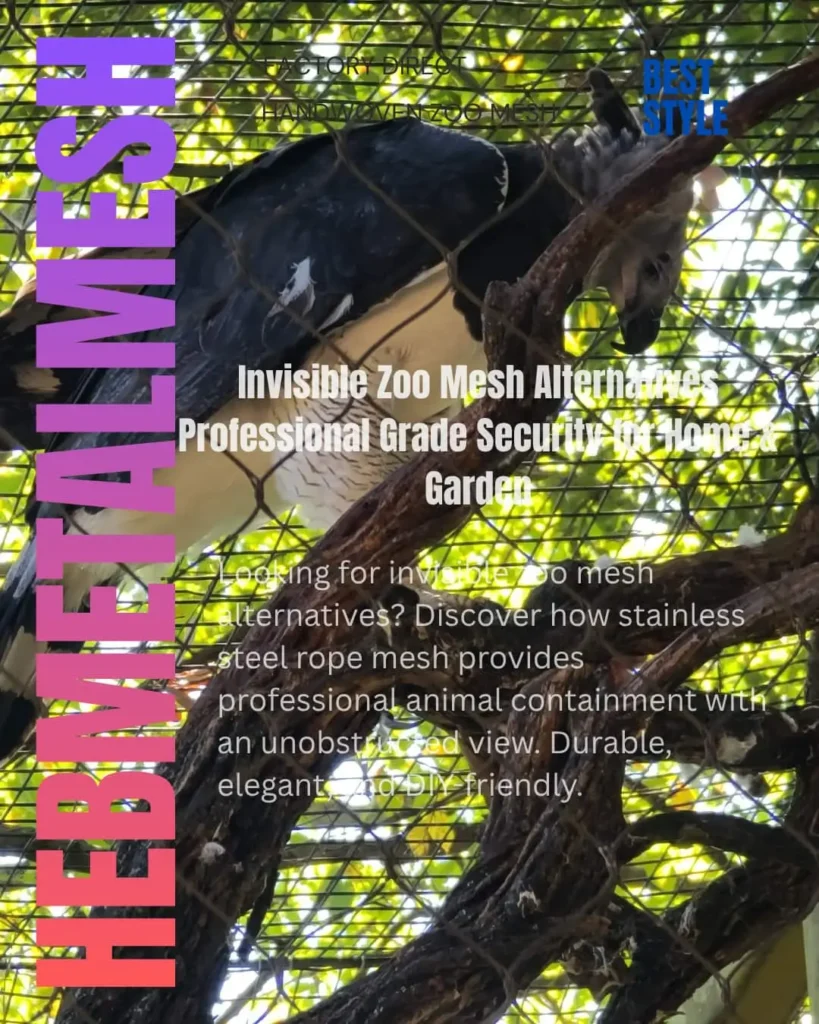
Why do we insist that Parrot and Macaw enclosure mesh should be the gold standard for any predator-proof project? Because Macaws have a bite force that can crack brass. If a mesh is designed to keep a Macaw in, it is over-engineered to keep a fox out. By using zoo-grade stainless steel rope mesh, you are applying “Apex Security” to your backyard project.
Jaw Pressure vs. Tensile Strength
Let’s do the math. Standard nylon or poly-netting has a breaking strength that degrades every day it sits in the sun. Hebmetalmesh, made from 304/316 stainless steel wire rope, has a tensile strength measured in thousands of pounds.
- Raccoon vs. Plastic: The raccoon wins by snapping individual filaments until the structural integrity of the weave fails.
- Raccoon vs. Hebmetalmesh: The raccoon meets a 7×7 or 7×19 strand cable construction. It is like trying to bite through a car’s brake line. It simply doesn’t happen.
The Hidden Danger of “Soft” Netting: Entanglement
There is a dark side to cheap, soft netting that many “humane” builders overlook. When a predator (or your own pet) tries to push through plastic netting, they often become entangled. This leads to panicked thrashing, severe injury, or death for the animal—and a gruesome scene for you to clean up.
Stainless steel rope mesh is a “clean” barrier. It is smooth, taut, and rigid enough that it doesn’t “wrap” around limbs or necks. It provides a definitive “No” to the predator without the messy, dangerous entanglement of synthetic materials. Whether you are protecting a Peacock enclosure or a small flight cage, steel is the only choice that is truly safe for everyone involved.
3. The Ground War: Preventing the “Dig-In”
Even if your walls are bulletproof, a predator-proof outdoor enclosure is only as strong as its connection to the earth. Foxes, badgers, and even persistent rats don’t need to go over your fence if they can go under it. The “Ground War” is a battle of depth and material durability.
The Mesh “Apron” (L-Footer) Technique
The most effective way to stop a digger is to exploit their natural instinct. A fox will trot up to the mesh wall and immediately start digging at the base. By installing a Mesh Apron, you create a horizontal barrier that stops them in their tracks.
- The Design: Extend your hebmetalmesh down the wall and then bend it outward 90 degrees, extending 12 to 24 inches along the ground (or buried just beneath the surface).
- The Result: When the predator tries to dig at the fence line, they hit the “L-footer.” Because their paws are hitting stainless steel instead of dirt, they can’t make progress. Most predators aren’t smart enough to back up two feet and start a new hole—they simply give up.
The Peacock Enclosure Standard: Buried Steel
For high-value birds, a Peacock enclosure often requires a full-perimeter buried barrier. Unlike plastic or galvanized chicken wire—which will rot and rust in the damp soil within 24 months—316-grade stainless steel is virtually inert. You can bury it with total confidence that it won’t develop “soft spots” where a rat could eventually chew through.
Concrete vs. Buried Mesh: Which Wins?
While a concrete footer is a classic choice, buried stainless mesh often wins on versatility and cost.
- Concrete: Rigid, expensive, and can crack over time with ground heaving.
- Buried Mesh: Flexible, allows for natural drainage, and is significantly easier to install as a DIY project.
- The Verdict: For a truly predator-proof outdoor enclosure, a combination of a shallow concrete curb with an attached stainless mesh apron is the “gold standard” for professional sanctuaries.
4. Aerial Defense: Stopping the “Dive-Bomb”
The threat isn’t just on the ground. For bird owners, the sky is a source of constant anxiety. Hawks, falcons, and owls are specialized “impact hunters.” They don’t just land; they strike.
The Structural Roof: Why “Bird Netting” Isn’t Enough
Most people use a lightweight “top-net” for their roof, thinking the birds only need to be contained. This is a fatal mistake. A hungry hawk can dive at speeds exceeding 50 mph. If your bird netting fence roof is made of flimsy nylon, the impact can tear the mesh or create a “pocket” that allows the predator to grab a bird through the netting.
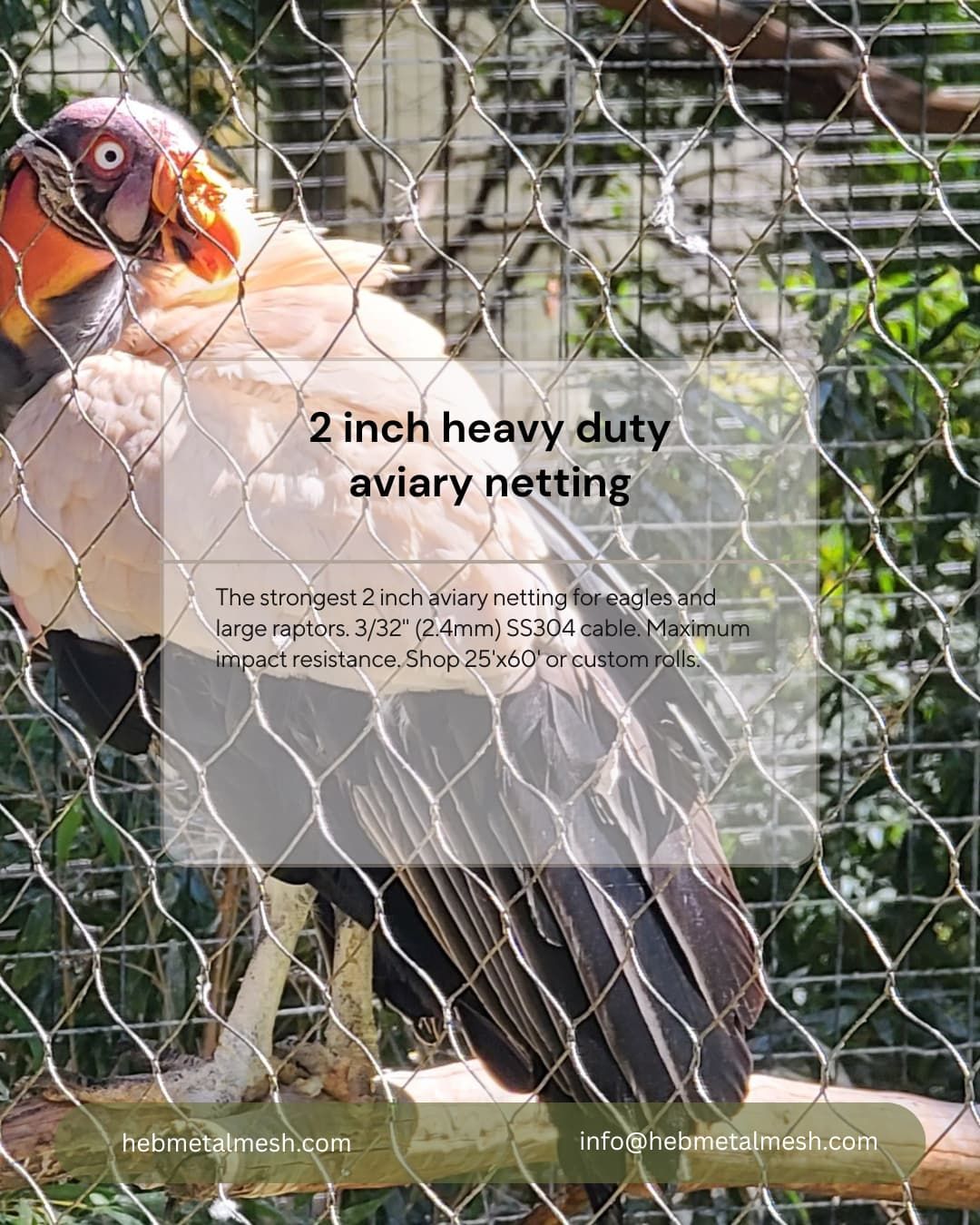
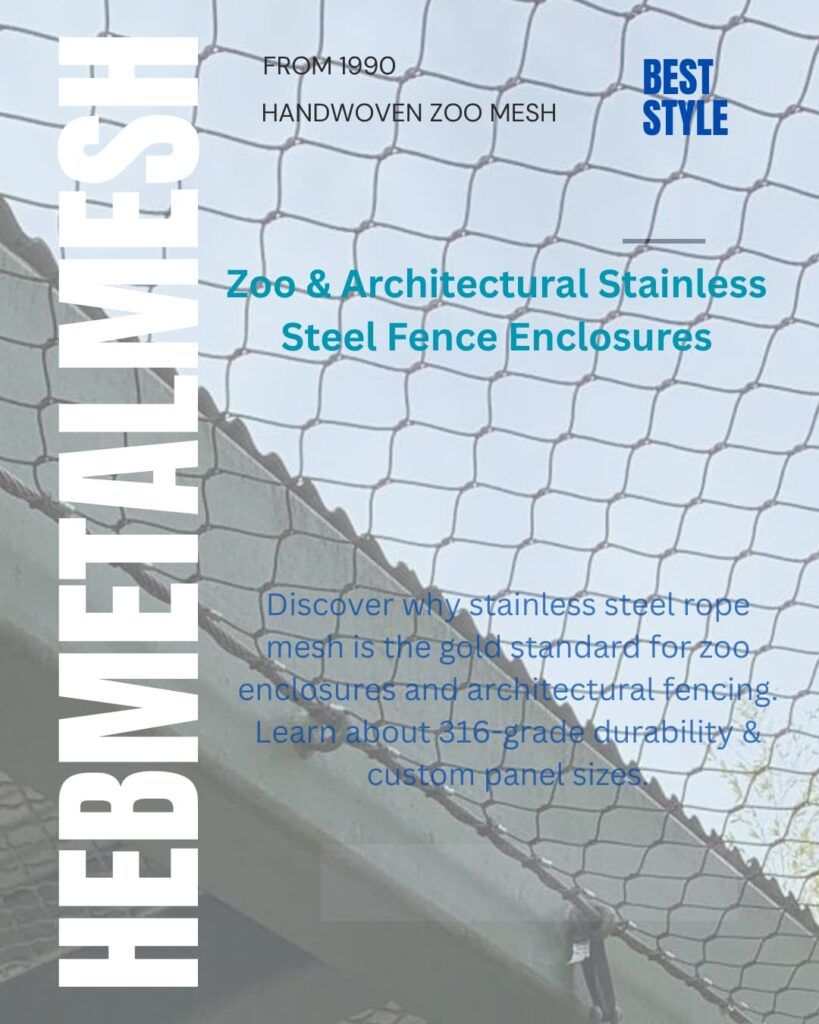
- Integrity is Key: Your roof should be made of the same high-tensile stainless steel rope mesh as your walls. It needs to handle the kinetic energy of a strike without snapping a single strand.
The Danger of “Sag-Pockets”
If your mesh isn’t properly tensioned, gravity will eventually create sags. These pockets are more than just an eyesore; they are landing pads for owls.
- The Night Threat: An owl will land in a sag-pocket, wait for a bird to move beneath them, and then reach through the mesh with their talons.
- The Tension Solution: By using stainless steel perimeter cables to pull your hebmetalmesh taut, you eliminate these landing zones. A tight, “drum-like” roof makes it impossible for a raptor to gain a foothold or a “grip-point” to harass your flock.
Professional Protection for High-Value Flight
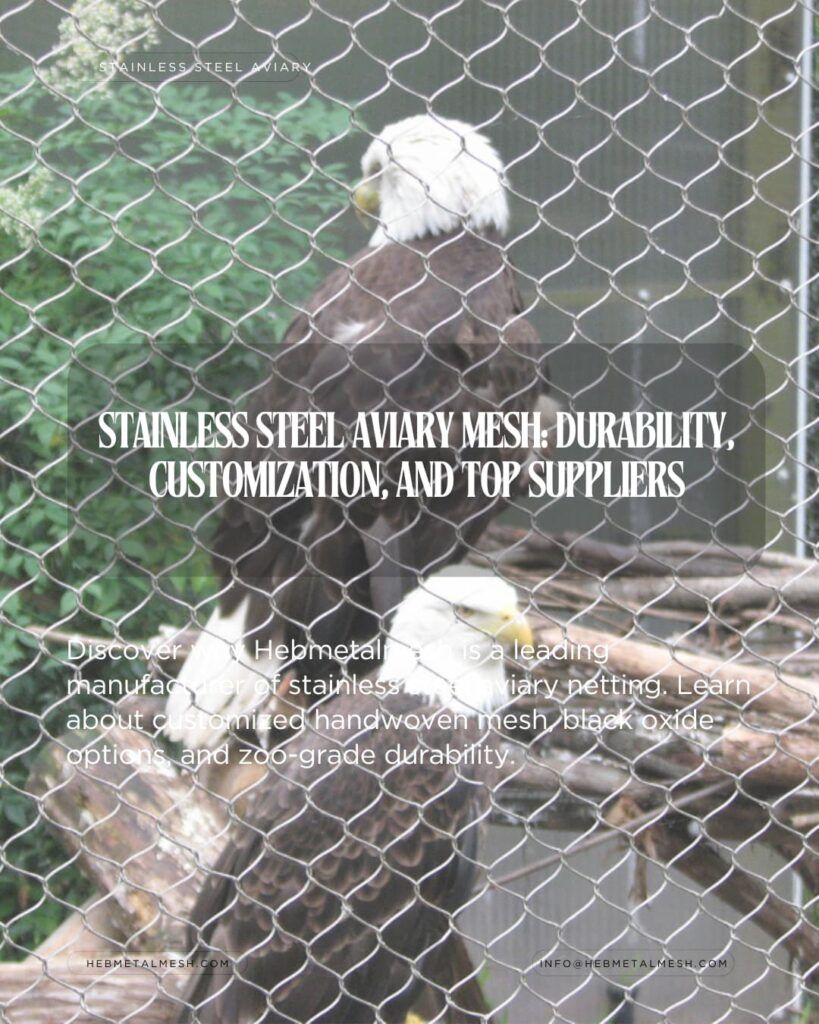
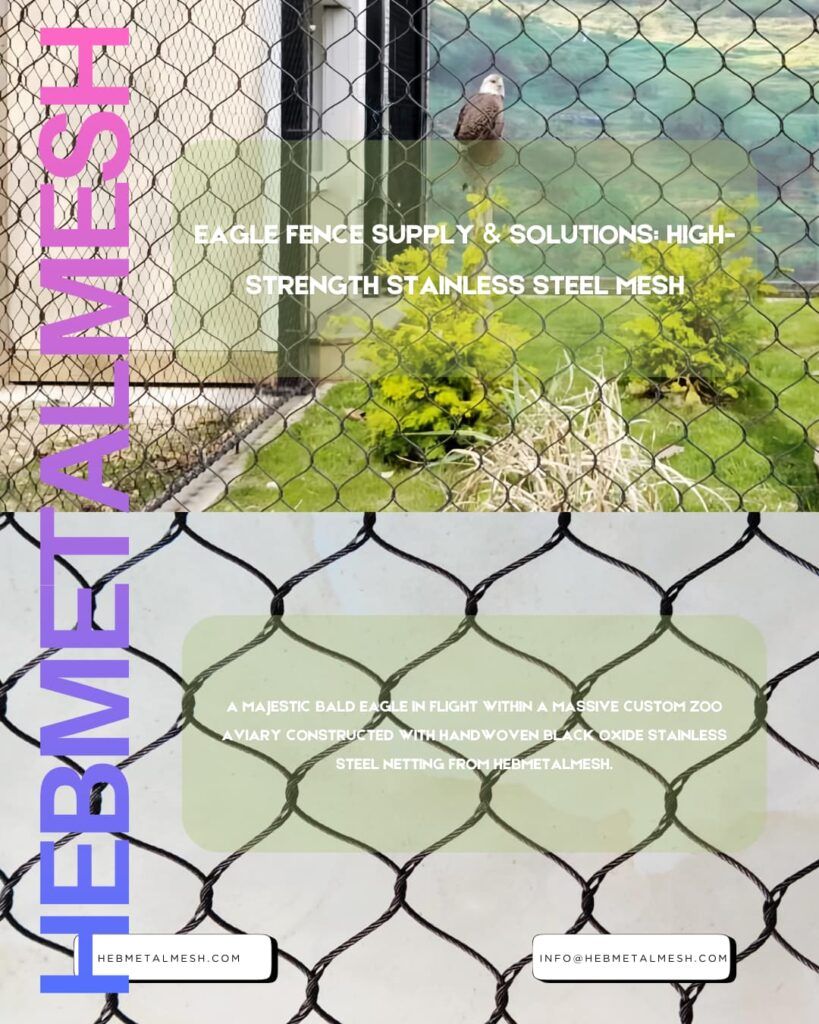
Whether you are securing a large Eagle enclosure or a small backyard flight cage, your aerial defense must be proactive. Stainless steel doesn’t just stop the entry; it discourages the attempt. Once a hawk hits a steel-mesh roof and realizes it isn’t moving, they typically move on to easier, softer targets.
5. Hardware & Latches: The Weakest Link
You can invest in the world’s strongest mesh, but if you secure it with zip-ties or cheap galvanized staples, you’ve left the back door wide open. In a predator-proof outdoor enclosure, security is a chain—and that chain is only as strong as its smallest link.
The Critical Role of Stainless Steel Fasteners
Many DIY builders make the mistake of pairing premium hebmetalmesh with standard steel screws or plastic ties.
- Galvanic Corrosion: Mixing different metals can cause rapid rusting. Always use stainless steel ferrules, clench strips, or heavy-duty staples to match your mesh.
- The “Pull-Out” Test: A determined predator like a large dog or a bear won’t just try to chew the mesh; they will try to rip the entire panel off the frame. Using high-torque stainless fasteners ensures the mesh stays anchored to the structure under extreme stress.
Why Your Eagle Enclosure is Only as Strong as Its Hinges
For large raptors or heavy-duty Eagle enclosures, the gate is the primary point of failure.
- Sagging Gates: Cheap hinges bend under the weight of a large door, creating gaps at the top or bottom—perfect entry points for weasels or snakes.
- Sheer Strength: Use “over-specced” stainless steel butt hinges or strap hinges. You want a gate that closes with a definitive, flush “thud,” leaving zero wiggle room for a predator to pry.
Implementing “Raccoon-Proof” Latching Systems
Raccoons are notoriously intelligent; they can solve simple sliding bolts and hook-and-eye latches in minutes.
- The Two-Step Rule: Use latches that require two distinct motions (like a “lift-and-slide” or a spring-loaded carabiner).
- Padlock Security: Even if you aren’t worried about human intruders, a simple brass padlock through your latch is the ultimate insurance policy against the “clever hands” of a midnight raider.
6. The “Aha!” Moment: Security That Doesn’t Block the View
The ultimate frustration for many animal lovers is the trade-off: “I want them safe, but I don’t want my backyard to look like a maximum-security prison.” This is where the true “Aha!” moment happens. When you see a professionally installed predator-proof outdoor enclosure, you realize that high security can actually be beautiful.
Black-Oxide: The “Invisible” Armor
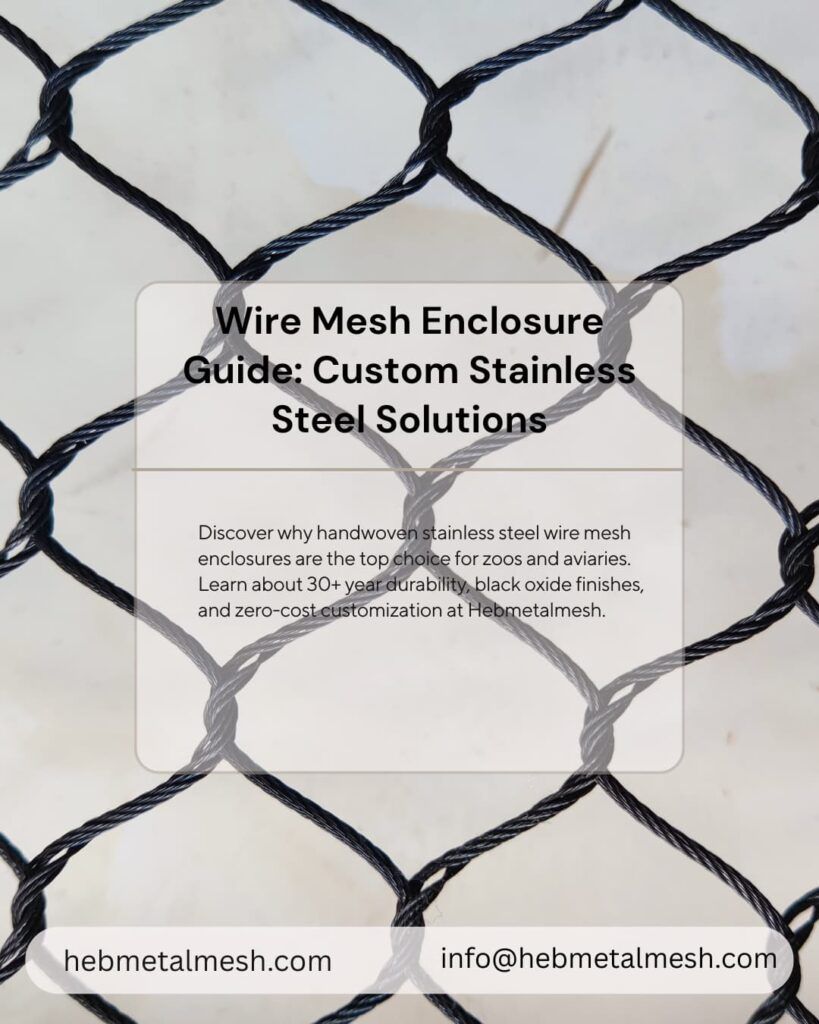
While natural stainless steel has a classic silver sheen, Black-Oxide finished mesh is the secret weapon of modern zoo design.
- Light Absorption: Instead of reflecting the sun (which draws your eye to the fence), the black finish absorbs light.
- The Disappearing Act: Because the wire rope is so thin ($1.2mm$ to $2.0mm$), your eyes naturally focus past the black mesh and onto the birds or landscaping inside. It provides the same heavy-duty protection as a steel cage, but with the visual lightness of a screen.
Absolute Protection, Zero Compromise
Whether you are observing the intricate feathers in a Peacock enclosure or the powerful movements in a Parrot and Macaw sanctuary, visibility is paramount.
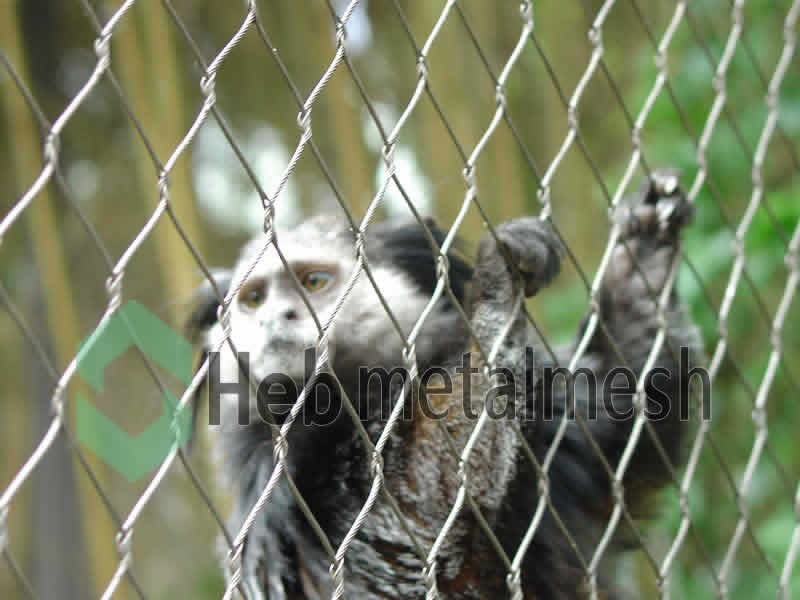
- No More “Grid-Vision”: Unlike thick-stranded plastic netting or chunky chain-link, the hand-woven diamond pattern of rope mesh offers the highest “open area” percentage in the industry.
- The Result: You get the peace of mind knowing a fox can’t get in, without the heartbreak of having your view ruined by bulky, ugly materials.
True security isn’t about how much metal you can see—it’s about how much you don’t have to see to know they are safe.
7. Conclusion: The Peace of Mind Investment
Building a predator-proof outdoor enclosure isn’t just about structural engineering; it’s about emotional security. Every animal owner knows the “midnight anxiety”—that moment you lie awake during a storm or after hearing a stray dog bark, wondering if your mesh will hold.
The “Aha!” moment comes when you realize that cheap materials are a recurring debt, while stainless steel is a one-time investment in silence. When you choose hebmetalmesh, you aren’t just buying wire; you’re buying the certainty that when you wake up tomorrow, your flock will be exactly where you left them—safe, secure, and undisturbed.
Stop “hoping” your plastic netting holds. Start knowing your stainless steel sanctuary is impenetrable.
Compare the [stainless steel bird netting vs. plastic] specs to see why steel is the only choice for long-term predator protection.
Safety doesn’t have to be ugly. Check out our [Walk-in aviary design ideas] for inspiration.
Don’t Wait for a Breach to Take Action.
Your animals rely on you for protection. Plastic netting is a temporary fix; stainless steel mesh is a lifetime security solution.
*304 & 316 Stainless Steel available. Proven chew-proof against all common predators.*
Frequently Asked Questions: Predator-Proofing Your Enclosure
Answer: Yes, and surprisingly fast. Raccoons have incredibly sharp teeth and strong jaw muscles designed for cracking shellfish and bone. They don’t just “chew” plastic; they shred it. For a truly predator-proof outdoor enclosure, you need a material with a high tensile strength that exceeds a raccoon’s bite force—which is why stainless steel rope mesh is the industry standard.
Answer: Most foxes and dogs are “surface diggers,” meaning they start at the fence line and go down 6–10 inches. We recommend burying your hebmetalmesh at least 12 inches deep, or using an “L-footer” (apron) that extends 18 inches horizontally along the ground. This forces the predator to hit a metal floor no matter how hard they dig.
Answer: In terms of physical strength, both are nearly identical and will stop any common predator. However, for longevity in high-moisture or coastal areas, 316-grade stainless steel is the superior choice. It resists the salt-air corrosion that can create “weak spots” in standard metals over time, ensuring your Peacock enclosure stays secure for decades.
Answer: No. Unlike “knotted” plastic netting or loosely woven chicken wire, hand-woven rope mesh uses a smooth, ferruled or interlocked diamond pattern. This design prevents the “snag points” that lead to limb injuries. It’s why it’s the trusted choice for Eagle enclosures where feather and talon integrity are critical.
Answer: This depends on the aperture (opening) size you choose. For complete predator-proofing against small snakes or weasels, you should select a smaller diamond size (e.g., 20mm to 25mm). If you are housing larger birds in a Parrot and Macaw enclosure, you can use a larger mesh, but always consider the smallest local predator when choosing your aperture.
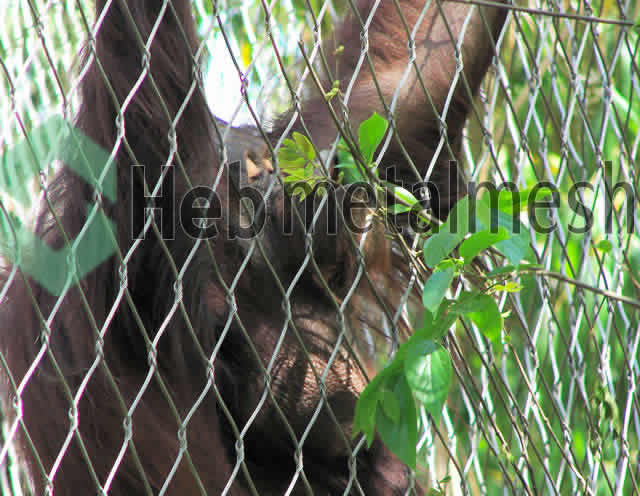
zoo mesh, zoomesh
Hebmetalmesh zoo mesh factory is a professional leader in China special for Zoo mesh, zoo netting, zoo enclosure mesh, bird netting, aviary netting, stainless steel wire rope mesh, wire rope netting, zoo animal fencing, aviary wire mesh, with high quality and reasonable price
https://hebmetalmesh.com
info@hebmetalmesh.com