
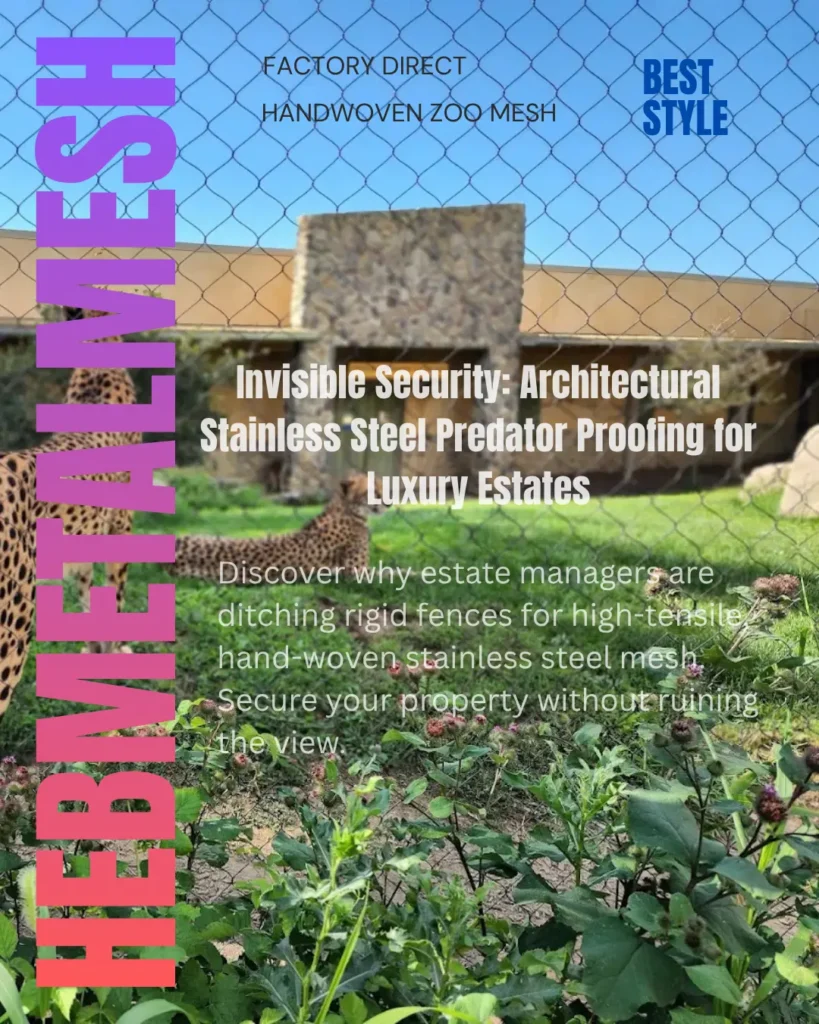
Traditional predator proofing—think wooden slats or chain link—is an eyesore that kills property value. Architectural stainless steel predator proofing utilizes high-tensile, hand-woven mesh to provide a near-invisible, “zoo-grade” barrier. It offers a “buy it once” solution that absorbs high-impact energy from large animals while remaining visually transparent from a distance, ensuring luxury estates maintain both security and aesthetic integrity.
The “Million Dollar View” Dilemma
The Psychological Cost of Ugly Fencing
For the owner of a luxury estate, the “landscape” isn’t just grass and trees; it is a carefully curated asset that defines the property’s value. When a security threat emerges—be it a coyote eyeing livestock or a mountain lion prowling the perimeter—the immediate reaction is to build a wall. However, for high-net-worth owners, the psychological cost of traditional fencing is often higher than the risk of the predator itself.
Standard solutions like wooden slats, heavy-duty chain link, or iron bars create a “prison effect” that shatters the architectural flow of a multi-million dollar home. You didn’t buy a property with a panoramic sunset view just to stare at rusty galvanized wire or opaque timber. This leads to a dangerous compromise: many estate managers choose “risky aesthetics” over “ruinous protection,” leaving the property vulnerable because the available safety options are simply too ugly to install.
1. The “Aha” Moment: Learning from the Elite
This is where the “Aha” moment happens. While property owners have been struggling with clunky hardware-store solutions, the world’s most elite zoological institutions have already solved this exact crisis. If you’ve ever stood five feet away from a snow leopard and felt like there was nothing between you and the predator, you’ve experienced the “invisible barrier”.
Zoos require a material that is strong enough to contain 1,200 lbs of muscle but transparent enough for a toddler to see a bird’s feathers. That material is high-tensile, hand-woven stainless steel mesh. By adopting this “Zoo Standard,” estate owners realize they don’t have to choose between security and the view. You can have a perimeter that is virtually unbreakable and, from a distance of just a few yards, virtually invisible.
- The Evolution: To understand how these materials transitioned from public exhibits to private luxury estates, see our deep dive into the Evolution of Animal Fencing.
- Design Inspiration: If your project focuses more on aesthetics for smaller winged visitors, explore our guide on Modern Backyard Aviary Design.
- Direct Access: View the specific mesh grades used in these luxury applications at the Hebmetalmesh.
2. Breaking Down the Material Science
To truly appreciate why high-tensile mesh is the gold standard for elite estates, we have to look past the surface and into the engineering that makes it possible. Most property owners are used to the rigid, brittle nature of traditional fencing, but architectural mesh operates on a different set of physical principles.
304 vs. 316 Stainless Steel: The Secret Weapon
When you are investing in a perimeter that must withstand both the elements and physical impact, the grade of steel is your most critical decision. While 304 stainless steel is common, 316 stainless steel is the “secret weapon” for harsh environments. Containing molybdenum, 316 grade offers superior resistance to chloride pitting, making it essential for coastal estates or properties exposed to heavy rain and animal waste. This “buy it once” philosophy is central to our Cost-Benefit Analysis of Premium Mesh, where we break down why higher upfront quality prevents the $10k+ replacement cycles typical of galvanized wire.
Hand-Woven vs. Rigid Welded Wire: The Physics of Flexibility
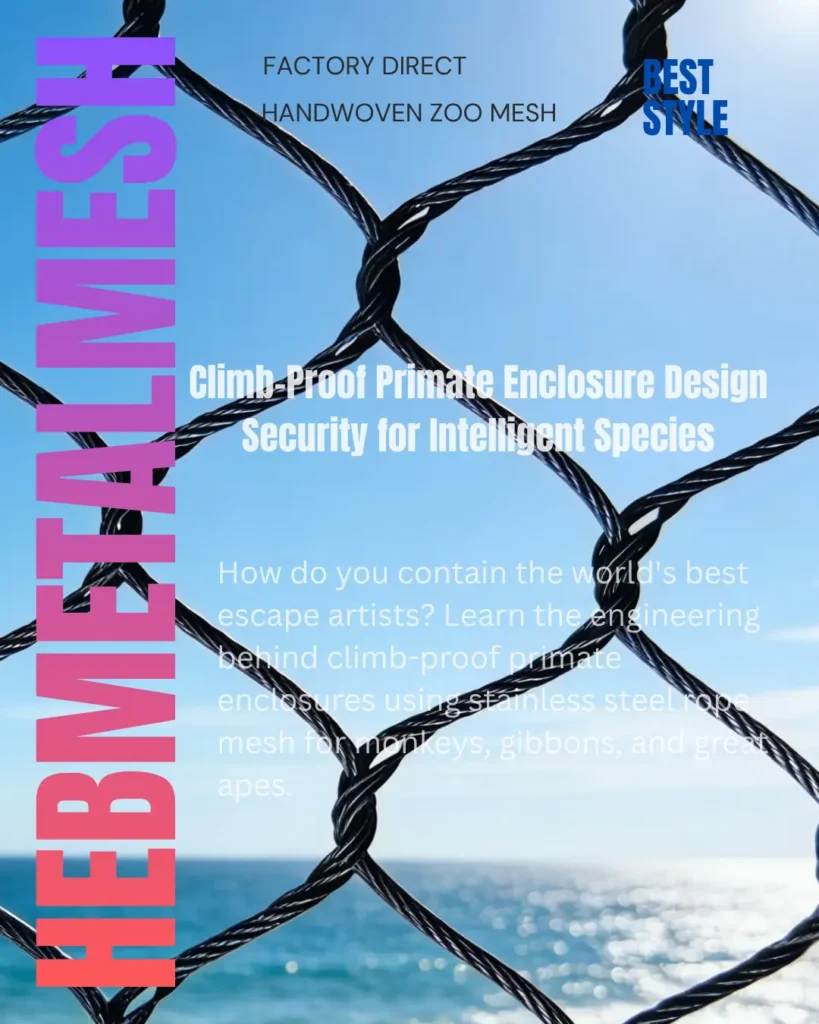
Unlike welded wire that snaps under pressure, hand-woven cable mesh utilizes a flexible diamond pattern that acts like a structural net. This is vital for impact absorption; when a large animal strikes the mesh, the material “gives” slightly to dissipate the kinetic energy before snapping back into its original shape. This same technical durability is what allows for the organic, curved shapes seen in Modern Backyard Aviary Design, proving that safety doesn’t have to be rigid.
The “Invisible” Factor
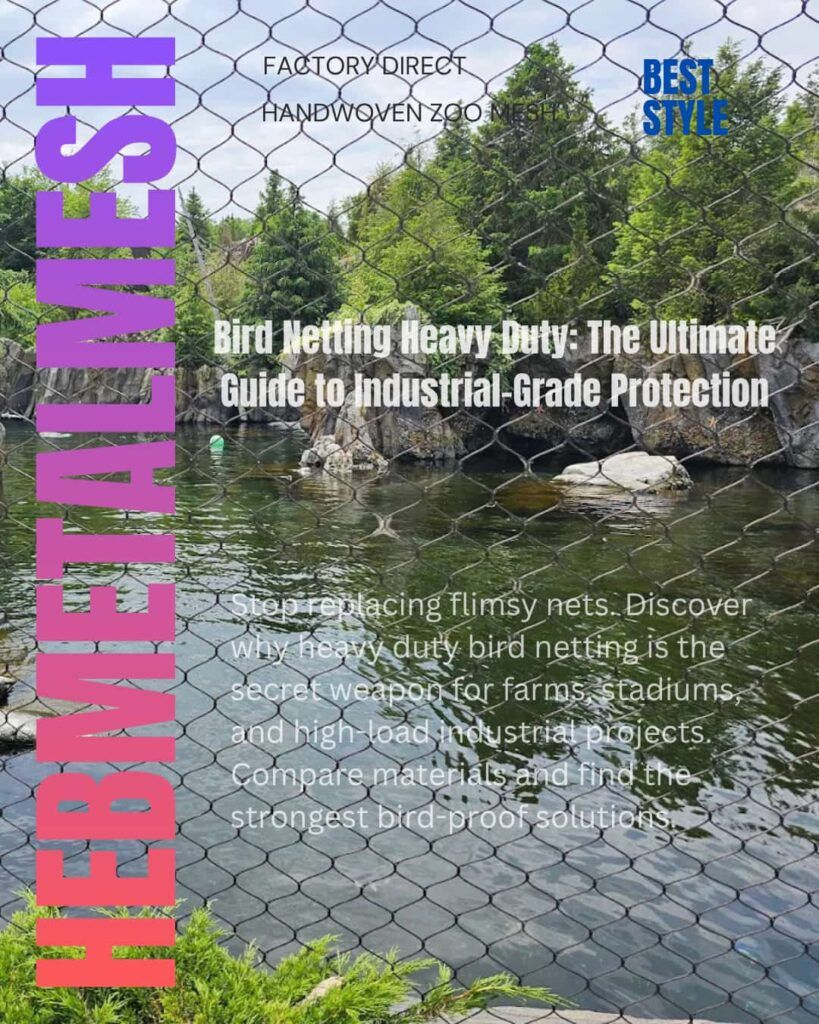
The most striking feature of this mesh is its light-to-shadow ratio. Because the high-tensile strength of the cable allows for a remarkably thin diameter, the mesh physically disappears against natural backgrounds. From just a few yards away, the structural lines vanish, leaving your panoramic views completely unobstructed while maintaining a “zoo-grade” security barrier that traditional opaque materials simply cannot match. To see these technical specifications in action, you can explore the full range of cable diameters at the Hebmetalmesh.
3: Strategic Implementation: More Than Just a Fence
Designing a perimeter for a luxury estate requires a nuanced understanding of local wildlife and the specific vulnerabilities of your property. Unlike generic hardware-store solutions, implementing “zoo-grade” architectural mesh is a strategic engineering choice that addresses the sophisticated needs of high-end land management.
Predator Specifics: Engineering for Uninvited Guests
The primary goal of any perimeter is to neutralize threats before they become a crisis. Whether you are dealing with the persistent digging of coyotes, the sheer climbing power of cougars, or other unwanted “uninvited guests,” the material must be matched to the predator’s capabilities. High-tensile stainless steel mesh is uniquely qualified for this because it denies predators the two things they rely on: a foothold and a weak point.
The transition from traditional wood to professional-grade wire is a significant leap in estate security. To truly appreciate this shift, it is helpful to explore the Evolution of Animal Fencing, which details how we moved from high-maintenance timber to the nearly indestructible “invisible” solutions used today.
Integration with Modern Landscaping
One of the most overlooked benefits of hand-woven mesh is its ability to blend seamlessly with high-end landscaping. Because the mesh is malleable and visually lightweight, it can be used for more than just a barrier. Estate managers are increasingly using this same high-tensile material for vertical gardens, green walls, and trellis systems that provide perimeter security while doubling as a lush, living privacy screen.
This versatility is a hallmark of modern design-build projects. For example, the same engineering principles that secure a large perimeter are often applied on a smaller, more intimate scale when creating a Modern Backyard Aviary Design. By using a unified material across your estate—from the main boundary to the specialized animal enclosures—you maintain a consistent architectural language that enhances, rather than detracts from, the property’s overall aesthetic.
To see the full technical specifications required for these diverse applications, including tensile strength and aperture sizes, you can visit the Hebmetalmesh Zoo Mesh Product.
4: Installation & Longevity
When you are managing a luxury estate, the last thing you want is a revolving door of contractors on your property every spring to fix sagging wire or replace rotted timber. True security is a long-term investment, and understanding the “Zoo Standard” is the key to achieving a “buy it once” perimeter.
The “Zoo Standard” for Home Application
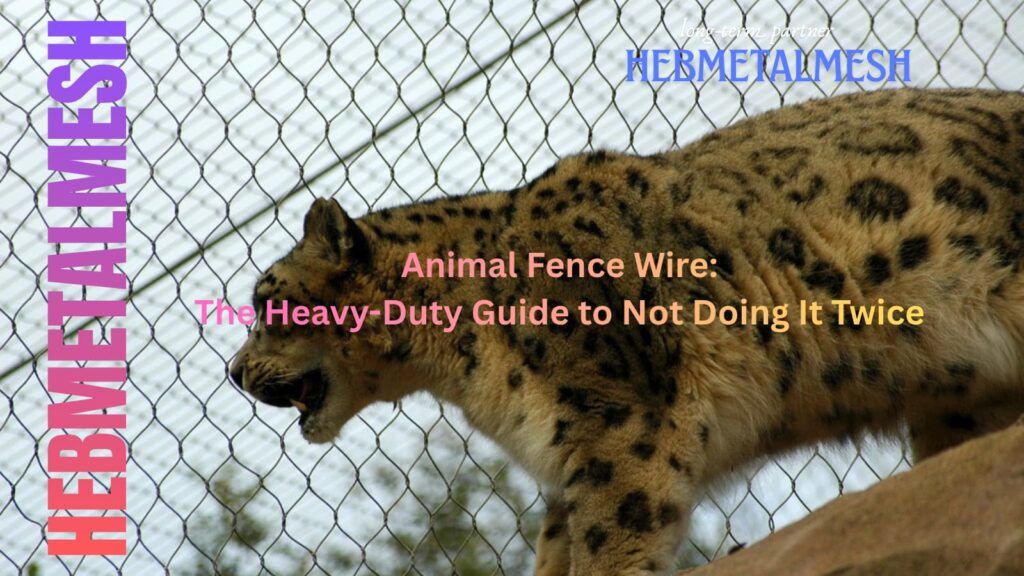
There is a reason why high-end zoological institutions rarely replace their enclosures: they build for extreme durability. Materials engineered to safely contain 300-pound snow leopards are, in the best way possible, “overkill” for a standard home farm or estate. By applying these same professional-grade standards to your property, you are utilizing a material designed to withstand high-impact forces and decades of environmental exposure without losing its structural integrity.
While large-scale perimeters are the primary concern for most estate managers, this same durability can be scaled down for specialized projects. If you are tackling a more focused area of your property, such as a bird sanctuary, our guide on Modern Backyard Aviary Design shows how these same zoo-grade materials can be adapted for smaller, more delicate structures.
ROI Analysis: The Cost of “Cheap” Fencing
The initial price tag of 316 stainless steel often gives some property owners pause, but a seasoned estate manager knows that “cheap” fencing is the most expensive thing you will ever buy. Standard galvanized wire or treated wood begins to degrade the moment it is installed, often requiring full replacement within five to seven years.
A higher upfront investment in high-tensile stainless steel mesh can save an estimated $10,000+ in replacement and maintenance costs over a 10-year period. Beyond the raw numbers, there is the peace of mind that comes from knowing your security barrier will not fail when it matters most. To compare these longevity metrics in detail, see our full Cost-Benefit Analysis of Premium Mesh.
This long-term value is why architects and designers consistently point their clients toward professional-grade solutions. You can start exploring the specific materials used in these high-ROI installations by visiting the Hebmetalmesh Online Store.
5: The “No-Climb” Architecture
The ultimate goal of luxury estate security is to prevent a breach before it even begins. Traditional fencing often inadvertently provides predators with the tools they need to succeed, such as a sturdy top rail to vault over or large gaps that offer an easy foothold. In contrast, the unique structural properties of hand-woven mesh create a “No-Climb” architecture that is as psychologically discouraging to predators as it is physically impenetrable.
Engineering Against Footholds
Most predators, from nimble coyotes to powerful mountain lions, rely on a combination of grip and leverage to clear a boundary. Woven stainless steel mesh is specifically engineered to deny these mechanical advantages. Because the high-tensile cables are flexible and the diamond apertures are precisely sized, a predator cannot find the rigid purchase necessary to pull itself upward. This design forces animals to stay on the ground, far away from your livestock or private grounds. For estate managers who need detailed data on how these patterns hold up against significant force, viewing our Full Technical Range provides the necessary specifications on tensile strength and impact resistance.
Seamless Transitions and Integrated Safety
Beyond the mesh itself, a “no-climb” strategy often involves a seamless integration between the fencing and the surrounding environment. Unlike rigid panels that create hard corners and potential weak points, flexible cable mesh can be tensioned over irregular terrain and around architectural features without leaving gaps. This adaptability ensures that the security of your perimeter remains consistent regardless of the landscape’s complexity.
This architectural consistency is what allows for the same high-level safety standards to be applied throughout a property, whether you are securing a vast boundary or a specialized installation. Many owners find that the principles used to keep large predators out are equally effective when applied to bird-specific structures, as explored in our guide on Modern Backyard Aviary Design. By utilizing a unified, zoo-grade material across your entire estate, you ensure that every square inch of your property—from the front gate to the most remote animal sanctuary—benefits from the same unbreakable, invisible protection.
While visual immersion is the goal, durability is the necessity. Learn how to transition from design to reality in our guide on Best maintenance-free animal enclosure materials for 30-year durability
To find the specific cable diameters and aperture sizes that best fit your project’s unique security and design requirements, you can explore the full catalog on the Hebmetalmesh.
Stop Sacrificing Your View for Security
Ready to upgrade to the “Invisible Barrier” used by world-class zoos? Get the architectural mesh that protects your estate without blocking the horizon.
Trusted by estate managers and zoo architects worldwide. Learn more at Hebmetalmesh.com
FAQ: Invisible Security for Elite Estates
To wrap up this deep dive into architectural stainless steel predator proofing for luxury estates, we’ve compiled the most common questions from estate managers and high-end property owners who are ready to make the switch to “invisible” security.
While no physical barrier is completely invisible, high-tensile mesh has a remarkably high light-to-shadow ratio. Because the 316-grade stainless steel cables are so strong, they can be manufactured with a very thin diameter. From just a few yards away, the structural lines tend to vanish against natural foliage and landscapes, preserving your panoramic sunset views far better than traditional wood or chain link.
Yes. Unlike rigid welded wire that can snap under sudden pressure, hand-woven cable mesh acts like a high-strength structural net. It is engineered to “give” slightly upon impact, dissipating the kinetic energy of a 1,200 lb force before snapping back into its original shape. This is the same “Zoo Standard” used to contain apex predators globally. For more on handling these high-impact forces, check out our upcoming Full Technical Range.
Predators like mountain lions rely on rigid footholds and leverage to clear a fence. The flexible nature of woven mesh, combined with precisely sized diamond apertures, denies them a steady surface to pull themselves up. It creates a psychological and physical deterrent that forces animals to stay grounded.
While the upfront cost is higher, 316 stainless steel contains molybdenum, which provides superior resistance to “pitting” and corrosion—especially in coastal estates or areas with heavy rain and animal waste. Standard galvanized fencing often begins to degrade immediately and may require full replacement every five to seven years, making it a much more expensive option in the long run. You can find a detailed breakdown of these savings in our Cost-Benefit Analysis of Premium Mesh.
Absolutely. One of the greatest benefits of this material is its versatility. The same hand-woven mesh used for your perimeter can be scaled down for a bird sanctuary or a custom garden feature. To see how this applies to specialized avian projects, see our guide on Modern Backyard Aviary Design, or visit the Hebmetalmesh to explore all available grades.