In the world of bird control and habitat design, the term “outdoor bird netting” has long been associated with thin, green or black plastic mesh that tangles easily and lasts only a season or two. However, as we move through 2026, the industry is seeing a massive shift. Property owners, agricultural managers, and zoo curators are moving away from “disposable” solutions in favor of architectural-grade materials that respect both the budget and the environment.
The Failure of “Disposable” Plastic Netting
For years, extruded plastic (polypropylene or HDPE) was the default choice for outdoor bird netting due to its low upfront cost. But today’s environmental and economic realities have exposed three major flaws in these temporary materials:
- UV Degradation and Microplastics: Plastic netting is highly susceptible to ultraviolet radiation. After a few months under the sun, the polymers break down, becoming brittle and snapping. This not only leaves your property vulnerable but sheds microplastics into the surrounding soil and water systems.
- The Entanglement Hazard: Thin, flexible plastic nets are notorious for “ghost fishing” land animals. Birds, bats, and even beneficial pollinators can become hopelessly entangled in the sagging mesh, leading to humane concerns that can damage a brand’s reputation—especially for public-facing parks and farms.
- Low Resistance to “Bite-Through”: Outdoor bird netting often has to deal with more than just birds. Squirrels, rodents, and larger predators can easily chew through plastic, rendering the entire enclosure useless against persistent intruders.
Introducing Hebmetalmesh: The Permanent Alternative
At Hebmetalmesh, we have redefined outdoor bird netting by bringing industrial-strength engineering to the natural world. We specialize in handwoven stainless steel mesh—a material designed to stay tensioned, beautiful, and effective for 30 years or more.
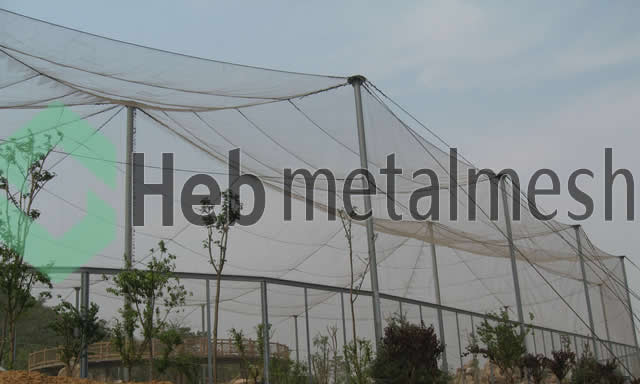
Unlike machine-welded wire that can be rigid and prone to rust at the joints, our mesh is handcrafted from high-tensile 304 or 316-grade stainless steel cables. This “fabric-like” flexibility allows our netting to draped over complex garden structures, wrapped around large-scale zoo aviaries, or tensioned across massive 30′ x 60′ rooftop spans without a single seam.
When you choose Hebmetalmesh, you aren’t just buying a net; you are investing in a permanent structural component. We lead the market by offering:
- Customized Roll Sizes: Tailored to your project to eliminate onsite waste.
- Zero Maintenance: No sagging, no rusting, and no need for seasonal replacement.
- Black Oxide Options: A sophisticated finish that allows the netting to disappear into the landscape, providing an unobstructed view of the outdoors.
Key Takeaways: Why Professionals are Switching to Stainless Steel
- Life Cycle Value: While the initial investment is higher than plastic, the “cost-per-year” is significantly lower as it removes the need for recurring labor and replacement costs.
- Safety & Ethics: The smooth, knotted surface of handwoven mesh prevents bird entanglement, making it the most humane outdoor bird netting on the market.
- Sustainability: Made from 100% recyclable steel, helping your project meet modern “Green Building” and eco-certification standards.
Applications for Outdoor Bird Netting: From Vineyards to Skyscrapers
The versatility of handwoven stainless steel mesh allows it to bridge the gap between heavy-duty industrial use and delicate aesthetic requirements. Because Hebmetalmesh provides custom-sized panels, the application possibilities are virtually limitless.
A. High-Value Agriculture and Viticulture
For vineyards and organic fruit orchards, birds aren’t just a nuisance—they are a threat to the bottom line. Traditional outdoor bird netting made of plastic often sags under the weight of rain or snow, touching the fruit and allowing birds to peck through the gaps.
- The Stainless Advantage: Our stainless steel mesh maintains its tension over large spans. This creates a “hovering” protective canopy that keeps birds at a distance from the crops.
- Orchard Protection: It is particularly effective for protecting “Super-High-Density” orchards where the netting must remain in place year-round.
B. Architectural Bird Exclusion and Building Envelopes
In modern architecture, birds nesting on ledges or entering HVAC systems can cause significant structural damage and health risks. Architects now use Hebmetalmesh as a “functional facade.”
- Rooftop Exclusion: Unlike spikes, which are unsightly and often fail, a tensioned stainless steel net creates a 100% exclusion zone on rooftops.
- Large Panel Integration: With our ability to manufacture 30′ x 60′ seamless panels, we can cover entire building faces or open-air courtyards with a single, clean piece of mesh, maintaining the building’s aesthetic integrity.
C. The New Standard for Zoo and Bird Park Aviaries
Zoo curators face a unique challenge: they must keep birds safe, predators out, and the public happy.
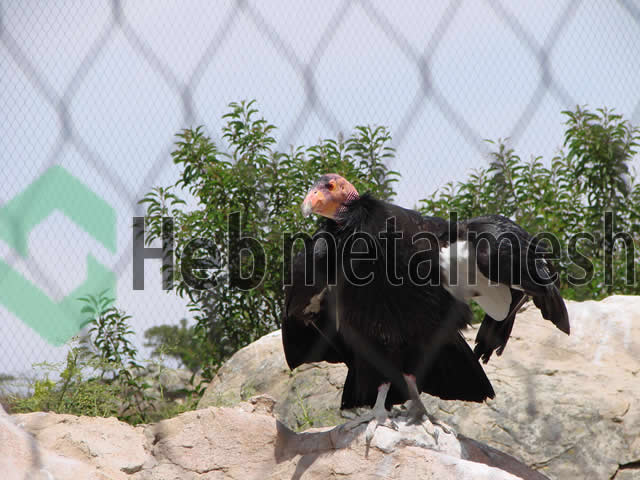
- Photography-Friendly: Our Black Oxide bird netting is the secret weapon for world-class aviaries. The matte black finish eliminates sunlight glare, allowing visitors to take crystal-clear photos through the mesh as if it wasn’t even there.
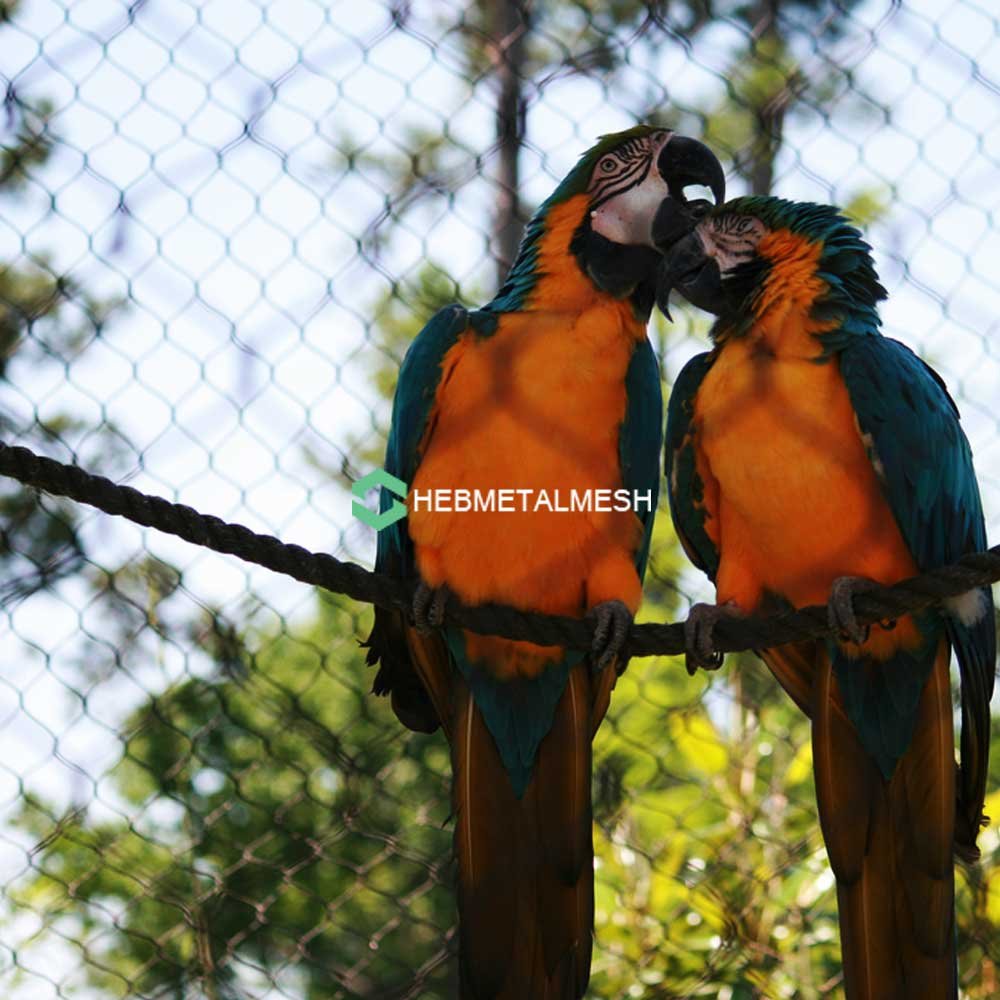
- Climbing Strength: Many bird species, like parrots and macaws, use their beaks and claws to climb the netting. Our handwoven cables are designed to withstand this constant mechanical stress without fraying or breaking.
D. Professional-Grade “Catios” and Garden Enclosures
For the premium residential market, homeowners are moving away from “chicken wire” for their garden enclosures and cat patios (Catios).
- Safety & Security: It provides a predator-proof environment that protects pets from hawks, coyotes, and snakes, while keeping the garden free from pest birds.
How to Choose the Right Mesh Size for Your Outdoor Project
Choosing the correct aperture (the “hole” size) is the most critical technical decision in your purchase. If the hole is too large, small birds will pass through; if it is too small, you may be adding unnecessary weight and cost.
| Mesh Aperture (Inch/mm) | Target Bird Species | Common Applications |
| 0.75″ x 0.75″ (20mm) | Small birds (Sparrows, Finches) | Gardens, Vineyards, Small Aviaries |
| 1″ x 1″ (25.4mm) | Medium birds (Starlings, Robins) | General Balcony Protection, Catios |
| 1.5″ x 1.5″ (38mm) | Large birds (Pigeons, Crows) | Rooftop Deterrents, Industrial Enclosures |
| 2″ x 2″ (50mm) | Raptors and Waterfowl | Eagle Aviaries, Pond Protection |
Maintenance and Longevity: The 30-Year Guarantee
One of the most common questions we receive at Hebmetalmesh is: “How do I maintain outdoor bird netting?”
The beauty of 304 and 316-grade stainless steel is that it is virtually maintenance-free.
- Self-Cleaning: In most outdoor environments, rainfall is sufficient to keep the mesh clean.
- Corrosion Resistance: Unlike galvanized wire, which will eventually white-rust and fail, our stainless steel cables develop a protective chromium-oxide layer that heals itself if scratched.
- No Re-Tensioning Required: Because our cables are pre-stretched during the hand-weaving process, the netting will not “creep” or sag over time, even in areas with heavy seasonal snow.
Installation Mastery: How to Secure Outdoor Bird Netting
Installing stainless steel mesh is different from hanging plastic nets. Because it is a permanent structural element, it requires proper tensioning to achieve that “invisible” and professional look.
Step 1: Establish Your Perimeter
For large outdoor bird netting installations, you need a solid anchor point. We recommend using a 1/8″ or 1/4″ stainless steel perimeter cable. This cable acts as the “frame” for your mesh.
- Pro Tip: If you are installing on a wooden garden structure, use stainless steel eye-bolts every 2–3 feet to thread your perimeter cable through.
Step 2: Hanging the Mesh
Our handwoven mesh is incredibly flexible. Start at one corner and use temporary zip-ties or clips to position the mesh along your frame. Because Hebmetalmesh provides customized roll sizes, you won’t have to deal with heavy excess material hanging off the edges.
Step 3: Lacing and Ferrules
To permanently attach the mesh to the perimeter cable, use a “lacing wire” technique. Weave a thinner 1mm stainless steel wire through every diamond of the mesh and around the perimeter cable. Alternatively, use stainless steel ferrules for a high-strength, industrial finish.
8. Head-to-Head: Stainless Steel vs. Other Netting Materials
To help you make the final decision for your project, here is how our handwoven mesh compares to common alternatives found in the market today.
| Feature | Hebmetalmesh Stainless Steel | Nylon/Polyethylene | Galvanized Welded Wire |
| Bite-Proof | Yes (Total Protection) | No (Easily Chewed) | Yes |
| Flexibility | High (Like Fabric) | High | Low (Stiff) |
| Rust Resistance | Excellent (316 Grade) | N/A | Low (Rusts at welds) |
| Visual Appeal | Premium (Black Oxide) | Cheap/Messy | Industrial/Bulky |
| Best Use | 30-Year Permanent Installs | Short-term/Emergency | Small rigid cages |
9. Environmental Impact: A Sustainable Choice
In 2026, sustainability is no longer optional. Plastic outdoor bird netting eventually breaks down into microplastics that contaminate soil and harm the very birds you may be trying to protect.
By choosing Hebmetalmesh, you are opting for a 100% recyclable product. Stainless steel is one of the most recycled materials on earth. Its 30-year lifespan means you are reducing the carbon footprint associated with manufacturing, shipping, and disposing of 15 sets of plastic nets over the same period.
10. Conclusion: Invest Once, Protect Forever
Whether you are covering a small backyard koi pond or a 10,000-square-foot zoo aviary, the quality of your outdoor bird netting determines your long-term success. Don’t settle for “disposable” solutions that fail when the sun gets hot or the predators get hungry.
At Hebmetalmesh, we provide the strength of steel with the beauty of handwoven craftsmanship. With our custom size mesh rolls and massive 30′ x 60′ panels, we make it easy to protect your property permanently.
Ready to Upgrade Your Protection?
- Browse our Collection: Outdoor Bird Netting Catalog
- Get Technical Advice: Contact our Engineering Team
- Shop Online: Hebmetalmesh Store
Frequently Asked Questions: Outdoor Bird Netting & Wire
There are several compelling reasons to choose stainless steel netting. It offers superior strength and durability, keeping your macaws securely contained. Unlike traditional materials, it’s resistant to rust and corrosion, ensuring a long lifespan for the enclosure. The open mesh design provides excellent ventilation and allows for natural light, creating a healthy and airy environment for your feathered companions. Finally, stainless steel netting is low-maintenance and can be easily cleaned with a hose, saving you time and effort.
Choosing the right mesh size is crucial. An ideal mesh size depends on the specific macaw species you have. Generally, a mesh size between 1 inch and 1.5 inches is recommended. This provides a good balance between security and comfortable movement for your macaws. If you’re unsure about the ideal size for your particular situation, consulting with a professional bird enclosure builder is always a wise decision.
While building your own enclosure is certainly possible, it’s essential to prioritize the safety and security of your macaws. Stainless steel netting requires a sturdy frame and proper installation to ensure its integrity. If you’re not confident in your DIY skills, seeking the expertise of an experienced bird enclosure builder is highly recommended. They can guarantee a safe and functional enclosure that your macaws will love.
A: Yes, especially for long-term installations. While plastic netting is cheaper upfront, it typically degrades under UV light within 1–2 years. Hebmetalmesh stainless steel netting lasts over 30 years, is bite-proof against predators, and does not shed microplastics into the environment. When you factor in the cost of labor for repeated replacements, stainless steel is the more cost-effective choice.
A: For small birds, a mesh aperture of 3/4″ (20mm) or 1″ (25mm) is ideal. This prevents small birds from flying through or, more importantly, getting their heads stuck in the openings. For larger birds like pigeons or hawks, a 1.5″ to 2″ (38mm – 50mm) mesh is sufficient and more cost-effective.
A: No. Unlike paint or plastic coatings, our Black Oxide is a chemical conversion process. It changes the surface properties of the stainless steel itself. It will not chip, peel, or flake, and it is highly resistant to fading, making it perfect for high-visibility zoo aviaries and residential balconies.
A: While our handwoven mesh is flexible and easy to handle, panels of this size (1,800 sq. ft.) usually require a team of 2–3 people and proper tensioning equipment (like turnbuckles and perimeter cables). Because our panels are seamless, they are much easier to install than multiple smaller rolls that require tedious joining.
A: Absolutely. Many galvanized wire products contain zinc or lead, which can cause “New Wire Disease” or zinc poisoning in climbing birds. Hebmetalmesh uses only high-grade 304 and 316 stainless steel, which is non-toxic, inert, and completely safe for birds to climb on with their beaks and feet.
A: You can order directly through our online store
. We provide customized roll sizes with no additional cutting fees. Simply provide your required length and width, and we will manufacture the mesh to your exact specifications to ensure you have zero waste on your project site.
A: Yes. Because it is a woven cable structure rather than a solid sheet, wind passes through it easily, reducing “wind load” on your support structure. Additionally, the high tensile strength of the stainless steel cables allows it to support heavy snow loads without sagging or breaking, provided it is installed with a proper perimeter frame.